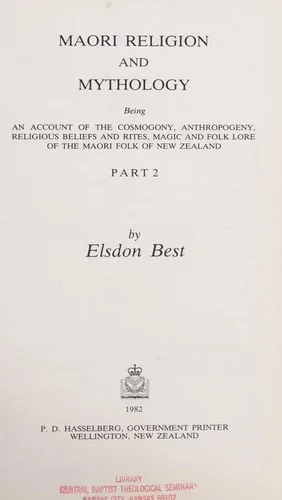
Maori Religion and Mythology, Part 2
 61
61

Maori Religion and Mythology, Part 2

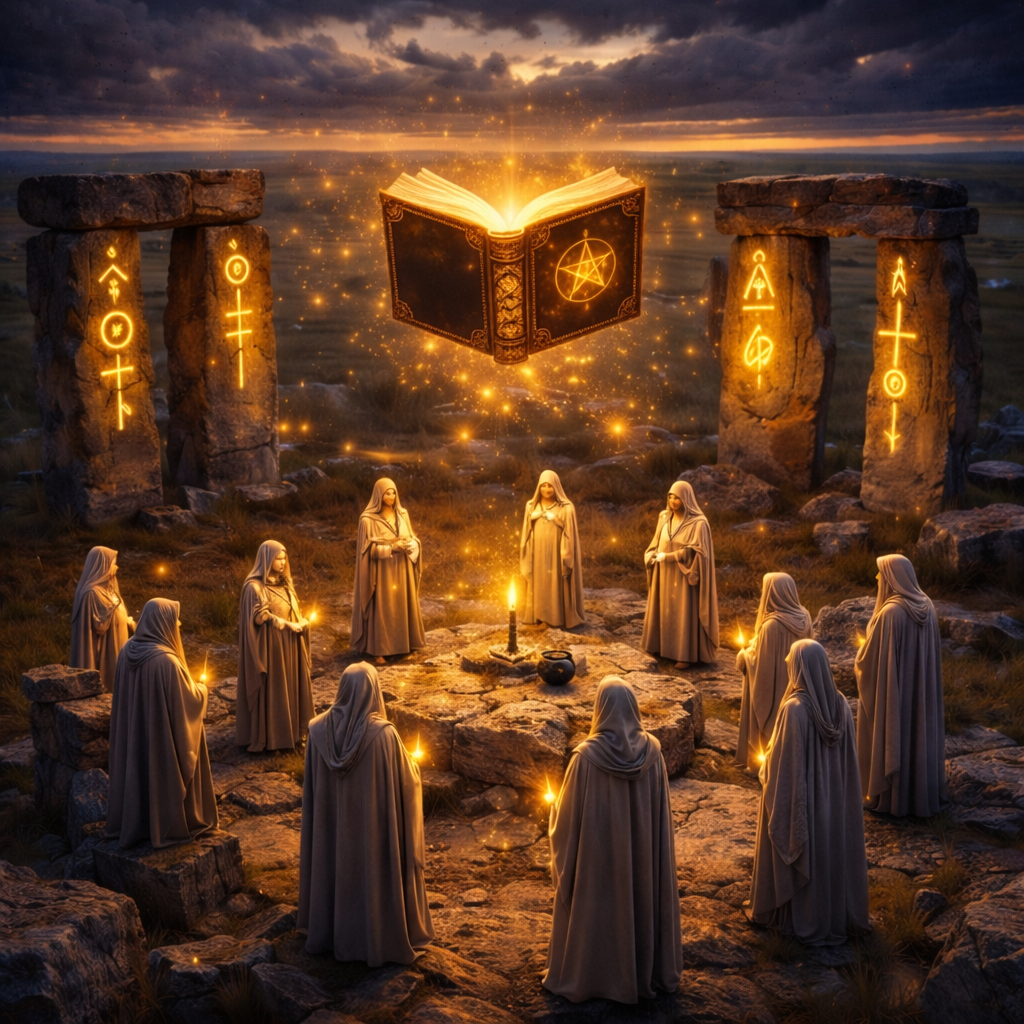

Lorelei Sage, Contemplative Literature Editor: Elsdon Best's 'Maori Religion and Mythology, Part 2' stands as a cornerstone for serious students of indigenous spiritual systems. Best's meticulous research and deep respect for Māori culture illuminate the complex pantheon, the sacred rites, and the philosophical underpinnings of their belief. This volume is particularly strong in its exposition of ritualistic practices and their cosmological significance, revealing a sophisticated spiritual framework. It is an essential read for scholars, ritual practitioners, and anyone drawn to the profound wisdom embedded within ancient mythologies. Its enduring value lies in its comprehensive and sensitive portrayal of a vibrant spiritual heritage.
📝 Description
61
Elsdon Best's 'Maori Religion and Mythology, Part 2' was published in 1924, detailing the spiritual beliefs of the Māori people.
This volume continues Elsdon Best's comprehensive study of Māori spiritual life. It examines the complex structure of their cosmology, including the genealogies that link the human and divine, known as whakapapa. The book also details various religious practices and rituals employed by the Māori to interact with their gods and maintain order. Best's work focuses on the sacred dimensions of their worldview, where spiritual forces were understood to influence the natural world. It covers the arcane methods used to invoke deities and manipulate primal energies.
The text further discusses the philosophical underpinnings of Māori belief systems. It explores how these indigenous traditions interpret humanity's position within a larger cosmic framework. The author presents this knowledge through a distinctly Polynesian cultural lens, suggesting universal spiritual concepts can be found within specific traditions. Readers will find detailed accounts of beliefs that shaped daily life and ritual practice.
Published in the early 20th century, Elsdon Best's work on Māori religion sits within a tradition of ethnographic and comparative religious studies. It engages with indigenous belief systems as complex, internally coherent spiritual frameworks, rather than mere superstition. This approach aligns with a broader esoteric interest in understanding diverse paths to spiritual knowledge and the sacred dimensions of human culture. The book presents Māori cosmology and ritual as a system of understanding existence that parallels, in its own way, the concerns found in other world religions and mystical traditions.
💡 Why Read This Book?
Uncover the esoteric heart of Māori spiritual traditions, exploring their intricate cosmogony, sacred rituals, and the profound connection between the seen and unseen worlds. This book is essential for scholars of comparative mythology, seekers of ancestral wisdom, and practitioners interested in the practical application of ancient spiritual technologies. Gain a deeper understanding of universal spiritual principles through a unique and powerful indigenous lens.
⭐ Reader Reviews
Honest opinions from readers who have explored this book.
❓ Frequently Asked Questions
What is the primary focus of Part 2?
Part 2 primarily delves into the intricate rituals, ceremonies, and the philosophical underpinnings of Māori religion, expanding on the foundational myths presented in earlier works.
Who was Elsdon Best?
Elsdon Best was a prominent ethnographer and folklorist who dedicated his life to meticulously documenting the culture, traditions, and beliefs of the Māori people of New Zealand during the late 19th and early 20th centuries.
Is this book suitable for beginners?
While comprehensive, the depth of the subject matter may be more accessible to those with some prior interest in mythology or anthropology. However, its rich narratives offer a captivating entry point for the dedicated beginner.
What is 'Whakapono' in Māori religion?
Whakapono refers to faith, belief, and spiritual conviction within the Māori worldview. It encompasses trust in the spiritual realm, adherence to ancestral customs, and the integrity of one's spiritual path.
Does this book discuss specific deities?
Yes, Part 2 details various spiritual beings, ancestral gods (atua), and their roles within the Māori pantheon, often explaining their associated rituals and mythological narratives.
🔮 Key Themes & Symbolism
The Sacred Cosmos and Divine Interventions
This volume meticulously unpacks the Māori understanding of the cosmos, a dynamic realm populated by powerful atua (gods) and ancestral spirits. It explores how these divine entities actively intervene in the mortal world, influencing natural phenomena, human destiny, and the very fabric of existence. Best elucidates the intricate genealogies (whakapapa) that connect humanity to these celestial beings, revealing a profound sense of cosmic kinship and responsibility. The rituals and ceremonies documented serve as vital conduits for communication and appeasement, ensuring harmony between the spiritual and physical planes.
Ritual Efficacy and Ceremonial Power
At the heart of Maori spiritual practice lies the potent force of ritual and ceremony. Part 2 provides an in-depth examination of these sacred acts, from elaborate public rites to more personal invocations. These ceremonies were not mere symbolic gestures but were believed to possess tangible power, capable of healing, protection, divination, and even the manipulation of natural forces. The book details the specific chants, offerings, and actions required to invoke spiritual efficacy, highlighting the sophisticated understanding of energetic principles that underpinned Maori religious life. The precision and intent behind these practices are paramount.
Ancestral Wisdom and the Transmission of Knowledge
The enduring legacy of Maori religion is deeply rooted in the veneration of ancestors and the sacred transmission of knowledge across generations. Elsdon Best's work illuminates how ancestral wisdom, embodied in myths, proverbs, and sacred teachings, served as the bedrock of Maori society. This knowledge was carefully guarded and passed down through oral traditions and ritualistic instruction, ensuring the continuity of spiritual understanding and cultural identity. The book emphasizes the role of elders and tohunga (priests) as custodians of this esoteric lore, responsible for guiding their communities through spiritual and practical challenges.
💬 Memorable Quotes
Direct passages from the work, attributed to the author.
“Rituals are the bridges between worlds.”
— This highlights the functional and transformative nature of ceremonies, emphasizing their role in facilitating connection and exchange with the divine and ancestral realms.
“Genealogy binds us to the gods.”
— This underscores the importance of whakapapa (genealogy) in Maori belief, illustrating how lineage serves as a direct link to the divine, establishing identity and spiritual authority.
“Knowledge is a sacred trust.”
— This speaks to the profound respect for wisdom and its careful preservation and transmission within Maori culture, recognizing its vital role in spiritual and societal well-being.
“The land remembers, the spirits watch.”
— This evocative phrase points to the interconnectedness of the natural world and the spiritual plane, suggesting a constant, sentient presence that influences and observes human actions.
💡 Key Ideas
Editorial paraphrase of the work's core concepts — not direct quotes.
The world is alive with unseen forces.
This quote captures the animistic and pantheistic worldview where the spiritual permeates all of existence, suggesting a constant interaction with unseen energies.
🌙 Esoteric Significance
Tradition
This work is deeply rooted in the esoteric traditions of Polynesia, specifically the indigenous spiritual cosmology of the Māori people. It reveals a complex system of shamanic practices, intricate cosmogonies, and a profound understanding of energetic forces and spiritual intermediaries. The emphasis on ritual efficacy, ancestral communication, and the interconnectedness of all life aligns with universal esoteric principles found in many ancient traditions, offering a unique Pacific perspective on spiritual mastery and cosmic harmony.
Symbolism
Maori religion is rich with potent symbolism. The spiral motifs (koru) represent growth, new life, and the unfolding of the cosmos. The whale (tohora) symbolizes ancestral power and journeys between realms. The tiki figures often represent ancestral spirits or the first man, embodying primal energy and connection to the divine. The concept of tapu (sacredness) and mana (spiritual power/authority) are fundamental symbolic frameworks that govern social and spiritual interactions, illustrating a profound understanding of inherent spiritual forces.
Modern Relevance
In an era increasingly seeking decolonized perspectives and deeper connections to nature, the wisdom of Maori religion offers profound relevance. Its emphasis on ecological interconnectedness, the importance of ancestry, and the inherent sacredness of all life provides valuable counterpoints to materialistic worldviews. The resilience and adaptability of Maori spiritual practices offer lessons in maintaining cultural identity and spiritual integrity amidst rapid change. For contemporary seekers, it provides a rich source of philosophical inquiry and potential pathways to understanding universal spiritual laws through a distinctly indigenous lens.
👥 Who Should Read This Book
This book is an essential resource for academics and students of anthropology, religious studies, and indigenous cultures. Seekers of spiritual wisdom and those interested in comparative mythology will find useful insights into a unique worldview. Ritual practitioners and those exploring indigenous spiritual technologies will benefit from the detailed accounts of ceremonies and their underlying principles. Furthermore, anyone with a connection to or interest in Māori culture will find this a deeply enriching and informative read, offering a foundational understanding of their rich spiritual heritage.
📜 Historical Context
Published during a period of intense anthropological interest in indigenous cultures, Elsdon Best's work on Maori religion emerged as European colonization was profoundly impacting Māori society. The late 19th and early 20th centuries were a time of both cultural preservation efforts and significant societal upheaval for the Māori people. Best, working in close collaboration with Māori informants, sought to meticulously record and archive their rich traditions before they were potentially lost to modernization. His extensive fieldwork and detailed ethnography provide an invaluable, albeit filtered, window into a spiritual and mythological system at a critical juncture in its history, offering insights into a worldview that profoundly shaped the identity and resilience of the Māori.
📔 Journal Prompts
Reflect on the concept of 'mana' and how it might manifest in your own life and endeavors.
Consider the role of 'tapu' in your personal boundaries and sacred spaces.
How does the Māori understanding of interconnectedness between the spiritual and physical realms resonate with your own experiences?
Explore the significance of ancestral connection and how you honor or connect with your own lineage.
What parallels can you draw between Māori rituals and personal practices aimed at achieving balance or seeking guidance?
🗂️ Glossary
Atua
Spiritual beings or gods in Māori mythology, often ancestral figures who held dominion over natural forces and aspects of human life.
Whakapapa
Genealogy; the recitation of ancestral lines, crucial for establishing identity, rights, and spiritual connections within Māori society.
Rites and Ceremonies
Sacred acts and structured observances performed to appease spiritual beings, ensure cosmic balance, or achieve specific spiritual or practical outcomes.
Whakapono
Faith, belief, conviction, and spiritual trust; an essential element of Māori religious practice and worldview.
Tohunga
Expert priest, shaman, or skilled practitioner in traditional Māori society, possessing specialized knowledge in spiritual, healing, or craft domains.
This book appears in 4 collections
🔮 Readers Also Liked
Browse all →





More by Elsdon Best
All books →
From the “Ritual Magic” Collection
View all →






More Free Magic & Ritual Books
View all →