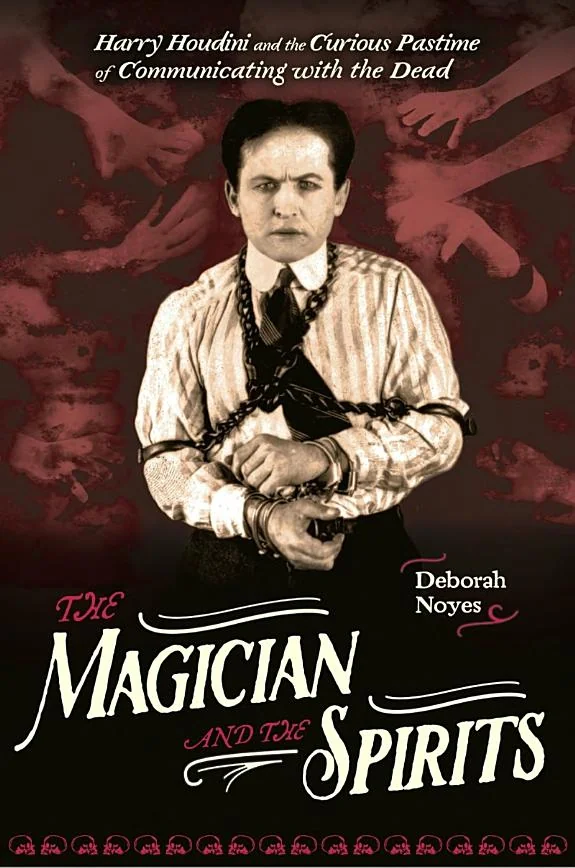
The Magician and the Spirits
 83
83

The Magician and the Spirits
Deborah Noyes’s The Magician and the Spirits offers a sharp, unsentimental look at the spiritualist craze of the early 20th century. The book excels in its detailed accounts of séances, moving beyond mere sensationalism to explore the genuine human needs—grief, curiosity, a search for meaning—that fueled this phenomenon. Noyes skillfully interweaves the societal fascination with the spirit world with the counter-narrative of figures like Harry Houdini, whose investigations into fraud provide a crucial anchor. A particularly compelling aspect is the examination of ectoplasm, presented not just as a curious material but as a focal point for belief and skepticism. While the book is historically rigorous, at times the sheer density of accounts can feel overwhelming, slightly obscuring the overarching narrative thread. Nevertheless, it provides a vital historical perspective on belief and its material manifestations. It is an essential read for understanding a peculiar, yet deeply human, chapter in our cultural history.
📝 Description
83
Deborah Noyes's 2017 book details the spiritualist movement's reach in the late 19th and early 20th centuries.
The Magician and the Spirits examines the spiritualist movement that gained traction across Western society from the late 1800s into the early 1900s. This period saw widespread belief in life after death, with mediums employing various methods to contact the deceased. Phenomena such as automatic writing and claims of ectoplasm emerged, all intended to bridge the gap between the living and the spirit world. Noyes investigates how these ideas captured public attention and drew in prominent individuals.
The book is suited for readers interested in the intersection of history, psychology, and the human desire for connection beyond death. It appeals to those studying the social history of belief, especially during spiritualism's peak cultural influence. Readers curious about Harry Houdini's investigations and his confrontations with fraudulent mediums will find relevant material. The work also touches upon the origins of modern parapsychology and the cultural impact of séances.
This book situates itself within the study of spiritualism, a movement that deeply engaged with the possibility of communicating with spirits and understanding life after death. Spiritualism arose during a time of significant social and intellectual change, coexisting with scientific advancements and the development of psychology. It represents a specific historical manifestation of perennial human interest in the supernatural and the nature of consciousness beyond the physical body, often involving practices like séances and automatic writing.
💡 Why Read This Book?
• Understand the historical context of spiritualism, including the late 19th and early 20th-century fascination with séances and mediums, gaining insight into the social and psychological drivers behind this widespread belief. • Examine the critical role of Harry Houdini, not just as an escape artist but as a prominent skeptic who actively investigated and exposed fraudulent spiritualists during this period. • Explore the tangible (and often bizarre) phenomena associated with spiritualism, such as ectoplasm, and how these manifestations were interpreted by both believers and skeptics.
⭐ Reader Reviews
Honest opinions from readers who have explored this book.
❓ Frequently Asked Questions
What historical period does 'The Magician and the Spirits' primarily cover?
The book focuses mainly on the late 19th and early 20th centuries, a peak period for the spiritualist movement in Western society, though its roots extend back to the mid-19th century.
Who was Harry Houdini in relation to the spiritualist movement?
Harry Houdini, the renowned magician and escape artist, was a prominent skeptic who dedicated significant effort to debunking fraudulent mediums and exposing their tricks during the height of the spiritualist craze.
What is 'ectoplasm' as discussed in the book?
Ectoplasm is described as a supposed physical substance or emanation from mediums during séances, often appearing as a viscous or gaseous material, and was a key point of contention between believers and skeptics.
What role did grief play in the spiritualist movement?
Grief, particularly following major events like World War I, played a significant role by intensifying the desire for proof of an afterlife and encouraging people to seek solace and contact with lost loved ones.
Does the book present spiritualism as real or fraudulent?
The book presents a historical account of the movement, detailing both the genuine beliefs and practices of mediums and the extensive efforts by figures like Houdini to expose fraud within the spiritualist community.
What makes Deborah Noyes's approach unique?
Noyes's approach is characterized by its historical rigor and its focus on the complex interplay between genuine human desires, cultural phenomena, and the critical investigations of skeptics like Houdini.
🔮 Key Themes & Symbolism
The Allure of the Afterlife
This theme centers on the profound human longing to believe in continued consciousness after death, a belief amplified by societal upheaval and personal loss. The book illustrates how this desire manifested in the widespread practice of spiritualism, where mediums became conduits for presumed communication with the deceased. It examines the psychological comfort derived from such beliefs and the cultural conditions that allowed these ideas to flourish, making the 'other side' a tangible, albeit debated, reality for many.
Mediumship and its Manifestations
The work dissects the various practices and purported phenomena associated with mediumship during the spiritualist era. From trance states and automatic writing to the more controversial physical manifestations like ectoplasm, the book details the methods employed by mediums to facilitate contact. It presents these occurrences not just as historical curiosities but as focal points for intense belief, scientific scrutiny, and outright skepticism, highlighting the theatrical and often ambiguous nature of these performances.
Skepticism and the Magician's Eye
Central to the narrative is the role of skepticism, personified by Harry Houdini. The book explores how renowned magicians, with their understanding of illusion and deception, became key figures in challenging the authenticity of spiritualist claims. Houdini's systematic efforts to expose fraudulent mediums reveal the tension between genuine spiritual yearning and deliberate charlatanism, providing a critical counterpoint to the widespread embrace of spiritualism.
Spiritualism as a Social Phenomenon
This theme addresses the broad cultural impact of the spiritualist movement. It explores how spiritualism permeated society, influencing art, literature, and social reform, and how it offered a framework for understanding life, death, and the unknown. The book contextualizes the craze within the intellectual currents of the time, examining how it intersected with burgeoning scientific inquiry and psychological exploration, making it a significant, albeit often contested, aspect of modern history.
💬 Memorable Quotes
Direct passages from the work, attributed to the author.
“A century ago, the curious idea that spirits not only survive death but can be contacted on the “other side” was widespread.”
— This opening statement frames the historical scope, highlighting the pervasive nature of spiritualist beliefs during a specific era and setting the stage for exploring how this fascination took hold of society.
“Psychic mediums led countless séances, claiming to connect the grieving with their lost relations through everything from frenzied trance writing to sticky expulsions of ectoplasm.”
— This highlights the diverse and often bizarre methods employed by spiritualists, illustrating the tangible, physical aspects that drew public attention and fueled both belief and disbelief.
“The craze caught Harry Houdini’s attention.”
— This short, impactful sentence introduces the key role of the famous magician, signaling his engagement with and likely critical examination of the spiritualist movement.
“Well-known by then as most renowned magician and escape artist, he began to invest [time and resources into investigating spiritualism].”
— This emphasizes Houdini's established public persona and suggests his transition from performer to investigator, hinting at the serious nature of his involvement in debunking spiritualist claims.
💡 Key Ideas
Editorial paraphrase of the work's core concepts — not direct quotes.
Noyes makes history accessible and irresistible . . . Excellent.
This quote, attributed to a review, praises the author's ability to present complex historical subject matter in an engaging and compelling manner, suggesting the book is both informative and enjoyable.
🌙 Esoteric Significance
Tradition
While not strictly adhering to a single lineage like Hermeticism or Theosophy, 'The Magician and the Spirits' engages with the broader esoteric currents of its time, particularly those focused on contacting non-corporeal entities and exploring the nature of consciousness beyond the physical. It touches upon phenomena and beliefs that intersected with spiritualism's popularity, which itself became a quasi-religious movement for many, offering a path to perceived higher knowledge and connection outside established religious doctrines.
Symbolism
The primary symbolic motif is the 'veil' separating the living from the dead, representing the barrier between worlds that mediums sought to pierce. Ectoplasm, often described as a viscous, semi-material substance, functions symbolically as tangible 'proof' of the spirit world's presence, a physical manifestation of the intangible. Séances themselves symbolize communal attempts to transcend individual mortality and reconnect with lost loved ones or unseen intelligences.
Modern Relevance
Contemporary interest in consciousness studies, near-death experiences, and mediumistic phenomena can trace a lineage back to the spiritualist movement documented in this book. Thinkers exploring the psychology of belief, the sociology of religion, and the history of parapsychology continue to reference this era. Furthermore, modern spiritualist churches and individual practitioners still engage with concepts and practices that evolved from this foundational period.
👥 Who Should Read This Book
• Students of Western esotericism and the history of belief systems, seeking to understand the cultural impact and diverse practices of the spiritualist movement. • Researchers interested in the intersection of psychology, grief, and the paranormal, particularly how societal events shape belief in the afterlife. • Enthusiasts of historical figures like Harry Houdini, looking to explore his lesser-known role as a prominent debunker of spiritualist fraud.
📜 Historical Context
The period surrounding the late 19th and early 20th centuries was ripe for the spiritualist movement, fueled by immense societal changes, industrialization, and the profound grief following events like the American Civil War and later, World War I. This era saw a burgeoning interest in the unseen, with figures like Helena Blavatsky and the Theosophical Society also gaining prominence, offering alternative spiritual frameworks. In this climate, mediums like the Fox sisters (though earlier) and later figures claimed direct communication with spirits. The work positions Harry Houdini, a globally recognized magician and escape artist, as a crucial skeptical voice. His well-publicized campaigns against fraudulent mediums provided a significant counterbalance to the spiritualist fervor, drawing considerable public attention and contributing to the eventual decline of its mainstream acceptance. The intellectual landscape was also marked by the rise of psychology and early parapsychology, creating a complex environment where belief, skepticism, and scientific inquiry often collided.
📔 Journal Prompts
The pervasive idea of contacting spirits on the 'other side' during the early 20th century.
Harry Houdini's methods for investigating and exposing fraudulent mediums.
The significance of ectoplasm as a physical manifestation in séances.
Personal reflections on the human desire for evidence of life after death.
The role of grief in fueling belief during periods of widespread loss.
🗂️ Glossary
Séance
A meeting or gathering where people attempt to make contact with spirits of the dead, often led by a medium.
Medium
A person believed to be able to communicate with the spirits of the dead or to act as an intermediary between the living and the spirit world.
Ectoplasm
A supposed viscous, gaseous, or jelly-like substance supposedly exuded by spiritualist mediums during a trance, often presented as evidence of spirit presence.
Trance
A state of consciousness in which a person appears to be between waking and sleeping, often characterized by heightened suggestibility and believed to facilitate communication with spirits.
Automatic Writing
A claimed psychic phenomenon where a person, while in a trance or altered state, produces writing that is believed to be from a spirit or subconscious source.
Skepticism
An attitude of doubt or a disposition to incredulity either in general or toward a particular object, particularly in the context of spiritualist claims.
Spiritualism
A religious movement based on the belief that the spirits of the dead return to communicate with the living.
This book appears in 1 collection
🔮 Readers Also Liked
Browse all →








From the “Ectoplasm” Collection
View all →







More Free Occult Philosophy Books
View all →