The Great Ghost Rescue
 72
72

The Great Ghost Rescue
Eva Ibbotson’s "The Great Ghost Rescue" is a peculiar delight, offering a vision of the afterlife populated not by dread, but by mild inconvenience and social aspiration. Humphrey the Horrible, a skeleton yearning for true ghastliness, is a character of immediate sympathy, his plight far more relatable than terrifying. The author’s strength lies in her ability to imbue spectral beings with such distinctly human foibles, as seen in the description of Humphrey’s ectoplasm issues. A minor limitation, however, is the somewhat predictable arc of Humphrey’s quest for frightfulness. The passage detailing the ghost council’s deliberations, while amusing, could benefit from more visceral stakes. Ultimately, Ibbotson crafts a warm, engaging story that finds the humanity within the spectral.
Verdict: A charmingly unconventional spectral romp for younger readers.
📝 Description
72
Eva Ibbotson's 2008 novel, The Great Ghost Rescue, features a skeleton who wants to be scarier.
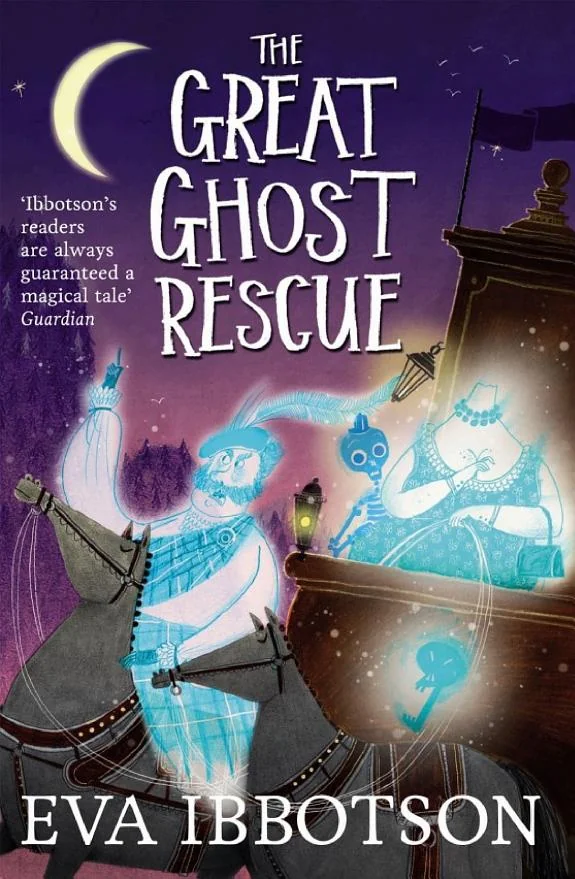
Humphrey the Horrible is a skeleton in Eva Ibbotson's "The Great Ghost Rescue." Unlike other skeletons, Humphrey does not wish to be less ghastly; he wants to be more so. His goal is to achieve a higher level of frightfulness, a desire that sets him apart in the spectral community. The story, first published in 2008 and illustrated by Alex T. Smith, follows Humphrey's attempts to become a more effective ghost.
This children's book is suited for readers aged 8 to 12 who enjoy tales of the supernatural with a light touch and gentle humor. It appeals to young readers who like characters with unusual goals and narratives that blend the world of ghosts with ordinary life. The book examines the social structures and expectations within the ghost world.
Published in 2008, "The Great Ghost Rescue" arrived in a literary climate that saw continued interest in the supernatural for young audiences, following trends in fantastical fiction. While not a direct exploration of occult practices, it touches on the established conventions of ghost lore found in folklore and earlier literature. The book presents a whimsical, British perspective on ghost society, imagining its rules and hierarchies with a characteristic Ibbotson charm. It fits within a tradition of children's fiction that personifies spirits and explores their existence in imaginative ways.
💡 Why Read This Book?
• Gain insight into the nature of spectral identity, as Humphrey the Horrible grapples with his desire to be 'ghastly,' offering a unique perspective on self-perception and belonging. • Understand the gentle subversion of typical ghost lore, where beings like Humphrey and his family exist within a structured, almost bureaucratic, spectral society that defies typical horror tropes. • Experience Ibbotson's characteristic whimsical tone, evident in the portrayal of the ghost world and its inhabitants, providing a comforting yet imaginative encounter with the supernatural.
⭐ Reader Reviews
Honest opinions from readers who have explored this book.
❓ Frequently Asked Questions
What is the main conflict in The Great Ghost Rescue?
The primary conflict revolves around Humphrey the Horrible, a skeleton who wants to be more ghastly and frightening, but struggles due to his inherently friendly nature and issues with his ectoplasm.
Who illustrated The Great Ghost Rescue?
The book is illustrated by Alex T. Smith, known for his work on the Claude series, who provides a fittingly charming visual style to the story.
What is Humphrey's biggest problem?
Humphrey's biggest problem is his inability to be truly 'ghastly' or scary, which is a source of distress for him as he wishes to emulate his more fearsome brother.
When was The Great Ghost Rescue first published?
The Great Ghost Rescue was first published on September 4, 2008.
What kind of tone does Eva Ibbotson use in this book?
Eva Ibbotson employs a whimsical, gentle, and often humorous tone, even when dealing with supernatural elements like ghosts and skeletons.
What does Humphrey's ectoplasm have to do with his problem?
Humphrey's ectoplasm is mentioned as a possible reason for his lack of ghastliness, suggesting it doesn't function as effectively as it should for a truly terrifying skeleton.
🔮 Key Themes & Symbolism
Spectral Identity and Belonging
The core of "The Great Ghost Rescue" lies in the exploration of identity within the spectral realm. Humphrey the Horrible, despite his name, is not inherently frightening. His struggle to achieve 'ghastliness' reflects a universal yearning for acceptance and to fit into one's perceived societal role. The book subtly critiques the idea that one must conform to a specific image to be valid, suggesting that true belonging comes from within, even in a world of ghosts and skeletons.
The Bureaucracy of the Afterlife
Ibbotson humorously depicts the ghost world as surprisingly organized, complete with councils and established norms for spectral behavior. This aspect offers a unique take on the afterlife, moving away from chaotic specters towards a structured society. The narrative uses this framework to highlight the absurdity of rigid social expectations, even among the departed, and the challenges individuals face when deviating from the norm.
Gentle Subversion of Horror Tropes
Rather than relying on jump scares or genuine terror, "The Great Ghost Rescue" playfully subverts typical ghost story conventions. Humphrey's desire to be scary, juxtaposed with his amiable nature, turns the expected fear dynamic on its head. This approach makes the supernatural accessible and non-threatening, focusing on character and narrative over frights, making it ideal for younger audiences.
The Nature of 'Ghastliness'
The concept of 'ghastliness' itself is examined not as an inherent quality but as a performance or a goal. Humphrey's quest forces readers to consider what truly constitutes being 'ghastly.' Is it appearance, actions, or reputation? The book suggests that the desire for a particular reputation can be more defining than the reality, offering a nuanced look at perception versus substance.
💬 Memorable Quotes
Direct passages from the work, attributed to the author.
“'Nobody knew what had gone wrong with Humphrey. Perhaps it was his ectoplasm . . .'”
— This opening line immediately establishes the book's playful tone and introduces the central character's peculiar problem. It frames Humphrey's struggle not as a dire curse, but as a quirky biological or spiritual malfunction, setting the stage for a humorous rather than terrifying narrative.
“Humphrey the Horrible sounds scary, but he's actually a very friendly skeleton, with twinkling eye sockets and jangling finger bones.”
— This description highlights the core irony of Humphrey's character. His intimidating moniker is directly contrasted with his gentle reality, emphasizing the theme of identity versus perception and making him an immediately sympathetic figure for readers.
“Humphrey dreams of being ghastly, like his brother – a scr...”
— This fragment reveals Humphrey's core aspiration and the source of his dissatisfaction. His desire to emulate his brother suggests a need for validation and a struggle with inadequacy, common themes that resonate even within a supernatural context.
“With a beautiful cover illustration by Alex T. Smith, creator of the Claude series...”
— This factual statement about the illustrator, Alex T. Smith, points to the book's target audience and artistic style. His association with the beloved Claude series signals a whimsical and child-friendly visual approach, reinforcing the book's gentle and engaging nature.
“Eva Ibbotson, award-winning author of Journey to the River Sea...”
— Mentioning Ibbotson's prior success with "Journey to the River Sea" situates "The Great Ghost Rescue" within a respected literary tradition. It assures readers of the author's storytelling prowess and her ability to create engaging narratives for young audiences.
🌙 Esoteric Significance
Tradition
While not explicitly tied to a single esoteric lineage, "The Great Ghost Rescue" engages with themes common in spiritualist and Theosophical discussions of the afterlife. The concept of a structured spirit world with its own rules and inhabitants echoes early 20th-century ideas about spiritual planes and communication with entities beyond the physical. It offers a simplified, child-friendly interpretation of these complex doctrines.
Symbolism
Humphrey the skeleton serves as a symbol of mortality made approachable; his 'ghastliness' is a performative aspect of his spectral existence, representing the gap between societal expectation and individual reality. Ectoplasm, mentioned as a potential issue, can be seen symbolically as the 'substance' of spiritual manifestation, here presented humorously as faulty or unreliable, challenging notions of consistent spiritual phenomena.
Modern Relevance
The book's exploration of identity, self-acceptance, and the humor found in the spectral continues to resonate. In contemporary discussions around mental well-being and embracing individuality, Humphrey's struggle offers a gentle allegory. Modern spiritual or metaphysical exploration often seeks accessible entry points, and Ibbotson’s work provides a charming, non-dogmatic illustration of spectral existence for imaginative minds.
👥 Who Should Read This Book
• Young readers (ages 8-12) seeking imaginative stories with a touch of the supernatural that are more charming than frightening. • Aspiring writers interested in how authors like Eva Ibbotson playfully subvert genre conventions, particularly those within children's literature and fantasy. • Parents and educators looking for engaging chapter books that promote themes of self-acceptance and understanding, wrapped in a whimsical narrative.
📜 Historical Context
Eva Ibbotson's "The Great Ghost Rescue," published in 2008, arrived in a vibrant landscape for children's fantasy literature. The preceding decade had seen the phenomenal success of J.K. Rowling's Harry Potter series, which normalized intricate magical systems and complex world-building for young readers. Simultaneously, authors like Philip Pullman were exploring darker, more philosophical fantasy. Ibbotson's work, while featuring supernatural elements, offered a distinctly gentler, more whimsical, and quintessentially British perspective. Unlike the more overtly allegorical or morally complex fantasies, Ibbotson focused on character-driven narratives with a lighthearted touch. The reception of the book was generally positive, praised for its charm and humor, fitting within the tradition of classic British children's authors who could handle the fantastic with wit and warmth.
📔 Journal Prompts
Humphrey the Horrible's desired 'ghastliness' versus his actual nature.
The organizational structure of the ghost world in "The Great Ghost Rescue."
Reflecting on the role of ectoplasm in spectral manifestation.
The contrast between a character's name/reputation and their true self.
The concept of belonging within a community, spectral or otherwise.
🗂️ Glossary
Ghastly
In the context of the book, 'ghastly' refers to something frightening, horrifying, or spectral in a terrifying manner. Humphrey's ambition is to achieve this quality to fit in with more traditionally scary ghosts.
Skeleton
A literal skeletal structure, but in this book, Humphrey is a sentient, anthropomorphic skeleton who experiences emotions and desires, functioning as a character in the ghost world.
Ectoplasm
A substance believed in spiritualism to be exuded by spirits or mediums. In the book, it's humorously suggested as a potential factor in Humphrey's lack of frightening ability.
Ghost World
The realm or society inhabited by ghosts, as depicted in the book. It is portrayed with a degree of order, rules, and social dynamics, contrasting with chaotic or purely terrifying notions of the afterlife.
Humphrey the Horrible
The protagonist of the story, a friendly skeleton whose name suggests terror but whose nature is gentle, driving the central conflict of the narrative.
Twinkling Eye Sockets
A descriptive phrase for Humphrey's eyes, emphasizing his non-threatening and perhaps even cheerful disposition despite being a skeleton.
Jangling Finger Bones
A characteristic sound associated with Humphrey's movement, adding a sensory detail that, while potentially spooky, contributes to his unique and not entirely terrifying persona.
This book appears in 1 collection
🔮 Readers Also Liked
Browse all →









From the “Ectoplasm” Collection
View all →






More Free Occult Philosophy Books
View all →