The Lost Teachings of Jesus
 71
71

The Lost Teachings of Jesus
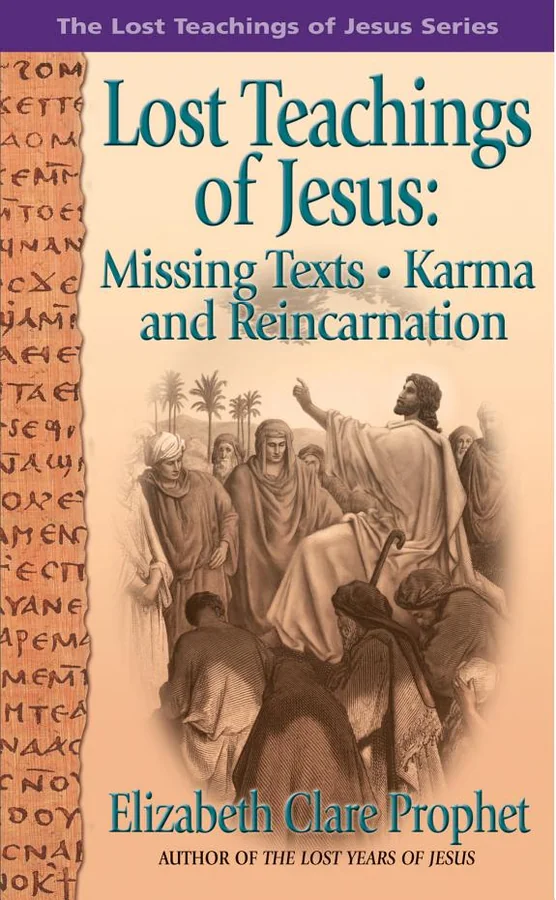
The Prophets' assertion that the New Testament is a curated fragment of Jesus' teachings is a bold one, and *The Lost Teachings of Jesus* attempts to substantiate this claim with a deep dive into what they believe was deliberately omitted. Their examination of early Christian literature and apocrypha is thorough, presenting a case for a more Gnostic-leaning Jesus than conventionally portrayed. The strength of the book lies in its meticulous collation of various texts and its persuasive argument that certain passages, when read through an esoteric lens, reveal deeper meanings. However, the authors' interpretive framework, while consistent within their own system of belief, can sometimes feel like a foregone conclusion. The assertion of "guardians of the faith" actively suppressing texts, while plausible in a historical context of canon formation, is presented with a certainty that borders on dogma. A particularly striking section discusses the "Kingdom of Heaven" not as a future reward but as an attainable state of consciousness in the present, a concept often explored in mystical traditions but framed here as a core, suppressed teaching of Jesus. Ultimately, the book offers a compelling, if partisan, re-reading of early Christian history and doctrine for those already inclined towards esoteric interpretations.
📝 Description
71
Published in 1994, The Lost Teachings of Jesus argues the New Testament omits key esoteric messages.
Mark and Elizabeth Clare Prophet's 1994 book contends that the New Testament canon suppresses or alters a substantial part of Jesus' original teachings. The authors suggest that early Christian "guardians of the faith" deliberately hid or modified Jesus' more challenging doctrines, deeming them too radical for common understanding. To reconstruct these lost messages, the book analyzes apocryphal texts, writings from outside the New Testament, and what the Prophets identify as hidden references within the Gospels.
The Prophets propose that these "lost teachings" focus on spiritual ascension, the soul's divine nature, and practical methods for attaining spiritual mastery. They believe these elements were excluded from the mainstream Christian narrative due to their complexity or perceived threat to established authority. The work aims to reveal these suppressed aspects of Jesus' message for those seeking a deeper, less conventional understanding of his spiritual path.
This book engages with the Gnostic tradition, which often posits a hidden or esoteric dimension to Jesus' teachings, distinct from orthodox interpretations. The Prophets' work aligns with Gnostic ideas that emphasize inner knowledge (gnosis) and the divine spark within the individual soul. It places itself within a lineage of Gnostic and esoteric Christian scholarship that seeks to recover suppressed or marginalized texts and interpretations of early Christianity, particularly in light of discoveries like the Nag Hammadi library which revealed early Christian writings that differed significantly from the developing New Testament canon.
💡 Why Read This Book?
• Understand the concept of "lost teachings" as presented by the Prophets, gaining insight into specific doctrines concerning spiritual ascension and Christ consciousness that they argue were omitted from the New Testament. • Explore the authors' interpretation of "veiled references" within canonical texts, learning how to identify potential hidden meanings in parables and sayings that suggest a more complex spiritual path. • Examine the historical context of early Christian text formation and the potential for deliberate alteration, using the Prophets' analysis of "guardians of the faith" as a case study for understanding religious canon development.
⭐ Reader Reviews
Honest opinions from readers who have explored this book.
❓ Frequently Asked Questions
What is the primary argument of 'The Lost Teachings of Jesus'?
The book argues that the New Testament presents only a fraction of Jesus' original teachings, with many doctrines altered, deleted, or never recorded by early editors and "guardians of the faith" to control the narrative.
What kind of evidence do Mark and Elizabeth Clare Prophet use to support their claims?
They cite apocryphal texts, early Christian writings outside the New Testament canon, and interpret veiled references within the Gospels themselves to reconstruct what they believe are the suppressed teachings.
When was 'The Lost Teachings of Jesus' first published?
The book was first published in 1994.
Who were Mark and Elizabeth Clare Prophet?
They were American authors and spiritual leaders who founded the "Summit Lighthouse" organization, dedicated to disseminating teachings on spiritual enlightenment and the "Great White Brotherhood."
Does the book claim to present the exact words of Jesus that were lost?
The book aims to reconstruct the essence and core concepts of these lost teachings through interpretation and comparative textual analysis, rather than claiming to possess verbatim transcripts of every lost utterance.
What is the esoteric significance of the "Kingdom of Heaven" according to this book?
The book interprets the "Kingdom of Heaven" not as a future paradise but as an attainable state of divine consciousness achievable in the present through spiritual discipline and inner transformation.
🔮 Key Themes & Symbolism
Suppressed Esoteric Doctrines
The core of the book posits that Jesus taught advanced spiritual principles, including methods for achieving "Christ consciousness" and understanding the soul's divine origin, which were later suppressed. These "lost teachings" are presented as being more complex and transformative than those included in the canonical Gospels, suggesting a deliberate effort by early religious authorities to simplify or control the spiritual message for broader, less initiated audiences. The authors argue that these doctrines were not lost by accident but were systematically removed or altered to maintain a particular power structure within the nascent Christian church.
The Role of "Guardians of the Faith"
This theme explores the concept of individuals or groups who, according to the Prophets, actively curated and redacted early Christian texts. These "guardians" are depicted as gatekeepers of spiritual knowledge, responsible for ensuring that only teachings deemed suitable for the masses were preserved in the New Testament. The book suggests their motivations might have stemmed from a fear of spiritual persecution, a desire to maintain control, or a belief that the populace was not ready for the full scope of Jesus' radical teachings on inner divinity and spiritual liberation.
Interpretive Framework for Scripture
The work champions an esoteric hermeneutics, viewing canonical texts not just as historical accounts but as repositories of hidden spiritual truths. It proposes that many of Jesus' parables and sayings contain "veiled references" – coded messages intended for those with spiritual discernment. The book provides examples of how to "read between the lines" of familiar biblical passages to uncover deeper layers of meaning related to spiritual alchemy, the nature of reality, and the path to divine union, challenging literalistic interpretations.
Spiritual Ascension and Inner Divinity
A significant focus is placed on Jesus' alleged teachings about the inherent divinity within every individual and the potential for spiritual ascension. This contrasts with interpretations that emphasize Jesus solely as an external savior. The Prophets argue that Jesus taught practical methods, akin to those found in various mystical traditions, for individuals to realize their own "I AM" presence and achieve a state of divine consciousness, effectively becoming "Christed" through personal effort and divine grace.
💬 Memorable Quotes
Direct passages from the work, attributed to the author.
“The New Testament records only a fragment of what Jesus taught.”
— This core assertion highlights the book's central thesis: that the existing biblical narrative is an incomplete representation of Jesus' complete message, implying a significant body of his original teachings has been lost or deliberately obscured.
“What was written down was tampered with by numerous editors or suppressed by "guardians of the faith."”
— This points to the authors' belief in active historical manipulation of sacred texts. It suggests that the process of canonization involved not just selection but also alteration to fit a particular theological or political agenda.
“Some of what was recorded has been misinterpreted to the detriment of the spiritual evolution of mankind.”
— This statement emphasizes the negative consequences of textual alteration and misinterpretation, suggesting that the deviation from Jesus' original, more profound teachings has hindered humanity's spiritual progress.
“The "Kingdom of Heaven" is not a place but a state of consciousness.”
— This interpretation redefines a central biblical concept, shifting it from a future, external reward to an immediate, internal spiritual attainment accessible through personal transformation and realization of divine presence.
💡 Key Ideas
Editorial paraphrase of the work's core concepts — not direct quotes.
Jesus taught us how to become God, not just to believe in God.
This provocative paraphrase captures the essence of the "lost teachings" concerning inner divinity and spiritual ascension, suggesting Jesus' message was about empowering individuals to realize their own divine potential.
🌙 Esoteric Significance
Tradition
The work aligns with the Gnostic and Theosophical traditions, emphasizing the inherent divinity of the soul and the possibility of direct spiritual attainment. It interprets Jesus' teachings through a lens that prioritizes inner gnosis (knowledge) and spiritual self-mastery over external dogma or salvation by proxy. It departs from traditional Christian exegesis by positing a deliberate, systematic suppression of these core esoteric elements by early Church authorities.
Symbolism
Key symbols explored include the "Kingdom of Heaven," reinterpreted not as a physical place but as an internal state of divine consciousness. The "Light" or "Inner Light" represents the divine spark within each individual, a core concept in many mystical paths. The idea of "ascension" symbolizes the soul's journey from material limitation to spiritual liberation and reunion with the Divine Source, a process Jesus allegedly taught methods for facilitating.
Modern Relevance
Contemporary spiritual seekers interested in comparative mysticism, Gnostic Gospels, and alternative interpretations of Jesus' life often draw upon the ideas presented in this book. Thinkers and practitioners within the New Age movement, and those exploring consciousness studies or personal spiritual development, find resonance in the emphasis on inner divinity and self-realization. The work continues to inform discussions about the potential for hidden wisdom within religious traditions and the ongoing quest for deeper spiritual understanding.
👥 Who Should Read This Book
• Students of comparative religion and early Christianity seeking to understand non-canonical interpretations of Jesus' teachings, particularly those interested in Gnostic perspectives. • Individuals drawn to esoteric spirituality and mystical traditions who wish to explore alternative understandings of spiritual concepts like the "Kingdom of Heaven" and "Christ consciousness." • Researchers of religious history and textual criticism interested in theories of scriptural alteration and the formation of religious canons from an esoteric viewpoint.
📜 Historical Context
Published in 1994, *The Lost Teachings of Jesus* emerged during a resurgence of interest in Gnosticism and alternative Christianities, fueled by discoveries like the Nag Hammadi library and popular works like Elaine Pagels' *The Gnostic Gospels* (1979). Mark and Elizabeth Clare Prophet, already established figures in the mid-20th-century New Age movement through their Summit Lighthouse organization, positioned their work within this intellectual climate. They engaged with the long-standing academic debates surrounding the historical Jesus and the formation of the New Testament canon, but from a distinct esoteric perspective focused on recovering suppressed spiritual knowledge. While mainstream academia debated textual criticism and historical accuracy, the Prophets sought to reveal a hidden, mystical dimension of Jesus' teachings. Their work implicitly challenged orthodox interpretations and contributed to the broader discourse on esoteric Christianity, appealing to a readership seeking deeper, less conventional spiritual truths beyond established dogma.
📔 Journal Prompts
The concept of "guardians of the faith" and its implications for knowledge preservation.
Reflecting on "veiled references" in familiar spiritual texts.
The nature of the "Kingdom of Heaven" as an inner state.
Personal methods for spiritual ascension and realizing inner divinity.
The potential impact of suppressed teachings on spiritual evolution.
🗂️ Glossary
Lost Teachings
Doctrines and spiritual principles attributed to Jesus that the authors contend were omitted, altered, or never fully recorded in the canonical New Testament, often concerning esoteric spiritual practices and the soul's divine nature.
Guardians of the Faith
A term used by the Prophets to describe individuals or groups in early Christianity who allegedly controlled and redacted religious texts, suppressing teachings deemed too complex or radical for the general populace.
Veiled References
Passages, parables, or sayings within scripture that the authors interpret as containing hidden, esoteric meanings not immediately apparent on a literal level, requiring spiritual insight to discern.
Christ Consciousness
A state of spiritual enlightenment and divine awareness, understood as the realization of one's own divine nature and unity with God, which Jesus allegedly taught as an attainable goal for all.
Spiritual Alchemy
The process of transforming the lower, material aspects of the self into higher, spiritual qualities, akin to the alchemical transmutation of base metals into gold, applied metaphorically to the soul's purification and divine integration.
Spiritual Ascension
The process of raising one's consciousness and spiritual awareness, moving beyond material limitations towards a higher state of being and union with the Divine Source, a path the book suggests Jesus taught.
Inner Divinity
The concept that the divine essence or spark of God resides within every individual, a core tenet of the teachings presented as being emphasized by Jesus' "lost" doctrines.
This book appears in 1 collection
🔮 Readers Also Liked
Browse all →









From the “Karma” Collection
View all →








More Free Occult Philosophy Books
View all →




![The Dark Night of the Soul [microform]](/img/thumb/the-dark-night-of-the-soul-microform-saint-1542-1591-john-of-the-cross-359215.webp)