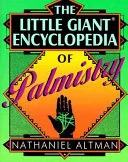
The Little Giant Encyclopedia of Palmistry
 77
77

The Little Giant Encyclopedia of Palmistry
Nathaniel Altman's "The Little Giant Encyclopedia of Palmistry" is a remarkably thorough compilation that effectively demystifies a practice often shrouded in vagueness. Its strength lies in its systematic, almost academic, dissection of chiromancy, presenting five distinct facets: Western analysis, psychological underpinnings, Indian traditions, Chinese methods, and practical application. The inclusion of detailed instructions for taking hand prints, a practical step often overlooked, is a significant advantage for serious students. However, the sheer breadth of information can, at times, feel overwhelming for the absolute novice. While Altman clearly outlines different schools of thought, the book's original publication in 1999 means it predates some contemporary psychodynamic interpretations of somatic psychology that might offer further layers of analysis. Nevertheless, its comprehensive nature and balanced presentation make it a solid reference. Altman's work provides a detailed framework for understanding the hand as a complex cartography of self.
📝 Description
77
Nathaniel Altman's 1999 encyclopedia presents palmistry as a map of personality, not destiny.
The Little Giant Encyclopedia of Palmistry, published in 1999, is a thorough guide to chiromancy. Nathaniel Altman moves beyond simple fortune-telling to examine the psychological and analytical aspects of reading hands. He presents palmistry as a tool for understanding potential and current personality traits, rather than a fixed fate. The book offers a complete grounding for anyone new to the subject.
This book is suitable for those curious about how physical characteristics reflect inner lives. It provides a structured introduction for beginners and a way for experienced practitioners to deepen their knowledge. Readers interested in comparative esotericism, psychology, or the history of divination will also find its detailed approach valuable. It synthesizes Western, Indian, and Chinese methods, reflecting a trend toward global practice in esoteric studies.
Altman's work appeared during a time of increased interest in esoteric subjects, amplified by the internet. While not directly tied to 20th-century occult figures like Aleister Crowley or Dion Fortune, it compiles centuries of diverse traditions. The encyclopedia includes Western, Indian, and Chinese approaches to palmistry. This synthesis mirrors a broader movement within esoteric studies to combine global practices.
💡 Why Read This Book?
• Learn practical hand-printing techniques from Chapter 5, 'Practical Guidance', enabling you to create accurate records for personal analysis that go beyond mere observation. • Understand the distinct methodologies of Western, Indian, and Chinese palmistry, as detailed in the comparative sections, providing a broader context than single-tradition texts. • Explore the psychological interpretations of hand features, such as the meaning of specific lines or mounts, offering a deeper self-awareness beyond simple prediction.
⭐ Reader Reviews
Honest opinions from readers who have explored this book.
❓ Frequently Asked Questions
What is the primary difference between Western and Indian palmistry as presented in the book?
The book distinguishes Western palmistry by its focus on psychological analysis and character assessment, while Indian palmistry (Hathayoga) is presented as more deeply integrated with astrological timings and karmic destiny.
Does the book teach you how to change the lines on your hands?
Yes, the book explores methods for influencing or changing the lines on your hands, framing it as a way to actively shape one's destiny and personality through conscious effort and understanding.
What are the five major topics covered in The Little Giant Encyclopedia of Palmistry?
The five core areas are Western hand analysis, psychological aspects, Indian palmistry, Chinese hand reading, and practical guidance including hand printing and data organization.
Is Nathaniel Altman's book suitable for absolute beginners in palmistry?
Absolutely. The encyclopedia is structured to provide a foundational understanding, starting with basic principles and progressing to more complex interpretations and comparative traditions.
When was The Little Giant Encyclopedia of Palmistry first published?
The book was first published in 1999, offering a comprehensive overview of palmistry at the turn of the millennium.
Can I use this book for professional palmistry readings?
While the book provides extensive practical guidance and theoretical frameworks, its primary aim is educational. Developing professional skill requires dedicated practice and potentially mentorship beyond the text.
🔮 Key Themes & Symbolism
Hand as a Cartographic Map
The work posits the hand as a detailed map of an individual's life, personality, and potential. It moves beyond simple fortune-telling to present chiromancy as a sophisticated system for self-understanding. The specific lines, mounts, and shapes are treated as symbolic language, revealing psychological predispositions and life trajectories. This perspective frames palmistry as a tool for introspection and personal development, rather than deterministic fate.
Psychological Dimensions of Chiromancy
A significant focus is placed on the psychological interpretations of hand features. Altman explores how the form and markings of the hand can reflect inner states, cognitive styles, and emotional patterns. This approach integrates palmistry with psychological principles, suggesting that the hand's physical characteristics are tangible expressions of the psyche, offering a unique lens for self-exploration and understanding human behavior.
Comparative Esoteric Traditions
The encyclopedia distinguishes itself by examining palmistry across different cultures, specifically highlighting Western, Indian, and Chinese traditions. This comparative approach reveals both commonalities and unique divergences in their methods and philosophies. By presenting these distinct schools, Altman offers a broader, more nuanced understanding of chiromancy's global history and its varied applications throughout different eras and civilizations.
Practical Application and Self-Modification
Beyond theoretical analysis, the book provides actionable guidance on practical techniques, including how to take accurate hand prints and organize data for readings. Crucially, it also touches upon methods for influencing or potentially changing the lines on one's hands. This aspect frames palmistry as an active, dynamic practice, empowering individuals to consciously work with their perceived destiny.
💬 Memorable Quotes
Direct passages from the work, attributed to the author.
“Palmistry offers insights into your personality and life, and even methods for changing the lines on your hands.”
— This core statement captures the book's dual purpose: analysis and active modification. It suggests that understanding your hand is not passive reception but an invitation to engage with and potentially alter your life's trajectory.
“The work explores the psychological aspects of hand reading.”
— This emphasizes that the book treats palmistry not merely as a divinatory art, but as a discipline with deep connections to understanding human psychology and character.
“Practical guidance on taking hand prints, organizing data, and doing your own readings.”
— This highlights the book's commitment to providing actionable skills, empowering readers to move from passive learning to active practice in their study of palmistry.
“Altman presents methods for changing the lines on your hands.”
— This unique claim suggests a proactive approach within palmistry, implying that one's fate or character, as indicated by hand lines, is not immutable but subject to personal will and effort.
💡 Key Ideas
Editorial paraphrase of the work's core concepts — not direct quotes.
Five major topics are covered: hand analysis in the West, psychological aspects, Indian palmistry, Chinese hand reading, and practical guidance.
This quote outlines the encyclopedic structure of Altman's work, highlighting its ambition to provide a comprehensive, multi-faceted introduction to the subject, bridging diverse traditions and practical application.
🌙 Esoteric Significance
Tradition
This work fits broadly within the Western esoteric tradition, specifically its branches concerned with physiognomy and divination. While drawing from Indian and Chinese systems, its integration and presentation lean towards a modern, eclectic approach. It departs from strictly Hermetic or Kabbalistic interpretations by focusing on the physical hand as a direct, readable text, rather than solely a symbolic representation tied to macrocosmic principles.
Symbolism
Key symbols include the shapes of hands themselves (e.g., spatulate, square), representing core personality types, and the mounts (like Mount Venus, associated with love and vitality). The major lines—Life, Head, and Heart—function as primary narrative threads, symbolizing duration of life, intellect, and emotional capacity, respectively. Their clarity, depth, and breaks are all interpreted symbolically.
Modern Relevance
Contemporary practitioners of somatic psychology and body-mind therapies may find elements of Altman's work in the idea that physical form reflects psychological states. Modern psychometric testing and character analysis also share the goal of understanding personality, albeit through different methodologies. The book's synthesis of global traditions aligns with today's interest in comparative spirituality and eclectic spiritual practices.
👥 Who Should Read This Book
["• Beginning students of chiromancy seeking a structured, comprehensive introduction to the subject's history, theory, and practice.", '• Individuals interested in psychological self-analysis who wish to explore non-traditional methods of understanding personality and behavior.', '• Researchers of comparative esoteric traditions interested in the historical and cultural variations of hand reading practices across the globe.']
📜 Historical Context
Nathaniel Altman's "The Little Giant Encyclopedia of Palmistry" arrived in 1999, a period where esoteric and New Age literature saw significant resurgence, amplified by early internet forums and online bookstores. While not directly engaging with the foundational figures of modern occultism like Madame Blavatsky or A.E. Waite, Altman's work synthesizes established practices from Western chiromancy, ancient Indian traditions, and Chinese physiognomy. It appeared in a landscape where comparative religious studies and explorations of global spiritual practices were gaining academic traction, though often viewed with skepticism by mainstream academia. The book’s broad approach, encompassing psychological interpretations alongside traditional divinatory methods, reflects a trend towards integrating esoteric knowledge with contemporary psychological frameworks, moving away from purely fatalistic interpretations that dominated some earlier palmistry texts. Its publication predates the explosion of easily accessible digital content on esoteric subjects, making it a valuable comprehensive print resource for its time.
📔 Journal Prompts
The shape of your dominant hand, as described in the Western analysis section.
The interpretation of your Heart Line and its potential psychological implications.
The distinct features of Indian palmistry versus Chinese hand reading presented by Altman.
Your personal experience with the practical guidance for taking hand prints.
The concept of modifying hand lines and your thoughts on its feasibility.
🗂️ Glossary
Chiromancy
The practice of divination and character analysis through the study of the palm, including lines, mounts, and hand shapes. It is synonymous with palmistry.
Hand Shapes
Categorizations of hands based on their overall form (e.g., square, spatulate, conic), believed to indicate fundamental personality traits and inclinations.
Mounts
Fleshy protuberances on the palm, located at the base of the fingers and along the sides, named after classical deities (e.g., Mount Venus, Mount Jupiter), each associated with specific character attributes.
Major Lines
The primary creases on the palm, typically including the Life Line, Head Line, and Heart Line, which are interpreted to reveal aspects of health, intellect, and emotions.
Hand Prints
Ink impressions of the hands, used in palmistry for detailed analysis and record-keeping, allowing for precise examination of lines and patterns.
Indian Palmistry (Hathayoga)
A specific tradition of palmistry originating from India, often integrated with astrological principles and concepts of karma and destiny.
Chinese Hand Reading
A system of hand analysis from China, which may incorporate elements of face reading and other traditional Chinese diagnostic arts, focusing on balance and energy.
This book appears in 1 collection
🔮 Readers Also Liked
Browse all →









From the “Palmistry” Collection
View all →








More Free Occult Philosophy Books
View all →