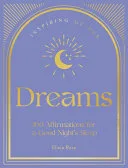
Dreams
 71
71

Dreams
Elicia Rose Trewick's *Dreams* offers a straightforward approach to utilizing affirmations for sleep. The strength of the collection lies in its sheer volume – 100 distinct affirmations provide ample variety for nightly repetition. Trewick’s insistence on the efficacy of positive self-talk, a tenet echoing earlier figures like Émile Coué, is commendable. However, the book occasionally borders on the simplistic, particularly in its treatment of complex sleep issues that may require more than affirmations. A passage that stands out is the affirmation for releasing day's worries, which, while well-intentioned, might feel insufficient for those experiencing deep-seated anxiety. The limitation is its broad applicability; it serves best as a supplementary tool rather than a comprehensive solution. Ultimately, *Dreams* is a useful, if basic, guide for those seeking to gently improve their nocturnal mindset.
📝 Description
71
Elicia Rose Trewick's 2022 book 'Dreams' presents 100 affirmations for better sleep.
Dreams: 100 Affirmations for a Good Night’s Sleep, published in 2022, offers a collection of positive affirmations and guided meditations. The aim is to help readers cultivate self-encouragement and inspire restful sleep. Trewick's central idea is that consistent, positive self-talk can significantly alter one's mental state and well-being, especially before sleep.
This book is for anyone seeking practical methods for self-improvement and stress reduction. It will interest those drawn to mindfulness, positive psychology, and self-help techniques who experience sleep disturbances or wish for a more optimistic outlook. Readers can easily integrate these techniques into their nightly routines without needing prior knowledge of esoteric practices.
Published in 2022, 'Dreams' draws from the New Thought movement, which emerged in the late 19th and early 20th centuries. This tradition emphasizes the power of thought and belief to shape reality and influence personal well-being. Trewick's approach also aligns with principles of positive psychology, specifically the concept that repeated positive statements can rewire subconscious beliefs and affect behavior. The book uses these ideas to promote better sleep hygiene and reduce anxiety.
💡 Why Read This Book?
• You will learn to harness the specific technique of affirmation, as presented in Trewick's 100 distinct statements, to reframe your nightly thoughts, a method directly inspired by the principles of positive psychology. • You can discover how to integrate personalized affirmations into your bedtime routine, a practice that can foster a sense of calm and control before sleep, a key takeaway from the book's structure. • You will gain a practical understanding of how consistent, positive self-dialogue, a core concept of the book, can contribute to personal growth and improved mental well-being, offering tangible benefits beyond just sleep.
⭐ Reader Reviews
Honest opinions from readers who have explored this book.
❓ Frequently Asked Questions
When was Elicia Rose Trewick's book 'Dreams' first published?
The book 'Dreams: 100 Affirmations for a Good Night’s Sleep' by Elicia Rose Trewick was first published on December 6, 2022. This places it firmly within contemporary self-help and mindfulness literature.
What is the primary goal of the affirmations in 'Dreams'?
The primary goal is to promote personal growth and encourage a good night's sleep by using positive thinking and uplifting statements to foster a more positive internal dialogue before bedtime.
Does 'Dreams' include guided meditations?
Yes, the book incorporates guided meditations alongside its 100 affirmations, offering a multi-faceted approach to achieving a restful state and promoting personal development.
Who is Elicia Rose Trewick?
Elicia Rose Trewick is the author of 'Dreams: 100 Affirmations for a Good Night’s Sleep.' While specific biographical details are limited in the initial publication, her work focuses on self-help and positive psychology principles.
How does 'Dreams' relate to positive thinking?
The book directly harnesses the power of positive thinking by providing specific affirmations. It operates on the principle that consistent positive self-talk can lead to significant positive impacts on one's life and sleep quality.
Is 'Dreams' considered an esoteric text?
While 'Dreams' draws on principles of positive psychology and mindfulness, which have roots in broader spiritual and self-help traditions, its direct classification as an 'esoteric' text depends on the definition. It focuses on accessible self-improvement rather than complex occult doctrines.
🔮 Key Themes & Symbolism
The Power of Affirmation
The core of Trewick's work lies in the deliberate use of affirmations – positive, present-tense statements designed to reprogram subconscious thought patterns. The book presents 100 distinct affirmations, each crafted to encourage self-belief, reduce anxiety, and promote a sense of well-being. This practice is rooted in the understanding that the language we use with ourselves directly shapes our reality and emotional state, particularly when preparing for sleep.
Personal Growth Through Self-Talk
Dreams posits that consistent positive self-talk is a vital engine for personal growth. By actively choosing empowering words, readers are guided to cultivate a more optimistic internal narrative. This is framed not just as a method for better sleep, but as a fundamental tool for self-improvement, encouraging readers to apply these principles to various aspects of their lives beyond the bedroom.
Mindfulness and Sleep Hygiene
The book integrates principles of mindfulness by encouraging readers to focus their attention on positive intentions and release anxieties before sleep. The affirmations and meditations serve as tools to achieve a calmer mental state, directly contributing to improved sleep hygiene. This approach recognizes the crucial link between mental quietude and physical rest.
Intentionality in Sleep Preparation
Trewick emphasizes the importance of intentionality in the process of falling asleep. Rather than passively succumbing to sleep, readers are encouraged to actively prepare their minds through positive engagement. The collection of affirmations provides a structured way to direct one's thoughts towards peace and restoration, transforming the act of going to bed.
💬 Memorable Quotes
Direct passages from the work, attributed to the author.
“The way we speak to ourselves matters.”
— This foundational statement underscores the book's central thesis: our internal dialogue has a tangible impact on our emotional state and overall well-being. It serves as a direct call to awareness regarding the power of self-communication.
“Positive affirmations and meditations are an important tool for personal growth.”
— This highlights the functional role of affirmations and meditations, positioning them not as mere pleasantries, but as active instruments for development and self-improvement, particularly relevant for those seeking change.
“Harnessing the power of positive thinking to uplift, encourage, and inspire.”
— This core idea captures the book's objective: to leverage positive thought patterns as a force for elevating one's mood, boosting confidence, and fostering a more hopeful outlook, especially before sleep.
“This mindful book incorporates original, mod...”
— This incomplete statement from the original blurb indicates that the book contains unique affirmations and possibly other original content designed to guide the reader's practice in a conscious and attentive manner.
💡 Key Ideas
Editorial paraphrase of the work's core concepts — not direct quotes.
Uplifting, inspiring, and motivational statements, when implemented regularly, can have a wide impact on our lives.
This paraphrased concept emphasizes the transformative potential of consistent practice. It suggests that the regular application of positive language is key to unlocking significant positive changes, moving beyond superficial positivity.
🌙 Esoteric Significance
Tradition
While *Dreams* does not explicitly align with a single, named esoteric tradition like Hermeticism or Kabbalah, it draws heavily from the broader metaphysical and New Thought currents that have influenced Western esotericism. These traditions often emphasize the mind's creative power and the efficacy of focused intention and affirmation. Trewick's work can be seen as a contemporary, accessible manifestation of these principles, secularized for a mass audience seeking self-improvement and mental well-being.
Symbolism
The primary 'symbol' in *Dreams* is the affirmation itself – a verbal construct imbued with the intention to manifest change. The act of repetition functions as a ritual, a sonic key intended to unlock deeper states of consciousness or belief. The implied symbolism of 'sleep' represents not just physical rest but also a state of subconscious receptivity, a fertile ground for the affirmations to take root and effect transformation.
Modern Relevance
The principles found in *Dreams* remain highly relevant today, resonating with contemporary practices in positive psychology, mindfulness-based stress reduction (MBSR), and various forms of self-help and coaching. Thinkers and practitioners in fields focused on cognitive reframing, mental wellness apps, and personal development continue to explore and utilize affirmation techniques, demonstrating the enduring appeal and applicability of Trewick's core concepts.
👥 Who Should Read This Book
• Individuals struggling with sleep difficulties who are seeking non-pharmacological aids and wish to explore the mind-body connection. • Beginners in self-help and personal development who want practical, easy-to-implement tools for cultivating a more positive mindset. • Those interested in positive psychology and mindfulness techniques who are looking for structured exercises to enhance their daily well-being and encourage personal growth.
📜 Historical Context
Elicia Rose Trewick's *Dreams*, published in December 2022, enters a contemporary self-help landscape heavily influenced by the 21st-century mindfulness movement and the enduring legacy of positive psychology. Its approach to affirmations carries the New Thought movement, which gained significant traction in the late 19th and early 20th centuries with figures like Phineas Quimby and Emma Curtis Hopkins advocating for the mind's power over circumstances. The book's focus on combating sleep anxiety through cognitive reframing aligns with modern therapeutic practices that draw from cognitive behavioral therapy for insomnia (CBT-I). While not overtly linked to a specific esoteric lineage, its emphasis on inner transformation and conscious thought can be seen as a secularized extension of earlier metaphysical traditions. Contemporary authors like Louise Hay, who popularized affirmations in the late 20th century, represent a clear lineage that Trewick builds upon, offering a streamlined version for a modern audience. There is no record of significant censorship or specific reception events like major awards or widespread academic citation directly tied to this 2022 publication.
📔 Journal Prompts
Your personal interpretation of the affirmation 'I release the day's worries into the night.'
How the concept of 'speaking to ourselves matters' influences your daily interactions.
Reflect on the difference between passive sleep and intentional rest preparation.
Consider the 'wide impact' of regular implementation on your sleep quality.
Analyze the role of 'positive affirmations' in your current self-perception.
🗂️ Glossary
Affirmation
A positive, present-tense statement designed to be repeated regularly to challenge negative or unhelpful thoughts and beliefs, promoting personal growth and well-being.
Positive Thinking
A mental and emotional attitude focusing on the good aspects of a situation and expecting favorable outcomes, believed to influence one's overall state.
Personal Growth
The ongoing process of self-improvement and self-realization, involving the development of one's potential, knowledge, and character.
Mindfulness
A mental state achieved by focusing one's awareness on the present moment, while calmly acknowledging and accepting one's feelings, thoughts, and bodily sensations.
Sleep Hygiene
Practices and habits that are conducive to sleeping well on a regular basis, encompassing environmental and behavioral factors.
Self-Talk
The internal dialogue or conversation one has with oneself, which can be positive, negative, or neutral, and significantly impacts mood and behavior.
Meditation
A practice where an individual uses a technique – such as mindfulness, or focusing the mind on a particular object, thought, or activity – to train attention and awareness, and achieve a mentally clear and emotionally calm and stable state.