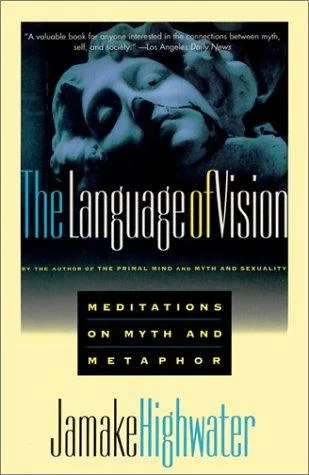
The Language of Vision
 63
63

The Language of Vision



Silas Hawthorne, Hermetic Studies Editor: Jamake Highwater's 'The Language of Vision' is a masterful exegesis, elegantly dissecting the symbolic grammar that underpins both art and esoteric practice. Highwater's profound understanding of myth and semiotics allows him to illuminate the archetypal resonances within the Tarot's Major Arcana with unparalleled clarity. This is not a mere primer; it is a deep dive into the philosophical architecture of visual meaning, essential for serious students of hermeticism, comparative mythology, and visual semiotics. The book's strength lies in its ability to bridge academic rigor with mystical intuition, offering readers a transformative perspective on how images shape consciousness and reveal universal truths. Its insights will resonate deeply with seekers of hidden wisdom and practitioners of the divinatory arts.
📝 Description
63
Jamake Highwater's 1981 book, 'The Language of Vision,' connects art, myth, and Tarot to human perception.
Jamake Highwater's 'The Language of Vision,' published in 1981, examines how visual art, mythology, and the Tarot deck function as systems for understanding. Highwater posits that the archetypal images within the Tarot's Major Arcana are more than just fortune telling devices. Instead, he presents them as fundamental symbols that can help individuals access their subconscious minds and comprehend deeper psychological states. The book also discusses the semiotics of artistic creation, showing how visual stories use metaphors that tap into basic human experiences. This work is for readers interested in the relationship between internal awareness and external reality, and how symbolic language influences our perception of the world. It encourages a way of seeing that draws on ancient symbolic traditions and developed intuition.
This book sits within the Western esoteric tradition, specifically engaging with ideas that bridge psychology and symbolic systems. It draws parallels between the archetypal imagery found in the Tarot, often linked to Jungian psychology and Hermeticism, and the way art and myth communicate meaning. Highwater’s approach suggests that these visual languages offer a path to understanding the psyche and the nature of reality, aligning with esoteric pursuits that seek hidden knowledge through symbols and introspection. It connects to traditions that view the universe and consciousness as having underlying symbolic structures.
💡 Why Read This Book?
Embark on a profound exploration of symbolism and consciousness. 'The Language of Vision' unveils the hidden meanings within art and Tarot, revealing how ancient archetypes shape our perception. Ideal for seekers of esoteric knowledge, art historians, and Tarot practitioners, this book offers a unique lens to understand the universal language of the human psyche and its connection to the cosmos. Discover the visual keys to unlocking deeper levels of self-awareness and cosmic understanding.
⭐ Reader Reviews
Honest opinions from readers who have explored this book.
❓ Frequently Asked Questions
What is the primary focus of 'The Language of Vision'?
The book primarily explores the semiotics of art and myth, with a particular focus on how the symbolism within the Tarot's Major Arcana offers insights into human consciousness and universal truths. It delves into how visual language constructs meaning and connects us to deeper levels of perception.
Is this book only for Tarot practitioners?
No, while it offers profound insights into the Major Arcana, the book's scope extends to the semiotics of art, myth, and metaphor. It is valuable for anyone interested in visual communication, symbolism, and the philosophical underpinnings of human expression.
What makes this book 'esoteric'?
Its esoteric nature lies in its exploration of hidden knowledge, archetypal patterns, and symbolic languages that transcend ordinary discourse. It guides readers to perceive the deeper, often veiled, meanings embedded in visual and mythical narratives, connecting them to universal consciousness.
How does Highwater connect art and Tarot?
Highwater posits that both art and the Tarot employ universal symbolic languages rooted in myth and human experience. He demonstrates how the archetypes represented in the Tarot's Major Arcana are echoed in artistic creations across cultures and epochs, revealing shared patterns of human understanding.
What is the intended impact of reading this book?
The book aims to awaken a deeper visual literacy and a more profound understanding of symbolism. It encourages readers to see beyond the surface of images, myths, and archetypes, fostering a richer connection to the subconscious, the collective unconscious, and the inherent wisdom of the universe.
🔮 Key Themes & Symbolism
Archetypal Symbolism and the Tarot
Highwater masterfully deciphers the profound archetypal imagery within the Tarot's Major Arcana. He presents these cards not just as tools for divination, but as a potent visual language representing fundamental human experiences, cosmic principles, and stages of spiritual development. By linking these symbols to ancient myths and psychological archetypes, the book reveals a universal grammar of the soul, accessible through careful observation and intuitive understanding. This theme is central to understanding how seemingly simple images can unlock complex truths about our inner and outer worlds, offering a roadmap for personal transformation and spiritual insight.
Semiotics and the Art of Meaning
This theme examines the science of signs and symbols, exploring how visual art functions as a complex semiotic system. Highwater examines how metaphors, myths, and cultural narratives are encoded within artistic creations, shaping perception and conveying meaning across time and cultures. He argues that art is a primal form of communication, speaking directly to the subconscious through its visual lexicon. Understanding this 'language of vision' allows us to decode the messages embedded in our visual environment, from ancient artifacts to contemporary masterpieces, fostering a deeper appreciation for the power of images to influence thought and emotion.
Myth as a Mirror to Consciousness
Highwater posits that myth is not mere storytelling but a profound expression of collective human consciousness and a repository of ancient wisdom. He illustrates how recurring mythical motifs and archetypes, found across diverse cultures, reflect universal truths about the human condition, the cosmos, and the spiritual journey. By analyzing the symbolic narratives of myth, the book demonstrates its role in shaping identity, understanding existence, and providing frameworks for navigating life's challenges. This theme invites readers to recognize the mythic patterns that continue to resonate in our modern lives and within the symbolic language of art and divination.
💬 Memorable Quotes
Direct passages from the work, attributed to the author.
“Tarot is not a crystal ball, but a mirror reflecting the currents of the psyche.”
— This emphasizes the introspective and psychological function of Tarot, positioning it as a tool for self-reflection and understanding inner states rather than a deterministic predictor of future events.
“Myth is the ancient map of the human spirit.”
— This evocative phrase suggests that myths provide essential guidance and understanding for the journey of the human spirit, acting as timeless charts for navigating life's complexities and existential questions.
“Every image carries a whisper of the eternal.”
— This statement points to the profound, timeless quality inherent in visual representations, suggesting that art and symbols can connect us to universal truths and enduring aspects of existence.
💡 Key Ideas
Editorial paraphrase of the work's core concepts — not direct quotes.
The eye is the window to the soul, but the mind is the architect of what it sees.
This quote highlights the subjective nature of perception, suggesting that our internal mental frameworks actively shape how we interpret the external visual world, implying a profound connection between consciousness and perception.
To see is to understand; to understand is to be transformed.
This quote outlines a transformative process initiated by clear perception and deep understanding, implying that true insight gained through visual and symbolic means leads to fundamental personal change.
🌙 Esoteric Significance
Tradition
This work draws deeply from the Hermetic tradition, which emphasizes the interconnectedness of all things and the power of symbolic language to unlock hidden knowledge. It aligns with alchemical principles of transformation, Jungian archetypal psychology, and the ancient art of divination as pathways to understanding the self and the cosmos. Highwater bridges these disciplines, offering a unified esoteric perspective on perception and meaning.
Symbolism
The book's symbolism is rooted in the archetypal imagery of the Tarot's Major Arcana, which Highwater interprets as universal symbols of human experience and spiritual progression. He explores the symbolic resonance of metaphors in art and the foundational myths of human culture, viewing them as coded expressions of cosmic laws and psychological truths. These symbols are presented as keys to unlocking deeper layers of consciousness and understanding.
Modern Relevance
In an era saturated with visual information, 'The Language of Vision' offers a critical and profound lens through which to navigate our media-rich environment. Its exploration of semiotics and symbolic communication is more relevant than ever, providing tools to deconstruct images, understand their underlying messages, and recognize the archetypal patterns that continue to shape our collective and individual psyches. The book empowers readers to engage with visual culture consciously and to access the transformative potential of symbolic wisdom in contemporary life.
👥 Who Should Read This Book
This clear work is essential for a diverse audience. **Seekers of esoteric wisdom** will find it a guide to understanding the hidden currents of meaning in art, myth, and divination. **Art historians and critics** will appreciate its unique semiotic approach, offering new perspectives on visual communication. **Tarot practitioners**, from novices to seasoned readers, will gain a profound understanding of the Major Arcana's archetypal depth. **Students of mythology and comparative religion** will find valuable insights into the universal language of human stories. Ultimately, anyone curious about the power of images, the nature of consciousness, and the profound connections between perception and reality will find 'The Language of Vision' a deeply rewarding and transformative read.
📜 Historical Context
Published during a period of burgeoning interest in esoteric studies and a re-evaluation of symbolic systems, Jamake Highwater's 'The Language of Vision' emerged as a significant contribution to understanding the intersection of art, myth, and divination. The late 20th century saw a growing curiosity about non-Western philosophies, ancient wisdom traditions, and the psychological depth of symbols, fueled in part by figures like Carl Jung and the continued exploration of archetypal psychology. Highwater, with his unique background and scholarly approach, tapped into this intellectual current, offering a synthesized perspective that resonated with both academic circles and the burgeoning New Age movement. The book provided a sophisticated framework for interpreting visual culture through an esoteric lens, challenging conventional art historical approaches and validating the profound significance of symbolic languages in human experience. Its influence can be seen in subsequent scholarship on visual semiotics, myth criticism, and the modern practice of Tarot.
📔 Journal Prompts
Reflect on a piece of art that deeply moves you. What archetypal symbols or myths do you perceive within it, and how do they resonate with your own experiences?
Consider the Major Arcana card that most frequently appears in your readings or that you feel most drawn to. What personal myth or psychological journey does it represent for you?
How does the concept of 'the language of vision' apply to your daily life? Identify three everyday images or visual cues that carry significant unspoken meaning for you.
Highwater connects myth and art. Can you identify a contemporary film, song, or advertisement that draws heavily on ancient myths or archetypes? How does it utilize them?
Explore a personal metaphor you often use. What deeper, perhaps unconscious, meaning or truth does this metaphor reveal about your inner landscape or your worldview?
🗂️ Glossary
Semiotics
The study of signs and symbols and their interpretation. It explores how meaning is created and communicated through various forms of representation, including language, images, and gestures.
Archetype
A universal, archaic pattern, image, or symbol that is part of the collective unconscious. These are fundamental structures of human experience and consciousness, often found in myths, dreams, and art.
Major Arcana
In Tarot, the set of 22 cards (from The Fool to The World) that represent significant life lessons, spiritual journeys, and transformative experiences. They are considered the archetypal stages of human development.
Myth
A traditional story, especially one concerning the early history of a people or explaining some natural or social phenomenon, and typically involving supernatural beings or events. Myths often carry profound symbolic meaning.
Metaphor
A figure of speech in which a word or phrase is applied to an object or action to which it is not literally applicable, used to suggest a resemblance or analogy and to convey deeper meaning.
This book appears in 3 collections
🔮 Readers Also Liked
Browse all →








More by Jamake Highwater
All books →
From the “Tarot” Collection
View all →









More Free Divination & Tarot Books
View all →