The Key to Solomon's Key

 72
72

The Key to Solomon's Key
Duquette approaches the formidable *Lemegeton* with a scholar's precision and a practitioner's understanding. His strength lies in demystifying the labyrinthine structures of the *Goetia* and other sections, providing context that makes the text less daunting for newcomers to Solomonic magic. The annotations are particularly useful, often clarifying archaic language and obscure references that would otherwise halt a reader cold. For instance, his explanation of the precise construction and consecration of a magic circle, a recurring element, offers practical guidance. However, the sheer density of the source material means even Duquette's extensive commentary can sometimes feel overwhelming. While he aims for accessibility, the inherent complexity of the *Lemegeton*'s ritualistic system, particularly the angelic and demonic hierarchies, occasionally requires a deep dive into comparative occult literature to fully grasp. The work ultimately succeeds as a comprehensive scholarly companion for dedicated practitioners.
📝 Description
72
Lon Milo Duquette's 2010 guide deciphers the *Lemegeton*, the *Lesser Key of Solomon*.
Published in 2010, Lon Milo Duquette's *The Key to Solomon's Key* serves as a detailed commentary on the *Lemegeton*, also known as the *Lesser Key of Solomon*. This influential grimoire, compiled in the mid-17th century, draws on older magical texts. Duquette moves beyond simple translation, offering extensive annotations, historical context, and practical insights into the rituals and invocations detailed in the original work. The book meticulously breaks down the *Lemegeton*'s five constituent parts: *The Ars Goetia*, *Theurgia Goetia*, *The Ars Notoria*, *The Ars Palo*, and *The Ars Ouyam*. Duquette clarifies the function and methods of each section, explaining the complex system of spirits, sigils, and conjurations that the magician is meant to employ. This work is intended for dedicated students of ceremonial magic and Western occultism who possess a basic understanding of Kabbalah and Hermeticism. It is not an introductory text but a scholarly examination for those interested in the historical development of magical practices and the practical application of Solomonic magic.
The *Lemegeton*, or *Lesser Key of Solomon*, is a significant grimoire that emerged in the mid-17th century. It represents a compilation of earlier magical knowledge, reflecting a period of renewed interest in occult traditions in Europe. Duquette's work situates itself within this lineage, tracing the historical development and interpretive layers that surround the *Lemegeton* since its initial circulation. The text is a key artifact in the study of Western ceremonial magic, angelology, and demonology.
💡 Why Read This Book?
• Gain a structured understanding of the *Lemegeton*'s five books, including the *Ars Goetia*, learning how each section functions within the larger Solomonic magical system, a detail often glossed over in simpler introductions. • Decode the complex angelic and goetic hierarchies presented in the text, enabling a clearer comprehension of spirit classification and invocation protocols as outlined by Duquette's detailed explanations. • Explore the practical applications of Solomonic magic, such as the construction and consecration of ritual tools and circles, as discussed in the book's annotated passages, offering tangible insights beyond theoretical study.
⭐ Reader Reviews
Honest opinions from readers who have explored this book.
❓ Frequently Asked Questions
What is the historical origin of the text Duquette analyzes?
The *Lemegeton*, or *Lesser Key of Solomon*, was compiled in the mid-17th century, drawing upon earlier magical traditions and manuscripts. Duquette's work provides extensive context for this period of occult literature.
Is *The Key to Solomon's Key* suitable for beginners in magic?
While Duquette strives for clarity, the book is best suited for those with some background in Western esotericism, such as Kabbalah or Hermeticism. Beginners might find the density of the *Lemegeton*'s material challenging.
What are the five books within the *Lemegeton*?
The five books are the *Ars Goetia*, *Theurgia Goetia*, *The Ars Notoria*, *The Ars Palo*, and *The Ars Ouyam*. Duquette dedicates significant analysis to each.
Does this book explain how to perform the rituals?
Yes, Duquette's commentary includes practical guidance on rituals, spirit invocation, and the creation of magical tools like sigils and circles, based on the *Lemegeton*'s instructions.
Who was Solomon in relation to these magical texts?
The texts are attributed to King Solomon of ancient Israel, though modern scholarship indicates they were compiled much later. The attribution lends authority and connects them to biblical narratives of wisdom and power.
What is the relationship between Duquette's book and the original *Lemegeton*?
Duquette's book is an annotated edition and scholarly companion to the *Lemegeton*, providing explanations, historical context, and practical interpretations of its contents.
🔮 Key Themes & Symbolism
Solomonic Grimoire Tradition
This work meticulously dissects the *Lemegeton*, a central text in the Solomonic grimoire tradition, first compiled around the mid-17th century. Duquette clarifies the historical lineage and practical intent behind these often-daunting magical instructions. He emphasizes that these texts are not mere historical curiosities but contain operational frameworks for ritual magic, focusing on the systematic invocation and command of spiritual entities, a hallmark of this specific esoteric lineage originating from figures like King Solomon.
Angelic and Goetic Hierarchies
A central theme is the detailed exploration of the angelic and goetic hierarchies as presented in the *Ars Goetia* and *Theurgia Goetia*. Duquette breaks down the complex classifications of spirits, their assigned ranks, seals (sigils), and the specific planetary or elemental associations. Understanding these hierarchies is crucial for practitioners seeking to engage with these entities in a structured and effective manner, as Duquette elucidates the intended correspondences and operational logic.
Ceremonial Magic Operations
Duquette's commentary moves beyond theoretical exposition to address the practical execution of ceremonial magic. He provides extensive notes on the construction of magical tools, the drawing of circles, the use of divine names, and the precise wording of invocations and conjurations as found in the *Lemegeton*. This focus on operational details makes the book useful for those seeking to actively practice Solomonic magic, bridging the gap between ancient texts and contemporary ritual.
The Ars Notoria
Beyond the more commonly known *Ars Goetia*, Duquette dedicates significant attention to the *Ars Notoria*, a section focused on acquiring knowledge and memory through prayer and divine inspiration. This aspect highlights a different facet of Solomonic magic, one less concerned with commanding spirits and more with intellectual and spiritual illumination, often involving specific orations and alphabets designed to impart wisdom directly.
💬 Memorable Quotes
Direct passages from the work, attributed to the author.
“The construction of the magic circle is not merely symbolic, but creates a necessary boundary.”
— This interpretation highlights the practical necessity Duquette attributes to ritual tools. The magic circle, far from being just a visual aid, is presented as a functional element essential for the magician's safety and the efficacy of the operation.
“The *Ars Notoria* offers a path to knowledge distinct from the conjurations of the *Goetia*.”
— This interpretation points to the diverse methodologies within the *Lemegeton*. Duquette distinguishes the intellectual and spiritual acquisition of wisdom in the *Ars Notoria* from the more direct command-oriented practices found in other sections of the text.
“Understanding the correspondences is paramount to successful Solomonic operation.”
— This concept underscores the intricate system of correspondences (planetary, elemental, angelic, etc.) that Duquette details. He stresses that mastering these connections is fundamental for aligning intent with the forces invoked, ensuring the ritual’s effectiveness.
💡 Key Ideas
Editorial paraphrase of the work's core concepts — not direct quotes.
The spirits are not to be feared, but understood and commanded.
This paraphrased concept captures Duquette's pragmatic approach. He views the entities described in the *Lemegeton* not as inherently malevolent forces, but as powers or intelligences that can be worked with through correct procedure and understanding, emphasizing the magician's role as an operator.
Sigils are keys, each one unlocking a specific power or entity.
This paraphrase emphasizes the symbolic and functional nature of the sigils within the *Lemegeton*. Duquette explains how these unique glyphs are not arbitrary designs but are integral to the process of identification and invocation of the described spirits.
🌙 Esoteric Significance
Tradition
This work firmly belongs to the Western Esoteric tradition, specifically focusing on the lineage of Solomonic magic and ceremonial invocation. It draws heavily upon Kabbalistic principles for understanding hierarchies and correspondences, and Hermetic philosophy for its underlying cosmology. Duquette's approach bridges historical textual analysis with modern practical application, fitting within contemporary interpretations of ceremonial magic that seek to operationalize older grimoires.
Symbolism
Key symbols explored include the pentagram and hexagram, used in protective circles and as divine representations. The specific sigils (or seals) of the Goetic demons are central, acting as unique identifiers and conduits for invoking these entities. The magical square, or talisman, also features prominently, representing condensed spiritual power and intent for specific purposes, as detailed in various sections of the *Lemegeton*.
Modern Relevance
Contemporary practitioners of ceremonial magic, particularly those interested in the Goetia and broader Solomonic systems, frequently reference Duquette's work. It serves as a vital resource for understanding and implementing the complex rituals described in the *Lemegeton*. Schools focusing on Western occult traditions often incorporate his annotations and practical advice into their curricula, demonstrating its ongoing influence.
👥 Who Should Read This Book
• Students of Western Ceremonial Magic seeking a practical and historically informed guide to the *Lemegeton*, especially the *Ars Goetia*, and how its rituals were intended to be performed. • Scholars of esoteric history interested in the compilation and evolution of grimoires, gaining context for the mid-17th century occult landscape and the specific traditions that informed the *Lemegeton*. • Occult practitioners who wish to understand the complex hierarchies of angels and demons detailed in the text, and explore Duquette's interpretations of their roles and correspondences within the Solomonic framework.
📜 Historical Context
Published in 2010, Lon Milo Duquette's *The Key to Solomon's Key* arrived in an era where interest in historical grimoires had seen a significant resurgence, fueled partly by occult revivals and academic interest in Western esotericism. The original *Lemegeton*, compiled around the mid-17th century, itself represents a complex layering of magical traditions. Its circulation and influence were significant, though often through manuscript copies until printed editions became more common, notably those associated with the French occult revival and later figures. Duquette's work engages with this history, positioning the *Lemegeton* not just as a curiosity but as a functional text within the broader Hermetic and Kabbalistic framework. It appeared during a period when authors like Stephen Skinner were also producing extensive scholarship on grimoires, creating a dialogue about the authenticity and practical application of these ancient magical systems. The reception of such works often navigates between scholarly analysis and occult practice, a duality Duquette embraces.
📔 Journal Prompts
The specific construction of a magic circle as described in the *Ars Goetia*.
The function and significance of the sigils for the 72 Goetic demons.
The differing aims of the *Ars Goetia* versus the *Ars Notoria*.
The role of divine names in Solomonic conjurations.
The historical period of the *Lemegeton*'s compilation.
🗂️ Glossary
Ars Goetia
The first book of the *Lemegeton*, detailing the 72 demons, their sigils, ranks, and methods for their invocation and conjuration by the magician.
Lemegeton
A 17th-century grimoire, also known as *The Lesser Key of Solomon*, compiled from earlier magical texts. It contains five distinct books on various aspects of ceremonial magic.
Sigil
A symbolic representation or magical glyph, often unique to a specific spirit or entity, used in ceremonial magic for invocation or identification.
Grimoire
A textbook of magic, typically containing instructions on how to perform magical operations, invocations, and create talismans, often attributed to historical or biblical figures.
Kabbalah
A system of Jewish mysticism and esoteric interpretation of scripture that explores the nature of God and the universe through symbolic analysis, influencing many Western occult traditions.
Hermeticism
A philosophical and religious tradition based on the purported teachings of Hermes Trismegistus, emphasizing divine wisdom, the interconnectedness of all things, and the potential for human spiritual ascent.
Theurgia Goetia
The second book of the *Lemegeton*, focusing on the invocation of aerial spirits, distinguishing between 'good' and 'evil' entities within this category.
🔮 Readers Also Liked
Browse all →




More by Lon Milo Duquette
All books →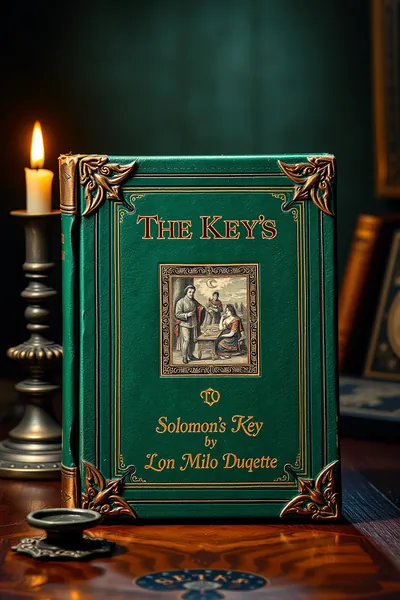




More Free Freemasonry & Secret Societies Books
View all →