Is it True What They Say About Freemasonry?
 78
78

Is it True What They Say About Freemasonry?
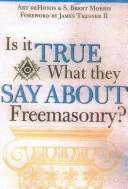
Art de Hoyos and S. Brent Morris's "Is it True What They Say About Freemasonry?" tackles a persistent deluge of unsubstantiated claims about the fraternity head-on. The book’s strength lies in its methodical, fact-based approach, systematically debunking popular myths with historical evidence and clear explanations of Masonic tenets. For instance, their discussion of the supposed "Prince Hall Freemasonry schism" is meticulously detailed, tracing the lineage and acknowledging the complexities without resorting to sensationalism. A limitation, however, is that the sheer volume of detailed refutations might feel dense to a casual reader; it prioritizes thoroughness over brevity. The authors’ interpretation of Masonic allegory, particularly concerning the legend of Hiram Abiff, is presented with scholarly rigor, offering a perspective that grounds these narratives in moral and philosophical instruction rather than occult dogma. It is a necessary corrective for the misinformed, albeit a demanding one.
This is a serious, scholarly defense against Masonic mythmaking.
📝 Description
78
Published in 2004, Art de Hoyos and S. Brent Morris directly counter Freemasonry myths.
Art de Hoyos and S. Brent Morris wrote "Is it True What They Say About Freemasonry?" in 2004 to address widespread misconceptions. The book provides factual rebuttals to sensationalized narratives that often surround the fraternity. It aims to clarify Freemasonry's nature, history, and principles for a public frequently influenced by unsubstantiated claims.
The work is for curious individuals seeking accurate information, especially those encountering Freemasonry in popular culture or speculative texts. Masons will find it a useful resource for understanding public perception and defending against misinformation. Students of fraternal organizations and religious history will also find value in its approach.
The authors base their explanations on extensive archival research and primary sources. They situate Masonic practices within verifiable historical developments, distinguishing between symbolic, speculative Freemasonry and earlier operative guilds. The book systematically examines ritualistic practices, philosophical underpinnings, organizational structure, and the fraternity's relationships with religion, politics, and charity.
This book engages with the perennial fascination and suspicion directed at fraternal orders, particularly Freemasonry. It stands in a tradition of works that seek to demystify secret societies by grounding their practices and history in factual accounts, rather than speculative or conspiratorial interpretations. By distinguishing operative from speculative Masonry and detailing its principles, the authors contribute to a scholarly approach to understanding esoteric traditions that often become subjects of rumor and misunderstanding.
💡 Why Read This Book?
• Gain precise answers to common Freemasonry myths, learning how the authors refute claims about the fraternity's origins and practices using specific historical documents from the 18th century. • Understand the symbolic meaning of key Masonic concepts like the "Square and Compasses" by examining their representation and philosophical application as discussed in the text. • Appreciate the historical development of Freemasonry by tracing its evolution from operative stonemasons to speculative philosophical society, a narrative supported by references to its earliest known lodges.
⭐ Reader Reviews
Honest opinions from readers who have explored this book.
❓ Frequently Asked Questions
What is the primary goal of "Is it True What They Say About Freemasonry?"
The book's main objective is to counter misinformation and popular myths about Freemasonry by providing historically accurate information and scholarly explanations of its principles and practices.
When was "Is it True What They Say About Freemasonry?" first published?
The book was first published on March 11, 2004, by Art de Hoyos and S. Brent Morris.
Does the book discuss Freemasonry's relationship with religion?
Yes, it addresses the common misconception that Freemasonry is a religion or a substitute for one, clarifying its requirement for belief in a Supreme Being and its philosophical rather than theological nature.
Are the authors of the book recognized Masonic scholars?
Yes, Art de Hoyos and S. Brent Morris are highly respected authorities on Masonic history and philosophy, having authored numerous works on the subject.
What kind of myths does the book address?
It tackles a wide range of myths, including those concerning Masonic oaths, secret rituals, alleged political conspiracies, and its supposed connections to various esoteric or occult traditions.
Is this book suitable for non-Masons?
Absolutely. It is designed for anyone curious about Freemasonry, offering clear, fact-based answers to questions and dispelling prevalent myths for a general audience.
🔮 Key Themes & Symbolism
Myth Debunking
The central theme is the systematic refutation of popular misconceptions and conspiracy theories surrounding Freemasonry. The authors meticulously address claims about secret societies, world domination plots, and unorthodox rituals, contrasting them with the actual historical record and the fraternity's stated principles. They highlight how sensationalized accounts, often originating from anti-Masonic literature, have distorted public perception. By presenting verifiable facts and historical context, the book aims to provide a clear, rational counter-narrative to unfounded speculation, demonstrating that Freemasonry is a fraternal organization focused on moral and personal development.
Historical Accuracy
This theme underscores the importance of grounding any understanding of Freemasonry in documented history. The authors trace the fraternity's origins, differentiating between operative stonemason guilds and the emergence of speculative Masonry in the early 18th century. They cite specific dates and documents, such as the Constitutions of the Grand Lodge of England from 1723, to establish a factual basis for their explanations. This approach serves to clarify the organization by situating it within identifiable historical movements and societal changes, moving beyond anecdotal evidence or legendary accounts.
Masonic Principles
The work clarifies the core tenets and philosophical underpinnings of Freemasonry. It explains the significance of its moral teachings, charitable work, and emphasis on belief in a Supreme Being, without dictating religious doctrine. The book details the symbolic language used in rituals and degrees, interpreting them as tools for self-improvement and ethical guidance. By focusing on these fundamental aspects, the authors aim to present Freemasonry as a benevolent fraternity dedicated to the betterment of its members and society.
Symbolism and Allegory
A significant portion of the book is dedicated to explaining the detailed symbolism inherent in Masonic ritual and regalia. Concepts like the Square and Compasses, the Trowel, and the Apron are analyzed not as arcane symbols but as allegorical representations of moral virtues and principles. The legend of Hiram Abiff, a central to Masonic lore, is interpreted as an allegory for the pursuit of knowledge and the consequences of vice. This exploration of symbolism provides insight into the philosophical depth and educational methods employed within the fraternity.
💬 Memorable Quotes
Direct passages from the work, attributed to the author.
“Freemasonry is not a religion, nor a substitute for one.”
— This statement directly addresses a common misconception, clarifying that while belief in a Supreme Being is required, Freemasonry does not prescribe specific religious doctrines or practices.
“The legend of Hiram Abiff is an allegory for the pursuit of knowledge and the struggle against vice.”
— This interpretation of a central Masonic narrative frames it as a moral and philosophical lesson rather than a historical event or an occult myth.
“Our rituals are designed to teach moral lessons through dramatic representation.”
— This highlights the pedagogical function of Masonic ceremonies, emphasizing their role in communicating ethical principles and virtues to the members.
“The Constitutions of 1723 laid the groundwork for speculative Freemasonry as we know it.”
— This anchors the development of modern Freemasonry to a specific historical document and date, underscoring the book's reliance on factual historical evidence.
“Many anti-Masonic tracts originated from political or religious opposition, not factual inquiry.”
— This points to the often biased or agenda-driven nature of historical criticism against Freemasonry, suggesting that misinformation has deep roots.
🌙 Esoteric Significance
Tradition
While Freemasonry has been embraced by various esoteric traditions, this work primarily engages with the historical and philosophical lineage of Western Esotericism without being strictly confined to a single school. It operates within the broader Hermetic and Renaissance humanist traditions that influenced early speculative Masonry, emphasizing moral philosophy, allegory, and the pursuit of self-knowledge. The book positions Freemasonry as a system of moral instruction and brotherhood, distinct from, though sometimes overlapping with, more overtly magical or mystical practices found in Kabbalah or alchemy.
Symbolism
The text frequently references key Masonic symbols such as the Square and Compasses, interpreting them allegorically. The Square represents morality and rectitude in conduct, while the Compasses symbolize the ability to circumscribe desires and passions. The Hiram Abiff legend is presented as an allegory for the pursuit of lost knowledge and the consequences of betrayal and violence, serving as a cautionary tale for moral development. These symbols are explained as tools for ethical instruction, designed to guide the Mason's character.
Modern Relevance
Contemporary discussions on fraternalism, civil society, and the history of Western Esotericism continue to draw upon the factual groundwork laid by scholars like de Hoyos and Morris. Their work provides a crucial reference point for understanding Freemasonry’s historical and philosophical context, informing debates about its role in society and its relationship with other intellectual currents. Thinkers and researchers examining the evolution of philosophical societies and the persistence of symbolic language in modern discourse find value in their rigorous approach.
👥 Who Should Read This Book
• Individuals curious about Freemasonry's true nature, seeking to separate fact from fiction, will gain clear, historically grounded answers to prevalent myths and misconceptions. • Members of Freemasonry who wish to better understand and articulate their fraternity's history, principles, and public image will find a comprehensive resource for addressing common inquiries. • Students of comparative religion, fraternal organizations, and Western philosophical traditions will benefit from the book's scholarly analysis of Masonic symbolism and historical development.
📜 Historical Context
The early 21st century, with its burgeoning internet culture, amplified both interest in and misinformation about fraternal organizations like Freemasonry. "Is it True What They Say About Freemasonry?", published in 2004, emerged as a direct response to this environment. It sought to provide a scholarly counterpoint to the speculative theories and sensationalized accounts that proliferated online and in popular media. The authors, Art de Hoyos and S. Brent Morris, drew upon decades of Masonic scholarship, aiming to correct the historical record. This period saw a continued public fascination with secret societies, a trend also explored by authors like David Icke, though de Hoyos and Morris deliberately distanced themselves from such esoteric speculation. The book’s reception, while primarily among Masonic circles and those seeking factual information, highlighted the ongoing tension between historical reality and popular myth surrounding the fraternity.
📔 Journal Prompts
The Square and Compasses' allegorical meaning in daily conduct.
Interpreting the Hiram Abiff legend as a personal moral allegory.
The historical shift from operative to speculative Freemasonry.
Distinguishing Masonic principles from religious dogma.
The impact of early 18th-century documents on Masonic structure.
🗂️ Glossary
Speculative Freemasonry
The modern form of Freemasonry, focused on philosophical and moral teachings through ritual and allegory, as distinct from operative masonry.
Hiram Abiff
A central legendary figure in Masonic lore, whose story is interpreted as an allegory for the pursuit of wisdom and the consequences of moral failings.
Supreme Being
A required belief for Freemasons, referring to a higher power, without dictating a specific religious affiliation or doctrine.
Constitutions of 1723
A foundational document for modern Freemasonry, published by the Grand Lodge of England, outlining rules, regulations, and principles.
Allegory
The use of symbols and symbolic narratives to convey moral, spiritual, or philosophical meanings, a key teaching method in Freemasonry.
Masonic Ritual
The ceremonial practices and dramatic presentations used in Masonic lodges to impart lessons and foster brotherhood.
Operative Masonry
The historical practice of stonemasonry, from which speculative Freemasonry is believed to have evolved.