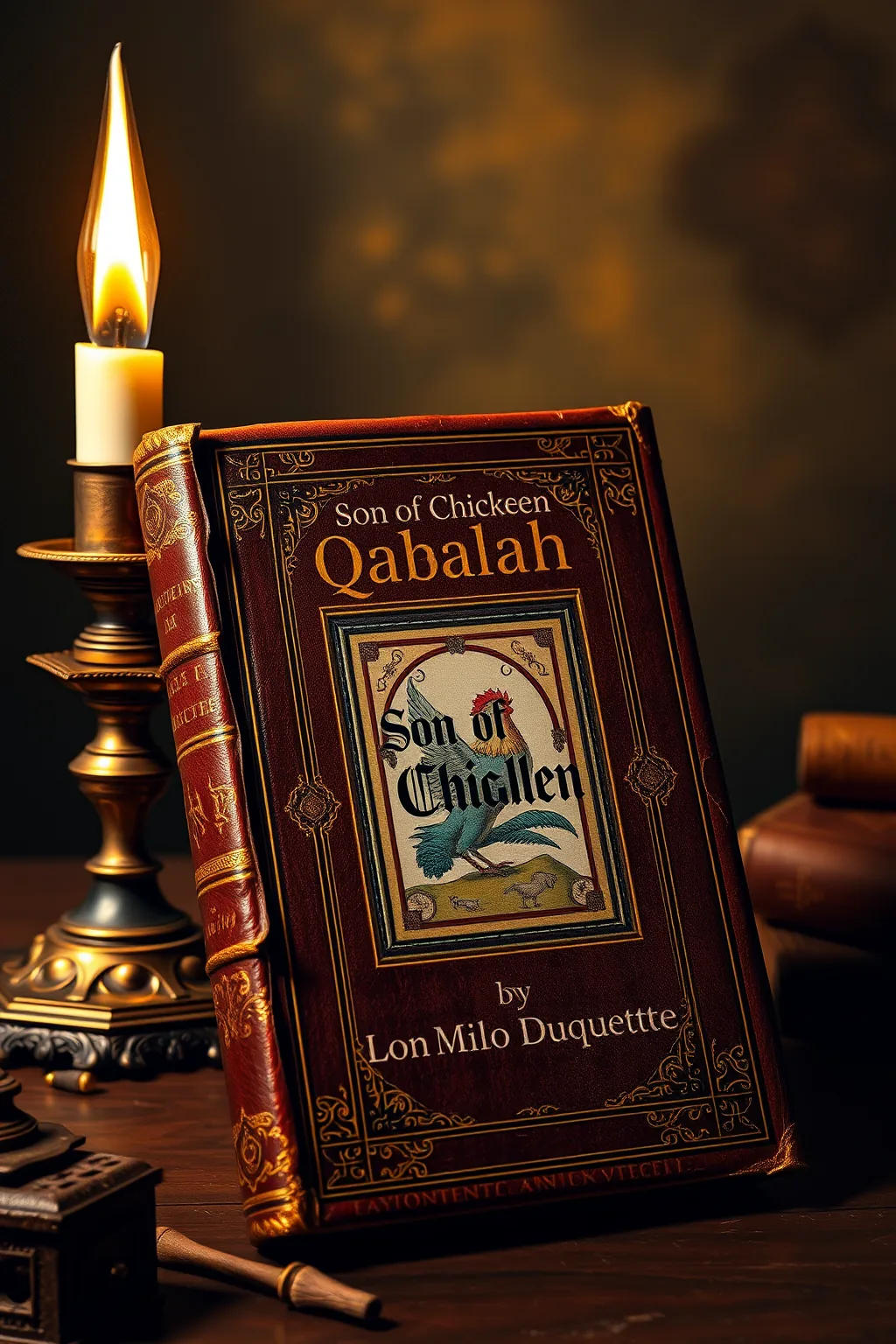
Son of Chicken Qabalah
 79
79

Son of Chicken Qabalah
Lon Milo DuQuette's "Son of Chicken Qabalah" is a curious blend of earnest instruction and wry humor. The author succeeds admirably in his stated goal of making the Qabalah approachable. His interpretation of the Hebrew alphabet, presented as a "road map from the Godhead to your head," is particularly effective, offering a practical framework for understanding esoteric correspondences. The exercises, especially those related to the "Rabbi Lamed Ben Clif" system, feel grounded and achievable for the dedicated student. However, the book's very accessibility might, for some, dilute the profound depths of traditional Qabalistic study. While it simplifies complex ideas, it occasionally risks oversimplification, potentially leaving seasoned practitioners wanting more. The humor, while generally welcome, sometimes borders on flippancy when discussing deeply symbolic material. Nevertheless, for the beginner seeking a clear, engaging entry point into practical Qabalah, DuQuette provides a valuable and often entertaining guide.
📝 Description
79
Lon Milo DuQuette's Son of Chicken Qabalah, published in 2018, offers a direct approach to Qabalistic study.
This book aims to make the Qabalah accessible through a practical, self-study guide. DuQuette breaks down the Hebrew alphabet and its mystical associations into manageable steps. The work emphasizes a personal path to gnosis through exercises and rituals. It is intended for those interested in practical occultism and Western Esotericism who find traditional Qabalistic texts difficult. The author's engaging and humorous tone makes serious spiritual inquiry approachable.
Readers seeking a straightforward introduction to Qabalistic principles, especially those new to Hebrew or advanced Kabbalah, will find this text useful. It is also suitable for students of Hermeticism who wish to incorporate Qabalistic ideas into their practices. The book addresses contemporary interest in esoteric traditions while drawing on established Qabalistic systems.
Son of Chicken Qabalah is part of a modern revival of interest in esoteric traditions, particularly in the late 20th and early 21st centuries. DuQuette's work connects to the lineage of Western occultism, referencing systems popularized by figures such as Aleister Crowley and the Hermetic Order of the Golden Dawn. It seeks to distill core Qabalistic tenets for contemporary practitioners, making them understandable outside of academic or strictly traditional settings.
💡 Why Read This Book?
• Gain a practical, step-by-step method for understanding the Hebrew alphabet's esoteric significance, moving beyond theoretical study to direct application. • Experience a structured self-initiatory process through specific exercises and rituals outlined in the "Rabbi Lamed Ben Clif" degrees, fostering personal spiritual development. • Discover how to connect abstract Qabalistic concepts to your own consciousness, using the book's "road map from the Godhead to your head" approach for immediate self-reflection.
⭐ Reader Reviews
Honest opinions from readers who have explored this book.
❓ Frequently Asked Questions
What is the "Chicken Qabalah" mentioned in the title?
The "Chicken Qabalah" is a playful, informal term coined by Lon Milo DuQuette to signify his unique, simplified, and practical approach to the Qabalah, distinguishing it from more academic or traditional interpretations. It highlights its accessible nature.
Is "Son of Chicken Qabalah" suitable for complete beginners with no prior knowledge of Hebrew or Kabbalah?
Yes, the book is specifically designed for beginners. It painlessly introduces the Hebrew alphabet and fundamental Qabalistic principles, making it an ideal starting point for those new to the subject.
What kind of exercises are included in the book?
The book includes practical exercises and rituals designed for self-initiation. These are intended to help readers attune themselves to the mysteries of the Hebrew alphabet and apply Qabalistic concepts directly.
Who was Rabbi Lamed Ben Clif?
Rabbi Lamed Ben Clif is a conceptual figure created by Lon Milo DuQuette. The "three main degrees of Rabbi Lamed Ben Clif" represent a pedagogical framework within the book for self-guided Qabalistic study and initiation.
What makes this book different from other Qabalah guides?
Its primary distinction lies in its blend of serious esoteric instruction with humor and a focus on practical, experiential learning. It aims to be the easiest, fastest way to grasp core Qabalistic ideas.
When was "Son of Chicken Qabalah" first published?
The book "Son of Chicken Qabalah" by Lon Milo DuQuette was first published on November 1, 2018.
🔮 Key Themes & Symbolism
Practical Qabalah
This theme focuses on the application of Qabalistic principles rather than purely theoretical study. DuQuette emphasizes using the Hebrew alphabet as a tool for understanding the universe and oneself. The work guides readers through exercises that directly engage with these symbols, aiming for an experiential grasp of Qabalistic cosmology and its relevance to personal development. It's about doing, not just knowing.
Self-Initiation Framework
The book presents a structured path for personal spiritual growth through a system of self-initiation. Referencing the "three main degrees of Rabbi Lamed Ben Clif," DuQuette provides a clear progression for the reader. This framework breaks down the potentially overwhelming study of Qabalah into achievable stages, encouraging consistent practice and internal transformation.
Humor in Esotericism
A unique aspect of this work is its integration of humor into esoteric teachings. DuQuette uses wit and a lighthearted tone to explain complex subjects like the Qabalah, making them less intimidating. This approach aims to foster a more relaxed and accessible learning environment, suggesting that spiritual study need not always be solemn and austere.
Hebrew Alphabet as a Map
The letters of the Hebrew alphabet are presented not merely as linguistic symbols but as keys to unlocking spiritual understanding. The book treats them as a "road map from the Godhead to your head," illustrating how each letter corresponds to specific energies, concepts, and stages of consciousness, facilitating a more direct connection to the divine.
💬 Memorable Quotes
Direct passages from the work, attributed to the author.
“The easiest, fastest way for readers to painlessly attune themselves to the mysteries of the Hebrew alphabet and immerse themselves in the fundamentals of practical Qabalah.”
— This foundational statement highlights the book's core promise: explaining Qabalah and making its study accessible and straightforward, even for complete novices. It emphasizes an experiential and rapid learning curve.
“It is a road map from the Godhead to your head—a clear and lucid guide to an extremely complex, mystical topic.”
— This metaphor frames the Qabalah not as an abstract intellectual pursuit, but as a direct pathway to divine understanding that can be integrated into one's own consciousness. It underscores the book's clarity and practical application.
“By performing the exercises and rituals in the book, the reader can complete the self-initiatory process comprising the three main degrees of Rabbi Lamed Ben Clif.”
— This highlights the active, participatory nature of the book. It positions the reader as an agent of their own spiritual development, outlining a specific, structured program for achieving initiatory milestones.
“This simultaneously funny and serious book...”
— This description captures the book's distinctive tone. It signals that readers should expect a blend of lightheartedness and genuine, profound esoteric instruction, setting it apart from more somber or purely academic texts.
💡 Key Ideas
Editorial paraphrase of the work's core concepts — not direct quotes.
The fundamental purpose of the Qabalah is to achieve union with God.
This interpretation paraphrases a core tenet often implied in Qabalistic study. It grounds the complex symbolic system in its ultimate spiritual aim: direct communion with the divine or ultimate reality.
🌙 Esoteric Significance
Tradition
This work firmly sits within the Western Esoteric tradition, specifically drawing from the practical applications of Kabbalah. It aligns with Hermetic principles by seeking correspondences between the macrocosm and microcosm, and the human mind. While rooted in Jewish mysticism, DuQuette's "Chicken Qabalah" adapts and simplifies these teachings for a modern, often non-Jewish, audience interested in personal gnosis and spiritual development.
Symbolism
Key symbols include the Hebrew alphabet itself, presented as a map of consciousness and creation. The concept of the "Godhead to your head" pathway illustrates the direct connection between the ultimate divine source and individual awareness. The "three main degrees of Rabbi Lamed Ben Clif" function as symbolic initiatory stages, representing a structured journey through Qabalistic understanding and practice.
Modern Relevance
The book's accessible approach speaks to contemporary practitioners of various esoteric paths, including modern Hermeticism, ceremonial magic, and even some forms of New Age spirituality. Thinkers and groups seeking simplified, practical frameworks for understanding universal principles and personal transformation often turn to DuQuette's accessible style. Its focus on self-initiation aligns with current trends emphasizing individual spiritual authority.
👥 Who Should Read This Book
• Aspiring practitioners of Western Esotericism seeking a clear, humorous, and practical introduction to Qabalistic principles without being overwhelmed. • Students of Hermeticism looking to integrate the symbolic language of the Hebrew alphabet into their magical and meditative practices. • Individuals interested in comparative religion or mysticism who want a simplified, yet potent, guide to the core concepts of Kabbalah.
📜 Historical Context
Published in 2018, "Son of Chicken Qabalah" arrived during a period marked by widespread interest in accessible esoteric literature, often facilitated by online platforms and a desire for practical application of spiritual systems. Lon Milo DuQuette's work implicitly engages with the legacy of Western Esotericism, particularly the Qabalistic revival championed by figures like Aleister Crowley and the Hermetic Order of the Golden Dawn in the early 20th century. Unlike purely academic or rigidly traditionalist approaches, DuQuette's method prioritizes ease of entry and a humorous, relatable tone. This approach contrasts with more dense, scholarly works or the ritualistic intensity found in groups like the O.T.O. or Golden Dawn, offering a distinct alternative for contemporary seekers who may find those paths less approachable.
📔 Journal Prompts
The "road map from the Godhead to your head": How does the concept of the Hebrew alphabet as a guide for consciousness manifest in your daily experiences?
Reflecting on the "three main degrees of Rabbi Lamed Ben Clif," identify which degree you feel most aligned with currently and why.
Consider the book's blend of humor and seriousness. How does this approach affect your perception of esoteric study?
What personal meaning do you derive from the idea of "painless attunement" to mystical concepts?
Explore the practical exercises presented. How can applying these rituals aid your self-initiatory process?
🗂️ Glossary
Qabalah
A system of esoteric Jewish mysticism, often adapted in Western Esotericism, that deals with the nature of God and the universe, typically involving symbolic interpretations of the Hebrew alphabet and divine emanations.
Hebrew Alphabet
The script used for writing Hebrew. In Qabalistic contexts, each letter is imbued with symbolic, numerological (Gematria), and mystical significance, representing divine forces and stages of creation.
Practical Qabalah
An approach to Qabalah that emphasizes direct application and experiential methods, often involving rituals, meditation, and the use of Hebrew letters and divine names for magical or spiritual purposes.
Self-Initiation
A process where an individual undertakes their own spiritual or magical development and progression, often following a structured curriculum or personal discipline, without reliance on external organizational authority.
Degrees of Rabbi Lamed Ben Clif
A conceptual framework introduced by Lon Milo DuQuette in this book, representing stages of learning and self-initiation within his unique approach to practical Qabalah.
Godhead
The ultimate, transcendent, and often unknowable divine principle or source from which all existence emanates in various mystical and theological systems.
Gnosis
Spiritual or intuitive knowledge, particularly a form of knowledge that leads to salvation or enlightenment, often attained through direct experience rather than rational thought.