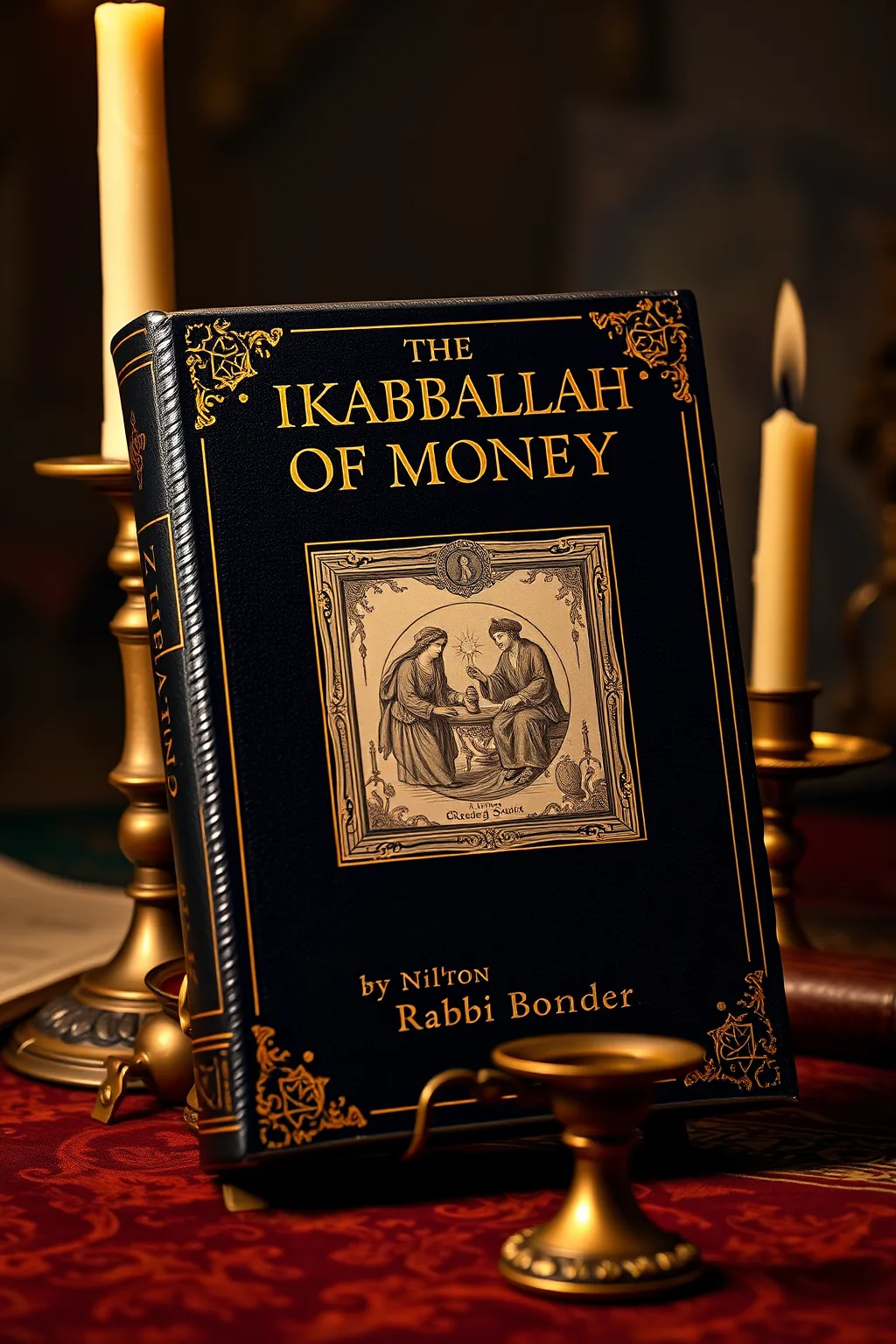
The Kabbalah of Money
 61
61

The Kabbalah of Money



Nilton Rabbi Bonder's 'The Kabbalah of Money' is a masterful exploration of a topic often relegated to the profane. Bonder artfully weaves Kabbalistic principles with the practicalities of our material existence, revealing the profound spiritual underpinnings of our financial lives. His insights into how our relationship with money mirrors our inner state are particularly striking, echoing ancient wisdom about character. This text offers a rare blend of scholarly depth and mystical revelation, making it indispensable for anyone seeking to harmonize their spiritual path with their economic realities. A truly transformative read for practitioners and seekers alike.
📝 Description
61
Nilton Rabbi Bonder's 2003 book connects Kabbalistic thought to the spiritual dimensions of wealth.
In "The Kabbalah of Money," Nilton Rabbi Bonder examines how Kabbalistic principles illuminate our relationship with wealth. He argues that money is not simply a material object but a spiritual force influenced by intention and character. Bonder uses parables and interpretations from Jewish mysticism to explain how concepts of abundance and scarcity are tied to our inner spiritual state.
The book moves beyond practical financial advice to address the soul's dialogue with prosperity. It aims to show readers how to understand the hidden spiritual aspects of economic ideas. By connecting ancient Kabbalistic ideas to the sociology and religion of wealth, Bonder offers a way to view material possessions within a larger cosmic framework. This work seeks to help readers apprehend the spiritual structure of financial well-being.
This book draws from the Kabbalah, a body of Jewish mystical teachings that originated in the medieval period. Kabbalistic thought traditionally explores the nature of God, the creation of the universe, and the human soul through symbolic interpretation of scripture and divine emanations. Its concepts, such as the Sefirot (divine attributes), are often used to map spiritual realities and understand the interconnectedness of the material and immaterial worlds. Bonder applies these mystical frameworks to the material realm of finance.
💡 Why Read This Book?
Unlock the hidden spiritual dimensions of wealth. This book offers a unique Kabbalistic perspective on money, revealing its connection to character and abundance. Ideal for seekers of holistic prosperity, students of Jewish mysticism, and practitioners looking to integrate spiritual principles into their financial lives.
⭐ Reader Reviews
Honest opinions from readers who have explored this book.
❓ Frequently Asked Questions
What is the Kabbalistic perspective on money?
The Kabbalah views money not as a mere commodity, but as a divine emanation and a mirror of one's spiritual state. It's a tool to understand character, influence, and the flow of abundance.
How does this book relate economics to mysticism?
It bridges these disciplines by interpreting economic principles through the symbolic language and spiritual frameworks of Kabbalah, revealing deeper meanings behind financial interactions and societal structures.
Who is the intended audience for this book?
This book is for anyone interested in Kabbalah, Jewish mysticism, spiritual finance, or those seeking a deeper understanding of their relationship with money and abundance.
Does this book offer practical financial advice?
While it offers profound insights into the spiritual roots of financial well-being, its primary focus is on transformative understanding rather than tactical financial planning.
What ancient Jewish wisdom is explored?
It draws upon aphorisms and mystical interpretations to connect one's 'cup' (appetite), 'pocket' (relationship to money), and anger as indicators of spiritual character.
🔮 Key Themes & Symbolism
The Soul of Wealth: Kabbalistic Finance
This theme explores the profound connection between our inner spiritual state and our external financial reality, as illuminated by Kabbalistic teachings. It posits that a healthy relationship with money is not merely about accumulation, but about aligning one's intentions and character with the divine flow of abundance. The book explores how ancient wisdom can clarify economic concepts, revealing money as a spiritual conduit that reflects our inner receptivity to blessings and prosperity. Readers will discover how to cultivate a sacred approach to their finances, transforming monetary interactions into opportunities for spiritual growth and ethical engagement.
Money as a Mirror of Character
Drawing from ancient Jewish aphorisms, this theme highlights the critical insight that one's relationship with money—their 'pocket'—is a powerful indicator of their spiritual character. Bonder elaborates on how our attitudes towards wealth, generosity, and scarcity reveal deeper truths about our desires, our fears, and our capacity for spiritual discipline. The book offers a framework for self-reflection, encouraging readers to examine their financial habits and motivations through a mystical lens. By understanding this mirror, individuals can begin a path of self-awareness and spiritual refinement, fostering a more conscious and purposeful engagement with the material world.
The Mystical Economy of Abundance
This theme explores the Kabbalistic concept of abundance as a spiritual principle that extends beyond mere material wealth. It investigates how the divine economy operates through interconnected energies and intentions, and how our participation in this economy is shaped by our spiritual alignment. Bonder illuminates the sociological aspects of wealth distribution and religious perspectives on prosperity, framing them within the broader context of cosmic order. The book guides readers towards understanding abundance not as a limited resource to be hoarded, but as an infinite flow that can be accessed through spiritual receptivity, ethical conduct, and a profound understanding of interconnectedness.
💬 Memorable Quotes
Direct passages from the work, attributed to the author.
“A man shows his character in three ways: by his cup, his pocket, and his anger.”
— This foundational aphorism posits that our appetites, our relationship with money, and our temper are potent indicators of our inner spiritual disposition and character.
“The way we handle our finances reveals the depth of our soul's connection to divine provision.”
— This highlights the spiritual significance of financial stewardship, suggesting that our material interactions are a profound evidence of our faith and trust in higher powers.
“True prosperity is a state of being, not just a state of having.”
— This emphasizes that genuine abundance transcends material possessions, pointing towards an inner state of contentment, gratitude, and spiritual fulfillment.
“Our pockets are a sacred space for divine blessings to flow through.”
— This metaphor elevates the concept of personal finance to a spiritual practice, suggesting that our financial lives can be conduits for divine generosity and manifestation.
💡 Key Ideas
Editorial paraphrase of the work's core concepts — not direct quotes.
Money is not just paper and coins; it is a spiritual force.
This quote reframes money from a mundane object to a mystical energy, emphasizing its potential to reflect or obstruct spiritual growth and abundance.
🌙 Esoteric Significance
Tradition
This work is deeply rooted in the Kabbalah, a complex system of Jewish mysticism that seeks to understand the divine nature and the structure of the universe through symbolic interpretation of scripture and esoteric cosmology. It specifically draws upon the Sefirot (divine emanations), the Tree of Life, and various mystical concepts to illuminate the spiritual dimensions of material existence.
Symbolism
Key symbols include the 'pocket' representing one's relationship with money and character, the 'cup' symbolizing desire and appetite, and 'anger' as an indicator of spiritual imbalance. The book also implicitly utilizes symbols from the Kabbalistic Tree of Life, mapping financial flows and personal growth onto its divine architecture.
Modern Relevance
In a world often preoccupied with material accumulation, this book offers a vital counterpoint by framing financial interactions within a spiritual and ethical context. It provides tools for individuals to cultivate a conscious relationship with money, fostering abundance not just materially but also spiritually, and encouraging a more mindful and purposeful engagement with economic realities.
👥 Who Should Read This Book
This useful text is a treasure for seekers of holistic wisdom, particularly those drawn to the profound depths of Jewish mysticism and Kabbalah. Beginners will find a gentle yet insightful introduction to the spiritual underpinnings of wealth, presented through accessible analogies. Scholars of esoteric traditions will appreciate Bonder's nuanced interpretations and the integration of ancient teachings with modern sociological and economic observations. Practitioners of spiritual disciplines will discover practical guidance on aligning their financial lives with their higher purpose, transforming mundane monetary dealings into sacred acts. Ultimately, anyone yearning to understand the deeper meaning of abundance and prosperity beyond mere material gain will find this book profoundly enriching.
📜 Historical Context
Nilton Rabbi Bonder's "The Kabbalah of Money" emerges from a collection of Jewish mystical thought, particularly the Kabbalistic tradition, which flourished in medieval Europe and continues to evolve globally. The Kabbalah, with its roots in ancient Hebrew mysticism, offers a complex system of esoteric interpretation of the Torah and the nature of God, the universe, and humanity. Bonder's work builds upon centuries of commentary, integrating the profound symbolism of the Tree of Life, the Sefirot, and gematria with contemporary understandings of economics and sociology. His approach reflects a modern re-engagement with these ancient texts, seeking to apply their timeless wisdom to the pressing material and spiritual challenges of the 21st century. The book's emergence signifies a growing interest in the intersection of spirituality and material well-being, a trend amplified in an era marked by both economic uncertainty and a resurgence of interest in holistic and esoteric philosophies.
📔 Journal Prompts
Reflect on your personal aphorism: How do your 'cup,' 'pocket,' and 'anger' reveal your character?
In what ways do you perceive money as a spiritual force in your life?
How can you transform a mundane financial transaction into a sacred act today?
What does 'true prosperity' mean to you, beyond material wealth?
How can you cultivate a more conscious and intentional relationship with abundance?
🗂️ Glossary
Kabbalah
A system of Jewish mysticism that seeks to understand the divine nature and the structure of the universe through symbolic interpretation of scripture and esoteric cosmology.
Sefirot
The ten divine emanations or attributes of God in Kabbalistic cosmology, often depicted as a tree-like structure.
Aphorism
A concise, pithy statement of a truth or principle, often used in ancient wisdom traditions to convey profound meaning.
Abundance
In a spiritual context, a state of plentifulness and flow, extending beyond material wealth to encompass spiritual fulfillment, well-being, and divine provision.
Manifestation
The process by which thoughts, intentions, and spiritual energies take tangible form in the material world, often influenced by one's inner state and actions.
This book appears in 1 collection
🔮 Readers Also Liked
Browse all →








More by Nilton Rabbi Bonder
All books →
From the “Kabbalah” Collection
View all →







More Free Kabbalah & Jewish Mysticism Books
View all →