The Kabbalah and Jewish Mysticism
 80
80

The Kabbalah and Jewish Mysticism
Gutwirth's "The Kabbalah and Jewish Mysticism" performs a crucial service: it anchors the reader firmly within the historical and textual reality of Jewish mysticism, a domain often obscured by contemporary fads. The author's command of the subject is evident, particularly in his clear exposition of concepts like *Tzimtzum*. However, the book's academic rigor, while a strength, can also be a hurdle for the uninitiated; it rarely pauses for breath or simplifies its dense material for broader accessibility. A notable section discusses the evolution of Kabbalistic thought from its medieval origins, highlighting the Zohar's profound impact, yet this historical sweep could have benefited from more direct engagement with the speculative leaps made by later Kabbalists. Ultimately, Gutwirth provides an indispensable, albeit challenging, corrective to popular distortions.
📝 Description
80
Israel Gutwirth's 2021 book distinguishes authentic Kabbalistic development from popular appropriations.
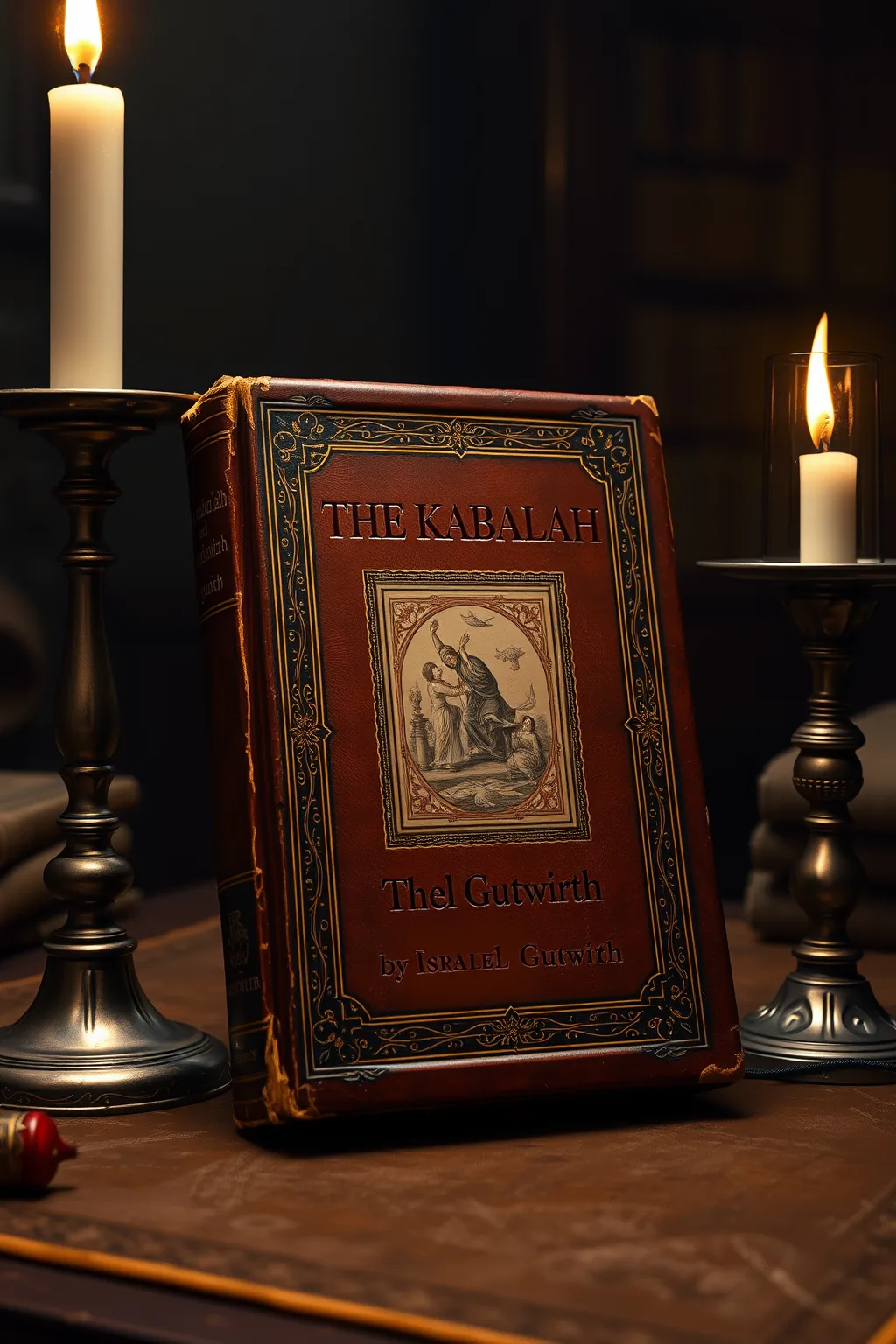
Israel Gutwirth's "The Kabbalah and Jewish Mysticism" offers a detailed examination of Kabbalistic tradition. The author works to separate the historical development of Jewish mysticism from later interpretations and common misunderstandings. Gutwirth emphasizes a return to original sources, aiming to clarify the core principles and historical progression of this complex field. The book seeks to provide a serious introduction for readers interested in a scholarly approach to Kabbalah.
This work is suited for students of comparative religion, Jewish studies, and esoteric philosophy. It addresses scholars and practitioners who want to understand Kabbalah beyond its recent widespread appeal. Those looking to correct inaccurate ideas or to establish their knowledge on historical and textual evidence will find this volume useful. It functions as a resource for academic study and personal investigation into Jewish mystical thought.
Published in 2021, Gutwirth's work engages with a renewed global interest in Kabbalah, often presented through non-Jewish or New Age frameworks. The book implicitly responds to the academic tradition established by scholars like Gershom Scholem, who brought significant scholarly attention to Kabbalah in the mid-20th century. Gutwirth's scholarship traces the lineage of Jewish mystical thought, a tradition with roots extending back centuries, including the creation of foundational texts like the Zohar during the medieval period. The study confronts the challenge of conveying this ancient wisdom within a contemporary, often secular, cultural context.
💡 Why Read This Book?
• Gain a precise understanding of *Ein Sof*, the Kabbalah's concept of the Infinite Divine, as Gutwirth distinguishes it from popular, secular interpretations, offering clarity on its unique theological role. • Learn about the *Sefirot* and their function within the Kabbalistic cosmology, a key element of Jewish mystical thought, as presented in the context of medieval Kabbalistic texts. • Understand the historical development of Kabbalah by examining its roots and the influence of key texts like the Zohar, providing a factual basis beyond speculative modern interpretations.
⭐ Reader Reviews
Honest opinions from readers who have explored this book.
❓ Frequently Asked Questions
What is the primary goal of Israel Gutwirth's "The Kabbalah and Jewish Mysticism"?
The book aims to provide an authoritative study of Kabbalah, celebrating its history and wisdom while actively dispelling popular misconceptions and distortions that have arisen from its widespread interest beyond Jewish scholarship.
Who is Israel Gutwirth and what is his background?
Israel Gutwirth is described as an acclaimed Torah scholar. His expertise lies in the study of Jewish texts and traditions, lending significant weight to his analysis of Kabbalah.
When was "The Kabbalah and Jewish Mysticism" first published?
The book was first published on March 23, 2021, positioning it as a contemporary examination of a long-standing mystical tradition.
How does Gutwirth address the popularization of Kabbalah?
Gutwirth confronts the widespread interest in Kabbalah by highlighting the numerous distortions of Jewish mystical doctrine that have emerged, often from alleged experts drawing on non-original sources.
What distinguishes this book from other works on Kabbalah?
This study emphasizes authenticity by grounding its exploration in original Jewish sources and scholarly understanding, in contrast to popular interpretations that may lack historical or textual accuracy.
What is the significance of mentioning 'Torah scholar' in relation to the author?
Referring to Gutwirth as a 'Torah scholar' signifies his deep familiarity with Jewish scripture and tradition, suggesting his analysis of Kabbalah is informed by a comprehensive understanding of its religious and textual context.
🔮 Key Themes & Symbolism
Authenticity in Mystical Study
The work critically addresses the contemporary surge in Kabbalah's popularity, arguing for a return to original Jewish sources. Gutwirth decries the proliferation of distorted doctrines and misinterpretations, particularly those arising from non-scholarly engagement or reliance on secondary, often Westernized, interpretations. This theme underscores the importance of textual fidelity and historical context in understanding esoteric traditions, urging readers to distinguish genuine Kabbalistic wisdom from its superficial appropriations.
The Structure of Divine Emanation
Central to the book is an exposition of the Kabbalistic cosmology, focusing on concepts like *Ein Sof* and the *Sefirot*. Gutwirth meticulously details how these divine attributes or emanations function as a framework for understanding the nature of God and the process of creation. The study clarifies the intricate relationships between the ten *Sefirot*, illustrating their role in bridging the infinite divine with the finite created world and explaining the mechanics of divine outflow.
Historical Trajectory of Kabbalah
Gutwirth traces the historical lineage of Jewish mysticism, highlighting key periods and texts that shaped its development. The work implicitly contrasts the medieval origins of foundational texts like the Zohar with later interpretations and modern popularizations. By situating Kabbalah within its historical progression, the book provides a scholarly perspective on its evolution, emphasizing the continuity and transformation of its core ideas over centuries.
Dispelling Popular Misconceptions
A significant objective of this study is to rectify the widespread misunderstandings surrounding Kabbalah. Gutwirth challenges the tendency for popular media and unqualified practitioners to present a simplified or inaccurate version of Jewish mysticism. The book acts as an antidote to such distortions, offering a scholarly and historically grounded account that respects the complexity and depth of the tradition.
💬 Memorable Quotes
Direct passages from the work, attributed to the author.
“The Kabbalah has aroused widespread interest well beyond the area of Jewish scholarship.”
— This observation frames the book's central concern: the significant gap between the academic study of Jewish mysticism and its popular reception, often leading to misunderstandings.
“popularization has also led to numerous distortions of Jewish mystical doctrine.”
— Gutwirth directly confronts the negative consequences of Kabbalah's increased visibility, pointing out how widespread interest has unfortunately resulted in the corruption of its core teachings.
“some alleged experts drawing on material other than original Jewish sources.”
— This highlights a key critique of contemporary Kabbalah, identifying a problematic trend where individuals present themselves as authorities without grounding their knowledge in authentic textual traditions.
“This authoritative study of the Kabbalah celebrates the history and wisdom of Jewish mysticism.”
— The blurb establishes the book's dual purpose: to honor the rich heritage of Jewish mysticism while simultaneously providing a reliable and scholarly guide to its authentic content.
“acclaimed Torah scholar Israel Gutwirth”
— This description emphasizes the author's credentials, positioning him as a trustworthy guide whose scholarship is rooted in a deep understanding of Jewish tradition and scripture.
🌙 Esoteric Significance
Tradition
This work is firmly situated within the Jewish Kabbalistic tradition, a lineage of Jewish mysticism with roots tracing back to medieval Spain and earlier esoteric interpretations of Jewish scripture. Gutwirth's approach adheres to a scholarly, historically-grounded perspective, distinguishing it from more syncretic or New Age interpretations that have become prevalent. It seeks to elucidate the internal logic and theological framework of Kabbalah as a distinct religious and philosophical system within Judaism.
Symbolism
Key symbols explored include the *Sefirot*, often depicted as a ten-branched tree, representing divine attributes and the structure of creation, and *Ein Sof*, the infinite, unknowable divine essence from which all emanates. The concept of *Tzimtzum*, or divine contraction, is also central, explaining how God makes space for creation. The shattering of the vessels (*Shevirat ha-Kelim*) symbolizes the introduction of imperfection and evil into the world.
Modern Relevance
Gutwirth's work is vital for contemporary thinkers seeking to understand Kabbalah beyond its popularized forms. It informs current discussions in comparative religion and esoteric studies by providing a robust, historically accurate foundation. Modern scholars and practitioners interested in the philosophical underpinnings of Western esotericism, or those seeking to engage with Jewish mystical traditions authentically, can draw upon Gutwirth's meticulous research to avoid common misinterpretations.
👥 Who Should Read This Book
• Students of comparative religion and Jewish studies seeking a scholarly overview of Kabbalah grounded in historical texts. • Esoteric practitioners aiming to understand the authentic roots of Jewish mysticism and differentiate them from modern appropriations. • Readers interested in correcting popular misconceptions about Kabbalah, desiring a clear explanation of its complex theological and cosmological concepts.
📜 Historical Context
Published in 2021, Israel Gutwirth's "The Kabbalah and Jewish Mysticism" entered a discourse already shaped by decades of academic engagement with Jewish mysticism, notably initiated by scholars like Gershom Scholem in the mid-20th century. Scholem's work, particularly his studies on figures like Isaac Luria and the development of Kabbalistic texts such as the Zohar (dating primarily from the medieval period), re-established Kabbalah as a subject of serious scholarly inquiry. Gutwirth's book arrives at a time when Kabbalah has achieved significant popular traction, often divorced from its original context. The work implicitly responds to this phenomenon by advocating for a return to primary sources and historical accuracy, contrasting with the more speculative or syncretic approaches that emerged in the late 20th century, such as those found in some New Age movements. The reception of such works is often polarized between academic circles valuing textual rigor and popular audiences seeking spiritual or self-help applications.
📔 Journal Prompts
The concept of *Ein Sof* as the ultimate divine source.
The function and symbolic meaning of the ten *Sefirot*.
The historical development of Kabbalistic texts like the Zohar.
Distinguishing authentic Kabbalistic doctrine from popular distortions.
The theological implications of *Tzimtzum* and *Shevirat ha-Kelim*.
🗂️ Glossary
Kabbalah
A system of Jewish mysticism that explores the nature of God, the creation of the universe, and the relationship between the divine and the human through esoteric interpretations of scripture and tradition.
Ein Sof
The Kabbalistic concept of the 'Infinite' or 'Without End,' representing God in His absolute, unknowable essence, prior to any manifestation or emanation.
Sefirot
The ten divine emanations or attributes through which the infinite God (Ein Sof) manifests and interacts with the created universe, forming a central structure in Kabbalistic cosmology.
Tzimtzum
A concept, notably developed by Isaac Luria, describing God's act of 'contraction' or self-limitation to create a void in which the universe could come into being.
Shevirat ha-Kelim
Literally 'the shattering of the vessels,' this Lurianic concept explains the origin of evil and imperfection in the world as a consequence of divine emanations overwhelming their containment vessels.
Zohar
The foundational text of Kabbalah, primarily written in medieval Aramaic, consisting of mystical commentaries on the Torah and explorations of divine mysteries.
Torah scholar
An individual possessing deep knowledge and expertise in the study of the Torah (the first five books of the Hebrew Bible) and related Jewish texts and traditions.