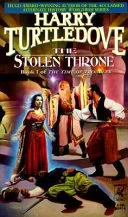
The Stolen Throne
 78
78

The Stolen Throne
Turtledove’s "The Stolen Throne" presents a world where the echoes of Byzantine administration clash with the whispers of ancient prophecy. The author masterfully grounds his fantastical elements in meticulously researched historical parallels, making the Videssian Empire feel palpably real. The initial chapters, detailing the unease along the Makuran border and Abivard's unsettling premonition, are particularly strong, establishing a mood of impending doom. However, the narrative occasionally falters under the weight of its own detail; the political maneuvering, while historically informed, can sometimes overshadow the personal stakes of characters like Abivard. A memorable passage involves the stark contrast between the mundane preparations for war and the otherworldly nature of the prophecy Abivard receives, highlighting the collision of the material and the mystical. Despite its occasional pacing issues, the work succeeds in creating a believable, albeit fictional, historical setting ripe for further exploration. The book offers a compelling, if sometimes dense, introduction to its world.
📝 Description
78
Harry Turtledove's 1995 novel, The Stolen Throne, uses a Byzantine-inspired empire to explore prophecy.
Set in the Videssian Empire, a land shaped by Byzantine history, The Stolen Throne unfolds during a fragile peace. The narrative centers on an impending conflict with the rival Makuran empire. Young Abivard, whose father guards a border fortress, receives a prophecy that hints at future events and impending war.
Turtledove, known for his detailed alternate history, grounds this supernatural story in meticulous research. The Videssian Empire reflects the administrative, military, and religious structures of the Eastern Roman Empire. This historical backdrop is key to understanding the novel's portrayal of border skirmishes and imperial politics, echoing real historical tensions.
The book appeals to readers of epic fantasy and alternate history who value complex world-building and political strategy. Those interested in how fantastical elements can intersect with historical settings, particularly Roman and Byzantine history, will find its intricate societal and military depictions rewarding.
Published in 1995, 'The Stolen Throne' participates in the historical fantasy tradition by blending speculative elements with a carefully researched historical setting. Turtledove's use of the Videssian Empire, a clear analog to the Eastern Roman Empire, grounds the supernatural occurrences within a believable, if fictionalized, geopolitical framework. The novel examines how mystical premonitions and prophecies intersect with the realities of imperial politics and warfare, suggesting a world where unseen forces shape grand historical movements as much as human ambition.
💡 Why Read This Book?
• Gain insight into how ancient prophecies, like the one concerning a "shield shining across the sea," can be interpreted as catalysts for both personal and political upheaval within a detailed historical fantasy setting. • Understand the strategic implications of border defenses and imperial rivalries, as depicted through the Videssian Empire's preparations against Makuran in the 1995 publication context. • Explore the concept of fate versus free will as characters grapple with foreknowledge, exemplified by Abivard's reactions to the cryptic visions preceding battlefield devastation.
⭐ Reader Reviews
Honest opinions from readers who have explored this book.
❓ Frequently Asked Questions
What historical period does "The Stolen Throne" draw inspiration from?
The novel is heavily inspired by the Byzantine Empire, mirroring its administrative structures, military conflicts, and imperial politics. The Videssian Empire serves as a fictional parallel, allowing Turtledove to explore alternate historical trajectories.
Who are the main rival empires in "The Stolen Throne"?
The primary rival empires are the Videssian Empire and Makuran. The narrative focuses on the uneasy peace and impending conflict between these two powers, particularly along their shared borders.
What is the central prophecy mentioned in the book?
Abivard receives a prophecy foretelling "a field, a hill, and a shield shining across the sea." This cryptic message hints at future battles and significant events that will impact the characters and the empire.
What role does Abivard play in the story?
Abivard is a central character whose father commands a border fortress. He receives a significant prophecy that foretells impending doom, placing him at the nexus of mystical foresight and the harsh realities of war.
Is "The Stolen Throne" part of a series?
Yes, "The Stolen Throne" is part of Harry Turtledove's "Videssos Cycle," which explores the history and politics of the fictional Videssian Empire.
When was "The Stolen Throne" originally published?
The book was first published in 1995, establishing its place within the historical fantasy genre during that era.
🔮 Key Themes & Symbolism
Imperial Rivalry and Border Wars
The narrative meticulously details the tense relationship between the Videssian Empire and its rival, Makuran. It showcases the strategic importance of border fortresses and the constant threat of conflict, echoing historical patterns of imperial expansion and defense. The story grounds itself in the realities of military preparedness and the political climate that precedes open warfare, offering a realistic portrayal of state-level tensions.
Prophecy and Foreknowledge
A central element is the cryptic prophecy received by Abivard, which foreshadows a devastating battle. This theme explores the nature of fate and free will, questioning how individuals and societies react to predetermined or foreseen events. The prophecy acts as a narrative engine, driving the plot forward and forcing characters to confront their destinies against the backdrop of war and political upheaval.
Byzantine Parallels
The Videssian Empire serves as a clear analogue to the historical Byzantine Empire. Turtledove infuses the world with details reflecting Byzantine administration, military organization, and societal structures. This allows readers to engage with familiar historical dynamics within a fantastical framework, exploring themes of imperial decay, succession crises, and the influence of religion and superstition on governance.
The Role of the Individual
Amidst the grand sweep of imperial conflict, the story highlights the experiences of individuals caught in the maelstrom. Abivard's personal journey, shaped by the prophecy he receives, underscores how seemingly small figures can be deeply affected by, and sometimes influence, major historical currents. The novel contrasts the fate of common soldiers and lords with the overarching actions of emperors and kings.
💬 Memorable Quotes
Direct passages from the work, attributed to the author.
“An eerie prophecy of a field, a hill, and a shield shining across the sea.”
— This cryptic vision serves as a direct premonition of impending conflict and loss, directly influencing Abivard's perspective and actions as the narrative unfolds towards battle.
“The King of Kings alerted his border holdings... to prepare for barbarian raids.”
— This highlights the ever-present threat of external conflict and the vast scale of imperial command, setting the stage for the larger geopolitical tensions explored in the novel.
“His father and his King lay dead upon the field of battle.”
— This stark outcome directly fulfills the ominous prophecy, demonstrating the brutal consequences of war and the potential validity of supernatural warnings within the story's world.
“An uneasy peace had prevailed these last few years.”
— This sets the initial tone of fragile stability, emphasizing that the apparent calm is merely a prelude to the inevitable eruption of hostilities between Videssos and Makuran.
“Even the small fortress where Abivard's father was lord.”
— This detail grounds the epic conflict in a specific, tangible location and personal connection, showing how large-scale imperial events directly impact individual lives and families.
🌙 Esoteric Significance
Tradition
While not explicitly tied to a single occult lineage, "The Stolen Throne" engages with themes common in esoteric traditions, particularly those concerning fate, prophecy, and the influence of unseen forces on worldly events. It shares a conceptual kinship with Gnosticism in its exploration of a seemingly fated reality and the struggle against predetermined outcomes. The narrative's focus on omens and divine or mystical intervention also echoes practices found in ancient divination and Hermetic thought, where cosmic influences are believed to shape human destiny.
Symbolism
The prophecy itself, with its "field, a hill, and a shield shining across the sea," functions as a potent symbolic cluster. The field and hill represent the physical locations of conflict and struggle, while the "shield shining across the sea" suggests a powerful, perhaps divine or fated, intervention or omen. This imagery evokes archetypal battlefield scenes and the concept of a guiding or warning light, common motifs in mythological and esoteric narratives about destiny and conflict.
Modern Relevance
Contemporary authors and practitioners interested in the intersection of history, mythology, and speculative fiction find "The Stolen Throne" a valuable study. Its exploration of how prophecies influence societal and individual actions remains relevant in discussions of belief systems and the psychology of leadership. Thinkers within the modern fantasy genre, particularly those focusing on intricate world-building rooted in historical parallels, often cite Turtledove's "Videssos Cycle" as an example of sophisticated historical fantasy.
👥 Who Should Read This Book
• Students of alternate history and Byzantine-inspired fantasy who seek meticulously crafted worlds and complex political narratives. • Readers interested in the interplay between historical realism and supernatural elements, particularly how prophecies and omens are integrated into a military and political setting. • Fans of Harry Turtledove's "Videssos Cycle" looking to explore the early stages of the empire's conflicts and the origins of its key characters and prophecies.
📜 Historical Context
Published in 1995, Harry Turtledove's "The Stolen Throne" emerged during a period of robust growth for the historical and alternate history fiction genres. Turtledove himself was already a prominent figure, having won the Sidewise Award for Alternate History in its inaugural year (1995) for his novel "The Guns of the South." "The Stolen Throne" draws heavily from the historical milieu of the Byzantine Empire, mirroring its administrative structures, military campaigns, and the pervasive influence of religion and superstition. This era, marked by conflicts along its frontiers and complex internal politics, provides a rich backdrop for Turtledove's speculative fiction. The novel’s publication year places it in conversation with other contemporary authors exploring historical reimaginations, though Turtledove’s specific focus on a Byzantine-inspired setting offered a less common, yet deeply researched, perspective within the broader fantasy landscape.
📔 Journal Prompts
Abivard's prophetic vision and its aftermath.
The strategic significance of the Videssian-Makuran border.
The contrast between imperial machinations and individual fate.
Interpreting the symbolism of the "shield shining across the sea."
The nature of barbarian threats versus internal imperial stability.
🗂️ Glossary
Videssos
The primary fictional empire in the novel, heavily inspired by the historical Byzantine Empire, known for its complex administration and protracted wars.
Makuran
The rival empire to Videssos, serving as the primary external antagonist and source of conflict along the border territories.
King of Kings
A title used for the supreme ruler of Makuran, indicating a hierarchical imperial structure similar to historical Persian or other Eastern empires.
Abivard
A key character who receives a significant prophecy, linking him directly to the unfolding events and the impending conflict.
Border Holdings
Territories and fortresses situated along the frontiers of an empire, crucial for defense against external threats and often sites of military tension.
Prophecy
A foretelling of future events, in this context, a cryptic message received by Abivard that foreshadows impending battle and loss.
The Stolen Throne
The title refers to a central conflict or objective within the larger narrative arc of the Videssos Cycle, implying themes of usurpation or contested succession.
This book appears in 1 collection
🔮 Readers Also Liked
Browse all →








From the “Scrying” Collection
View all →









More Free Occult Philosophy Books
View all →