The Wind Through the Keyhole
 76
76

The Wind Through the Keyhole
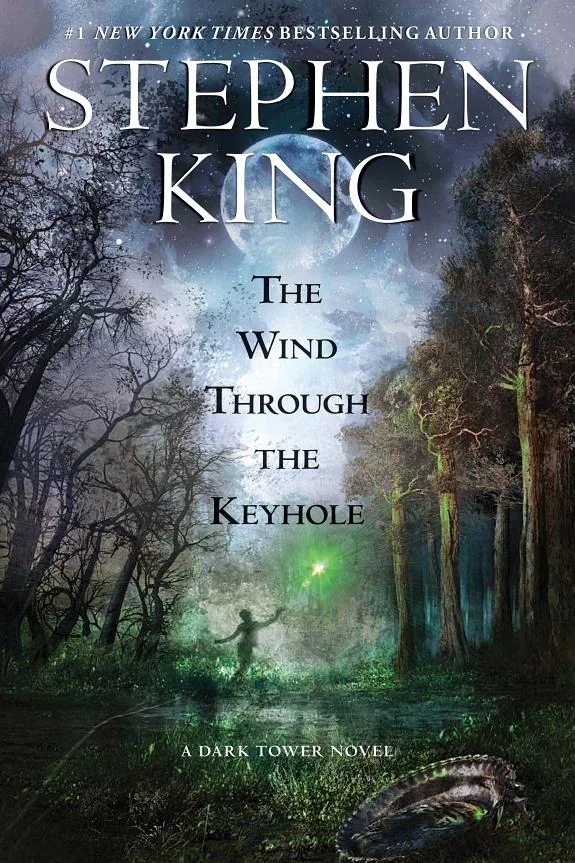
King's return to Mid-World with "The Wind Through the Keyhole" is a deliberate, almost meditative pause within the grander narrative of Roland's quest. The novel’s structure, a story told by Roland to his companions, allows for a dual focus: the immediate threat of a shape-shifter and the protracted, melancholic recollection of Roland's own formative experiences. The strength lies in this layering, offering glimpses into Roland's character that predate his established weary persona. However, the pacing can feel protracted, particularly in the embedded fairy tale, which, while thematically relevant, occasionally slows the momentum of the gunslinger's immediate predicament. The passage detailing Roland's encounter with the witch and the ensuing trials is particularly evocative, showcasing King's enduring skill in crafting chilling, allegorical encounters. Ultimately, it's a welcome, if sometimes meandering, expansion of the Dark Tower mythos.
📝 Description
76
Stephen King's 2012 novel, The Wind Through the Keyhole, adds a story-within-a-story to the Dark Tower saga.
This volume returns readers to Mid-World, focusing on Roland Deschain, the last gunslinger. While on a perilous journey, Roland recounts a tale from his youth to his ka-tet, a group bound by destiny. The story he shares concerns a young Roland's encounter with a monster and his subsequent rite of passage.
King's narrative structure here emphasizes the power of storytelling itself. The tale Roland tells is framed by his present dangers and the enduring questions of his quest for the Dark Tower. Readers who have followed Roland's journey will find new layers to his character and the world he inhabits. The book also touches upon the concept of the man-in-black and the constant struggle against encroaching darkness.
Published over a decade after the series' original conclusion, this novel serves as a bridge, enriching the established mythology. It reflects King's continued interest in mythic quests and the nature of heroism, weaving elements of Western, fantasy, and horror into a familiar yet distinct narrative.
The Dark Tower series, to which this book belongs, is deeply rooted in archetypal mythologies and the concept of the hero's journey. Roland's quest for the titular tower can be seen as a metaphysical pursuit, a struggle against forces that threaten not just his world but existence itself. The series draws on Western, fantasy, and science fiction tropes, creating a unique blend that explores fate, free will, and the cyclical nature of time, all central concerns in many esoteric traditions. The inclusion of the 'man-in-black' further emphasizes the dualistic struggle between light and shadow.
💡 Why Read This Book?
• Learn about the early trials of Roland Deschain, including his first encounter with a witch and the moral quandaries of his youth, offering a deeper understanding of his character arc initiated in the original Dark Tower novels. • Explore the symbolic significance of the "wind through the keyhole" motif, which represents hidden knowledge and the power of stories to reveal truths about oneself and the world. • Experience King's masterful blending of horror, fantasy, and Western genres as he constructs a narrative within a narrative, showcasing his skill in building immersive worlds and complex characters like Roland.
⭐ Reader Reviews
Honest opinions from readers who have explored this book.
❓ Frequently Asked Questions
Is "The Wind Through the Keyhole" a good starting point for the Dark Tower series?
While "The Wind Through the Keyhole" adds depth, it's best read after establishing familiarity with the core Dark Tower books, particularly "The Gunslinger." It functions as a supplementary narrative, enriching the lore rather than initiating it.
What is the significance of the title "The Wind Through the Keyhole"?
The title refers to the idea of secrets, hidden knowledge, and the way stories can offer glimpses into other realities or deeper truths, much like wind passing through a small opening.
Who is the primary antagonist in this specific Dark Tower novel?
The primary antagonist Roland recounts dealing with is a shape-shifter, a creature that murders and assumes the identities of its victims, presenting a deceptive and terrifying threat.
What role does Roland's ka-tet play in this book?
Roland's ka-tet (Eddie, Susannah, Jake, and Oy) are present as the audience for Roland's story. He tells them the tale of his youth as a way to pass the time during a storm and to share a part of his past.
Does this book contain elements of fairy tales or folklore?
Yes, Roland tells a story within the main narrative that strongly resembles a fairy tale, featuring a young hero, a witch, and moral trials, which serves as a parallel to his own life.
When was "The Wind Through the Keyhole" originally published?
"The Wind Through the Keyhole" was first published on November 6, 2012, serving as an interquel within the Dark Tower series.
🔮 Key Themes & Symbolism
The Gunslinger's Rite of Passage
This volume revisits Roland Deschain's youth, detailing a critical period where he confronts not only external monsters but also the internal moral field of his burgeoning role as a gunslinger. The narrative explores the sacrifices and ethical compromises required to protect the innocent, particularly through his encounter with the witch and the subsequent trials he endures. It highlights how early experiences shape the stoic, weary warrior readers come to know, emphasizing the weight of responsibility and the loss of innocence inherent in his path.
The Power of Storytelling
Central to "The Wind Through the Keyhole" is the act of telling and listening to stories. Roland recounts a tale from his past to his ka-tet, using narrative as a means of survival during a brutal storm and as a method for imparting wisdom. The embedded story itself functions as a fable, mirroring the challenges faced by the protagonist and offering allegorical lessons. This theme underscores the esoteric notion that stories are not mere entertainment but conduits for truth, memory, and collective understanding, shaping reality itself within the Dark Tower universe.
Facing the Unknown
The novel looks at the confrontation with shapeshifting creatures and the psychological terror they represent. The antagonist, a murderous shape-shifter, embodies the fear of the unknown and the deceptive nature of appearance. Roland's journey involves navigating environments fraught with peril, both physical and psychological, forcing him to rely on his skills and intuition. This theme appeals to esoteric traditions that emphasize confronting one's shadow self and the hidden forces that govern existence.
Mid-World's Fragile Reality
The book further illustrates the decaying and fantastical nature of Mid-World, a realm existing outside conventional reality. The presence of magical elements, ancient curses, and beings like the witch underscores the unique cosmology of the Dark Tower series. Roland's quest is intrinsically tied to the fate of this world, and the narrative explores the threats that seek to unravel its already precarious existence, highlighting the constant struggle between order and chaos.
💬 Memorable Quotes
Direct passages from the work, attributed to the author.
“Every story has a beginning, a middle, and an end.”
— This simple statement, often attributed to Roland, expresses the narrative structure and the fundamental way humans understand and process reality through sequential events and cause-and-effect.
“The wind is blowing through the keyhole.”
— This phrase, from which the book derives its title, symbolizes the intrusion of the unknown, hidden truths, or external forces into one's sealed-off reality or understanding.
“When the blood is forgotten, the magic is forgotten.”
— This interpretation suggests that true power or understanding stems from a connection to primal forces or one's lineage, and that forgetting these roots leads to a loss of efficacy or spiritual connection.
“A story is like a road.”
— This metaphor highlights the journey inherent in narrative, suggesting that stories, like roads, lead somewhere and are shaped by the path taken and the experiences encountered along the way.
💡 Key Ideas
Editorial paraphrase of the work's core concepts — not direct quotes.
There are other worlds than these.
A core tenet of the Dark Tower series, this quote points to the multiverse concept and the interconnectedness of various realities, a fundamental aspect of King's cosmology.
🌙 Esoteric Significance
Tradition
While not explicitly tied to a single esoteric lineage, "The Wind Through the Keyhole" draws heavily from archetypal storytelling found in Gnostic traditions and Western folklore. The concept of a fallen world, the search for ultimate truth (the Tower), and the dualistic struggle between good and evil echo Gnostic cosmology. The embedded fairy tale, with its trials and symbolic encounters, aligns with the allegorical nature of many esoteric teachings, presenting a path of spiritual development through hardship.
Symbolism
The "wind through the keyhole" itself symbolizes hidden knowledge, secrets, and the permeability of reality's boundaries. The witch encountered by young Roland represents the archetypal feminine shadow, a figure of temptation and dangerous power that must be confronted and understood. The concept of the "Man in Black" embodies the primal adversary, the force of chaos and destruction that tests the protagonist's resolve and guides his destiny, often through manipulation.
Modern Relevance
Contemporary authors exploring themes of fragmented realities, the nature of consciousness, and the enduring power of narrative continue to find resonance in King's work. Thinkers in Jungian psychology might analyze the archetypal figures of the witch and the hero. Furthermore, the book's exploration of how stories shape identity and collective memory aligns with postmodern literary theory and studies on myth-making in the 21st century.
👥 Who Should Read This Book
• Dedicated fans of Stephen King's Dark Tower series seeking to deepen their understanding of Roland Deschain's origins and the intricate lore of Mid-World. • Readers interested in complex, interwoven narratives that blend genres like fantasy, horror, and Western, and who appreciate a story-within-a-story structure. • Students of comparative mythology and folklore who wish to analyze how classic fairy tale elements are reinterpreted within a modern, epic fantasy context.
📜 Historical Context
Published in 2012, "The Wind Through the Keyhole" arrived as a significant interquel in Stephen King's Dark Tower saga, a series that had already spanned decades and seen its conclusion in 2004. This period represented a moment of reflection and expansion for King's most ambitious work, occurring between the main series' finale and the eventual 2017 film adaptation. The early 2010s saw a resurgence of interest in epic fantasy and mythic quests across literature, a trend King himself had pioneered. While not directly engaging with a specific competing school of thought in the way an academic treatise might, King's blend of fantasy, horror, and Western elements implicitly challenged genre boundaries. The book’s reception was largely positive among existing fans, appreciated for deepening Roland Deschain's backstory and the lore of Mid-World, a evidence of King’s enduring ability to maintain narrative coherence across a sprawling, multi-volume epic.
📔 Journal Prompts
Roland's early encounter with the witch and the subsequent moral choices.
The significance of the "wind through the keyhole" as a metaphor for knowledge.
The narrative function of the story-within-a-story structure in this volume.
The symbolic representation of the shape-shifter as an antagonist.
Reflections on the theme of a hero's rite of passage as depicted through Roland's youth.
🗂️ Glossary
Mid-World
The primary setting for the Dark Tower series, a decaying, surreal landscape that exists in a parallel universe, blending elements of fantasy, Western, and post-apocalyptic fiction.
Gunslinger
The warrior-protector order to which Roland Deschain belongs. They are masters of firearms and guardians of the balance in Mid-World, though their order is now nearly extinct.
Ka-tet
A group of individuals bound together by destiny (ka) to fulfill a common purpose. Roland's ka-tet includes Eddie Dean, Susannah Dean, Jake Chambers, and the billy-bumbler Oy.
The Tower
The nexus of all realities in Stephen King's multiverse, the ultimate goal of Roland's quest. Its stability is essential for the preservation of all existence.
Man in Black
A recurring antagonist, often identified as the sorcerer Walter O'Dim or Randall Flagg, representing chaos and malevolence, who frequently obstructs Roland's path.
Shape-shifter
A creature capable of altering its physical form to deceive or impersonate others. In this book, it is a predatory entity that murders and assumes the guise of its victims.
Rite of Passage
A ceremony or event marking an important stage in someone's life, particularly in their transition from childhood to adulthood. The book details Roland's version of this.
This book appears in 1 collection
🔮 Readers Also Liked
Browse all →








From the “Shapeshifting” Collection
View all →





More Free Occult Philosophy Books
View all →