The intuitive way
 73
73

The intuitive way
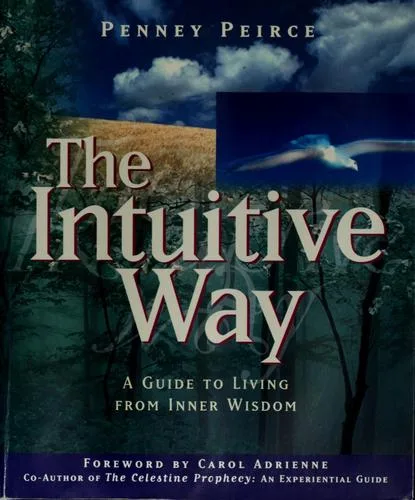
Penney Peirce's "The Intuitive Way" moves beyond vague spiritual pronouncements to offer a pragmatic, almost scientific, dissection of intuitive knowing. Peirce meticulously categorizes the various ways we receive intuitive information, from subtle energetic shifts to clear imaginal downloads. Her strength lies in this detailed mapping, providing a vocabulary and structure for something often described only in poetic terms. The chapter discussing the "intuitive mind" versus the "ego mind" is particularly sharp, offering concrete strategies for discernment. However, the sheer volume of distinctions and categories, while comprehensive, can occasionally feel overwhelming, requiring diligent rereading. The book's focus is firmly on the internal mechanics, and while it touches on external application, a reader seeking extensive case studies of intuition in action might find it more theoretical than practical. It’s an invaluable reference for anyone serious about cultivating their inner compass, offering clarity and actionable steps where others offer only mystery.
📝 Description
73
Penney Peirce published "The Intuitive Way" in 1997, detailing a structured approach to understanding intuition.
Penney Peirce's 1997 book, "The Intuitive Way," offers a detailed system for recognizing and developing intuitive abilities. It separates intuition from mere hunches, showing how it can guide decisions, foster creativity, and deepen spiritual connection. The book is for anyone wanting to connect with their inner guidance more reliably, whether they are new to the idea or have already had intuitive experiences. It also addresses those who are curious about how intuition works and anyone feeling lost or seeking a more genuine life path.
The methods presented are clear enough for beginners but contain enough substance for those already familiar with inner work. Peirce establishes different categories of intuitive knowing and provides practical exercises to strengthen these capacities. The goal is to help readers distinguish authentic intuitive input from the noise of everyday thoughts or ego.
Published in 1997, "The Intuitive Way" emerged during a time of growing interest in consciousness and personal growth, influenced by earlier New Age movements. Peirce's work stood out by presenting a systematic, psychologically grounded method for understanding intuition. It moved beyond personal stories to offer a guide on the operational aspects of intuition, placing it within the wider scope of human perception and intelligence. This approach distinguished it from other contemporary explorations of intuitive healing.
💡 Why Read This Book?
• Learn to distinguish between genuine intuitive signals and ego-driven thoughts, a skill crucial for making authentic decisions, as detailed in Peirce's "intuitive mind" versus "ego mind" framework. • Develop practical techniques for accessing different types of intuitive knowing, such as "knowing by feeling" and "knowing by imagery," enhancing your perception beyond the five senses. • Gain a structured understanding of the "intuitive process," enabling you to reliably engage with and interpret inner guidance, fostering greater self-trust and clarity.
⭐ Reader Reviews
Honest opinions from readers who have explored this book.
❓ Frequently Asked Questions
What is the primary goal of Penney Peirce's 'The Intuitive Way'?
The book aims to demystify intuition, providing readers with a comprehensive understanding of its various forms and practical methods to cultivate and discern intuitive guidance reliably.
How does 'The Intuitive Way' differentiate intuition from ordinary thought?
Peirce distinguishes the "intuitive mind" from the "ego mind," detailing how intuitive knowing arises differently and offering techniques to recognize and trust these distinct inner signals.
When was 'The Intuitive Way' first published?
Penney Peirce's foundational work, 'The Intuitive Way,' was first published in 1997, placing it within the context of late 20th-century explorations of consciousness.
Are there exercises in 'The Intuitive Way' to practice intuition?
Yes, the book offers numerous exercises and practices designed to help readers develop and refine their intuitive capacities, encouraging active engagement with the concepts presented.
What types of intuitive knowing does Peirce describe?
Peirce outlines several modes of intuitive knowing, including "knowing by feeling," "knowing by imagery," and "knowing by knowing," providing specific characteristics for each.
Is 'The Intuitive Way' suitable for beginners?
Absolutely. While thorough, the book provides a clear, step-by-step approach that is accessible to those new to exploring intuition, as well as offering depth for experienced practitioners.
🔮 Key Themes & Symbolism
Discernment of Intuitive Signals
A central theme is the critical skill of discernment, enabling readers to differentiate authentic intuitive guidance from the noise of the ego mind, fear, or wishful thinking. Peirce provides specific markers and internal sensations associated with true intuition, contrasting them with the often-anxious or self-serving nature of ego-driven thoughts. This focus empowers individuals to trust their inner knowing more reliably, leading to more aligned decisions and actions in daily life and spiritual practice.
Mapping Intuitive Capacities
The work meticulously maps the range of human intuition, identifying distinct ways in which intuitive information is received. Peirce categorizes these as "knowing by feeling," "knowing by imagery," and "knowing by knowing," among others. This detailed taxonomy moves intuition from a vague concept to a tangible set of skills that can be understood, practiced, and honed, offering readers a clear understanding of their own intuitive strengths and areas for development.
The Intuitive Process
Peirce outlines a structured 'intuitive process,' guiding readers through the stages of receiving, interpreting, and acting upon intuitive insights. This framework emphasizes the importance of present-moment awareness and non-judgmental observation as prerequisites for clear intuitive reception. By understanding this process, individuals can create space for their inner wisdom to surface and be effectively integrated into their conscious awareness and decision-making.
Energetic Awareness
Underpinning the practical techniques is an awareness of subtle energy and vibration. The book suggests that intuitive perception is deeply connected to one's energetic state and the energetic environment. Cultivating sensitivity to these subtle cues is presented as a vital component of enhancing intuitive abilities. This aspect connects the psychological and practical aspects of intuition to a more holistic, energetic understanding of reality.
💬 Memorable Quotes
Direct passages from the work, attributed to the author.
“Intuition is not a mystical gift but a natural human capacity.”
— This statement reframes intuition from an exclusive, almost magical ability, to an inherent part of human consciousness that can be understood and developed through conscious practice and awareness.
“Discernment is the key to working through the intuitive realm.”
— This highlights the practical necessity of learning to distinguish between true inner guidance and other mental phenomena, emphasizing that developing intuition requires developing critical judgment about its messages.
“The intuitive mind speaks in images, feelings, and knowingness.”
— This succinctly captures the primary modes through which Peirce suggests intuition communicates, offering a basic classification for readers to begin identifying their own intuitive experiences.
“Paying attention to subtle shifts in energy is fundamental to intuitive perception.”
— This points to the energetic underpinnings of intuition, suggesting that sensitivity to vibrational changes in oneself and one's environment is crucial for receiving clear intuitive information.
“Our inner guidance system is always active, but often ignored.”
— This emphasizes the constant availability of intuition, suggesting that the challenge lies not in its absence, but in our willingness and ability to tune into and heed its messages.
🌙 Esoteric Significance
Tradition
While not strictly adhering to a single esoteric lineage, "The Intuitive Way" draws heavily from Western Esotericism's emphasis on inner development and the cultivation of subtle perception. It speaks to Gnostic ideals of inner knowing and Hermetic principles of correspondence between the inner and outer worlds. Peirce's work can be seen as a modern interpretation of the "as above, so below" principle, focusing on how inner intuitive states reflect and influence outer reality, making esoteric concepts accessible through psychological and practical frameworks.
Symbolism
The book frequently employs the metaphor of "inner maps" or "landscapes" to describe the intuitive realm, suggesting a symbolic geography of consciousness. The concept of "energy" and "vibration" functions symbolically, representing the subtle forces that connect individuals and inform intuitive insights. Peirce also uses the symbol of "light" implicitly, referring to clarity and illumination as outcomes of well-honed intuition, contrasting it with the "shadow" of unconscious or ego-driven patterns.
Modern Relevance
Contemporary thinkers and practitioners in fields like mindfulness-based stress reduction, coaching, and intuitive development often reference Peirce's foundational work. Her systematic approach to understanding and cultivating intuition remains highly relevant for coaches, therapists, and spiritual directors seeking to guide clients toward their inner wisdom. Schools of thought focused on embodied cognition and somatic experiencing also find resonance with Peirce's emphasis on feeling and subtle energetic awareness as crucial components of intuitive knowing.
👥 Who Should Read This Book
• Individuals new to exploring their intuition: You'll gain a clear, structured understanding of what intuition is, how it works, and practical exercises to begin developing this capacity. • Professionals in helping or creative fields: This book offers tools to enhance discernment and decision-making, allowing you to tap into deeper insights for client work or creative projects. • Anyone seeking greater self-awareness and authenticity: Learn to trust your inner guidance system more fully, leading to more aligned choices and a deeper connection with your authentic self.
📜 Historical Context
Published in 1997, "The Intuitive Way" emerged during a period of significant public and academic interest in consciousness, psychology, and alternative approaches to knowing. The late 20th century saw a broadening of the New Age movement, with a growing desire for more structured and less dogmatic spiritual practices. Peirce's work distinguished itself from earlier, more esoteric or purely anecdotal accounts by offering a psychologically grounded, systematic exploration of intuitive abilities. It arrived in a milieu where thinkers like Daniel Goleman were popularizing concepts of "emotional intelligence," suggesting a societal readiness to acknowledge and codify non-rational forms of knowing. While not directly engaging with academic fields like parapsychology in a formal sense, the book contributed to a broader cultural conversation about the mind's latent capacities, offering a practical toolkit that appealed to a wide audience seeking personal growth and deeper self-understanding.
📔 Journal Prompts
Reflect on the distinction between your 'intuitive mind' and 'ego mind' during a recent decision.
Identify instances where you experienced 'knowing by feeling' versus 'knowing by imagery.'
Explore the concept of 'discernment' in relation to a subtle intuitive nudge you received.
Consider how cultivating 'energetic awareness' might shift your perception of everyday interactions.
Map out your personal 'intuitive process' for a specific type of situation.
🗂️ Glossary
Intuitive Mind
The aspect of consciousness that directly perceives information through non-linear means such as feelings, images, or direct knowing, distinct from analytical or logical thought processes.
Ego Mind
The part of the personality driven by self-preservation, past experiences, fears, and desires, which can often mimic or obscure true intuitive signals.
Knowing by Feeling
An intuitive mode characterized by direct physical or emotional sensations that provide information or guidance, often felt in the body.
Knowing by Imagery
An intuitive mode where insights are received as mental pictures, symbols, or visions, requiring interpretation.
Knowing by Knowing
A direct, unmediated form of intuitive insight that arrives as a sudden certainty or understanding, without a discernible feeling or image.
Discernment
The crucial skill of differentiating between genuine intuitive perception and other mental phenomena like thoughts, fantasies, or emotional reactions.
Energetic Awareness
The capacity to perceive subtle shifts in energy fields, both within oneself and in the external environment, which can provide intuitive information.
🔮 Readers Also Liked
Browse all →








More by Penney Peirce
All books →



More Free Occult Philosophy Books
View all →