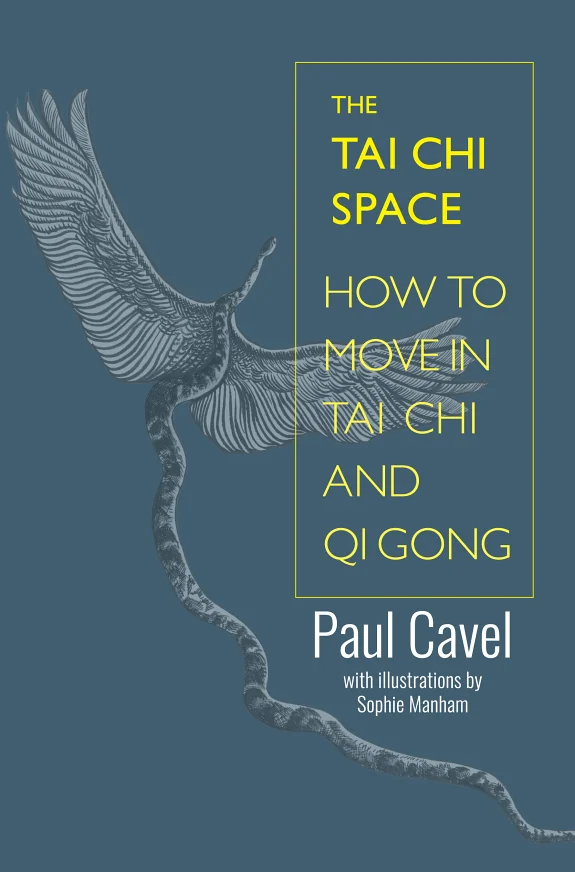
The Tai Chi Space
 76
76

The Tai Chi Space
Paul Cavel’s The Tai Chi Space offers a welcome departure from the legion of books that merely catalog movements or historical anecdotes. Instead, Cavel directs the reader’s attention to the fundamental principles that, when truly embodied, animate practices like Tai Chi and Qi Gong. His presentation of 42 distinct concepts, each framed by an image and explanation, attempts to bypass intellectualization and foster direct somatic understanding. This approach is the book’s primary strength; it seeks to imbue the practitioner with a felt sense of internal dynamics. However, the reliance on imagery, while conceptually useful, can sometimes feel abstract without extensive personal exploration or guidance. The section on 'The Principle of the Center' is particularly effective, illustrating how maintaining a stable yet adaptable core affects the entire body’s structure and energetic coherence. While the book admirably avoids esoteric jargon for its own sake, its utility hinges on the reader’s willingness to engage in dedicated, introspective practice. The Tai Chi Space is a valuable resource for those seeking to move beyond superficial technique towards a deeper, embodied understanding of internal arts.
📝 Description
76
Paul Cavel's The Tai Chi Space, published in 2017, clarifies the core principles behind internal martial arts.
Published in 2017, The Tai Chi Space by Paul Cavel does not focus on a specific martial art form. Instead, it distills the fundamental principles animating internal arts like Tai Chi and Qi Gong. The book presents 42 conceptual images, each with a brief explanation, designed to make these core ideas tangible. Cavel aims to help practitioners integrate these concepts into their physical training, experiencing their effects across different internal arts systems. The work emphasizes the 'how' and 'why' of internal movement, moving beyond simple memorization of techniques.
This book is suitable for internal arts practitioners at any level, from beginners seeking a solid grounding to advanced students wanting to deepen their knowledge. It appeals to those who are not content with merely repeating forms but desire a felt understanding of the principles that govern energy cultivation and body mechanics. Individuals interested in the deeper, often hidden, aspects of movement practices, including those outside Tai Chi or Qi Gong who recognize shared energetic principles, will find it valuable. The book is for dedicated students aiming for true embodiment.
The Tai Chi Space fits within the contemporary interest in applying Eastern esoteric philosophies practically. While many texts cover historical lineages or philosophical discussions of practices like Tai Chi, Cavel's work prioritizes direct, felt experience of core principles. It avoids being solely an academic study or a manual for learning forms. The book acts as a link between abstract knowledge and lived practice, aligning with a trend among Western practitioners to grasp the energetic mechanics described in classical texts. It encourages engagement with the more hidden, hermetic dimensions of these arts, moving past superficial interpretations.
💡 Why Read This Book?
• Gain a tangible understanding of the 42 core principles underlying internal arts, moving beyond rote memorization of forms, as detailed in the book's conceptual images. • Develop a felt sense of energetic flow and body mechanics applicable to any internal discipline, fostered by Cavel's focus on embodied principles rather than specific sequences. • Connect with the hermetic underpinnings of practices like Tai Chi and Qi Gong, understanding their energetic architecture as explored through the book's unique conceptual framework.
⭐ Reader Reviews
Honest opinions from readers who have explored this book.
❓ Frequently Asked Questions
What makes 'The Tai Chi Space' different from a typical Tai Chi form book?
Unlike books that teach specific sequences, 'The Tai Chi Space' focuses on 42 fundamental principles that animate all internal arts. It aims to build a somatic understanding of how these arts function, rather than teaching a particular set of movements.
Is this book only for Tai Chi practitioners?
No, while the principles are drawn from Tai Chi and Qi Gong, the book is designed for any practitioner of internal arts. It emphasizes universal concepts of energy, structure, and intention that apply across different systems.
How does Paul Cavel present these principles?
Cavel uses 42 distinct images, each accompanied by a brief explanation, to convey complex principles. The goal is to make these concepts accessible and easily integrated into a practitioner's physical experience.
What is the primary goal of practicing the principles outlined in 'The Tai Chi Space'?
The primary goal is to cultivate a deeper, embodied awareness of internal mechanics and energetic flow. This allows practitioners to feel the principles come alive in their bodies, enhancing their practice regardless of style.
When was 'The Tai Chi Space' first published?
The book was first published on October 31, 2017, making it a relatively recent contribution to the literature on internal arts.
Does the book include detailed instructions for forms?
No, the book explicitly states it is not a form instruction manual. Its focus is on the underlying principles and concepts that inform the practice of internal arts.
🔮 Key Themes & Symbolism
Somatic Principle Integration
The core of this work lies in its method for integrating abstract principles into physical reality. Cavel presents 42 conceptual images, not as static diagrams, but as dynamic keys to unlock embodied understanding. The emphasis is on feeling the principle – such as maintaining a central axis or employing intention to guide energy – within the flesh. This approach moves beyond intellectual comprehension, aiming for a visceral grasp that transcends specific forms or styles. It suggests that true mastery in internal arts stems from this direct, felt experience of foundational energetic and structural concepts.
The Essence of Internal Arts
Cavel seeks to reveal the common energetic and structural language spoken by various internal arts, despite their diverse outward expressions. By distilling Tai Chi and Qi Gong into 42 fundamental principles, he provides a framework applicable to any discipline focused on internal cultivation. This perspective challenges the notion that mastery is solely tied to intricate forms, instead highlighting the universal dynamics of breath, mind, and energy. The book serves as a guide to perceiving the deeper currents that unify these practices, offering a means to refine one's training irrespective of stylistic affiliation.
Principle-Based Practice
The book advocates for a practice grounded in core principles rather than a mere replication of movements. Each of the 42 concepts presented acts as a building block for developing profound internal awareness. Cavel's intention is for practitioners to 'feel them come alive in your flesh,' transforming abstract notions into lived sensations. This method encourages a more intelligent and efficient approach to training, where understanding the underlying mechanics leads to more dynamic and effective execution, fostering a deeper connection to the body's inherent wisdom.
💬 Memorable Quotes
Direct passages from the work, attributed to the author.
“Each of the 42 principles, portrayed as images and accompanied by brief explanations, are aimed at conveying how internal arts techniques function.”
— This highlights Cavel's unique approach: using visual metaphors and concise explanations to illuminate the functional mechanics of internal arts, prioritizing understanding over rote memorization.
“This book is designed to teach the fundamentals that drive and underpin internal arts training at all levels and stages of development, not a form.”
— This statement clearly defines the book's scope, emphasizing its focus on foundational principles rather than instructional content for specific martial art forms or meditative sequences.
“help you embed them and feel them come alive in your flesh - regardless of the specific systems, styles or forms you train.”
— This points to the ultimate goal of Cavel's method: achieving a deeply embodied understanding and practical application of internal principles that transcends stylistic boundaries.
“The aim is to convey how internal arts techniques function in ways that help you embed them and feel them come alive in your flesh.”
— This emphasizes the experiential nature of the learning process Cavel advocates, focusing on the practitioner's internal sensation and direct experience of the principles.
“Learn the 42 Essential Principles of Tai Chi & Qi Gong”
— This serves as a direct, action-oriented summary of the book's content, clearly stating its purpose and the core elements it seeks to impart to the reader.
🌙 Esoteric Significance
Tradition
While rooted in the observable practices of Tai Chi and Qi Gong, The Tai Chi Space engages with the hermetic underpinnings common to many esoteric traditions. It echoes principles found in Hermeticism regarding the correspondence between the microcosm (the body) and the macrocosm (the universe), and the power of intention (the mind) to shape energetic reality. The book’s focus on cultivating internal energy and refining bodily structure for energetic efficiency aligns with alchemical and Taoist concepts of transformation and balance.
Symbolism
The book utilizes 'images' as conceptual symbols to represent abstract principles. These are not always overtly symbolic in a traditional sense but function as mnemonic devices and focal points for internal awareness. For instance, the 'principle of the center' symbolizes the unshakeable yet adaptable core of being, analogous to the alchemical idea of the philosopher's stone as a point of ultimate balance and power. The flow of energy, often depicted through imagery of yielding and yielding force, relates to Taoist concepts of Yin and Yang, and the alchemical axiom 'Solve et Coagula' (dissolve and coagulate) in its dynamic interplay.
Modern Relevance
Contemporary practitioners in fields ranging from somatic psychology and embodied cognition to advanced martial arts and meditative disciplines can draw from Cavel's work. Thinkers exploring the intersection of consciousness and physical practice, or those seeking to bridge the gap between Eastern energetic arts and Western scientific understanding of the body, find resonance here. Schools that emphasize internal development over external form, and practitioners seeking a deeper, felt understanding of energetic principles, often reference or embody the concepts presented in The Tai Chi Space.
👥 Who Should Read This Book
• Practitioners of internal martial arts (Tai Chi, Baguazhang, Xingyi Quan) and Qi Gong seeking to deepen their understanding beyond form-based training, by learning to embody core principles. • Students of esoteric philosophy and comparative mysticism interested in the energetic and structural underpinnings of mind-body practices, looking for a practical application of hermetic concepts. • Bodyworkers, movement therapists, and coaches aiming to enhance their understanding of subtle energy, postural integrity, and intentional movement, drawing on principles applicable to human kinetics.
📜 Historical Context
The Tai Chi Space, published in 2017, arrived during a period where Western engagement with Eastern internal arts was maturing beyond superficial introductions. While figures like Bruce Lee had earlier popularized martial arts, and scholars like Joseph Needham had extensively documented Chinese science and technology, Cavel’s work carved a niche by focusing on the *embodiment* of principles. Unlike more traditional texts that might detail lineage or philosophy, Cavel’s book offers a practical, somatic approach. It emerged in an era where practitioners increasingly sought to understand the energetic mechanics often described esoterically, moving past purely physical interpretations. The book can be seen as part of a broader trend in the late 20th and early 21st centuries, influenced by thinkers like George I. Gurdjieff and his emphasis on 'work on oneself,' to integrate mind, body, and spirit through disciplined practice. Its reception was likely within circles already familiar with internal arts, appealing to those seeking deeper comprehension beyond standard form instruction.
📔 Journal Prompts
The concept of the 'center' as a stable yet adaptable core.
How the 42 principles might inform your current training regimen.
The feeling of energy transfer as described through the principle of yielding.
Integrating 'intention' to guide breath and movement.
The experience of 'embedding' a principle rather than just knowing it.
🗂️ Glossary
Internal Arts
A category of practices, primarily originating from China, that emphasize the cultivation of internal energy (Qi), mind-body integration, and energetic principles over brute physical force.
Qi Gong
A system of coordinated body posture and movement, breathing, and meditation used for health, spirituality, and martial arts training. It involves cultivating and balancing life energy (Qi).
Tai Chi
A Chinese martial art practiced for both defense training and its health benefits. It is characterized by slow, flowing movements, deep breathing, and a focus on internal energy and balance.
Form
In the context of martial arts and internal arts, a sequence of movements practiced repetitively to develop skill, coordination, and the embodiment of underlying principles.
Principle
A fundamental truth or proposition that serves as the foundation for a system of belief or behavior, or for a chain of reasoning. In this context, it refers to core concepts governing internal arts practice.
Somatic
Relating to the body, especially as distinct from the mind or spirit. Somatic practices focus on direct experience and awareness of bodily sensations.
Embodiment
The process of experiencing and expressing an idea, emotion, or principle through one's physical being; making abstract concepts manifest in the body.