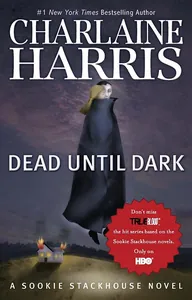
Dead Until Dark (Sookie Stackhouse, #1)

 81
81

Dead Until Dark (Sookie Stackhouse, #1)
Charlaine Harris’s *Dead Until Dark* is less an earth-shattering revelation and more a competent, enjoyable introduction to a world where vampires walk among us. The novel’s strength lies in its grounded depiction of Sookie Stackhouse, a waitress whose telepathy makes her an outsider in Bon Temps, Louisiana. Harris avoids overly dramatic pronouncements, instead focusing on Sookie’s pragmatic reactions to the extraordinary. A notable limitation is the pacing; some plot points, particularly around the mid-point murder mystery, feel somewhat predictable, relying on familiar genre conventions. The introduction of Bill Compton, the vampire who disrupts Sookie's life, is handled with a certain intriguing restraint, though his characterization occasionally leans into brooding archetypes. Ultimately, *Dead Until Dark* succeeds as a sturdy, character-focused entry into the paranormal genre.
📝 Description
81
Charlaine Harris's 2003 novel, Dead Until Dark, introduced Sookie Stackhouse and a world where vampires walk among us.
In Charlaine Harris's 2003 novel, Dead Until Dark, readers meet Sookie Stackhouse, a telepathic waitress working at Merlotte's bar in a small Louisiana town. Her life takes a turn when she encounters Bill Compton, a vampire who has recently emerged from hiding. The story unfolds in a reality where supernatural beings have revealed themselves to the public, blending Southern Gothic atmosphere with elements of urban fantasy. This premise allows Harris to examine the complexities of human and supernatural interaction.
Sookie's telepathic abilities become a focal point, influencing her relationships and her perception of the world. The narrative grapples with themes of privacy, trust, and the challenges of forming genuine connections when one possesses unusual gifts. The novel sets up a unique dynamic between the ordinary and the extraordinary, as Sookie navigates her new reality and her involvement with Bill. It explores the societal shifts that occur when the hidden world of the supernatural becomes visible.
Published in 2003, Dead Until Dark arrived during a period of renewed popular interest in vampire fiction. The novel positioned itself within this resurgence by grounding supernatural elements in a contemporary, small-town setting, departing from more traditional gothic or young adult interpretations. Harris's approach focused on the social implications of creatures of the night existing openly, rather than solely on their inherent mystery or danger. This book offers a perspective on how established folklore interacts with modern societal structures when the veil between worlds thins.
💡 Why Read This Book?
• Gain insight into the early development of the 'vampires revealed' trope, as seen in Sookie's interactions with Bill Compton shortly after supernatural beings publicly announced their existence. • Experience the unique narrative voice of Sookie Stackhouse, whose telepathic abilities offer a distinct perspective on human and non-human relationships, a core element from the novel's 2003 publication. • Explore a blend of Southern Gothic atmosphere and modern paranormal investigation, characteristic of the narrative style established in this first book of the Sookie Stackhouse series.
⭐ Reader Reviews
Honest opinions from readers who have explored this book.
❓ Frequently Asked Questions
When was Dead Until Dark first published?
Dead Until Dark, the first book in the Sookie Stackhouse series by Charlaine Harris, was first published in 2003. This marked the beginning of a popular paranormal romance saga.
What is Sookie Stackhouse's main supernatural ability?
Sookie Stackhouse's primary supernatural ability is telepathy, allowing her to read the thoughts of others. This ability is a central element explored throughout the novel.
What is the setting for Dead Until Dark?
The novel is primarily set in the fictional small town of Bon Temps, Louisiana, a location that grounds the supernatural elements in a distinctly Southern atmosphere.
Who is the main romantic interest introduced in Dead Until Dark?
The main romantic interest introduced is Bill Compton, a vampire who has recently emerged from his coffin and becomes involved with Sookie Stackhouse.
What societal change is occurring in the book's world?
In the world of Dead Until Dark, supernatural beings, including vampires, have recently revealed their existence to humanity, leading to societal adjustments and integration.
Is Dead Until Dark part of a series?
Yes, Dead Until Dark is the first book in the Sookie Stackhouse series by Charlaine Harris, which continues with subsequent novels exploring Sookie's life and relationships.
🔮 Key Themes & Symbolism
Supernatural Integration
The novel grapples with the societal implications of supernatural beings, primarily vampires, choosing to reveal themselves to the human population. This integration is not seamless, as evidenced by the cautious interactions Sookie has with Bill Compton. The work explores the potential for both acceptance and fear when the 'other' becomes visible, a concept Harris revisits throughout the series, examining how everyday life adapts to the presence of beings with extraordinary abilities or origins.
Telepathy and Privacy
Sookie Stackhouse's telepathic abilities serve as a primary lens through which themes of privacy and genuine connection are examined. Her constant awareness of others' thoughts creates a barrier to authentic intimacy, making her particularly sensitive to those whose minds she cannot read, like vampires. The narrative questions whether true understanding is possible when thoughts are laid bare, and conversely, what genuine connection means when one party's inner world is hidden.
Southern Gothic Atmosphere
Set in the fictional town of Bon Temps, Louisiana, the novel employs key elements of Southern Gothic literature. This includes a sense of place, the presence of secrets, the blending of the mundane with the uncanny, and a focus on eccentric characters. The humid, insular environment of the South provides a fertile ground for the introduction of vampires and other supernatural elements, creating a unique tone that distinguishes it from more urban fantasy settings.
Found Family and Belonging
Despite her unique ability, Sookie often feels like an outsider. Her role as a waitress at Merlotte's and her interactions with her grandmother and friends form a semblance of a found family. The arrival of Bill Compton challenges her established relationships and sense of belonging, pushing her to redefine her place in the world. The narrative explores how connections are forged, especially for those who don't fit neatly into societal norms.
💬 Memorable Quotes
Direct passages from the work, attributed to the author.
““I was a normal waitress in a small town who could read minds.””
— This statement expresses Sookie's self-perception at the outset of her extraordinary encounters. It highlights the contrast between her ordinary life in Bon Temps and the extraordinary nature of her telepathic gift, setting the stage for the conflicts and relationships that define the series.
““The worst thing you can do is get into a situation where you can’t get out.””
— This sentiment reflects Sookie's cautious approach to her increasingly dangerous circumstances. It hints at the perils of entanglement, particularly when dealing with supernatural entities whose motives and powers are not fully understood by humans.
💡 Key Ideas
Editorial paraphrase of the work's core concepts — not direct quotes.
“If I have to explain, you won’t understand.”
This line, often used by characters when faced with explaining the inexplicable or the supernatural, speaks to the inherent difficulty of bridging the gap between the known and the unknown. It underscores the novel's exploration of societal integration of the paranormal.
“He was a vampire, and I was a waitress. That’s a bit like an alien and a human, or a ghost and a zombie.”
This paraphrase captures Sookie's initial assessment of the vast differences between herself and Bill Compton. It emphasizes the 'otherness' of vampires within the narrative's world and the inherent challenges in forming relationships across such fundamental divides.
“I’d never met a vampire before, and I had no intention of changing that part of my life.”
This quote, or a close interpretation, illustrates Sookie's initial apprehension and resistance to the supernatural world. It sets up the narrative arc where she is compelled to confront her prejudices and fears, particularly concerning Bill Compton.
🌙 Esoteric Significance
Tradition
While not strictly adhering to a single esoteric lineage, *Dead Until Dark* draws from broader occult and folkloric traditions surrounding vampires. Its depiction of vampires as sentient, albeit predatory, beings with a history and a desire for integration aligns with modern occult interpretations that move beyond purely demonic or monstrous archetypes. The novel taps into the archetype of the 'outsider' or 'hidden people' prevalent in various mythologies, presenting vampires as a distinct, albeit dangerous, society interacting with the human world.
Symbolism
The vampire, particularly Bill Compton, symbolizes the allure of the forbidden and the unknown. His existence represents a departure from the natural order, embodying themes of immortality, seduction, and hidden danger. The small town of Bon Temps itself can be seen as a symbol of normalcy and tradition, which is disrupted by the arrival of the supernatural, highlighting the tension between the mundane and the extraordinary. Sookie's telepathy symbolizes a different kind of 'otherness,' representing the burden of knowledge and the struggle for genuine connection.
Modern Relevance
Contemporary paranormal romance and urban fantasy authors continue to explore themes introduced in *Dead Until Dark*, such as human-supernatural relationships, the societal impact of revealed paranormal beings, and protagonists with unique psychic abilities. Thinkers and writers in modern occultism might analyze Harris's work for its nuanced portrayal of a classic mythological figure, examining how the vampire archetype has evolved to reflect contemporary anxieties and desires regarding difference, power, and societal change.
👥 Who Should Read This Book
• Readers interested in the early development of paranormal romance featuring vampires as integrated societal members, exploring the dynamics presented in the novel's 2003 publication. • Fans of character-driven narratives that focus on strong, independent female protagonists navigating complex relationships and supernatural circumstances. • Those who appreciate Southern Gothic aesthetics blended with modern fantasy elements, seeking a unique atmosphere in their reading choices.
📜 Historical Context
Published in 2003, *Dead Until Dark* emerged during a period of burgeoning interest in paranormal romance and urban fantasy. While Anne Rice had popularized vampires for decades, the early 2000s saw a shift towards more contemporary settings and relatable protagonists. Charlaine Harris's series entered a landscape where *Buffy the Vampire Slayer* had just concluded its influential run, and Stephenie Meyer's *Twilight* was on the horizon (published 2005). Harris distinguished her work by focusing on a Southern setting and a more mature, less angsty tone than some YA contemporaries. The novel's premise—vampires having publicly announced their existence—was a unique take on integration, offering a different perspective from the more clandestine supernatural societies often depicted. While not facing significant censorship, its success paved the way for the explosion of the paranormal romance genre throughout the 2000s.
📔 Journal Prompts
Sookie's telepathy as a constant sensory overload and its impact on her relationships.
The societal adjustment to vampires publicly revealing themselves in 2003.
Bon Temps, Louisiana, as a microcosm for human and supernatural coexistence.
Bill Compton's emergence from his coffin and his integration into modern society.
The concept of 'outsider' status, as experienced by Sookie and the vampires.
🗂️ Glossary
Vampire
In the context of *Dead Until Dark*, a supernatural being with a need to consume blood, possessing enhanced physical abilities and a lifespan far exceeding humans. They have recently revealed their existence to the general populace.
Telepath
An individual, such as Sookie Stackhouse, who possesses the ability to read the thoughts of others. This is often depicted as an involuntary or difficult-to-control psychic power.
Bon Temps
The fictional small town in Louisiana where the Sookie Stackhouse series is set. It serves as a backdrop for the unfolding supernatural events and character interactions.
Merlotte's
A bar in Bon Temps owned by Sookie's cousin, where she works as a waitress. It functions as a central social hub and a place where many key events occur.
Shapeshifter
A supernatural being capable of transforming into an animal form. While not heavily featured in this first book, they are part of the broader supernatural world Harris introduces.
Fangbanger
A slang term used within the series to describe humans who are sexually attracted to vampires.
Human blood substitutes
Synthetic blood products developed for vampires to consume, reducing their reliance on feeding from humans and facilitating their integration into society.
🔮 Readers Also Liked
Browse all →









More by Charlaine Harris
All books →




More Free Occult Philosophy Books
View all →