The inner eye of love

 73
73

The inner eye of love
William Johnston's "The Inner Eye of Love" presents a compelling case for love as the ultimate perceptual tool. The author’s strength lies in his ability to bridge the gap between academic psychology and esoteric spirituality, particularly in his treatment of the "inner eye" as a faculty of divine perception. He avoids sentimentalism, grounding his concepts in rigorous introspection. A notable passage discusses the ego's resistance to unconditional love, framing it as a necessary hurdle in the development of genuine spiritual sight. However, the book's dense prose, while precise, can occasionally feel repetitive, particularly when reiterating the distinction between egoic and divine love. This density might deter readers seeking more accessible introductions to mystical thought. Despite this, Johnston offers a unique lens through which to view spiritual development, emphasizing experience over dogma.
📝 Description
73
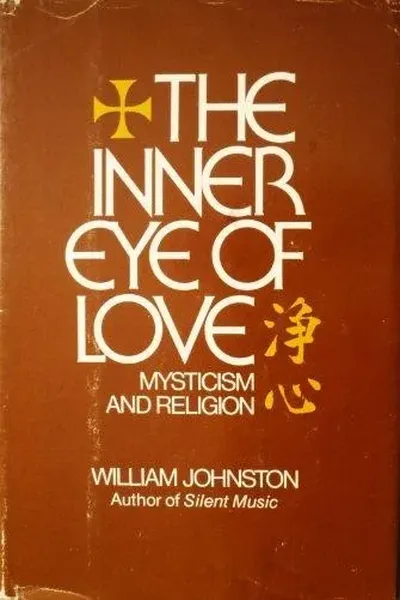
William Johnston's 1997 book considers how love functions as a spiritual pathway.
Published in 1997, "The Inner Eye of Love" examines mystical consciousness and the power of love as a means to spiritual growth. Johnston discusses how cultivating an intuitive awareness, termed the 'inner eye,' can lead to a deeper connection with oneself and the divine. The book is for readers interested in the interplay between psychology, spirituality, and contemplative practices. It addresses how to develop inner awareness, understand divine love, and integrate spiritual insights into everyday life. Those familiar with contemplative traditions or psychological approaches to spirituality will find the material relevant.
The work addresses the "inner eye" as a capacity for direct spiritual perception, separate from sensory experience. Johnston presents love not just as a feeling but as a core force in creation and connection. He also discusses barriers to this perception, including ego and societal conditioning, and suggests methods for overcoming them through practice and self-awareness.
Released in the late 20th century, "The Inner Eye of Love" emerged during a time of increasing engagement with Jungian psychology and Eastern contemplative traditions in Western esoteric thought. Johnston's work fits into a broader conversation about the relationship between scientific psychology and spiritual experience, drawing connections to earlier thinkers like Carl Jung and Thomas Merton.
💡 Why Read This Book?
• Gain a framework for understanding spiritual perception beyond ordinary senses, drawing on Johnston's concept of the "inner eye" as a distinct faculty for experiencing divine love. • Explore the nature of love not as a mere emotion, but as a foundational cosmic force, as detailed in the book's analysis of its creative and connective power. • Learn practical methods for overcoming egoic limitations and societal conditioning, essential for cultivating this heightened spiritual awareness, as discussed in the book's introspective exercises.
⭐ Reader Reviews
Honest opinions from readers who have explored this book.
❓ Frequently Asked Questions
What is the primary concept of "The Inner Eye of Love"?
The book's core concept is the "inner eye," a faculty of spiritual perception cultivated through love, enabling a direct experience of the divine and deeper self-awareness, distinct from ordinary sensory input.
Who is William Johnston and what is his background?
William Johnston was an Irish Jesuit priest and author whose work often explored the intersection of psychology, particularly Jungian analysis, and Christian mysticism, seeking to integrate these fields.
When was "The Inner Eye of Love" first published?
"The Inner Eye of Love" was first published in 1997, placing it within a period of significant cross-pollination between psychological inquiry and spiritual literature.
Does the book offer practical exercises for developing the 'inner eye'?
Yes, while not always explicitly formatted as exercises, the book offers insights and reflections that guide the reader toward cultivating the inner eye through disciplined introspection and understanding the nature of divine love.
How does Johnston define 'love' in this context?
Johnston defines love as more than an emotion; it is presented as a fundamental, creative force of the universe and the essential tool for unlocking spiritual perception and achieving true connection.
What is the relationship between psychology and spirituality in the book?
The book posits a deep, integrative relationship, using psychological concepts to illuminate spiritual experiences and suggesting that a developed spiritual awareness can profoundly impact one's psychological well-being.
🔮 Key Themes & Symbolism
The Faculty of Spiritual Perception
Johnston introduces the concept of the "inner eye" as a distinct mode of perception, separate from the five physical senses. This faculty is not merely intellectual but intuitive and experiential, allowing for direct apprehension of spiritual realities. The work posits that this inner eye is activated and sharpened through the practice and understanding of divine love, enabling a more profound and authentic engagement with existence. It challenges conventional ways of seeing, suggesting that true insight comes from a cultivated inner awareness rather than external observation alone.
Love as the Unifying Principle
The book elevates love from an interpersonal emotion to a cosmic, unifying force. Johnston explores how divine love acts as the fundamental energy that binds all things and serves as the primary conduit for spiritual insight. By understanding and embodying this love, individuals can overcome the fragmentation caused by egoic consciousness and societal conditioning. The text suggests that this form of love is not passive but an active principle that dissolves barriers and fosters connection, making it the essential element in the development of the inner eye.
Egoic Limitations and Spiritual Growth
A significant focus is placed on the obstacles to spiritual perception, primarily the limitations imposed by the ego and ingrained patterns of thought and behavior. Johnston meticulously details how egoic structures create a veil, obscuring the direct experience of love and the divine. The path to opening the inner eye involves a conscious effort to transcend these limitations through self-awareness, introspection, and a commitment to unconditional love, which naturally erodes the ego's hold and facilitates a more expansive consciousness.
Integration of Psychology and Spirituality
William Johnston, himself a scholar of Jungian psychology and mysticism, skillfully bridges these two domains. "The Inner Eye of Love" uses psychological insights to illuminate spiritual concepts, and vice versa. The book explores how archetypal patterns and the unconscious mind relate to mystical experiences. This integration provides a framework for understanding spiritual development not as separate from psychological health, but as intimately connected, offering a holistic approach to personal transformation.
💬 Memorable Quotes
Direct passages from the work, attributed to the author.
“Love is the eye of the soul.”
— This aphorism expresses the book's central thesis: that love is not merely an emotion or action, but the very faculty through which the deepest spiritual truths and the essence of reality are perceived.
“The ego is a master of disguise, obscuring direct experience.”
— This highlights a key obstacle to spiritual insight discussed in the work. The ego's self-protective mechanisms and ingrained patterns create a distorted view of reality, preventing the 'inner eye' from functioning clearly.
“True perception is an act of surrender, not assertion.”
— This conveys the idea that opening oneself to spiritual realities requires letting go of rigid intellectual frameworks and personal will, allowing for a more receptive and intuitive mode of knowing.
“The divine is not found 'out there,' but within the awakened heart.”
— This emphasizes the immanent nature of the divine as explored in the book. Spiritual realization is an internal journey, accessible through cultivating love and inner awareness, rather than seeking external validation.
“Love dissolves the boundaries that separate self from other.”
— This points to the unifying aspect of divine love as presented by Johnston. It breaks down the illusion of separateness, fostering a profound sense of interconnectedness with all beings and the cosmos.
🌙 Esoteric Significance
Tradition
While rooted in Christian contemplative practice, "The Inner Eye of Love" draws heavily from universal mystical principles akin to Gnosticism and Hermeticism in its emphasis on direct, intuitive knowledge and the cultivation of inner faculties. It departs from strict dogmatic adherence by focusing on the experiential core of spiritual realization, positing love as the universal key. The work aligns with traditions that view spiritual awakening as an internal process of unveiling rather than external acquisition.
Symbolism
The central symbol is the "inner eye," representing a faculty of direct spiritual perception, analogous to the Hermetic concept of the 'eye of the heart' or the Gnostic 'spark of the divine' within. Another key motif is "love" itself, not as mere sentiment but as the active, creative force that enables this inner vision, mirroring concepts of divine eros or the Logos in other traditions. The book also implicitly uses the symbolism of veils and light to represent the obscuring nature of the ego and the illumination that spiritual insight brings.
Modern Relevance
Contemporary spiritual teachers and psychologists exploring consciousness, mindfulness, and the integration of the self continue to find value in Johnston's work. Thinkers in the field of positive psychology and those interested in non-dual awareness often reference his insights on love as a transformative force. His approach speaks to modern contemplative practices that emphasize inner experience and the development of intuitive understanding, bridging psychological well-being with spiritual depth.
👥 Who Should Read This Book
• Individuals exploring the intersection of Jungian psychology and mysticism: Gain insights into how psychological concepts like the ego can be understood and transcapped through a spiritual lens. • Contemplative practitioners seeking deeper meaning: Discover how love functions as a primary faculty for spiritual perception, offering a path to profound inner connection. • Scholars of comparative religion and spirituality: Understand a late 20th-century attempt to synthesize Christian contemplative traditions with broader psychological and esoteric thought.
📜 Historical Context
Published in 1997, "The Inner Eye of Love" emerged during a period where Western intellectual currents were increasingly engaging with non-dualistic spiritual traditions and depth psychology. William Johnston, an Irish Jesuit priest, was active in a milieu that sought to reconcile Christian mysticism with insights from figures like Carl Jung. His work stands in dialogue with other contemporary authors exploring consciousness and spirituality, such as Matthew Fox and Richard Rohr, who were also popularizing more integrated spiritual perspectives. While not facing overt censorship, Johnston's approach, which integrated psychological analysis with contemplative theology, represented a departure from more dogmatic religious interpretations prevalent in some quarters. His previous works had already established him as a voice bridging these disciplines, making this book a continuation of his efforts to articulate a path of spiritual development grounded in both inner experience and intellectual rigor.
📔 Journal Prompts
The nature of the 'inner eye' as a faculty of perception.
The role of unconditional love in dissolving egoic barriers.
How does one differentiate between egoic desire and divine impulse?
Reflections on love as a creative, unifying force.
Experiences of direct spiritual apprehension versus intellectual understanding.
🗂️ Glossary
Inner Eye
A faculty of direct spiritual perception, distinct from ordinary sensory or intellectual understanding. It is cultivated through love and introspection, allowing for intuitive apprehension of deeper realities.
Ego
In this context, the self-centered aspect of personality that operates through defense mechanisms and self-interest, often obscuring direct spiritual experience and creating a sense of separateness.
Divine Love
A universal, unconditional, and creative force that transcends human emotion. It is presented as the fundamental principle of existence and the primary means by which spiritual perception is awakened.
Spiritual Perception
The act of apprehending spiritual truths and realities directly, through intuition and inner awareness, rather than solely through rational thought or sensory data.
Surrender
The act of relinquishing egoic control and resistance to allow for direct experience and alignment with divine will or cosmic order.
Consciousness
The state of being aware, encompassing not only everyday awareness but also deeper levels of spiritual and intuitive knowing cultivated through contemplative practice.
Introspection
The examination of one's own conscious thoughts and feelings; self-reflection, crucial for developing the 'inner eye' and understanding egoic patterns.
🔮 Readers Also Liked
Browse all →







More by Johnston, William
All books →


More Free Mysticism & Contemplation Books
View all →