Edith Stein
 78
78

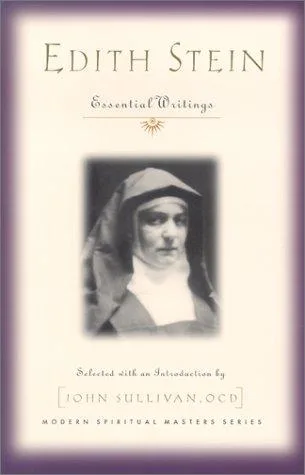
Edith Stein
Edith Stein's intellectual trajectory, as detailed in this volume, offers a compelling study of philosophical rigor meeting spiritual devotion. The narrative effectively charts her journey from a prominent student of phenomenology at the University of Freiburg to her embrace of Carmelite life. A particular strength lies in its depiction of Stein's philosophical roots, showcasing her engagement with Edmund Husserl's thought and her own contributions to understanding the human person. However, the book occasionally feels dense, particularly in its philosophical exegeses, which might challenge readers less familiar with phenomenological terminology. The passage detailing her reflections on the nature of prayer, bridging philosophical introspection with mystical experience, stands out as a moment where her dual intellectual and spiritual life is most vividly rendered. This biography serves as a solid, if occasionally demanding, introduction to a significant 20th-century thinker and mystic.
📝 Description
78
This 1988 volume details Edith Stein's journey from philosopher to Carmelite nun.
John Sullivan's work traces the life of Edith Stein (1891-1942), a German philosopher whose intellectual pursuits led her to Catholicism and a life as a Carmelite nun, Sister Teresa Benedicta of the Cross. The book examines her academic career, her studies in phenomenology under Edmund Husserl at Marburg and Freiburg universities, and her deep spiritual transformation.
Stein's intellectual development unfolded during a dynamic period in early 20th-century German philosophy, marked by significant innovation and societal change. Her conversion in 1922 and her entry into the Carmelite order in 1933 occurred as Nazism gained power, a force that would eventually lead to her death at Auschwitz. The book situates her philosophical engagement with existentialism, a current also explored by contemporaries like Martin Heidegger, within this historical context.
Sullivan's account highlights Stein's critical engagement with phenomenology, focusing on her ideas about empathy and the structure of the human person. It also covers her philosophical concept of the 'spirit' and its connection to the individual and the divine. The text concludes by examining her later writings, her contemplative practice within the Carmelite tradition, and her understanding of suffering.
This biography situates Edith Stein's life and thought within the broader currents of 20th-century Catholic mysticism and contemplative traditions. Her synthesis of rigorous philosophical inquiry, particularly her work on phenomenology and the structure of the person, with the Carmelite path of prayer and sacrifice offers a unique perspective. The book examines how her spiritual development, culminating in her martyrdom, reflects a deep engagement with the perennial themes of union with the divine and the meaning of suffering within a contemplative framework.
💡 Why Read This Book?
• Understand Edith Stein's philosophical evolution from her studies with Edmund Husserl at the University of Freiburg to her profound spiritual insights. • Grasp the complexities of phenomenological thought as applied to the human person and spirit, as developed in her pre-conversion philosophical works. • Explore the integration of Carmelite contemplative practices with rigorous intellectual inquiry, particularly as manifested in her later writings before her martyrdom in 1942.
⭐ Reader Reviews
Honest opinions from readers who have explored this book.
❓ Frequently Asked Questions
What was Edith Stein's primary philosophical school of thought?
Edith Stein was a student and collaborator of Edmund Husserl, the founder of phenomenology. Her early philosophical work was deeply rooted in this tradition, exploring concepts of empathy, consciousness, and the human person.
When did Edith Stein convert to Catholicism and join a religious order?
Edith Stein converted to Catholicism in 1922 and entered the Carmelite Order in 1933, taking the name Sister Teresa Benedicta of the Cross.
What is the significance of Edith Stein's martyrdom?
Edith Stein was murdered at the Auschwitz concentration camp in 1942. Her death is seen as a martyrdom, particularly in relation to her Jewish heritage and her Christian faith, and she was canonized as a saint by the Catholic Church.
Who was Edmund Husserl and what was his relationship with Edith Stein?
Edmund Husserl was a German philosopher and the founder of phenomenology. Edith Stein was one of his most brilliant students and assistants at the University of Freiburg, significantly contributing to the development of phenomenological thought.
What were Edith Stein's main philosophical interests?
Her main interests included the philosophy of consciousness, the nature of the human person, empathy, and the relationship between the finite self and the infinite. She sought to bridge philosophical inquiry with spiritual experience.
What is the main theme explored in Edith Stein's later philosophical and spiritual writings?
Her later works focus on the spiritual life, contemplative prayer within the Carmelite tradition, and a profound understanding of suffering and sacrifice, often framed by her philosophical background.
🔮 Key Themes & Symbolism
Phenomenology and the Person
The work details Stein's early philosophical career, deeply influenced by Edmund Husserl and the phenomenological method. She applied this approach to analyze the structure of the human person, focusing on concepts like empathy and the subjective experience of consciousness. Her doctoral dissertation, 'The Problem of Empathy,' is a foundational text in this area, demonstrating how subjective experience can be rigorously studied. This theme explores the bridge between empirical observation of consciousness and philosophical understanding of the 'I'.
Spiritual Conversion and Carmelite Life
A central theme is Stein's dramatic conversion from Judaism to Catholicism in 1922, followed by her entry into the Carmelite Order in 1933. The text examines the intellectual and spiritual motivations behind this profound shift, tracing her engagement with Christian philosophy and mysticism. Her life as Sister Teresa Benedicta of the Cross is explored, highlighting her commitment to contemplative prayer and her understanding of the Carmelite vocation as a path to spiritual union.
Suffering, Sacrifice, and the Divine
Later sections of the book address Stein's reflections on suffering, particularly in the context of her impending fate and the rise of Nazism. Her writings are interpreted through the lens of Christian theology, viewing suffering as a potential path to union with God and as a means of participating in Christ's sacrifice. This theme is intrinsically linked to her martyrdom at Auschwitz, presenting her death as a culmination of her spiritual journey and a profound act of faith.
The Synthesis of Faith and Reason
This theme underscores Stein's unique position as both a philosopher and a mystic. The book illustrates how she sought to integrate her rigorous philosophical training with her deep Catholic faith. Her work demonstrates a belief that reason and faith are not in opposition but can mutually illuminate each other, with philosophical inquiry leading to spiritual truth and spiritual experience informing philosophical understanding. This synthesis is evident in her later theological and spiritual writings.
💬 Memorable Quotes
Direct passages from the work, attributed to the author.
“The structure of the human person.”
— This phrase expresses Stein's phenomenological approach to understanding the self, moving beyond abstract theories to analyze the lived experience and inherent constitution of an individual.
“The problem of empathy.”
— This refers to Stein's significant early philosophical work, exploring how we understand and connect with the inner lives of others, a key concept in her phenomenology.
“Carmelite contemplative prayer.”
— This highlights the specific form of deep, meditative prayer that characterized Stein's life within the Carmelite Order, emphasizing inner silence and divine union.
“The spirit and the divine.”
— This points to Stein's philosophical exploration of the spiritual dimension of human existence and its ultimate connection to the transcendent or God.
💡 Key Ideas
Editorial paraphrase of the work's core concepts — not direct quotes.
Suffering as a path to God.
This summarizes a core aspect of Stein's later spiritual thought, interpreting hardship and pain not just as burdens, but as potential means of spiritual growth and connection to the divine.
🌙 Esoteric Significance
Tradition
While not fitting neatly into a single pre-defined esoteric lineage, Edith Stein's work draws heavily on Catholic mysticism, particularly the Carmelite tradition. Her approach can be seen as an attempt to synthesize rigorous philosophical method (phenomenology) with the contemplative practices and theological insights of Western Christian spirituality. This integration seeks a form of 'perennial wisdom' accessible through both intellectual rigor and deep inner experience, aligning with broader Hermetic and Neoplatonic ideals of achieving union with the Divine.
Symbolism
Key symbols in Stein's life and thought include the Carmelite habit, representing renunciation and dedication to a life of prayer; the Cross, a central symbol of Christian sacrifice and redemption, which she adopted as her religious name; and the concept of the 'spirit,' which for her was the core of human existence, capable of transcending material limitations to connect with the divine. Her writings often explore the symbolism inherent in spiritual practices like prayer and meditation.
Modern Relevance
Contemporary thinkers in philosophy of religion, Catholic theology, and contemplative studies frequently engage with Edith Stein's work. Her unique synthesis of phenomenology and mysticism offers a model for integrating intellectual inquiry with spiritual practice in an era often characterized by secularism. Movements focused on interfaith dialogue and the philosophy of suffering also find resonance in her life and writings, making her a relevant figure for those seeking meaning beyond purely material or rationalistic frameworks.
👥 Who Should Read This Book
• Students of philosophy, particularly phenomenology and existentialism, interested in how abstract concepts can inform spiritual life. • Individuals exploring the intersection of religious faith and intellectual pursuit, seeking examples of thinkers who harmonized these domains. • Researchers of 20th-century German history and the impact of Nazism on intellectuals and religious figures.
📜 Historical Context
Edith Stein's life unfolded during a period of immense intellectual ferment and catastrophic political upheaval in Germany. The early 20th century saw the rise of influential philosophical movements like phenomenology, with figures such as Edmund Husserl and Martin Heidegger at its forefront. Stein, a brilliant student of Husserl at the University of Freiburg, developed her own significant contributions within this milieu. Her conversion to Catholicism in 1922 and her subsequent decision to enter the Carmelite Order in 1933 occurred against the rising tide of Nazism. This ideology, which would lead to the Holocaust, represented a stark ideological counterpoint to the universalist and humanistic traditions Stein engaged with. While her philosophical work was respected, her Jewish heritage and eventual religious life placed her in increasing peril. She was later arrested and murdered at Auschwitz in 1942, a tragic end for a scholar who sought profound truths.
📔 Journal Prompts
Edith Stein's concept of empathy.
The structure of the human person in phenomenology.
Carmelite contemplative prayer.
The significance of the Cross in her life.
Bridging philosophical inquiry and spiritual truth.
🗂️ Glossary
Phenomenology
A philosophical method focused on the study of consciousness and the phenomena that appear in consciousness, emphasizing direct experience and subjective understanding.
Edmund Husserl
The German philosopher considered the founder of phenomenology, who heavily influenced Edith Stein's early philosophical development and academic career.
Carmelite Order
A Catholic religious order founded in the 12th century, known for its contemplative life, emphasis on prayer, and mystical tradition.
Sister Teresa Benedicta of the Cross
The religious name taken by Edith Stein upon entering the Carmelite Order, signifying her embrace of Christian sacrifice and devotion.
Martyrdom
The suffering or death of persons for adhering to a belief or cause, particularly in a religious context. Stein is recognized as a martyr by the Catholic Church.
Contemplative Prayer
A form of prayer characterized by quiet reflection and a focus on union with God, often involving stillness and deep inner listening.
Spirit
In Stein's philosophy, refers to the innermost core of the human person, capable of transcendence and direct connection with the divine.
🔮 Readers Also Liked
Browse all →








More Free Mysticism & Contemplation Books
View all →