Christian mysticism today

 72
72

Christian mysticism today
William Johnston's 1984 exploration of Christian mysticism arrives with a gentle, yet firm, invitation to interiority. He skillfully navigates the often-intimidating landscape of contemplative prayer, presenting it not as an esoteric art for a select few, but as an accessible dimension of the Christian path. Johnston’s strength lies in his ability to demystify concepts like the "prayer of simple gaze," grounding them in relatable psychological language without sacrificing their spiritual depth. A notable passage discusses the "prayer of silence" not as an absence of sound, but as a positive presence that stills the ego’s chatter, a concept he returns to throughout the text. The book’s primary limitation, however, is its consistent adherence to a specific theological framework, which might feel somewhat narrow for those coming from more diverse spiritual backgrounds or seeking a comparative mystical study. Despite this, Johnston offers a valuable resource for the dedicated seeker.
📝 Description
72
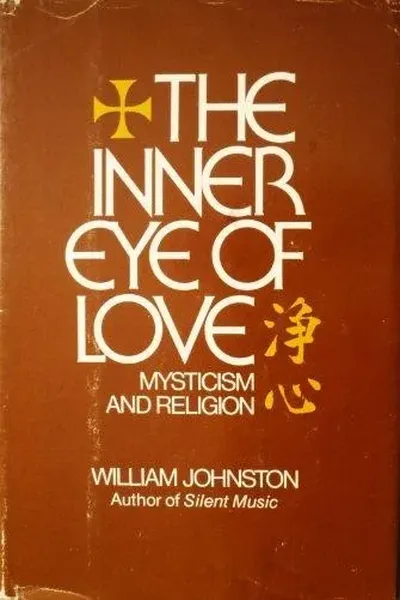
William Johnston's 1984 book connects Christian contemplation with modern psychology.
Published in 1984, Christian Mysticism Today by William Johnston offers a practical approach to the spiritual life. Johnston bridges traditional Christian contemplative practices with contemporary psychological thought. The book focuses on the interior journey of faith, drawing connections between ancient monastic disciplines and modern human experience. It is not a historical overview but a guide to achieving deeper spiritual states within a Christian context.
This work is for individuals aiming to enhance their personal prayer life and explore Christianity's contemplative aspects. It will appeal to those who find standard devotional methods lacking or who are interested in the overlap between psychology and spirituality. Readers curious about the Christian mystical tradition, regardless of their current practice level, will find value here. Johnston's writing aims to demystify these experiences, making them accessible beyond ascetic circles.
Johnston's book emerged during a period of renewed interest in contemplative prayer following the Second Vatican Council. It engaged with the growing integration of psychological theories, particularly Jungian ideas, into spiritual discussions. This work was part of a movement to re-examine and revitalize Christian mysticism for a contemporary audience, moving beyond purely academic or historical interpretations. It sought to make the mystical tradition accessible and relevant to everyday spiritual seekers.
💡 Why Read This Book?
• Learn about the "prayer of simple gaze," a technique for direct, unmediated experience of the divine, moving beyond discursive prayer as described by Johnston. • Understand the "prayer of silence" not as emptiness, but as a positive, ego-stilling presence, offering a practical method for inner peace. • Discover how psychological insights, relevant since the 1980s, can illuminate traditional Christian contemplative practices, making them more accessible today.
⭐ Reader Reviews
Honest opinions from readers who have explored this book.
❓ Frequently Asked Questions
What is the "prayer of simple gaze" as discussed in Christian Mysticism Today?
The "prayer of simple gaze" refers to a form of contemplative prayer where one focuses on God with a simple, direct attention, moving beyond conceptual thought or petitionary prayer, as detailed by William Johnston in his 1984 work.
How does William Johnston's book relate to modern psychology?
Johnston integrates psychological concepts, particularly relevant in the 1980s, to explain and demystify the internal experiences of Christian mystics, suggesting a harmonious relationship between inner spiritual states and psychological well-being.
Is Christian Mysticism Today suitable for beginners in contemplative prayer?
Yes, the book is designed to make contemplative prayer accessible. Johnston explains core practices like the "prayer of silence" in a way that is understandable for those new to these disciplines.
When was Christian Mysticism Today first published?
The book was first published in 1984, placing it within a period of significant resurgence in interest in Christian contemplative traditions.
What is the "prayer of silence" according to Johnston?
Johnston defines the "prayer of silence" not as an absence of external noise, but as an internal state of profound stillness that quiets the ego's incessant activity, allowing for a deeper connection with God.
Does the book offer practical exercises for deepening prayer?
Yes, Johnston offers practical guidance on cultivating practices such as the "prayer of simple gaze" and "heart-prayer," intended to foster a more direct experience of the divine.
🔮 Key Themes & Symbolism
Contemplative Prayer as Direct Experience
This theme explores contemplative prayer not as an intellectual exercise but as a direct, unmediated encounter with the divine. Johnston emphasizes practices like the "prayer of simple gaze" and "heart-prayer" as pathways to this experiential knowing. The work suggests that this form of prayer, often associated with monastic traditions, is accessible to contemporary individuals seeking a deeper spiritual reality beyond dogma or ritual, fostering an intimate relationship with God.
The "Prayer of Silence"
Johnston reinterprets the "prayer of silence" as a state of profound interior stillness rather than an absence of sound. This silence serves to quiet the ego's constant mental activity, creating space for divine presence to be experienced more fully. The book presents this practice as crucial for spiritual growth, enabling a deeper connection with the self and with God by reducing internal distractions and fostering a receptive state of being.
Integration of Psychology and Spirituality
A key aspect of the book, particularly for its 1984 publication context, is the integration of psychological insights with traditional Christian mysticism. Johnston uses psychological concepts to explain and validate the subjective experiences of mystics, making these profound states more understandable and attainable for the modern reader. This approach bridges the gap between ancient contemplative practices and contemporary human understanding of the psyche.
The Heart as the Center of Prayer
The concept of "heart-prayer" highlights the heart not merely as a biological organ but as the spiritual center of the person. Johnston suggests that true prayer originates from and returns to this core of being. This theme emphasizes an embodied spirituality, where prayer involves the whole person, particularly the affections and will, in a sincere and direct connection with the divine, moving beyond purely intellectual or vocal forms of worship.
💬 Memorable Quotes
Direct passages from the work, attributed to the author.
“The prayer of simple gaze is a direct looking at God.”
— This concise statement captures Johnston's emphasis on unmediated spiritual experience. It suggests a way of relating to the divine that bypasses intermediaries like complex theological reasoning or elaborate petitions, focusing instead on a pure, attentive awareness.
“Silence is not an emptiness, but a presence.”
— This interpretation of the "prayer of silence" reframes it from a passive void to an active, divine-filled space. It encourages practitioners to seek stillness not as an absence of activity, but as an encounter with a profound spiritual reality.
“The heart is the organ of spiritual perception.”
— This highlights the centrality of the heart in Johnston's understanding of mysticism. It implies that spiritual truth and divine connection are apprehended through deep feeling and intuitive awareness, rather than solely through intellect.
“Psychology can help us understand the terrain of the spiritual journey.”
— This reflects Johnston's approach of integrating psychological insights into the study of Christian mysticism. It suggests that understanding the human mind and emotions can illuminate the path of spiritual development without diminishing its divine character.
“Contemplation is the highest form of Christian prayer.”
— This assertion positions contemplative prayer as the ultimate goal or expression of Christian spiritual practice within Johnston's framework. It elevates direct experience of God above other forms of prayer or devotion.
🌙 Esoteric Significance
Tradition
Johnston's work fits within the broad lineage of Christian contemplative and mystical traditions, particularly those emphasizing direct experience of God. While firmly rooted in Catholicism, his approach echoes earlier figures like the author of The Cloud of Unknowing and later mystics who focused on interiority. His departure lies in the explicit integration of 20th-century psychological insights, a move less common in earlier eras, thereby reinterpreting ancient contemplative methods for a modern esoteric audience seeking tangible inner transformation.
Symbolism
While not overtly symbolic in the Hermetic or Kabbalistic sense, Johnston's work engages with the symbolism of the "heart" as the locus of spiritual awareness and divine encounter. The "prayer of silence" itself can be seen as symbolic of emptying the self to be filled by divine presence, a motif present in many esoteric paths. The concept of "light" as a manifestation of divine presence, though subtle, underpins the experiential nature of the contemplative states he describes.
Modern Relevance
Johnston’s approach continues to be relevant for contemporary spiritual seekers interested in the practical application of contemplative prayer within a Christian context. His work informs modern mindfulness and meditation movements by providing a structured, tradition-bound alternative focused on Christian experience. Thinkers and practitioners exploring the "contemplative turn" in Christianity often cite Johnston for his accessible synthesis of psychological understanding and mystical practice.
👥 Who Should Read This Book
• Individuals seeking to deepen their Christian prayer life by moving beyond discursive methods, offering practical guidance on contemplative techniques. • Students of comparative mysticism interested in how traditional Christian practices can be understood through a modern psychological framework. • Those exploring the intersection of spirituality and psychology, seeking to integrate inner contemplative experiences with an understanding of the human psyche.
📜 Historical Context
William Johnston’s Christian Mysticism Today, published in 1984, emerged during a period of significant spiritual seeking and re-evaluation within Western Christianity. The post-Vatican II era saw a renewed interest in the Church’s own contemplative traditions, moving beyond the more externally focused reforms. Johnston’s work tapped into this current, offering a contemporary lens on ancient practices. He was part of a broader intellectual milieu that included scholars and practitioners exploring the intersection of psychology and religion, influenced by figures like Carl Jung whose work on the unconscious provided new frameworks for understanding spiritual phenomena. While contemporary authors like Thomas Merton had already paved the way for a more accessible approach to Christian spirituality, Johnston's specific focus on integrating modern psychological understanding with practices like the "prayer of simple gaze" offered a distinct contribution.
📔 Journal Prompts
The "prayer of simple gaze": how might this direct attention to the divine manifest in daily life?
Reflecting on the "prayer of silence": what internal "chatter" most impedes your spiritual presence?
Consider the "heart" as the center of prayer: what emotions or intentions arise when you focus here?
How do psychological insights, as discussed by Johnston, illuminate your own spiritual journey?
Explore the concept of "contemplative prayer" as direct experience: what obstacles do you perceive to this state?
🗂️ Glossary
Contemplative Prayer
A form of prayer characterized by direct, unmediated experience of God's presence, moving beyond words, thoughts, or images. It emphasizes receptivity and inner stillness.
Prayer of Simple Gaze
A technique in contemplative prayer involving a direct, simple, and loving attention focused on God, without elaborate mental constructs or petitions.
Prayer of Silence
A practice of cultivating deep inner stillness, quieting the ego's incessant mental activity to create space for a more profound encounter with the divine presence.
Heart-Prayer
Prayer that originates from and is centered in the spiritual 'heart' of the person, understood as the core of one's being, involving intention and deep affection.
Ego
In this context, the part of the self concerned with self-preservation, self-importance, and personal desires, which often distracts from spiritual awareness.
Discursive Prayer
A form of prayer that involves reasoning, thinking, and talking with God, often using specific petitions, reflections, or meditations.
Spiritual Perception
The ability to apprehend or understand spiritual realities, often through intuition, inner knowing, or direct experience, rather than purely through intellect.
🔮 Readers Also Liked
Browse all →






More by Johnston, William
All books →


More Free Mysticism & Contemplation Books
View all →