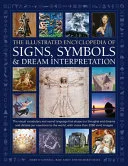
The Illustrated Encyclopedia of Signs, Symbols and Dream Interpretation
 74
74

The Illustrated Encyclopedia of Signs, Symbols and Dream Interpretation
The sheer volume of imagery within The Illustrated Encyclopedia of Signs, Symbols and Dream Interpretation is its most striking feature. The authors, Mark O'Connell, Raje Airey, and Richard Craze, present a visual feast, cataloging symbols with a commendable breadth. The section on dream interpretation, though less visually dense, provides a solid framework for understanding subconscious communication. However, the work's ambition to cover so much ground occasionally leads to a surface-level treatment of complex subjects. For instance, while the entry on the Ouroboros is informative, it doesn't fully explore its varied mythological and alchemical contexts with the depth some might expect. Despite this, the book is an indispensable reference for anyone grappling with the visual language of the human psyche.
📝 Description
74
Published in February 2022, this encyclopedia offers a visual lexicon of over 2200 symbols and their meanings.
This volume details more than 2200 images, cataloging their presence across various fields including language, art, mythology, religion, magic, and psychology. It examines how these symbols form a universal visual language that shapes thought and perception. The latter portion of the book focuses on the methods and interpretation of dreams, presenting it as a means to access deeper personal and universal meanings.
It is a useful reference for students of comparative mythology, art history, religious studies, and psychology. Practitioners of occult disciplines, dream analysts, artists, and anyone interested in the deeper significance of imagery and subconscious narratives will find it valuable. The book balances academic research with accessibility for self-taught individuals.
This encyclopedia draws on a long tradition of symbolic interpretation that stretches back to ancient civilizations. It follows in the vein of works that explore archetypal symbolism, like Carl Jung's writings, and connects these ideas to contemporary scholarship. The book examines how symbols operate within collective unconscious narratives and their role in accessing deeper layers of meaning.
💡 Why Read This Book?
• You will learn to decode the visual language of dreams, understanding concepts like the archetypal Shadow, as presented in the dream interpretation section, which offers a practical application beyond mere cataloging. • You will gain an appreciation for the cross-cultural significance of symbols, illustrated by the book's detailed exploration of over 2200 images, demonstrating their consistent presence in diverse mythologies and religions. • You will discover the historical lineage of symbolic interpretation, tracing motifs from ancient civilizations to their modern psychological and esoteric applications, as discussed in the historical context sections.
⭐ Reader Reviews
Honest opinions from readers who have explored this book.
❓ Frequently Asked Questions
What is the primary focus of 'The Illustrated Encyclopedia of Signs, Symbols and Dream Interpretation'?
The book's primary focus is to catalog and explain the meaning of over 2200 symbols found across cultures, languages, art, mythology, religion, magic, and psychology, with a dedicated section on dream interpretation.
Who are the authors of this encyclopedia?
The authors are Mark O'Connell, Raje Airey, and Richard Craze. The book was first published in February 2022.
How does the book approach dream interpretation?
It examines how we dream and offers interpretations of common dream symbols, connecting them to broader symbolic meanings and psychological concepts.
What kind of symbols are included in the encyclopedia?
The encyclopedia includes a vast array of symbols, from common archetypes to more obscure imagery, found in various aspects of human culture and belief systems.
Is this book suitable for academic study?
Yes, its comprehensive nature and scholarly approach make it a valuable resource for students and researchers in fields like mythology, psychology, and religious studies.
What distinguishes this encyclopedia from other symbol dictionaries?
Its strength lies in the sheer number of illustrated symbols (over 2200) and its integrated approach, linking symbols to their use in language, art, literature, mythology, magic, and psychology.
🔮 Key Themes & Symbolism
Universal Symbolism
This work posits that many symbols possess an elemental power that transcends geographical and cultural divides. It meticulously illustrates how motifs like the serpent, the mandala, or the tree of life appear consistently across disparate mythologies and religious traditions. The encyclopedia argues that these shared symbols tap into a universal visual language, reflecting common human experiences, archetypes, and psychological patterns that have shaped belief systems and artistic expression for millennia.
Dream as Symbolic Language
A significant portion of the book is dedicated to deciphering the language of dreams. It moves beyond simplistic one-to-one symbol associations, exploring how dreams function as a dialogue between the conscious and unconscious mind. The authors assess various theoretical frameworks for understanding dream content, emphasizing the personal and collective significance of dream imagery and its role in psychological integration and self-discovery.
Symbolism in Esoteric Practices
The encyclopedia examines the critical role of symbols within various esoteric traditions, including magic and alchemy. It illustrates how specific glyphs, sigils, and iconographies are not merely decorative but function as potent tools for ritual, spiritual development, and accessing hidden knowledge. The work assesses how these symbols are employed to represent cosmic principles, facilitate altered states of consciousness, and enact transformative processes.
The Visual Vocabulary of Culture
This theme centers on the idea that symbols form a fundamental layer of human communication, predating and informing spoken and written language. The book demonstrates how symbols are embedded in everything from ancient hieroglyphs and religious art to literary motifs and psychological theories. It argues that understanding this visual vocabulary is key to comprehending cultural narratives, historical consciousness, and the underlying structures of human thought.
💬 Memorable Quotes
Direct passages from the work, attributed to the author.
“Many symbols carry an elemental power that transcends boundaries and holds significance for other cultures.”
— This statement captures the book's core thesis: that symbols are not arbitrary but possess inherent, universal resonance, connecting diverse human experiences across time and geography.
“The visual vocabulary and secret language that shape our thoughts and dreams and dictate our reactions to the world.”
— This highlights the pervasive influence of symbolic imagery, suggesting it operates subconsciously to mold perception, cognitive processes, and emotional responses, acting as an unseen architect of our reality.
“This comprehensive and beautiful book discusses and illustrates thousands of these symbols and assesses their position in language, art, literature, mythology, magic, religion and psychology.”
— This accurately describes the book's encyclopedic scope and interdisciplinary approach, emphasizing its role as a reference tool for a wide range of academic and esoteric fields.
“In the second half of the book, how we dream and h...”
— This fragment indicates a specific focus on the mechanics and interpretation of dreams, suggesting a practical application of symbolic knowledge to understand the subconscious mind.
💡 Key Ideas
Editorial paraphrase of the work's core concepts — not direct quotes.
The work explores symbols' position in language, art, literature, mythology, magic, religion and psychology.
This paraphrase points to the book's analytical method, showing how it contextualizes symbols within diverse human endeavors to reveal their complex meanings and functions.
🌙 Esoteric Significance
Tradition
While not explicitly aligned with a single esoteric lineage, this encyclopedia draws heavily from Hermetic, Gnostic, and Jungian psychological traditions, which often overlap in their exploration of archetypal imagery and the subconscious. It functions as a bridge, presenting symbols not just as historical artifacts or religious icons but as active forces within the psyche and potential tools for spiritual transformation, aligning with a broad Neoplatonic and Hermetic worldview.
Symbolism
Key symbols such as the Ouroboros, representing cyclicality, self-creation, and the totality of existence, are explored in depth, reflecting their alchemical and Gnostic associations. The mandala, a symbol of wholeness and the unified self, is presented as a recurring motif in both art and dream states, signifying the integration of the psyche, a concept central to Jungian psychology and many meditation practices.
Modern Relevance
Contemporary practitioners of Jungian analysis, art therapy, and various forms of Western esotericism frequently utilize this work. Its detailed illustrations and cross-referenced interpretations make it useful for those exploring lucid dreaming techniques, modern shamanism, or contemporary magical practices that rely on a deep understanding of symbolic resonance and archetypal patterns.
👥 Who Should Read This Book
• Students of comparative mythology and religious studies will find a comprehensive visual reference to the recurring symbols and motifs across diverse global traditions, aiding in the analysis of sacred texts and iconography. • Practitioners of psychology and dream analysis, particularly those influenced by Jungian archetypes, can utilize this book to deepen their understanding of dream symbolism and its connection to the collective unconscious. • Artists, writers, and designers seeking symbolic inspiration will benefit from the extensive catalog of images and their varied cultural and psychological interpretations, enriching their creative output.
📜 Historical Context
Published in February 2022, The Illustrated Encyclopedia of Signs, Symbols and Dream Interpretation arrives at a moment of significant resurgent interest in archetypal psychology and comparative symbolism, particularly influenced by Carl Jung's key work. It builds upon a long history of symbolic interpretation that stretches from ancient Mesopotamian divinatory practices to Renaissance alchemical treatises and the esoteric systems developed in the 19th century, such as Theosophy. The book engages with a scholarly landscape that increasingly seeks to bridge the gap between empirical psychology and the study of myth and symbol, a field that saw figures like Mircea Eliade championing the study of religious symbolism. While not directly engaging with contemporary critics, its comprehensive approach implicitly addresses and synthesizes diverse interpretations that have emerged across various intellectual currents, offering a unified visual and conceptual resource that acknowledges the enduring power of symbolic language in human culture.
📔 Journal Prompts
The significance of the Ouroboros symbol in your personal mythology.
How the archetypal Shadow manifests in your dream narratives.
Reflect on recurring symbols in your dreams and their potential connection to waking life.
The elemental power of a chosen symbol and its cross-cultural presence.
Interpreting the visual vocabulary of a piece of art using concepts from the encyclopedia.
🗂️ Glossary
Archetype
In Jungian psychology, universal, archaic patterns and images that derive from the collective unconscious and are the psychic counterpart of a biological instinct.
Mandala
A circular geometric design that symbolizes the universe, wholeness, and the integration of the self, often used in meditation and spiritual practices.
Ouroboros
An ancient symbol depicting a serpent or dragon eating its own tail, representing cyclicality, renewal, and the unity of opposites.
Collective Unconscious
A concept developed by Carl Jung, referring to a shared reservoir of psychic material inherited from our ancestors, containing archetypes and universal patterns.
Symbolism
The use of symbols to represent ideas and qualities by giving them meanings different from their literal sense.
Dream Interpretation
The process of exploring the meaning and significance of dream imagery, often connecting it to the dreamer's psychological state and life experiences.
Esotericism
Systems of belief and practice that are concerned with the inner, or hidden, spiritual life, often involving secret knowledge or initiation.