The I Ching

 83
83

The I Ching
Smith’s "The I Ching" offers a welcome, if somewhat academic, entry into the world of the ancient Chinese oracle. The author’s strength lies in his meticulous unpacking of the hexagrammatic system and its philosophical underpinnings, a clarity often missing in more esoteric presentations. He grounds the text in its historical context, acknowledging its Confucian integration, which provides a solid academic foundation. However, the work occasionally feels overly dry, prioritizing scholarly exposition over the experiential resonance many seek from the I Ching. A particular passage that stands out is the detailed explanation of the 'Fu' hexagram (Return), illustrating the cyclical nature of decline and recovery. While comprehensive, it lacks the evocative language that can truly bring the oracle to life for a novice. Smith’s "The I Ching" is a valuable scholarly resource for understanding the mechanics and philosophy of the oracle.
📝 Description
83
Richard J. Smith's 2012 edition of the I Ching clarifies this ancient Chinese divination text for modern readers.
Published in 2012, Richard J. Smith's "The I Ching" offers a modern interpretation of this ancient Chinese divination system. The book breaks down the complex structure of the 64 hexagrams and their associated judgments, making it accessible to those new to its concepts. It examines the philosophy behind the I Ching, focusing on its core ideas of cyclical change and the constant flux of reality.
This volume suits students of Chinese philosophy, divination practitioners seeking deeper insight, and those interested in comparative religion. It treats esoteric texts as tools for intellectual and spiritual inquiry rather than dogma. Readers will find a structured introduction to the trigrams, hexagrams, and the philosophical ideas that have drawn study across various cultures and academic fields.
The I Ching originates in ancient China, with roots in the Zhou Dynasty. Over centuries, it accumulated commentary, particularly from Confucian scholars who integrated it into their ethical and political thought. Smith's work situates this oracle historically, showing its influence on East Asian thought and its later reception in the West, including its impact on figures like Carl Jung. Understanding its evolution from early divination to a philosophical system is key to grasping its significance.
The I Ching, or "Book of Changes," is one of China's oldest philosophical and divinatory texts. Its origins are traced to the Zhou Dynasty, evolving over centuries through layers of commentary. It is structured around 64 hexagrams, each formed by six lines representing yin (broken) or yang (solid). These figures symbolize archetypal situations and the dynamics of change. Confucians later integrated its principles into their ethical and political systems, solidifying its status as a cornerstone of East Asian thought. Its transmission to the West influenced thinkers like Carl Jung, who saw in its symbolism a reflection of psychological archetypes.
💡 Why Read This Book?
• Gain a structured understanding of the 64 hexagrams, learning how their combinations, derived from the eight trigrams, represent archetypal situations, a core concept absent in simpler divination guides. • Explore the philosophical evolution of the I Ching from its Zhou Dynasty origins to its Confucian integration, providing historical context that informs its enduring influence. • Grasp the central tenet of constant change, understanding how the interplay of yin and yang lines within hexagrams reflects the dynamic flux of reality, a principle central to Taoist thought.
⭐ Reader Reviews
Honest opinions from readers who have explored this book.
❓ Frequently Asked Questions
What is the historical origin of the I Ching discussed in Richard J. Smith's book?
Richard J. Smith's "The I Ching" traces the oracle's origins to ancient China, with roots in the Zhou Dynasty. The text evolved over centuries, absorbing commentary from various philosophical schools, notably Confucianism.
How does the book explain the structure of the I Ching hexagrams?
The book details how each of the 64 hexagrams is formed by combining two of the eight trigrams (Ba Gua), with each trigram consisting of three yin (broken) or yang (solid) lines.
Is Richard J. Smith's "The I Ching" suitable for beginners?
Yes, the book is designed as a foundational exploration, providing a clear entry point for those unfamiliar with its intricacies and explaining its complex structure methodically.
What is the philosophical significance of the I Ching according to Smith?
Smith highlights the I Ching's philosophy of constant change, emphasizing the cyclical nature of reality and the dynamic interplay of opposing forces, reflecting Taoist principles.
When was Richard J. Smith's edition of "The I Ching" first published?
Richard J. Smith's edition of "The I Ching" was first published in 2012, offering a modern perspective on this ancient Chinese text.
Does the book discuss the I Ching's influence on Western thinkers?
While primarily focused on its Chinese context and philosophical underpinnings, the work acknowledges the I Ching's transmission to the West and its impact on figures like Carl Jung.
🔮 Key Themes & Symbolism
The 64 Hexagrams
The core of the I Ching lies in its 64 hexagrams, each a symbolic representation of fundamental life situations and transitions. Smith's work meticulously breaks down how these hexagrams are constructed from the eight trigrams (Ba Gua) and how their layered meanings offer guidance. Each hexagram is more than just a combination of lines; it embodies a dynamic state of affairs, reflecting the constant flux that characterizes existence. Understanding these archetypal patterns allows practitioners to gain insight into their own circumstances and potential future developments.
Yin and Yang Dynamics
The interplay of yin (broken lines) and yang (solid lines) is central to the I Ching's philosophy. Smith explains how these seemingly opposing forces are not in conflict but are complementary, representing the dualistic nature of reality. Their interaction within the hexagrams illustrates the constant process of change, balance, and transformation. This dynamic is not static; it represents a continuous flow, where one force gives way to the other, creating the rhythm of the universe and guiding the interpretation of the oracle's counsel.
The Book of Changes Philosophy
The title "I Ching" itself translates to "The Book of Changes," underscoring its fundamental principle: nothing is permanent. Smith's exploration explores this concept, presenting the oracle not as a predictive tool for fixed outcomes, but as a guide to understanding the nature of transformation. It teaches that by recognizing the patterns of change and adapting to them, one can achieve harmony and navigate life's challenges with wisdom and foresight. This philosophical outlook encourages flexibility and acceptance of impermanence.
Historical and Confucian Context
Richard J. Smith situates the I Ching within its rich historical milieu, tracing its development from ancient divination practices to its significant integration into Confucian thought. This historical perspective highlights how the text was utilized not only for oracular purposes but also as a framework for ethics, governance, and self-cultivation. Understanding its reception and interpretation by scholars in dynasties like the Zhou and Han provides crucial context for its enduring legacy and its status as a classic of Chinese philosophy.
💬 Memorable Quotes
Direct passages from the work, attributed to the author.
“The hexagrams represent archetypal situations and transitions.”
— This captures the core function of the I Ching's visual language. It suggests that each of the 64 figures is not arbitrary but a symbolic model of common human experiences and the phases of change we encounter.
“The text emphasizes the constant flux of reality.”
— This highlights the I Ching's Taoist-influenced philosophy, positing that change is the only constant. It frames the oracle as a guide to navigating this inherent impermanence rather than seeking fixed answers.
“The trigrams (Ba Gua) form the basis of the hexagrams.”
— This points to the foundational structure of the oracle, explaining that the more complex six-line hexagrams are derived from the simpler three-line trigrams, revealing an underlying order.
“The I Ching evolved over centuries, absorbing layers of commentary.”
— This acknowledges the text's long and complex history, indicating that its meaning is not monolithic but has been shaped by various interpreters and eras, particularly Confucian scholars.
“Understanding the interplay of yin and yang is crucial.”
— This emphasizes the fundamental dualistic principle that underpins the entire system, explaining that the interaction of these complementary forces dictates the nature of change and situation.
🌙 Esoteric Significance
Tradition
The I Ching sits at a unique nexus, bridging ancient Chinese cosmology and divination with broader philosophical traditions that explore universal principles of change and order. While not strictly Hermetic or Kabbalistic, its emphasis on symbolic representation, cosmic patterns, and the interconnectedness of all things aligns with the core tenets found across many esoteric lineages. It functions as a philosophical oracle, offering insights into the Tao, the fundamental principle of the universe, which speaks to concepts of divine order and natural law found in Western esotericism.
Symbolism
Central to its symbolism are the 64 hexagrams, each a unique configuration of six lines, either solid (yang) or broken (yin). These lines and their combinations represent archetypal situations, natural phenomena, and stages of human experience. The eight trigrams (Ba Gua) – Heaven, Earth, Thunder, Wind, Water, Fire, Mountain, Lake – form the building blocks of the hexagrams, each carrying its own symbolic weight and association with elemental forces and cardinal directions.
Modern Relevance
In contemporary practice, the I Ching continues to inform various fields. Its principles of dynamic balance and cyclical change are often referenced in systems thinking, organizational development, and even quantum physics interpretations. Esoteric practitioners in Western traditions may use it as a tool for meditation and self-inquiry, seeking parallels with concepts of synchronicity and universal patterns. Modern interpreters often draw upon its wisdom for personal growth, decision-making, and understanding the subtle currents of life, reflecting its enduring capacity to provide guidance.
👥 Who Should Read This Book
• Students of comparative philosophy and religion seeking to understand foundational East Asian texts and their influence. • Practitioners of divination and esoteric arts interested in the mechanics and historical context of a globally significant oracle. • Individuals drawn to ancient wisdom traditions looking for a structured approach to understanding change, balance, and the cyclical nature of existence.
📜 Historical Context
The I Ching, as explored in Richard J. Smith's 2012 edition, carries profound historical weight, originating in ancient China and evolving significantly over millennia. Its roots extend to the Zhou Dynasty (c. 1046–256 BCE), where it began as a divination manual. Over time, it was integrated into the philosophical canon, notably by Confucian scholars who saw its principles as crucial for ethics, governance, and self-cultivation. The text absorbed extensive commentary, becoming a complex repository of wisdom. By the Han Dynasty (206 BCE–220 CE), its philosophical interpretations solidified, often overshadowing its divinatory aspects. Smith's work places this evolution against the backdrop of competing schools of thought, such as Legalism and Taoism, highlighting how the I Ching’s adaptability allowed it to remain relevant. Its eventual transmission to the West in the 20th century, famously engaging figures like Carl Jung, underscores its enduring cross-cultural appeal.
📔 Journal Prompts
The philosophical implications of the 64 hexagrams as archetypal situations.
Reflect on the dynamic interplay of yin and yang in a personal challenge.
Consider the historical evolution of the I Ching from divination to philosophy.
The concept of 'The Book of Changes' and its relevance to personal impermanence.
How the trigrams might symbolize elemental forces in your immediate environment.
🗂️ Glossary
Hexagram
A symbol composed of six stacked horizontal lines, each line being either solid (yang) or broken (yin). There are 64 unique hexagrams, representing archetypal situations and transformations.
Trigram (Ba Gua)
A symbol composed of three stacked horizontal lines, each being either solid (yang) or broken (yin). There are eight trigrams, forming the basic components from which the 64 hexagrams are derived.
Yin
In I Ching philosophy, represented by a broken line (--) or its numerical equivalent (2). It symbolizes passive, receptive, dark, feminine, and yielding qualities.
Yang
In I Ching philosophy, represented by a solid line (—) or its numerical equivalent (1). It symbolizes active, creative, light, masculine, and assertive qualities.
Tao (Dao)
The fundamental principle of the universe in Chinese philosophy, often translated as 'the Way.' It represents the natural order, the source, and the underlying reality of all things.
Book of Changes
The literal translation of 'I Ching.' It emphasizes the text's core philosophical concept: the constant state of transformation and flux that characterizes existence.
Confucianism
An ethical and philosophical system developed from the teachings of Confucius, emphasizing personal and governmental morality, correctness of social relationships, justice, kindness, and sincerity.
🔮 Readers Also Liked
Browse all →








More by Richard J. Smith
All books →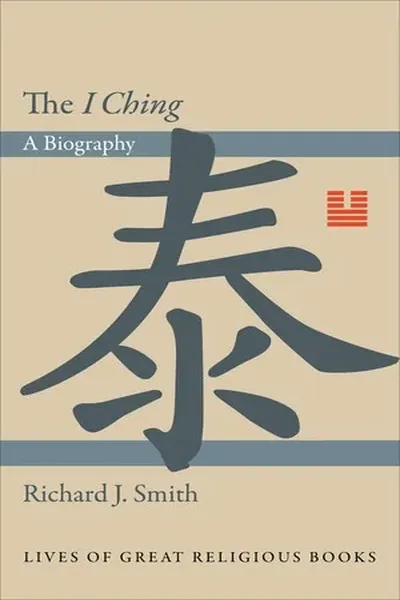

More Free Occult Philosophy Books
View all →