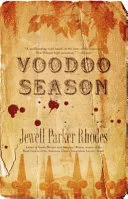
Voodoo Season
 82
82

Voodoo Season
Jewell Parker Rhodes' Voodoo Season plunges the reader into the disorienting world of Marie Levant as she starts her medical residency at New Orleans's Charity Hospital. The novel’s strength lies in its atmospheric portrayal of the city and Marie's internal struggles, particularly the vivid, unsettling dreams that signal her awakening. Rhodes adeptly contrasts the sterile, rational environment of medicine with the potent, ancestral spiritual forces Marie begins to uncover. A notable limitation, however, is the pacing in the latter half, which occasionally feels rushed as Marie grapples with her burgeoning powers. The depiction of Marie’s initial resistance to her Vodou heritage, culminating in a moment of profound acceptance during a crisis at the hospital, highlights the book’s central conflict. Ultimately, Voodoo Season offers a compelling, if at times uneven, exploration of identity and inherited spiritual legacies.
📝 Description
82
Jewell Parker Rhodes' 2006 novel, Voodoo Season, examines a young doctor's confrontation with inherited spiritual power.
Marie Levant, a Black woman starting her medical residency at New Orleans' Charity Hospital in 2006, finds her life increasingly disrupted by violent dreams. These nocturnal visions are tied to her growing awareness of a lineage of voodoo queens within her family. The city itself, with its deep spiritual and cultural history, becomes a backdrop for Marie's internal struggle.
The narrative contrasts Marie's scientific training with the burgeoning supernatural elements of her life. She grapples with ancestral heritage and latent spiritual gifts that emerge as her medical career begins. The novel questions the boundaries of purely scientific understanding when faced with ancestral beliefs and cultural practices.
Rhodes sets the story in a New Orleans that is rich with history, highlighting institutions like Charity Hospital, founded in 1736. The book engages directly with Vodou, a practice often misunderstood, and presents it as a significant part of the African diaspora's heritage in the American South.
Voodoo Season places Haitian Vodou within the context of American spirituality, specifically its presence in the South. It moves beyond common stereotypes to portray Vodou as an ancestral heritage and a potent spiritual tradition. The book explores the concept of inherited spiritual gifts and the internal conflict that arises when these manifest alongside a commitment to Western medicine, touching on themes of syncretism and the integration of indigenous knowledge systems.
💡 Why Read This Book?
• You will gain insight into the concept of ancestral spiritual inheritance, experiencing Marie Levant's journey of awakening to her Vodou queen lineage, a process explored through her visceral dreams and increasing awareness of her heritage. • You will understand the cultural significance of New Orleans as a nexus of African diaspora spirituality, appreciating how the setting of Charity Hospital (founded 1736) grounds the narrative in a specific historical and social reality. • You will explore the dynamic between Western scientific medicine and indigenous spiritual practices, observing how Marie’s medical residency challenges and ultimately integrates with her ancestral Vodou understanding.
⭐ Reader Reviews
Honest opinions from readers who have explored this book.
❓ Frequently Asked Questions
What is the primary setting for Jewell Parker Rhodes' Voodoo Season?
The primary setting is New Orleans, specifically Charity Hospital, where the protagonist Marie Levant begins her medical residency. The city's unique cultural and spiritual atmosphere plays a significant role in the narrative.
Who is the main character in Voodoo Season?
The main character is Marie Levant, a young African American woman undertaking her medical residency. She discovers an ancestral connection to Vodou and her heritage as a voodoo queen.
What are the main themes explored in Voodoo Season?
The novel explores themes of identity, ancestral heritage, the awakening of spiritual powers, the clash between modern medicine and traditional spiritual practices, and the cultural landscape of New Orleans.
When was Voodoo Season first published?
Voodoo Season was first published on July 4, 2006.
Does Voodoo Season focus on historical Vodou practices or a fictionalized account?
While drawing on the rich cultural history of Vodou in New Orleans and the African diaspora, Voodoo Season is a fictional narrative. It uses these traditions as a foundation for Marie's personal spiritual awakening and journey.
What kind of challenges does Marie Levant face in the book?
Marie faces the challenges of a demanding medical residency, culture shock in New Orleans, and increasingly violent dreams that lead to the discovery and integration of her ancestral Vodou heritage.
🔮 Key Themes & Symbolism
Ancestral Awakening
The novel centers on Marie Levant's profound discovery of her African ancestry and her lineage as a voodoo queen. This awakening is not merely intellectual but deeply visceral, manifesting through intense dreams and an intuitive understanding of spiritual forces. The narrative emphasizes that heritage is not just a historical fact but a living, potent energy that can be called upon and integrated into one's present life. Marie's journey illustrates how embracing one's roots can provide strength and a unique perspective, even amidst the rational world of modern medicine.
Medicine vs. Spirituality
Voodoo Season directly confronts the perceived dichotomy between Western scientific medicine and indigenous spiritual practices like Vodou. Marie's medical residency at Charity Hospital (founded 1736) exposes her to the rigorous, evidence-based approach of modern healthcare. Simultaneously, her ancestral heritage pulls her towards a spiritual understanding of healing and well-being. The book suggests these two seemingly opposing paradigms are not mutually exclusive but can, in fact, complement each other, offering a more holistic approach to human health and suffering.
New Orleans Identity
The city of New Orleans serves as more than just a setting; it is a character in itself, imbued with a rich, complex history of cultural fusion and spiritual traditions. The novel captures the unique atmosphere of the city, where African, Caribbean, and European influences converge, creating a fertile ground for spiritual practices like Vodou. Marie's experience of culture shock and eventual embrace of her heritage is intrinsically linked to her immersion in New Orleans' distinctive cultural landscape, highlighting how place shapes identity and spiritual connection.
The Voodoo Queen Archetype
Rhodes explores the archetype of the Voodoo Queen not as a figure of fear or superstition, but as a powerful spiritual leader, healer, and conduit of ancestral wisdom. Marie's reluctant transformation into this role involves confronting societal prejudices and her own internal doubts. The book presents the Voodoo Queen as a figure deeply connected to her community and the spiritual realm, capable of wielding significant influence and providing guidance. This portrayal aims to clarify and reclaim the significance of this powerful spiritual role.
💬 Memorable Quotes
Direct passages from the work, attributed to the author.
“The hospital's white walls seemed to absorb sound, leaving only the hum of machines and the occasional cry.”
— This descriptive passage highlights the sterile, impersonal environment of Charity Hospital, contrasting sharply with the vibrant, spiritual world Marie is beginning to access. It underscores the tension between her medical duties and her burgeoning Vodou identity.
“Her grandmother's stories, once dismissed as folklore, now felt like a map.”
— This interpretation points to Marie's realization that the tales from her past are not mere fiction but hold profound meaning and guidance. They become essential tools for understanding her ancestral connection and her destiny.
“In New Orleans, the veil between worlds felt thin.”
— This evocative phrase captures the pervasive spiritual atmosphere of New Orleans, suggesting that the city is a place where the boundaries between the physical and spiritual realms are permeable, facilitating Marie's connection to her Vodou heritage.
“She was a doctor, yes, but she was also something more ancient.”
— This statement expresses Marie's evolving identity. It signifies her acceptance of the dual nature of her being – a modern medical professional grounded in science, yet also deeply connected to an ancient spiritual tradition.
💡 Key Ideas
Editorial paraphrase of the work's core concepts — not direct quotes.
Marie's dreams were not nightmares; they were echoes.
This paraphrased concept suggests that Marie's disturbing dreams are not random occurrences but messages from her past and ancestral lineage. They serve as a crucial catalyst for her spiritual awakening, urging her to confront her heritage.
🌙 Esoteric Significance
Tradition
Voodoo Season engages with the Vodou tradition, a complex system of West African origin with significant development in Haiti and subsequent influence in the American South. It represents a syncretic religion blending indigenous beliefs with Catholicism. Rhodes' work positions Vodou not as mere superstition but as a profound spiritual lineage and a source of ancestral power and healing knowledge, fitting within a broader contemporary esoteric interest in African diasporic spiritual systems.
Symbolism
Key symbols include the recurring dreams, which act as conduits for ancestral communication and spiritual awakening, serving as a bridge between the conscious and subconscious. Water, particularly the Mississippi River or the ocean, often symbolizes cleansing, transition, and the flow of spiritual energy. The figure of the Voodoo Queen herself is a potent symbol of spiritual authority, healing, and connection to the divine and ancestral realms.
Modern Relevance
Contemporary practitioners and scholars of African diasporic religions find resonance in Rhodes' portrayal of Vodou as a valid spiritual path and a source of identity. The novel's exploration of integrating ancestral knowledge with modern life, particularly in professional fields like medicine, speaks to current discussions within New Age and neo-pagan communities seeking to reclaim and understand marginalized spiritual traditions. It informs contemporary perspectives on holistic healing and cultural heritage.
👥 Who Should Read This Book
• Readers interested in contemporary fiction exploring African diaspora spirituality: You will gain a nuanced fictional portrayal of Vodou heritage and its integration into modern life through Marie Levant's personal journey. • Aspiring or practicing medical professionals with an interest in holistic health: You will find value in the novel's exploration of the tension and potential synergy between scientific medicine and spiritual healing practices. • Students of comparative religion and cultural studies: You will benefit from the book's depiction of New Orleans as a significant cultural and spiritual crossroads and its engagement with the history and practice of Vodou.
📜 Historical Context
Published in 2006, Jewell Parker Rhodes' Voodoo Season emerged during a period of renewed interest in diasporic African religions and their influence on American culture. The novel engages with the complex history of Vodou, often marginalized and misrepresented in Western discourse. Its setting in New Orleans, a city with a profound connection to African and Caribbean spiritual traditions, is crucial. Charity Hospital, founded in 1736, provides a historical anchor, representing the established medical institution against which Marie's ancestral awakening unfolds. The work implicitly responds to a cultural landscape where figures like Zora Neale Hurston had previously explored African American folklore and spirituality, though Rhodes focuses more directly on the internal, personal integration of Vodou heritage within a contemporary professional setting. The novel’s reception contributed to broader conversations about the spiritual and cultural legacies of the African diaspora in the United States.
📔 Journal Prompts
Marie Levant's initial violent dreams foreshadowed her ancestral connection. Reflect on a recurring dream or intuition that guided your path.
The contrast between Charity Hospital's sterile environment and Marie's spiritual awakening. Consider a place where you felt a clash of energies.
The concept of Vodou as an ancestral heritage. How does your own heritage inform your understanding of the world?
Marie's grandmother's stories acting as a map. Identify a piece of advice or wisdom from an elder that proved crucial.
The New Orleans setting's role in spiritual permeability. Describe a location that feels spiritually charged to you.
🗂️ Glossary
Voodoo Queen
A spiritual leader within Vodou traditions, often a woman who holds significant authority, possesses healing knowledge, and acts as a conduit for communication with spirits and ancestors.
Ancestral Heritage
The traditions, beliefs, values, and spiritual connections passed down through one's family line, which can manifest as a source of identity, strength, and spiritual awareness.
Charity Hospital
A historic public hospital in New Orleans, founded in 1736, known for serving a diverse population and playing a significant role in the city's medical and social history.
Spiritual Awakening
A process of gaining deeper awareness and connection to spiritual or supernatural realities, often involving the discovery or activation of latent psychic or ancestral abilities.
Culture Shock
The feeling of disorientation experienced by someone when suddenly subjected to an unfamiliar culture, way of life, or set of attitudes.
Duality
The state of having two parts, often seemingly opposite, such as the coexistence of Marie's identity as a modern doctor and an ancient spiritual practitioner.
Esoteric
Relating to or accessible only by a select group of people initiated into special knowledge; concerned with the supernatural or the occult.