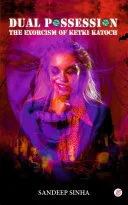
Dual Possession- The Exorcism of Ketki Katoch
 83
83

Dual Possession- The Exorcism of Ketki Katoch
Sandeep Sinha's "Dual Possession" offers a compelling, if unsettling, examination of spiritual affliction pushed to its extreme. The premise – a single host claimed by two distinct entities – immediately elevates the stakes beyond typical exorcism narratives. Sinha effectively builds tension by illustrating how conventional rites might falter when confronted with such complex spiritual infestation. A particular strength lies in the detailed exploration of the psychological fragmentation experienced by the host, Ketki Katoch, which feels acutely rendered. However, the narrative occasionally leans towards speculation without providing sufficient textual evidence or historical parallels to fully anchor its more speculative claims about the nature of the possessing entities. The work's true value emerges in its questioning of established exorcism protocols. "Dual Possession" presents a chilling scenario that compels a re-evaluation of spiritual defense strategies. It is a grimly fascinating study for those interested in the darker corners of spiritual warfare.
📝 Description
83
Sandeep Sinha's 2024 book examines the rare phenomenon of dual possession.
Dual Possession: The Exorcism of Ketki Katoch, by Sandeep Sinha, addresses a rare spiritual affliction where a single person is host to two distinct malevolent entities. The book moves past typical accounts of single demonic influence, detailing the complex dynamics and increased danger when a vessel is claimed by multiple dark forces simultaneously. It questions how standard exorcism rites function against such compounded spiritual attacks, suggesting a need for modified or stronger spiritual interventions. This work is for scholars of comparative demonology, students of religious folklore, and practitioners of spiritual warfare interested in possession phenomena beyond the single entity model. It will appeal to those curious about the psychological and spiritual effects of extreme spiritual distress and the theological and ritualistic responses it demands. Readers familiar with the history of exorcism and occult practices will encounter new material.
The book situates itself within historical accounts and theological discussions about spiritual corruption. Throughout history, various cultures have documented individuals believed to be inhabited by multiple entities. These cases often led to complicated and sometimes harsh expulsion attempts. Sinha's work examines anomalous spiritual states, connecting ancient shamanic beliefs with medieval demonological texts.
This book engages with historical and theological debates on spiritual corruption, particularly concerning instances of multiple entity inhabitation. It draws parallels between contemporary accounts and older traditions, such as ancient shamanic practices and medieval demonological writings. By examining 'Dual Possession,' the text challenges singular approaches to spiritual cleansing and situates itself within the broader study of anomalous spiritual states.
💡 Why Read This Book?
• Gain insight into the specific challenges posed by 'Dual Possession,' a phenomenon that complicates standard exorcism procedures, as detailed in the book's exploration of Ketki Katoch's case. • Understand the theological and ritualistic implications of confronting multiple entities within a single host, moving beyond singular possession doctrines. • Explore the psychological and spiritual toll on both the afflicted and the exorcist, as depicted through the narrative's detailed account of escalating spiritual conflict.
⭐ Reader Reviews
Honest opinions from readers who have explored this book.
❓ Frequently Asked Questions
What is the primary difference between single and dual possession as presented in the book?
The book posits that dual possession involves a single human host being simultaneously inhabited by two distinct malevolent spirits, amplifying the complexity and peril beyond conventional exorcism scenarios.
Who is Ketki Katoch in the context of Dual Possession?
Ketki Katoch is the central figure in Sandeep Sinha's work, serving as the individual afflicted by dual possession, around whom the narrative and exploration of the phenomenon are centered.
Does the book offer new exorcism rituals for dual possession?
While the book questions the sufficiency of traditional rites, it focuses more on the theoretical and psychological implications of dual possession rather than prescribing entirely new ritualistic methodologies.
What is the historical precedent for dual possession?
The book touches upon historical accounts and folklore that suggest instances of individuals believed to be inhabited by multiple entities, though it highlights dual possession as a less commonly documented variant.
What are the potential consequences for the host in a dual possession scenario?
The work suggests that dual possession can lead to extreme psychological fragmentation, amplified spiritual vulnerability, and a significantly heightened risk to the host's spiritual and physical well-being.
What is the author Sandeep Sinha's background regarding this subject?
Sandeep Sinha, the author, engages with the subject of exorcism and spiritual affliction, bringing a critical perspective to the phenomenon of dual possession in his 2024 publication.
🔮 Key Themes & Symbolism
Compounded Spiritual Affliction
The core theme is the unique horror and challenge presented by a single human host being simultaneously occupied by two distinct evil spirits. This work moves beyond the standard narrative of singular demonic invasion, exploring the amplified spiritual vulnerability and the complex internal dynamics that can arise when two malevolent presences co-inhabit a vessel. It questions how such a state affects the afflicted individual's psyche and spiritual integrity, pushing the boundaries of understanding possession.
Efficacy of Traditional Exorcism
A central question explored is whether established exorcism rituals, designed for singular entities, are sufficient to address the compounded threat of dual possession. The book scrutinizes the limitations of conventional holy practices when faced with a more complex spiritual infestation. It prompts reflection on the need for adaptive or intensified spiritual warfare tactics when the darkness within a person is doubled.
Psychological Fragmentation
The narrative explores the profound psychological toll on Ketki Katoch, the host, as she endures the presence of two opposing dark forces. This theme examines the fracturing of the self, the internal conflicts between entities, and the extreme mental distress that dual possession can inflict. It highlights the intricate interplay between spiritual infestation and mental breakdown, a critical aspect of occult philosophy.
The Exorcist's Burden
The book also addresses the immense pressure and unique challenges faced by the exorcist tasked with expelling not one, but two sinister spirits. It explores the increased spiritual, psychological, and potentially physical demands placed upon the practitioner. The narrative considers the adaptive strategies and heightened spiritual fortitude required to confront such a formidable and complex demonic assault.
💬 Memorable Quotes
Direct passages from the work, attributed to the author.
“Dual Possession emerges as a perplexing phenomenon, challenging the very core of exorcism.”
— This statement frames the central conflict of the book: how established spiritual practices are tested and potentially found wanting when confronted with an unusually complex form of demonic infestation.
“Would the traditional arsenal of holy practices prove sufficient, or must the exorcist...”
— This rhetorical question, left hanging, underscores the book's critical examination of standard exorcism protocols and suggests a need for innovation or intensified spiritual effort in the face of extreme possession.
“The purification of the plagued takes on new dimensions when the plague is twofold.”
— This interpretation of the blurb's intent suggests that the cleansing process itself must adapt, becoming more complex and demanding when dealing with the doubled spiritual assault of dual possession.
💡 Key Ideas
Editorial paraphrase of the work's core concepts — not direct quotes.
The darkness extended deeper, when one body becomes a host not to one, but to two sinister evil spirits.
This line expresses the core premise, highlighting the terrifying escalation from singular to dual possession and setting the stage for the unique challenges the narrative will explore.
The very notion of a singular spiritual battleground is disrupted.
This paraphrased concept emphasizes how dual possession fundamentally alters the range of spiritual warfare, moving from a one-on-one confrontation to a more intricate, multi-faceted struggle within the host.
🌙 Esoteric Significance
Tradition
This work engages with the broader tradition of demonology and spiritual warfare, which has threads running through Hermeticism, Gnosticism, and various folk magic practices. It departs from simpler portrayals by focusing on the compounded nature of spiritual infestation, suggesting a layered spiritual reality where entities can coexist and interact within a single host, demanding a more nuanced understanding of spiritual defense than typically found in singular-entity frameworks.
Symbolism
The concept of 'dual possession' itself acts as a potent symbol, representing internal conflict, divided self, and the overwhelming nature of multiplied spiritual adversity. The specific entities, if detailed, would carry their own symbolic weight within occult traditions – perhaps representing opposing forces or aspects of shadow. The act of exorcism, particularly if it involves dual rituals or a prolonged struggle, symbolizes the arduous process of integrating fragmented aspects of the self or confronting amplified external spiritual opposition.
Modern Relevance
In contemporary occult and esoteric circles, "Dual Possession" speaks to modern anxieties about mental fragmentation, the complex interplay of psychological and spiritual states, and the search for more sophisticated spiritual self-defense mechanisms. Thinkers exploring shadow work, trauma integration, and advanced spiritual warfare techniques may find its premise relevant. It challenges practitioners to consider the possibility of layered spiritual influences beyond the simplistic good-versus-evil binary.
👥 Who Should Read This Book
• Students of comparative demonology and religious studies seeking to understand less common possession phenomena. • Practitioners of spiritual warfare and deliverance ministry interested in theoretical challenges to standard protocols. • Readers of occult philosophy and esoteric history intrigued by extreme manifestations of spiritual affliction and their historical/theoretical context.
📜 Historical Context
Sandeep Sinha's "Dual Possession- The Exorcism of Ketki Katoch" (2024) enters a discourse with a long history of demonology and spiritual warfare. While single possession has been a recurring theme in religious texts and folklore since antiquity, the concept of an individual hosting multiple entities, though less frequently popularized, has surfaced in various historical accounts. Medieval demonologists, such as those who contributed to texts like the *Malleus Maleficarum* (1487), primarily focused on singular demonic influence and witchcraft. However, the persistent undercurrent of multiplicity in spiritual affliction can be seen in later occult traditions and anecdotal reports. The work engages with the intellectual currents of comparative religion and occult philosophy, seeking to delineate a specific, complex manifestation of spiritual corruption that challenges the established frameworks. Its contemporary publication suggests a renewed interest in exploring the extremities of spiritual pathology, potentially influenced by modern psychological understandings intersecting with ancient spiritual beliefs.
📔 Journal Prompts
The phenomenon of 'Dual Possession' and its impact on the host's psyche.
Ketki Katoch's spiritual vulnerability when afflicted by two entities.
The limitations of traditional exorcism rites when facing compounded spiritual assault.
The symbolic representation of multiplied darkness within a single vessel.
The exorcist's amplified burden in confronting dual entities.
🗂️ Glossary
Dual Possession
A rare spiritual affliction where a single human host is simultaneously inhabited by two distinct malevolent entities, complicating traditional notions of possession and exorcism.
Spiritual Affliction
A broad term encompassing negative spiritual influences, infestations, or possessions that adversely affect an individual's physical, mental, or spiritual well-being.
Exorcism Rites
Formal religious or spiritual ceremonies performed with the intent to expel demonic or malevolent entities from a person, place, or object.
Malevolent Entities
Supernatural beings or spirits characterized by ill will, destructive intent, and a desire to cause harm or exert control over others.
Psychological Fragmentation
A state of mental disunity or breakdown, often associated with severe trauma or spiritual distress, where the individual's sense of self becomes fractured.
Spiritual Warfare
The concept and practice of engaging in spiritual battles against opposing forces, often involving prayer, rituals, and focused intention to overcome negative spiritual influences.
Host (Spiritual)
An individual human being believed to be serving as a physical or spiritual vessel for one or more external entities, such as spirits or demons.