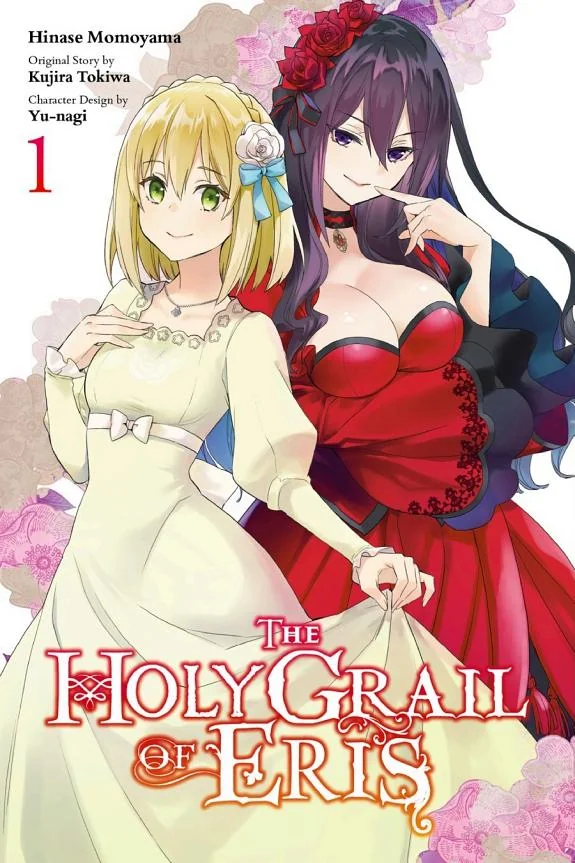
The Holy Grail of Eris, Vol. 1 (manga)
 75
75

The Holy Grail of Eris, Vol. 1 (manga)
Kujira Tokiwa's "The Holy Grail of Eris, Vol. 1" opens with a dramatic fall from grace for Constance Grail, framed for theft and losing her betrothed. The manga’s strength lies in its immediate establishment of high stakes and the introduction of Scarlett Castiel, a character whose malevolent aura is palpable even in brief glimpses. The central maxim, "Thou Shalt Be Sincere," quickly becomes a ironic counterpoint to the duplicitous world Constance inhabits. However, the pacing in the initial chapters feels somewhat rushed, particularly in the swiftness of Constance's ruin. A more gradual unveiling of the societal machinations might have amplified the dramatic tension. The visual design, while effective in conveying character emotions, occasionally leans into melodrama. Despite these points, the manga offers a compelling setup, particularly the enigmatic connection between Constance and Scarlett, suggesting a narrative that promises to explore darker, more complex truths beneath a veneer of societal politeness. It is a promising, if occasionally hurried, beginning.
📝 Description
75
Kujira Tokiwa's The Holy Grail of Eris, Vol. 1, published in May 2022, begins with a false accusation that shatters a young woman's life.
The manga centers on Constance Grail, whose life collapses after a theft accusation costs her fiancé and social standing. Her world is further complicated by a mysterious woman who looks strikingly like Scarlett Castiel, a figure suggested to be malevolent, hinting at occult connections.
The narrative is driven by Constance's plight and the unraveling secrets surrounding her accuser and the enigmatic Scarlett. The story contrasts the Grail family's motto, "Thou Shalt Be Sincere," with the manipulative nature of high society, questioning the efficacy of honesty in a world of pretense.
This work will appeal to readers who appreciate character-focused dramas exploring societal pressures and hidden identities. Those drawn to stories blending intense personal conflicts with supernatural or uncanny elements will find its premise engaging.
Emerging in 2022, this manga echoes themes found in 19th-century Gothic literature and Decadent aesthetics. Its critique of superficiality and examination of underlying darkness resonate with a tradition that questioned societal norms and delved into psychological depths. While not directly tied to specific esoteric movements, its focus on societal artifice and hidden malevolence can be seen as a modern interpretation of the occult's fascination with concealed truths and the darker aspects of human nature.
💡 Why Read This Book?
• Understand the corrosive impact of societal judgment through Constance Grail's plight, learning how reputation can be weaponized in high society. • Explore the esoteric principle "Thou Shalt Be Sincere" as it clashes with a world of artifice, offering a critique of superficiality as seen in the Grail family's ethos. • Witness the visual storytelling of Kujira Tokiwa as characters like the seemingly wicked Scarlett Castiel are introduced, hinting at hidden depths and potential occult connections.
⭐ Reader Reviews
Honest opinions from readers who have explored this book.
❓ Frequently Asked Questions
What is the core principle of the Grail family in The Holy Grail of Eris?
The Grail family's guiding principle is "Thou Shalt Be Sincere." This tenet is central to the narrative, contrasting with the deceptive nature of the high society Constance Grail navigates.
Who is Scarlett Castiel and what is her significance?
Scarlett Castiel is presented as an exceptionally wicked individual. Her uncanny resemblance to Constance Grail is a key plot point, suggesting a deeper, potentially supernatural or karmic connection.
What event leads to Constance Grail's downfall?
Constance Grail is framed for petty theft, an accusation that swiftly leads to the loss of her fiancé and her reputation within high society.
What genre does The Holy Grail of Eris, Vol. 1 fall into?
The manga blends elements of drama, social commentary, and mystery, with potential undertones of the supernatural or occult due to its character dynamics and implied darker themes.
When was The Holy Grail of Eris, Vol. 1 first published?
The manga, authored by Kujira Tokiwa, was first published on May 31, 2022.
Does this manga explore esoteric philosophy directly?
While not a direct philosophical treatise, the manga uses esoteric concepts like sincerity versus artifice and hints at deeper spiritual or karmic connections between characters, offering a narrative exploration of such themes.
🔮 Key Themes & Symbolism
Sincerity vs. Artifice
The narrative directly confronts the Grail family's core principle, "Thou Shalt Be Sincere," by juxtaposing it with the inherently deceptive environment of high society. Constance's downfall highlights how earnestness can be a liability when societal interactions are governed by pretense, manipulation, and hidden agendas. This theme questions the practical application of absolute sincerity in a world that rewards artifice, suggesting a need for deeper understanding beyond surface-level adherence to principles.
Reputation and Social Ruin
Constance Grail's swift descent from a respected position to social ostracization following a false accusation of petty theft underscores the fragility of reputation, especially for women in restrictive social structures. The manga depicts how easily a life can be dismantled by slander and societal judgment, prompting reflection on the mechanisms of social control and the consequences of perceived transgressions in the public sphere.
Duality and Hidden Connections
The striking resemblance between Constance Grail and the malevolent Scarlett Castiel introduces a powerful theme of duality and unseen links. This uncanny mirroring suggests possibilities beyond mere coincidence, hinting at shared destinies, past lives, or perhaps a symbolic representation of Constance's own suppressed darker impulses. The contrast between the two characters invites contemplation on the hidden aspects of identity and the nature of good and evil.
The Nature of Wickedness
Scarlett Castiel is introduced as inherently "extremely wicked," serving as an antithesis to Constance's initial purity and sincerity. The manga uses Scarlett not just as an antagonist, but as a focal point for exploring different forms of malevolence. Is wickedness an innate quality, or a product of circumstance and choice? The narrative sets up this question, promising to explore the motivations and manifestations of true wickedness.
💬 Memorable Quotes
Direct passages from the work, attributed to the author.
“Thou Shalt Be Sincere.”
— This maxim, the foundational principle of the Grail family, is presented as both a moral compass and, ironically, a potential vulnerability in the cutthroat world of high society depicted in the manga.
“Scarlett isn’t just extremely wicked...”
— This fragment suggests Scarlett Castiel possesses a level of malevolence that transcends ordinary villainy, hinting at a deeper, perhaps supernatural or profoundly corrupt, nature.
“Constance Grail soon learns after she is framed for petty theft...”
— This highlights the central conflict: Constance's adherence to sincerity is insufficient to protect her from societal machinations, leading to her rapid downfall and loss of status.
“one gaze on her isn’t quite as chilling as the others”
— This observation points to a subtle distinction in how characters perceive Constance, suggesting an underlying difference or perhaps a hidden affinity that sets one observer apart from the judgmental crowd.
💡 Key Ideas
Editorial paraphrase of the work's core concepts — not direct quotes.
the woman’s uncanny resemblance to Scarlett Castiel must be a coincidence.
This line directly addresses the narrative's use of doppelgänger motifs, framing the visual similarity between Constance and Scarlett as a point of suspicion that challenges simple explanations.
🌙 Esoteric Significance
Tradition
While not explicitly aligned with a single historical esoteric tradition like Hermeticism or Gnosticism, "The Holy Grail of Eris, Vol. 1" taps into archetypal themes common across many mystical paths. The family's maxim, "Thou Shalt Be Sincere," can be viewed through the lens of integrity and truth, principles valued in various spiritual disciplines. The contrast between sincerity and societal artifice suggests a commentary on the difficulty of maintaining inner truth in the external world, a perennial esoteric concern.
Symbolism
The concept of the "Holy Grail" itself, while secularized in this context, carries immense symbolic weight from Arthurian legend and esoteric traditions, often representing ultimate truth, spiritual enlightenment, or divine grace. The uncanny resemblance between Constance and Scarlett Castiel functions as a potent symbol of duality, shadow selves, or perhaps karmic entanglement, common motifs in Gnostic and Eastern philosophies exploring the interconnectedness of seemingly opposed forces.
Modern Relevance
In contemporary discourse, "The Holy Grail of Eris" speaks to the ongoing tension between authenticity and curated online personas, a modern manifestation of the sincerity versus artifice conflict. Thinkers and practitioners interested in social dynamics, identity formation, and the psychological underpinnings of reputation management might find narrative parallels. The manga's exploration of hidden connections and potential predetermination also appeals to modern interests in concepts like synchronicity and collective unconscious phenomena.
👥 Who Should Read This Book
• Readers interested in social drama with psychological depth, particularly those who appreciate narratives exploring the consequences of societal judgment and reputation. • Fans of manga seeking stories that subtly incorporate mystery and potentially supernatural elements, focusing on character relationships and hidden truths. • Students of narrative structure who enjoy analyzing how authors use character archetypes and symbolic resemblances to drive plot and explore thematic concepts like duality.
📜 Historical Context
Emerging in 2022, Kujira Tokiwa's "The Holy Grail of Eris, Vol. 1" arrives in a global media landscape saturated with manga adaptations and original works. While the narrative itself doesn't directly reference historical esoteric movements, its themes of societal hypocrisy and the critique of superficial virtue echo concerns found in late 19th-century Aestheticism and Decadent literature, movements that often questioned bourgeois morality and explored psychological depths. The manga's focus on a protagonist navigating treacherous social waters can be seen as a contemporary iteration of the anxieties present in earlier periods. Unlike the overt spiritualism of Theosophy, which gained significant traction in the late 19th and early 20th centuries, "Eris" grounds its narrative in personal drama and interpersonal intrigue, using hints of the uncanny rather than explicit occult philosophy.
📔 Journal Prompts
Constance Grail's adherence to "Thou Shalt Be Sincere" and its consequences.
The symbolic implications of the uncanny resemblance between Constance and Scarlett Castiel.
Analyze the function of petty theft as a catalyst for social ruin in the narrative.
Reflect on the contrast between the Grail family's guiding principle and the actions within high society.
Consider the characterization of Scarlett Castiel's 'extreme wickedness'.
🗂️ Glossary
Thou Shalt Be Sincere
The central ethical tenet of the Grail family, emphasized as a core principle that guides their lives but proves insufficient in the face of societal deceit.
Petty Theft
A minor offense involving the unlawful taking of property. In the context of the story, it serves as the false accusation used to ruin Constance Grail's reputation.
High Society
A social class comprising wealthy, influential, and often aristocratic individuals. The narrative depicts this sphere as governed by appearances, reputation, and intricate social rules.
Uncanny Resemblance
A striking and peculiar similarity between two individuals, often to the point of being unsettling or suggesting a deeper connection beyond coincidence.
Framed
To be falsely accused or implicated in a crime or wrongdoing, typically to shift blame onto an innocent party.
Fiancé
A person to whom one is engaged to be married. The loss of her fiancé is a significant consequence of Constance's social downfall.
Scarlett Castiel
A character introduced in the narrative known for her exceptional wickedness and her striking visual similarity to the protagonist, Constance Grail.
This book appears in 1 collection
🔮 Readers Also Liked
Browse all →









From the “Holy Grail” Collection
View all →




![EBOOK COLLECTION ( PART 8) [ CSI][h 33t]](/img/thumb/ebook-collection-part-8-csi-h-33t.webp)




More Free Occult Philosophy Books
View all →