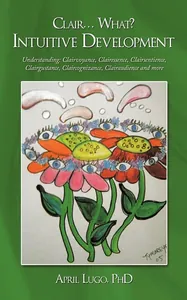
The Great Hunt (The Wheel of Time Book 2)

 73
73

The Great Hunt (The Wheel of Time Book 2)
Robert Jordan’s *The Great Hunt* solidifies the epic scope initiated in *The Eye of the World*. What initially appears as a straightforward quest for an artifact quickly fragments into a complex exploration of duty and self-identity, particularly through Rand al'Thor's evolving consciousness. The pacing, while occasionally ponderous in its detailed descriptions of travel and political maneuvering, effectively builds a world that feels both ancient and immediately perilous. A notable strength lies in the distinct character voices; Nynaeve al'Meara, in particular, provides a fiery, often exasperated counterpoint to the gravitas surrounding Rand. However, the sheer breadth of characters and subplots introduced can sometimes dilute the central narrative thrust, making it challenging to track every thread. The novel excels when it focuses on the internal conflicts of its main protagonists, showing how the burden of prophecy weighs upon them. Ultimately, *The Great Hunt* succeeds as a compelling continuation that deepens the lore and raises the stakes considerably.
📝 Description
73
Published in 1990, Robert Jordan's The Great Hunt continues Rand al'Thor's struggle as the prophesied Dragon Reborn.
The second novel in Robert Jordan's The Wheel of Time, The Great Hunt picks up with Rand al'Thor and his friends dealing with the consequences of his destiny. Rand must learn to control his growing power while seeking the Horn of Valere, an artifact that can summon ancient heroes. This quest takes them across a continent filled with new cultures and political dangers.
The story contrasts the forces of Light and Shadow, with Rand at the center of this conflict. His companions, including Mat, Perrin, Egwene, and Nynaeve, each have their own challenges and develop their unique abilities. The arrival of the Seanchan Empire and divisions within the Aes Sedai add to the complex political situation. The book examines how leadership weighs on individuals and the recurring nature of time.
The Wheel of Time series draws on cyclical views of time found in various mythologies and philosophies. The concept of the Dragon Reborn mirrors archetypal figures destined to battle great evils, often facing personal ruin. The cosmology of the Wheel itself, representing the flow of ages, frames the narrative within a larger, predetermined cosmic structure. Themes of free will versus destiny, the corrupting nature of power, and the necessity of courage are central to this framework.
💡 Why Read This Book?
• Understand the burden of destiny through Rand al'Thor's perspective as he grapples with his role as the Dragon Reborn, a concept central to the book's exploration of prophecy and power. • Experience the intricate world-building of Robert Jordan's creation, particularly the political machinations involving the White Tower and the introduction of the Seanchan Empire in 1990. • Witness the development of key supporting characters like Mat and Perrin, whose individual journeys and emerging abilities are crucial to the unfolding narrative of the Wheel of Time.
⭐ Reader Reviews
Honest opinions from readers who have explored this book.
❓ Frequently Asked Questions
What is the significance of the Horn of Valere in *The Great Hunt*?
The Horn of Valere is a powerful artifact that, when blown, can summon the spirits of legendary heroes from throughout history to fight for the blower's cause. Its retrieval is a central objective for Rand and his companions in this book.
Who are the main antagonists in *The Great Hunt*?
The primary antagonists are the servants of the Dark One, including powerful Forsaken like Ba'alzamon, and their monstrous creations, the Trollocs. The Seanchan Empire also presents a significant, albeit different, form of opposition.
How does *The Great Hunt* expand on the world introduced in the first book?
This installment significantly broadens the world by introducing new cultures, such as the militaristic Seanchan, and delving deeper into the political structures of the White Tower. It also explores more of the continent's geography.
What are the main themes explored in *The Great Hunt*?
Key themes include destiny versus free will, the corrupting nature of power, the burden of leadership, the cyclical nature of time, and the struggle against encroaching darkness, all framed by the Wheel of Time cosmology.
When was *The Great Hunt* published?
*The Great Hunt* was first published in 1990, serving as the second novel in Robert Jordan's epic fantasy series, *The Wheel of Time*.
What role do the Aes Sedai play in this book?
The Aes Sedai, particularly those from the White Tower, play a complex role. Some actively aid Rand, while others are suspicious or have their own agendas, reflecting the internal politics and varying interpretations of the Light.
🔮 Key Themes & Symbolism
The Dragon Reborn's Burden
Rand al'Thor's struggle with his identity as the prophesied Dragon Reborn is central. The book meticulously details the immense psychological weight of this destiny, the fear of repeating past mistakes (like the Breaking), and the isolation that comes with such a role. This theme is not merely about wielding power, but about the moral and emotional cost of bearing the fate of the world, a concept explored through his interactions with Moiraine Damodred and the whispers of Ba'alzamon.
Cycles of Time and History
The Wheel of Time cosmology posits that history repeats itself in cycles, with the Dragon destined to be reborn to fight the Dark One. *The Great Hunt* emphasizes this through the retrieval of the Horn of Valere, which summons heroes from past Ages. This cyclical nature suggests that while specific events and individuals change, the fundamental struggle between Light and Shadow is eternal, posing questions about agency within a predetermined cosmic framework.
The Nature of Evil and Corruption
The Shadow's influence is depicted not just as overt destruction but as a subtle force of corruption, seeking to twist individuals and institutions. This is exemplified by the Forsaken and their manipulations, as well as the threat of the Seanchan's damane. The book explores how even those with good intentions can be led astray or compromised, highlighting the constant vigilance required to resist the Shadow's insidious reach.
Companionship and Loyalty Under Duress
The bonds between Rand and his friends—Mat, Perrin, Egwene, and Nynaeve—are tested severely. Their loyalty to Rand, even when they fear his power or destiny, forms a crucial counterpoint to the isolation of his role. The narrative shows how shared hardship and unwavering support can provide strength against overwhelming external and internal threats, underscoring the importance of human connection.
💬 Memorable Quotes
Direct passages from the work, attributed to the author.
“He was the Lord Dragon. He was the one who would be. And he was the one who had been.”
— This interpretation highlights Rand's internal conflict and the weight of prophecy. He embodies both the present reality of his identity and the historical legacy of the Dragon, past and future, creating a profound sense of destiny and burden.
“Light help us, she was Aes Sedai. She could be Aes Sedai. She could be Aes Sedai. She was Aes Sedai.”
— This reflects Egwene al'Vere's internal struggle and eventual acceptance of her burgeoning power and role as an Aes Sedai. It captures the self-doubt and the dawning realization of her potential and the responsibilities that come with it.
“The greatest evil is not always the loudest.”
— This statement points to the insidious nature of the Shadow's influence, suggesting that the most dangerous threats are often subtle, manipulative, and unseen, rather than overt displays of power. It underscores the need for discernment.
“War is the only way the world is ever made new.”
— A grim observation on the destructive yet potentially transformative nature of conflict. This perspective suggests that societal upheaval, often born of war, can lead to radical change and the emergence of new orders, reflecting the dramatic events within the narrative.
💡 Key Ideas
Editorial paraphrase of the work's core concepts — not direct quotes.
The Wheel of Time turns, and Ages come and pass, leaving memories that become legend. Legend fades to myth, and even myth is long forgotten when the Age that gave it birth comes again.
This passage captures the series' core cosmological concept: the cyclical nature of time. It suggests that history is not linear but repeats, with events and figures recurring, reinforcing the idea that the present struggle has echoes in the past and future.
🌙 Esoteric Significance
Tradition
While not explicitly tied to a single esoteric lineage, *The Wheel of Time* draws heavily from archetypal mythologies and Gnostic concepts. The struggle between a singular, imprisoned Light (represented by the Dark One) and a destined savior (the Dragon Reborn) echoes Gnostic dualism. The cyclical cosmology of the Wheel itself can be seen as a narrative interpretation of concepts found in Eastern philosophies and certain Hermetic ideas about cosmic cycles and reincarnation, though Jordan synthesizes these into a unique framework.
Symbolism
The Wolf is a potent symbol, representing primal instincts, fierce loyalty, and a connection to the natural world, particularly embodied by Perrin Aybara. The Horn of Valere symbolizes the collective memory of heroism and the potential for past glories to influence the present battle against darkness. The One Power, divided into male (Saidin) and female (Saidar) halves, represents a cosmic duality, with the corruption of Saidin by the Dark One signifying the perversion of divine energy.
Modern Relevance
Contemporary fantasy authors continue to be influenced by Jordan's detailed world-building and intricate plotting. The series' exploration of destiny, the corrupting nature of power, and the psychological toll of leadership offers enduring material for analysis in literature courses. Elements of the magic system and its societal integration have also been discussed in contexts examining fictional economies and political structures within speculative fiction.
👥 Who Should Read This Book
• Readers interested in the archetypal hero's journey and its modern fantasy interpretations, particularly those drawn to narratives of chosen ones facing immense responsibility. • Students of comparative mythology and religion seeking to analyze how ancient themes of cosmic struggle and cyclical time are adapted into contemporary fiction. • Fans of intricate, large-scale epic fantasy who appreciate detailed world-building, complex magic systems, and a sprawling cast of characters with developing arcs.
📜 Historical Context
Published in 1990, *The Great Hunt* emerged during a period of significant growth and diversification within the fantasy genre. Following the initial success of *The Eye of the World* (1990), Jordan solidified his position as a major voice. The early 1990s saw fantasy grappling with its identity, moving beyond the shadow of Tolkien while also exploring more mature themes and complex world-building. Competitors like Ursula K. Le Guin's Earthsea books and Stephen R. Donaldson's *The Chronicles of Thomas Covenant* had already pushed boundaries, but Jordan's intricate magic system, vast scope, and detailed cultures offered a distinct approach. The reception was generally positive, with critics praising the ambitious world-building and character development, though some noted the considerable length and pacing. The rise of epic fantasy as a dominant subgenre was well underway, with *The Wheel of Time* becoming a foundational pillar.
📔 Journal Prompts
Rand's fear of becoming like Lews Therin and repeating the Breaking.
The strategic implications of the Horn of Valere's retrieval.
Perrin Aybara's internal conflict regarding his wolf-like abilities.
The political divisions and differing agendas within the White Tower.
The symbolic meaning of the Seanchan's 'a'dam' and 'damane' in relation to control and power.
🗂️ Glossary
Dragon Reborn
The prophesied reincarnation of Lews Therin Telamon, destined to save the world from the Dark One, but also feared for potentially causing another Breaking of the world.
One Power
The fundamental magical force of the universe, divided into Saidin (male) and Saidar (female), used by channelers to perform magic.
Aes Sedai
Women who can channel the One Power, trained at the White Tower. They hold significant political and social influence, though often viewed with a mixture of awe and suspicion.
Horn of Valere
An ancient artifact that, when blown, summons the spirits of legendary heroes from past Ages to fight for the blower.
Seanchan
A militaristic empire from across the sea, characterized by their use of 'damane' (enslaved channelers) and 'sul'dam' (their handlers), posing a major threat.
Ba'alzamon
A powerful servant of the Dark One, often appearing as a dark figure who directly confronts Rand, representing the embodiment of evil.
Trolloc
Brutish, monstrous creatures created by the Dark One, often serving as foot soldiers for Shadowspawn armies.
🔮 Readers Also Liked
Browse all →








More by Robert Jordan
All books →


More Free Occult Philosophy Books
View all →