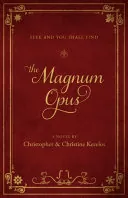
Passage

 76
76

Passage
Connie Willis, a writer whose longer works have earned her numerous awards, offers a selection of short fiction in *Passage*. The collection shines when Willis leans into the quiet, observational aspects of her characters' lives, imbuing them with a palpable sense of inner reality. One particularly effective piece explores the subtle anxieties of a narrator encountering an unusual neighbor, a scenario that builds unease through understated description rather than overt plot mechanics. However, the unevenness inherent in a collection spanning different periods of an author’s career is apparent; some stories feel more like sketches than fully realized narratives, lacking the thematic density or narrative propulsion of her best novels. The titular story, "Passage," while conceptually interesting, feels somewhat underdeveloped, leaving the reader wanting more resolution. Despite these minor drawbacks, *Passage* provides a valuable, if brief, look at the foundational elements of Willis's distinctive voice, demonstrating her consistent skill in crafting resonant human moments within speculative frameworks. It is a worthwhile, if not entirely essential, addition to her bibliography.
📝 Description
76
Connie Willis's 2020 short story collection, Passage, gathers narratives from across her career.
Passage collects short fiction by Connie Willis, a writer more often recognized for her novels. These stories, drawn from different periods of her writing, show the breadth of her storytelling. They often touch on human connections, the way time passes, and the small events that shape our lives.
Each story presents a unique situation, frequently with an unusual element or a quiet philosophical question. Willis invites readers to think about reality and personal experience. The collection is suitable for both dedicated fans of Willis's work and new readers who enjoy stories focused on characters and speculative ideas. Those who prefer literary science fiction that prioritizes emotional depth and intellectual engagement over fast action will find this book rewarding. Readers who like stories that stay with them, offering a new perspective on everyday life, will especially appreciate Passage.
This collection engages with themes that resonate within esoteric thought, particularly concerning the nature of consciousness and temporal perception. The stories question the boundaries of everyday reality, suggesting hidden connections or alternate ways of experiencing existence. Willis often uses speculative elements not for spectacle, but to explore how individuals interpret and are affected by the passage of time and the persistence of memory. This aligns with esoteric traditions that investigate the subjective nature of experience and the underlying patterns that connect seemingly disparate events.
💡 Why Read This Book?
• Gain insight into Connie Willis's foundational narrative techniques by examining the short story "Passage," which explores the subjective experience of time and perception, offering a concentrated look at her thematic preoccupations. • Understand the evolution of literary science fiction through the context of *Passage*'s 2020 publication, appreciating how Willis's work fits within a tradition of thoughtful, character-focused speculative narratives alongside contemporaries like Ted Chiang. • Experience concise, emotionally resonant storytelling that distills complex ideas about memory and human connection into potent, memorable vignettes, providing a unique perspective on everyday life through a speculative lens.
⭐ Reader Reviews
Honest opinions from readers who have explored this book.
❓ Frequently Asked Questions
What is the primary genre of Connie Willis's "Passage"?
While Connie Willis is a celebrated science fiction author, "Passage" is a collection of short stories that often blend speculative elements with literary fiction, focusing on character and theme rather than hard sci-fi concepts.
When was Connie Willis's "Passage" first published?
The collection "Passage" by Connie Willis was first published in 2020, gathering previously released short fiction from the author.
Are the stories in "Passage" connected thematically?
Yes, while each story is distinct, many in "Passage" explore recurring themes such as the nature of time, memory, human connection, and the uncanny aspects of everyday life.
Does "Passage" contain any of Connie Willis's most famous works?
"Passage" is a collection of short stories and novellas, not her major award-winning novels like *The Doomsday Book* or *To Say Nothing of the Dog*. It offers a different facet of her writing.
Is "Passage" suitable for readers new to Connie Willis?
Yes, "Passage" can serve as an accessible introduction to Connie Willis's style, showcasing her ability to craft compelling narratives and explore profound themes in a condensed format.
What kind of tone can I expect from the stories in "Passage"?
The tone varies, but generally, the stories in "Passage" are introspective, often poignant, and possess a subtle, sometimes melancholic, speculative or uncanny quality.
🔮 Key Themes & Symbolism
Subjectivity of Time
Many stories in Passage explore how individual perception warps the experience of time. Whether through memory, anticipation, or altered states of consciousness, the narrative frequently emphasizes that chronological progression is less significant than the subjective passage of moments. This theme challenges linear thinking, suggesting that our internal sense of duration and significance is paramount, a concept that aligns with certain esoteric philosophies valuing inner experience over external measurement.
The Unseen Fabric
Willis often introduces elements that suggest a reality beyond the immediately apparent. This can manifest as subtle uncanny occurrences, inexplicable coincidences, or characters with unusual sensitivities. These 'thin places' in the narrative hint at underlying currents or forces that influence human lives, echoing esoteric traditions that posit unseen dimensions or energies shaping our world and personal destinies. The stories invite contemplation of what lies just beyond our ordinary perception.
Moments of Revelation
Passage highlights how ordinary lives can be punctuated by extraordinary moments of insight or connection. These are not necessarily grand epiphanies but often small, intensely felt experiences that alter a character's understanding of themselves or their relationships. This focus on central, transformative instants appeals to esoteric paths that seek enlightenment through focused attention on the present and the cultivation of inner awareness.
Memory and Identity
The collection frequently interrogates the role of memory in constructing personal identity. Characters grapple with past events, the reliability of their recollections, and how accumulated experiences shape their present selves. This exploration mirrors esoteric discussions on the soul's journey and the karmic imprints left by past lives or significant experiences, suggesting that identity is a fluid construct influenced by layers of personal history.
💬 Memorable Quotes
Direct passages from the work, attributed to the author.
“She looked at the ordinary street, but for a moment, it shimmered with an impossible light.”
— This highlights the 'unseen fabric' theme, where mundane reality briefly reveals an underlying, extraordinary quality. It points to moments where perception shifts, allowing a glimpse into a deeper, perhaps mystical, aspect of existence.
“What we remember isn't always what happened, but it's always what we needed to have happened.”
— This interpretation of memory underscores its role in shaping identity and coping mechanisms. It suggests that our recollections are not passive recordings but active constructions, serving a psychological or even spiritual purpose.
“The silence in the room wasn't empty; it was full of things unsaid and unseen.”
— This metaphor speaks to the presence of hidden meanings and unspoken emotions within interpersonal dynamics. It implies that communication and understanding often transcend verbal expression, touching upon a more intuitive or psychic level of awareness.
“He realized the entire conversation had been about something else entirely.”
— This points to the subtle layers of meaning and subtext that often permeate human interaction. It suggests that surface-level communication can mask deeper intentions or unspoken truths, requiring a more discerning or intuitive approach to truly comprehend.
💡 Key Ideas
Editorial paraphrase of the work's core concepts — not direct quotes.
The clock on the wall was ticking, but it felt like a suggestion rather than a command.
This line expresses the collection's recurring theme of subjective time. It suggests that external measures of duration, like a clock's tick, hold little sway over an individual's internal experience of time's flow, particularly in moments of intense focus or altered perception.
🌙 Esoteric Significance
Tradition
While not explicitly aligned with a single esoteric tradition, Passage echoes themes found in Hermeticism and Gnosticism through its exploration of subjective reality and the hidden nature of the cosmos. The emphasis on perception shaping reality and the suggestion of deeper, unseen forces at play aligns with Hermetic principles like 'As Above, So Below' and the Gnostic idea of a hidden divine spark within humanity. Willis's approach, however, remains grounded in psychological realism rather than overt mysticism, offering a modern, secular interpretation of these ancient inquiries.
Symbolism
The 'passage' itself serves as a potent symbol, representing transitions between states of being, moments of profound change, or journeys into the unknown—both internal and external. Doorways and thresholds frequently appear, signifying opportunities for transformation or entry into new areas of understanding. The recurring motif of clocks and timepieces symbolizes not just the measurement of duration, but the often-illusory nature of linear progression and the subjective experience of temporal flow.
Modern Relevance
Contemporary thinkers and practitioners in fields like transpersonal psychology and philosophical investigations into consciousness find resonance in Willis's subtle explorations of altered states and subjective experience. Her work can inform discussions on mindfulness, the nature of reality in a post-digital age, and the power of narrative to shape perception. For writers and readers interested in exploring the liminal spaces between the ordinary and the extraordinary, Passage offers a deep study in understated speculative storytelling.
👥 Who Should Read This Book
• Readers interested in literary speculative fiction who appreciate character-driven narratives and thematic depth over plot-heavy action, particularly those drawn to stories that subtly question reality. • Fans of Connie Willis seeking a concentrated sampling of her shorter works, offering insights into the foundational elements of her acclaimed longer novels and her unique narrative voice. • Individuals exploring philosophical concepts related to time, memory, and perception, who will find in these stories accessible yet thought-provoking fictional case studies for contemplation.
📜 Historical Context
Connie Willis's *Passage*, published in 2020, emerged during a period where literary science fiction continued to thrive, exploring complex humanistic themes. Willis herself had established a significant career trajectory, particularly marked by her Hugo and Nebula Award-winning novel *The Doomsday Book* in 1992, which cemented her reputation for blending historical settings with profound emotional depth. The contemporary literary landscape in 2020 featured authors like Ursula K. Le Guin (whose influence on thoughtful speculative fiction remained strong posthumously) and Nnedi Okorafor, who were also critically recognized for their genre-bending narratives. While *Passage* itself is a collection of shorter works, its publication year places it within a broader conversation about the enduring power of speculative fiction to examine the human condition. The collection’s focus on intimate character experiences and subtle shifts in reality aligns with a strain of science fiction that prioritizes introspection, distinct from more action-oriented or technologically focused subgenres, a contrast also seen in the more philosophical short stories of Ted Chiang.
📔 Journal Prompts
The shimmering street in 'Passage': What ordinary aspect of your environment might reveal an impossible light?
Consider the 'suggestion rather than a command' quality of time. How does your internal sense of time differ from external measurements?
Reflect on a time when an 'unsaid and unseen' element profoundly shaped an interaction.
The 'needed to have happened' nature of memory: What past event do you reconstruct to serve your present understanding?
Analyze a 'passage' in your own life that felt like a transition between distinct states of being.
🗂️ Glossary
Passage
The title of the collection, also referring to specific narrative instances within the stories that denote a transition, a journey, or a significant shift in understanding or state of being.
Subjective Time
The concept that an individual's experience of time's duration and flow is personal and can differ significantly from objective, clock-measured time.
Unseen Fabric
A narrative device or thematic element suggesting that reality possesses hidden layers, forces, or dimensions that influence events and perceptions beyond ordinary awareness.
Moments of Revelation
Threshold
A symbolic or literal point of entry or transition, representing a move from one state, place, or understanding to another, often implying potential change or discovery.
Memory Construction
The idea that memories are not exact recordings but are actively shaped and reconstructed by the mind, influenced by present needs, beliefs, and emotions.
The Uncanny
A literary effect where something familiar becomes strange and unsettling, often hinting at underlying truths or hidden realities that disrupt normal perception.
🔮 Readers Also Liked
Browse all →







More by Connie Willis
All books →

More Free Occult Philosophy Books
View all →