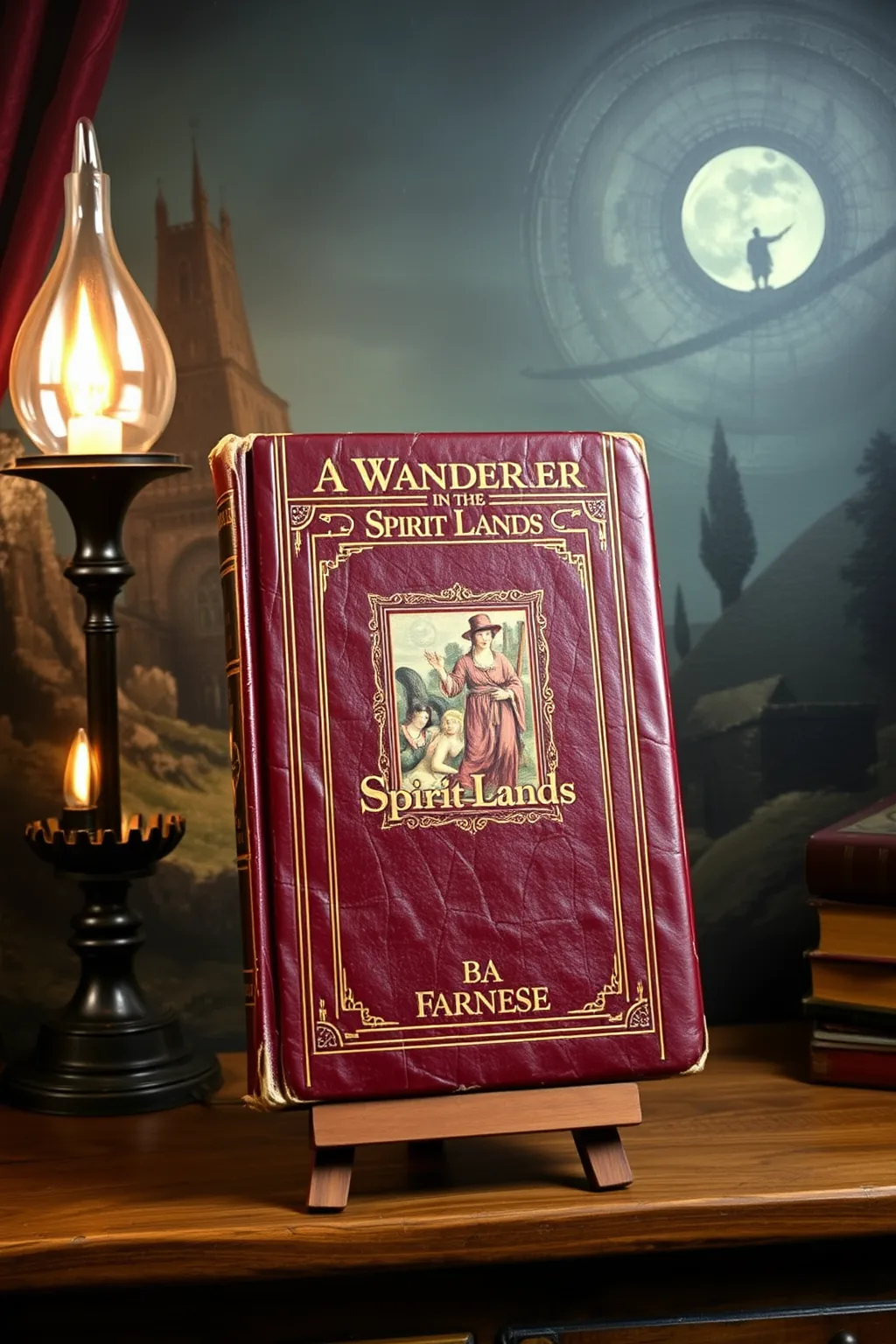
A Wanderer in the Spirit Lands
 82
82

A Wanderer in the Spirit Lands



Balthazar Finch (Senior Critic, Occult Philosophy) — "A Wanderer in the Spirit Lands" stands as a remarkable artifact of late 19th-century Spiritualism, offering a compelling, if allegorical, depiction of post-mortem existence. Farnese's work transcends mere anecdotal accounts, delving into themes of karmic retribution and spiritual evolution with an almost theological gravity. The alleged dictation from Franchezzo provides a unique, first-person perspective on the challenges and revelations awaiting the disembodied soul. Its strength lies in its detailed descriptions of spiritual hierarchies and the consequences of earthly choices, making it essential reading for serious students of the afterlife and esoteric philosophy.
📝 Description
82
Published in 1896, A Wanderer in the Spirit Lands claims to channel the spirit of Franchezzo via automatic writing.
This book presents an account of the afterlife, purportedly dictated by a spirit named Franchezzo. Franchezzo, described as a man previously absorbed in earthly pleasures, recounts his experiences after death. He details a spiritual journey through various planes of existence, where actions taken during life have consequences. The narrative follows his path of spiritual growth and understanding beyond the physical world. The text aims to illuminate the unseen influences that shape human lives and offers perspectives on the nature of existence after death. It addresses questions about cosmic order and the soul's development.
A Wanderer in the Spirit Lands emerged during a period of intense interest in Spiritualism and psychical research. It aligns with the tradition of spirit communication through mediums, a practice popular in the late 19th century. Similar to works by Allan Kardec or Helena Blavatsky, it seeks to provide a structured understanding of the spiritual world, including concepts of reincarnation, karma, and the evolution of the soul. The book's method of automatic writing also connects it to other trance phenomena explored within esoteric circles of the era.
✍️ Author
A Farnese
Alexander Farnese (Italian: Alessandro Farnese, Spanish: Alejandro Farnesio; 27 August 1545 – 3 December 1592) was an Italian noble and military leader, who was Duke of Parma, Piacenza and Castro from 1586 to 1592, as well as Governor of the Spanish Netherl…
💡 Why Read This Book?
This book is essential for seekers of profound spiritual truths, offering a unique, allegorical exploration of the afterlife and karmic justice. Scholars of Spiritualism and metaphysical history will find invaluable insights into early occult practices and beliefs. Practitioners will discover symbolic representations of spiritual growth and the consequences of action, providing a framework for personal development.
⭐ Reader Reviews
Honest opinions from readers who have explored this book.
❓ Frequently Asked Questions
What is "A Wanderer in the Spirit Lands"?
It's a spiritualist text from 1896, presented as a channeled account of the afterlife, allegedly dictated by the spirit of Franchezzo through automatic writing, detailing his journey of repentance and spiritual growth.
Who was Franchezzo?
Franchezzo is presented as the spirit whose experiences in the afterlife are chronicled in the book. He is described as a man who lived a selfish and hedonistic life on Earth and awakens to a spiritual journey of reform.
What is the primary theme of the book?
The primary themes are the nature of the afterlife, spiritual justice, repentance, the consequences of earthly actions, and the process of soul evolution and redemption.
How was the book written?
The book claims to have been written through the practice of automatic writing, a method where a spirit allegedly communicates by guiding the hand of a living person.
Is this book factual or allegorical?
While presented as a factual account by its proponents, it is widely considered an allegorical or symbolic narrative exploring spiritual concepts, rather than a literal travelogue of the afterlife.
🔮 Key Themes & Symbolism
The Nature of the Spirit World
The book provides an intricate, albeit symbolic, depiction of the spiritual realms, detailing various planes of existence, their inhabitants, and the laws that govern them. It explores the transition from physical life to spiritual consciousness, offering a vision of an ordered cosmos where souls reside and evolve according to their earthly deeds. This theme looks at the architecture of the unseen, the hierarchies of spirit beings, and the energetic currents that shape post-mortem realities, offering a conceptual map for those contemplating existence beyond the corporeal form.
Karmic Justice and Redemption
Central to "A Wanderer in the Spirit Lands" is the concept of spiritual accountability. The narrative illustrates how actions and intentions in earthly life cast long shadows into the spirit world, leading to consequences that can be both punitive and instructive. Franchezzo's journey exemplifies the arduous but necessary process of confronting one's past, seeking forgiveness, and undertaking spiritual labor to purify the soul. This theme underscores the inherent fairness of the cosmic order, where every soul is ultimately guided towards a path of rectification and eventual liberation through genuine repentance and growth.
Spiritual Evolution and Transformation
The book charts the transformative journey of the soul from ignorance and self-interest to wisdom and compassion. Franchezzo's awakening in the spirit lands marks the beginning of a profound inner metamorphosis, driven by the necessity to understand and rectify his past mistakes. The narrative emphasizes that the afterlife is not a static state but a dynamic environment for learning, healing, and advancement. It portrays spiritual growth as a continuous process of shedding lower vibrations, embracing higher truths, and actively participating in one's own spiritual evolution towards higher states of consciousness and service.
💬 Memorable Quotes
Direct passages from the work, attributed to the author.
“Every thought is a seed, and the spirit world is the garden where they bloom, for good or for ill.”
— Emphasizes the power of intention and thought in shaping one's spiritual reality, highlighting the principle of cause and effect that extends beyond physical life.
“Repentance is not merely sorrow, but the active will to mend the broken threads of one's past.”
— Defines true repentance as an active, volitional process of correction and atonement, rather than passive regret, crucial for spiritual progress.
“The heaviest chains are those forged by our own ignorance and pride.”
— Points to internal psychological states as the primary impediments to spiritual freedom, suggesting that self-awareness is key to liberation.
“Justice in the spirit lands is not a judgment, but a reflection of the soul's own truth.”
— Suggests that spiritual justice is inherent and self-manifesting, arising from the soul's own alignment (or misalignment) with universal principles.
💡 Key Ideas
Editorial paraphrase of the work's core concepts — not direct quotes.
I found myself in a place where the light was not of the sun, nor of the moon, but of the spirit.
This quote signifies the fundamental shift from physical perception to spiritual awareness, indicating that the afterlife operates on a different energetic and luminous plane.
🌙 Esoteric Significance
Tradition
This work is deeply rooted in the Spiritualist tradition, a 19th-century movement that sought empirical evidence for communication with the dead and the existence of a spirit world. It also draws upon broader esoteric concepts of karma, reincarnation (implied through spiritual growth), and the layered nature of reality, resonating with Hermeticism and elements of Eastern philosophies that began to gain traction in the West.
Symbolism
The book employs strong symbolism, with the 'Spirit Lands' representing various states of consciousness and spiritual evolution. Light and darkness symbolize spiritual awareness and ignorance, while geographical or environmental descriptions often represent inner states of being or stages of karmic reckoning. The journey of Franchezzo himself is a potent allegory for the soul's descent into the underworld of past errors and subsequent ascent towards purification and enlightenment.
Modern Relevance
In an age still preoccupied with the nature of consciousness and the possibility of life beyond death, "A Wanderer in the Spirit Lands" offers a historical perspective on these timeless questions. Its exploration of accountability, personal growth, and the interconnectedness of actions and consequences continues to resonate with modern seekers interested in spirituality, self-help, and understanding the broader implications of our existence. It serves as a foundational text for understanding the evolution of spiritualist thought.
👥 Who Should Read This Book
This book is a treasure for the earnest seeker of spiritual wisdom, offering a profound exploration of the afterlife and its moral underpinnings. Scholars of occult history and the Spiritualist movement will find it an invaluable primary source, providing insight into the era's beliefs and practices. Practitioners of esoteric arts and those on a path of personal development will benefit from its allegorical depiction of soul evolution and the principles of karmic justice, offering a contemplative framework for their own spiritual journey.
📜 Historical Context
Published in 1896, "A Wanderer in the Spirit Lands" emerged during the height of the Spiritualist movement, a period marked by intense public fascination with life after death, séances, and mediumship. This era was characterized by a blend of scientific inquiry and spiritual exploration, as thinkers sought to reconcile traditional religious beliefs with burgeoning scientific discoveries. The book reflects the Victorian era's grappling with mortality, the desire for proof of an afterlife, and the moral and ethical frameworks that underpinned society. It stands as a proof of the enduring human need to understand what lies beyond the veil, influenced by earlier transcendentalist thought and contributing to the ongoing discourse on spiritualism and metaphysics.
📔 Journal Prompts
Reflect on a time you experienced a significant 'awakening' or realization about yourself or the world. How did this change your perspective?
Consider the concept of 'karmic justice.' How do you see the consequences of actions playing out in your life and the lives of others?
Imagine your own 'spirit lands.' What would they look like, and what lessons would you need to learn there?
If you were to communicate with your past self, what advice or warnings would you impart based on your current understanding?
Explore the idea of 'active repentance.' What concrete steps could you take to mend or atone for past actions or intentions?
🗂️ Glossary
Spirit Lands
The collective term for the various realms or planes of existence inhabited by spirits after physical death, often depicted as having different conditions based on the spiritual state of their inhabitants.
Automatic Writing
A psychical phenomenon where a person's hand is purportedly guided by a spirit or subconscious entity to write messages, often used in Spiritualism for communication with the deceased.
Karmic Justice
The principle that actions (karma) in this life have inevitable consequences, often extending into the afterlife, leading to spiritual growth or suffering until balance is achieved.
Spiritual Evolution
The process by which a soul progresses through different stages of awareness, understanding, and moral development, typically over multiple lifetimes or within the spirit realms.
Repentance
In this context, not just regret but a profound internal change involving acknowledgment of wrongdoing, a desire for atonement, and a commitment to rectify past errors.
This book appears in 2 collections
🔮 Readers Also Liked
Browse all →








From the “Spiritualism” Collection
View all →


More Free Spiritualism & Afterlife Books
View all →