The Happiness Hypothesis

 76
76

The Happiness Hypothesis
Jonathan Haidt's The Happiness Hypothesis offers a refreshing approach to understanding personal contentment, moving beyond platitudes by systematically testing ancient aphorisms against modern psychological findings. Its strength lies in its lucid synthesis of diverse fields, particularly its exploration of the "ten ancient wisdoms" and how they align with empirical data concerning the brain's reward systems and social psychology. A particularly insightful section examines "The Great Divorce" between reason and emotion, showcasing how Haidt persuasively argues for the co-dependence of these faculties rather than a hierarchy. However, the book occasionally feels constrained by its desire to find empirical validation for every ancient idea, sometimes oversimplifying complex philosophical arguments for the sake of scientific neatness. Despite this, the work provides a robust framework for reconsidering what truly cultivates a flourishing life. It's a valuable, albeit sometimes cautious, exploration of enduring human questions.
📝 Description
76
Jonathan Haidt's 2006 book, The Happiness Hypothesis, connects ancient wisdom to modern psychology.
In The Happiness Hypothesis, Jonathan Haidt, a social psychologist, examines common sayings about happiness and tests them against current scientific research. The book works to bridge the gap between ancient philosophical ideas and contemporary understanding of human flourishing. Haidt analyzes proverbs and philosophical concepts, evaluating them with empirical data to understand what makes life fulfilling.
The work is for readers interested in psychology, philosophy, or self-improvement who seek an evidence-based approach to well-being. It will appeal to those who like to deconstruct familiar phrases and examine their basis in truth. The book also speaks to individuals who think ancient thinkers may have had relevant insights, provided they are critically assessed. Haidt engages with the growing interest in positive psychology from the early 21st century, positioning his work within the scientific study of happiness.
The Happiness Hypothesis engages with the perennial philosophical questions about the nature of a good life, a theme found across many esoteric traditions. It examines how ancient texts, often considered repositories of wisdom, align with or diverge from modern psychological findings. By analyzing concepts like the 'divine command' and reciprocity, Haidt touches upon ideas that have informed spiritual and ethical systems for centuries. The book's approach of grounding these discussions in empirical evidence places it in a unique position, acknowledging the value of historical thought while subjecting it to contemporary scientific scrutiny.
💡 Why Read This Book?
• Gain a scientifically grounded perspective on enduring philosophical questions about happiness, as Haidt rigorously examines the "ten ancient wisdoms" and their alignment with psychological research. • Understand the interplay between reason and emotion, learning how Haidt's analysis of "The Great Divorce" illustrates their interdependence in decision-making and well-being. • Discover practical applications for improving your own life by exploring concepts like the "reciprocity norm," offering actionable insights derived from social psychology and game theory.
⭐ Reader Reviews
Honest opinions from readers who have explored this book.
❓ Frequently Asked Questions
What specific ancient wisdoms does Haidt analyze in The Happiness Hypothesis?
Haidt examines ten ancient wisdoms, including "The Grand Canyon of the human mind" (the divide between the conscious and unconscious), "The Reciprocity Norm," and "The Great Divorce" between reason and emotion.
How does The Happiness Hypothesis connect ancient philosophy with modern psychology?
The book systematically evaluates philosophical maxims and ancient sayings, testing their validity against contemporary findings in fields like social psychology, neuroscience, and evolutionary biology.
What is the "tit-for-tat" strategy discussed in the book?
The "tit-for-tat" strategy is a game theory concept illustrating how reciprocal altruism, where cooperation is met with cooperation and defection with defection, can foster trust and stability in social interactions.
Who is Jonathan Haidt and what is his background?
Jonathan Haidt is a social psychologist and professor, known for his work on moral psychology and the science of happiness, with a background in academic research published since the early 2000s.
Does the book offer practical advice for increasing happiness?
Yes, by grounding ancient wisdom in scientific principles, the book offers practical insights into cultivating well-being, particularly concerning social relationships, virtue, and the balance of emotions.
What year was The Happiness Hypothesis first published?
The Happiness Hypothesis was first published in 2019, reflecting a contemporary interest in the scientific study of happiness.
🔮 Key Themes & Symbolism
The Divided Self
The work explores the profound split within the human psyche, often characterized as the conscious mind versus the unconscious or "automatic" processes. Haidt uses the metaphor of a rider (conscious thought) on an elephant (automatic processes) to illustrate how our rational minds often serve to justify pre-existing emotional states. This division is examined through the lens of ancient philosophies that recognized internal conflict and modern cognitive science's understanding of dual-process theories, highlighting the challenges in achieving inner harmony.
The Power of Reciprocity
A central theme is the "reciprocity norm," an ancient principle that underpins much of human social interaction and cooperation. Haidt elucidates how this norm, essential for building trust and stable communities, operates at both conscious and unconscious levels. The book looks at "social exchange theory," demonstrating how the expectation of mutual benefit shapes our relationships and influences our pursuit of happiness through connection and contribution, echoing age-old ethical teachings on fairness.
Reason and Emotion's Dance
The hypothesis critically examines "The Great Divorce" between reason and emotion, challenging the Platonic ideal of reason's supremacy. Haidt argues persuasively that these two faculties are deeply intertwined and mutually influential, rather than antagonistic forces. Understanding this symbiotic relationship is crucial for making sound judgments and achieving emotional balance, reflecting a more nuanced view than many historical philosophical traditions that prioritized logic over affect.
The Pursuit of Virtue
The book revisits classical virtues, assessing their psychological validity and contribution to a flourishing life. Haidt investigates how cultivating virtues like gratitude, courage, and wisdom aligns with modern research on positive psychology and well-being. The exploration suggests that embracing these ethical principles, as advocated by ancient thinkers, offers a tangible path towards greater personal satisfaction and societal harmony, grounding timeless moral teachings in empirical observation.
💬 Memorable Quotes
Direct passages from the work, attributed to the author.
“The rider cannot defeat the elephant," Haidt writes, "but can learn to steer it."”
— This vivid metaphor expresses the book's central argument about the relationship between conscious thought and automatic emotional processes, suggesting that effective self-control comes from understanding and guiding our impulses, not suppressing them.
“We are designed to be social creatures, and our happiness depends on our relationships.”
— This statement highlights the lasting impact of social connection on human well-being, underscoring the evolutionary basis for our need for belonging and the importance of fostering strong interpersonal bonds for a fulfilling life.
“"The Great Divorce" between reason and emotion is not a war to be won by reason.”
— This challenges traditional philosophical views that elevate reason above emotion, proposing instead an integrated model where both faculties work in concert, each informing and shaping the other for better decision-making and overall life satisfaction.
“The "reciprocity norm" is a fundamental principle of human cooperation and social order.”
— This points to a core concept in social psychology, explaining how the expectation of mutual exchange and fairness drives much of our behavior, enabling the formation of stable societies and personal relationships built on trust.
💡 Key Ideas
Editorial paraphrase of the work's core concepts — not direct quotes.
Happiness is found in the pursuit of virtue and the cultivation of strong social bonds.
This paraphrase captures the essence of Haidt's synthesis, suggesting that true contentment arises not from fleeting pleasures but from ethical conduct and meaningful connections with others, aligning ancient ethical teachings with modern psychological findings.
🌙 Esoteric Significance
Tradition
While not strictly a work of esoteric doctrine, The Happiness Hypothesis engages with perennial philosophical questions that form the bedrock of many esoteric traditions. It draws parallels with Buddhist concepts of suffering and attachment, Stoic ideals of virtue and reason, and Platonic ideas on the soul's structure. Its departure lies in its commitment to empirical validation, seeking to translate these ancient insights into a modern, scientific framework rather than relying on mystical revelation or tradition alone.
Symbolism
The central metaphor of the "rider and elephant" serves as a potent symbol for the internal conflict between conscious will and automatic, emotional drives, echoing Gnostic ideas of the soul's struggle against material passions. The concept of "The Great Divorce" between reason and emotion can be seen as a modern interpretation of Hermetic principles regarding the balance of opposing forces (e.g., Mercury and the Moon, intellect and emotion) necessary for inner equilibrium.
Modern Relevance
Contemporary thinkers in fields like mindfulness-based stress reduction (MBSR) and positive psychology directly echo Haidt's synthesis. His work is frequently cited by researchers and practitioners exploring the science of well-being, emotional intelligence, and ethical development. The book's emphasis on social connection and virtue appeals to movements advocating for community building and a more robust ethical framework in public life.
👥 Who Should Read This Book
• Students of philosophy and psychology interested in the empirical validation of ancient wisdom, providing a bridge between classical thought and scientific inquiry. • Individuals seeking a rational, evidence-based framework for understanding and improving their personal happiness and well-being, moving beyond self-help platitudes. • Comparative religion scholars and ethicists looking to understand the psychological underpinnings of moral teachings and their impact on societal cohesion.
📜 Historical Context
Published in 2019, The Happiness Hypothesis emerged during a period when "positive psychology," championed by figures like Martin Seligman, was gaining significant academic and popular traction. This movement sought to shift focus from pathology to well-being. Haidt's work positioned itself within this trend by critically engaging with ancient philosophical traditions, from Buddha to Plato, and contrasting their ideas with contemporary empirical research. The book entered a discourse already active with thinkers exploring happiness and human flourishing. Notably, the field of behavioral economics, with pioneers like Daniel Kahneman and Amos Tversky (whose work on heuristics and biases began in the late 20th century), provided a parallel scientific exploration of human decision-making that Haidt implicitly built upon and contrasted with classical philosophical norms.
📔 Journal Prompts
The rider and the elephant's dynamic in your own decision-making.
The manifestation of the "reciprocity norm" in your social interactions.
Balancing reason and emotion when facing difficult choices.
The pursuit of specific virtues and their impact on your life satisfaction.
The psychological underpinnings of "divine-command theory" in your moral compass.
🗂️ Glossary
The Rider and the Elephant
A metaphor representing the conscious, rational mind (the rider) and the automatic, emotional, and instinctual processes (the elephant), illustrating their interplay in shaping behavior and judgment.
The Great Divorce
Haidt's term for the historical philosophical separation and often adversarial view of reason and emotion, which he argues is an inaccurate dichotomy, proposing instead their essential interdependence.
Reciprocity Norm
A fundamental social principle where individuals feel obligated to return favors or kindnesses, forming the basis of cooperation, trust, and social exchange.
Tit-for-Tat Strategy
A strategy in game theory, particularly in repeated prisoner's dilemma scenarios, where a player cooperates on the first move and then mirrors the opponent's previous move, promoting mutual cooperation.
Divine-Command Theory
A meta-ethical theory positing that morality is based on the commands of a divine being, examined by Haidt through its psychological functions in creating social order and moral judgment.
Social Exchange Theory
A sociological and psychological perspective that views social relationships as involving exchanges of resources, where individuals seek to maximize benefits and minimize costs.
Positive Psychology
A field of psychology focused on the study of human flourishing, well-being, and the factors that enable individuals and communities to thrive, rather than solely on pathology.
🔮 Readers Also Liked
Browse all →









More by Jonathan Haidt
All books →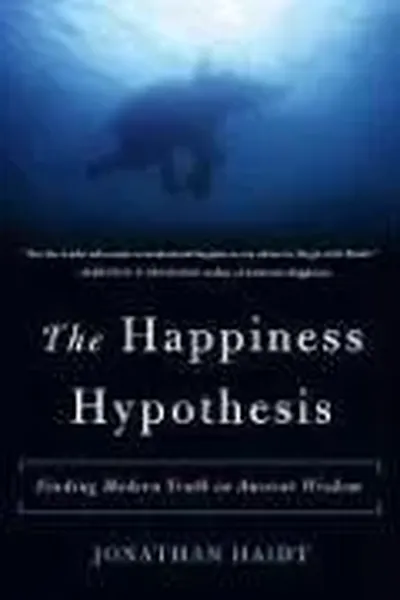


More Free Spiritual Development Books
View all →