Transcendence

 83
83

Transcendence
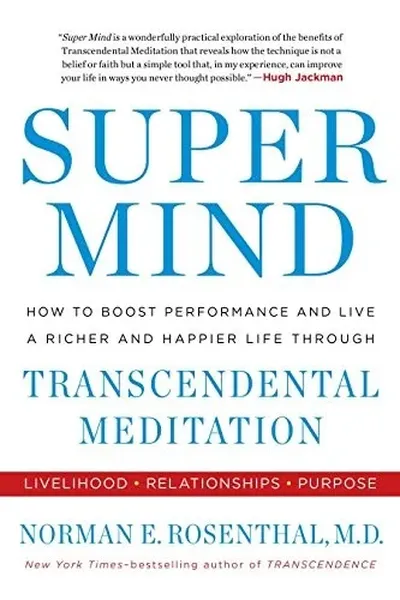
Norman E. Rosenthal's "Transcendence" offers a clinical perspective on Transcendental Meditation, moving beyond typical spiritual pronouncements to address the technique's mechanics and outcomes. Rosenthal, a physician, presents TM as a method with demonstrable benefits, focusing on the individual mantra and the resulting state of restful alertness. A notable strength is the grounding of the practice in physiological and psychological effects, making it accessible to a skeptical audience. However, the book occasionally feels more like an extended brochure for TM than a critical examination, particularly in its portrayal of the founder, Maharishi Mahesh Yogi. The discussion of TM's origins in Indian spiritual tradition is present but could be more deeply integrated with the technical explanation of the practice. Ultimately, "Transcendence" provides a clear, physician-led introduction to TM for those seeking a structured approach to meditation.
📝 Description
83
Norman E. Rosenthal's 2011 book, Transcendence, explains Transcendental Meditation.
Published in 2011, Norman E. Rosenthal's Transcendence details the practice of Transcendental Meditation (TM) as taught by Maharishi Mahesh Yogi. The book traces TM's origins to ancient Indian spiritual traditions. Rosenthal describes the technique, which involves using an individual, silent mantra to achieve a state of focused relaxation. He outlines the methodology and the advantages that can result from consistent practice. The work is directed towards individuals interested in practical methods for mental clarity and stress reduction, particularly those drawn to contemplative practices with a structured, scientifically informed perspective. Readers seeking to understand the psychological and physiological benefits of meditation from a physician's viewpoint will find this account useful. The book situates TM within the Western interest in Eastern contemplative disciplines that emerged in the late 20th century.
Transcendental Meditation, as presented in this book, has roots in the Vedic tradition of India. Maharishi Mahesh Yogi popularized this ancient practice globally from the mid-1950s. Its emergence in the West coincided with a broader interest in Eastern contemplative disciplines during the latter half of the 20th century. The book places TM within this historical context, contrasting it with established Western psychological theories and therapies of the time.
💡 Why Read This Book?
• Learn the specific mechanics of Transcendental Meditation, including the role of the individual silent mantra as taught by Maharishi Mahesh Yogi, to understand its unique approach to focused relaxation. • Discover the long-term benefits of TM practice as presented by Norman E. Rosenthal, a medical doctor, focusing on sustained improvements in mental clarity and emotional resilience beyond temporary stress relief. • Gain insight into the historical context of TM's introduction to the West, understanding its place within the broader spiritual and psychological movements of the late 20th century.
⭐ Reader Reviews
Honest opinions from readers who have explored this book.
❓ Frequently Asked Questions
What is the core practice of Transcendental Meditation as described in "Transcendence"?
The core practice involves using a unique, silent mantra assigned to each individual. This mantra serves as a tool to focus the mind, leading to a state of deep rest and relaxation, as detailed by Norman E. Rosenthal.
Who developed Transcendental Meditation?
Transcendental Meditation was developed by Maharishi Mahesh Yogi, who derived the technique from ancient Indian spiritual traditions. Rosenthal's book explains this lineage and the founder's role in its dissemination.
What kind of benefits does Norman E. Rosenthal claim for Transcendental Meditation?
Rosenthal highlights long-term benefits such as improved mental clarity, reduced stress, enhanced cognitive function, and greater emotional resilience. He presents these as cumulative effects of regular practice.
Is "Transcendence" a spiritual text or a scientific one?
The book bridges both. While it discusses the spiritual origins of TM from Maharishi Mahesh Yogi's tradition, it is written by a physician and emphasizes the scientific and psychological benefits of the practice.
What is the significance of the 'silent mantra' in TM?
The silent mantra is central to the TM technique. It's an individual, soundless vibration used to help the mind settle effortlessly into a state of deep rest, as explained in "Transcendence."
When was "Transcendence" by Norman E. Rosenthal first published?
"Transcendence" by Norman E. Rosenthal was first published in 2011. This edition details the principles and benefits of Transcendental Meditation.
🔮 Key Themes & Symbolism
The Mechanics of Mantra
The core of "Transcendence" lies in explaining the function of the silent mantra. Rosenthal details how this unique, personal sound, derived from Vedic tradition by Maharishi Mahesh Yogi, acts as a vehicle for transcending ordinary thought processes. It's not about concentration or contemplation, but about effortless settling of the mind. The book emphasizes that the mantra is not a word or phrase, but a specific vibration chosen for its ability to facilitate the unique state of 'restful alertness' sought in TM.
Restful Alertness
A central concept presented is 'restful alertness,' the physiological and psychological state achieved through Transcendental Meditation. Rosenthal, a physician, describes this as a unique state of deep relaxation combined with heightened mental clarity. Unlike sleep, the brain remains active, but in a coherent, organized manner. This state is posited as the key to the sustained benefits of TM, allowing the mind and body to heal and rejuvenate.
Long-Term Benefits
Rosenthal meticulously outlines the cumulative, long-term advantages of consistent TM practice. These extend beyond immediate stress reduction to encompass improved cognitive functions, enhanced creativity, greater emotional stability, and even physiological improvements like reduced blood pressure. The book frames these benefits not as transient effects but as lasting changes resulting from regular access to the state of restful alertness, making TM a tool for profound personal development.
Vedic Lineage
The book acknowledges the deep roots of Transcendental Meditation within the ancient Vedic tradition of India. Maharishi Mahesh Yogi is presented as the conduit through which this knowledge was brought to the modern world. Rosenthal situates the technique within this lineage, suggesting that its efficacy is tied to its ancient origins and the precise transmission of knowledge over millennia, providing a spiritual and historical foundation for the practice.
💬 Memorable Quotes
Direct passages from the work, attributed to the author.
“The technique taught by Maharishi Mahesh Yogi is practiced by using an individual silent mantra to focus and relax.”
— This statement expresses the fundamental mechanism of Transcendental Meditation: the personalized, soundless mantra serves as the anchor for achieving a state of profound relaxation and mental focus.
“Rosenthal shows the long-term benefits of this practice.”
— This highlights the book's focus on the enduring positive effects of TM, suggesting that consistent application leads to sustained improvements in well-being and cognitive function, not just temporary relief.
“TM is derived from his Indian spiritual tradition.”
— This points to the historical and cultural origins of Transcendental Meditation, emphasizing its connection to ancient Eastern philosophies as taught by Maharishi Mahesh Yogi.
“The practice involves achieving a state of restful alertness.”
— This defines the unique mental state that TM cultivates, distinct from ordinary wakefulness or sleep, characterized by deep relaxation coupled with focused mental activity.
“The mantra is an individual, silent sound.”
— This emphasizes the personalized and non-auditory nature of the TM mantra, differentiating it from chanting or other forms of vocalized meditation.
🌙 Esoteric Significance
Tradition
Transcendental Meditation, as presented in "Transcendence," draws directly from the Vedic tradition of India, a vast corpus of ancient texts and spiritual practices. While not strictly Hermetic or Kabbalistic, its emphasis on sound, vibration, and the inner potential of consciousness aligns with broader esoteric principles of microcosm-macrocosm correspondences. Maharishi Mahesh Yogi synthesized and presented these ancient teachings in a format accessible to the modern world, focusing on the experiential aspect of mantra and its capacity to unlock deeper states of awareness, fitting within the general umbrella of yogic and meditative spiritual paths.
Symbolism
The primary symbol in TM is the mantra itself, which is understood not as a word with semantic meaning, but as a specific vibration or soundless thought. In the Vedic tradition, mantras are considered sacred sounds that can invoke particular states of consciousness or spiritual energies. The concept of 'Om' (Aum), the primordial sound in Hinduism, often serves as a conceptual backdrop, representing the totality of existence. The practice's goal of 'restful alertness' can be seen as a symbolic representation of balancing the active (alertness) and passive (restful) principles within the individual.
Modern Relevance
Contemporary interest in mental well-being and stress reduction continues to drive interest in practices like TM. Thinkers and practitioners in fields ranging from positive psychology to consciousness studies often reference TM as a significant development in bringing ancient contemplative techniques into mainstream discourse. Schools of thought focusing on neuroplasticity and the brain's ability to change through practice find value in the research surrounding TM's effects. Furthermore, the ongoing exploration of non-ordinary states of consciousness keeps traditions like that espoused by Maharishi Mahesh Yogi relevant for those seeking deeper self-understanding.
👥 Who Should Read This Book
• Individuals new to meditation seeking a structured, physician-led introduction to a specific technique like Transcendental Meditation. • Practitioners of other meditation styles interested in understanding the unique methodology and purported benefits of TM as taught by Maharishi Mahesh Yogi. • Those concerned with stress reduction and mental clarity who are looking for scientifically-informed approaches rooted in ancient spiritual traditions.
📜 Historical Context
Published in 2011, Norman E. Rosenthal's "Transcendence" emerged during a period of burgeoning interest in mindfulness and meditation practices within Western psychology and popular culture. The book situates Transcendental Meditation (TM), popularized by Maharishi Mahesh Yogi from the 1950s onward, within this context. TM's origins trace back to the ancient Vedic tradition of India, a lineage distinct from Buddhist Vipassanā or Zen practices that also gained significant Western traction during the latter half of the 20th century. While figures like Jon Kabat-Zinn were making mindfulness-based stress reduction (MBSR) widely accessible through secular, clinical applications, Rosenthal's work specifically champions the TM technique, emphasizing its unique methodology and founder. The reception of TM has historically been varied, with some scientific communities questioning its purported unique benefits compared to other relaxation techniques, a debate ongoing since its introduction by Maharishi Mahesh Yogi.
📔 Journal Prompts
The individual silent mantra: how does its assignment by Maharishi Mahesh Yogi influence its perceived power?
Reflect on the concept of 'restful alertness' and its potential application beyond TM practice.
Consider the long-term benefits described by Rosenthal; how might these manifest in daily life?
Analyze the Vedic origins of TM; what does this lineage suggest about the technique's efficacy?
Compare the use of a silent mantra in TM to other forms of focused attention in contemplative practices.
🗂️ Glossary
Transcendental Meditation (TM)
A specific form of mantra meditation developed and taught by Maharishi Mahesh Yogi, originating from the Vedic tradition of India, aiming to induce a state of deep relaxation and mental clarity.
Maharishi Mahesh Yogi
The spiritual teacher who developed and popularized Transcendental Meditation globally, drawing from ancient Indian yogic traditions and presenting it as a technique for peace and well-being.
Silent Mantra
A unique, individual sound or vibration, assigned to each practitioner of TM, used as a focal point to effortlessly settle the mind into a state of deep rest.
Restful Alertness
The state of consciousness achieved during TM practice, characterized by deep physical rest simultaneously with heightened mental clarity and awareness.
Vedic Tradition
The ancient spiritual, philosophical, and cultural heritage of India, encompassing a vast body of scriptures and practices, from which TM is derived.
Norman E. Rosenthal
The author of "Transcendence," a physician who presents TM from a scientific and medical perspective, detailing its methodology and benefits.
Mantra
In this context, a specific sound or vibration used in meditation. In TM, it is silent, individual, and used to facilitate transcending thought.