The Darvishes
 79
79

The Darvishes
John P. Brown's "The Darvishes" presents itself as an unassailable reference, and indeed, its reliance on original Oriental works lends it considerable authority. The meticulous sourcing from Turkish, Arabic, and Persian manuscripts is its greatest strength, offering a scholarly antidote to superficial accounts. I found the sections detailing specific Darvish doctrines, particularly the interplay between ritual practice and metaphysical understanding, to be exceptionally well-articulated. However, the prose, while accurate, can be dense; readers accustomed to more narrative or accessible introductions to Sufism might find the academic tone a barrier. A particularly illuminating passage discusses the concept of *fana* (annihilation) within the context of specific Darvish disciplines, showcasing the work's depth. For those seeking a rigorously researched, primary-source-driven exploration of Darvish orders, "The Darvishes" is an indispensable, albeit demanding, resource.
📝 Description
79
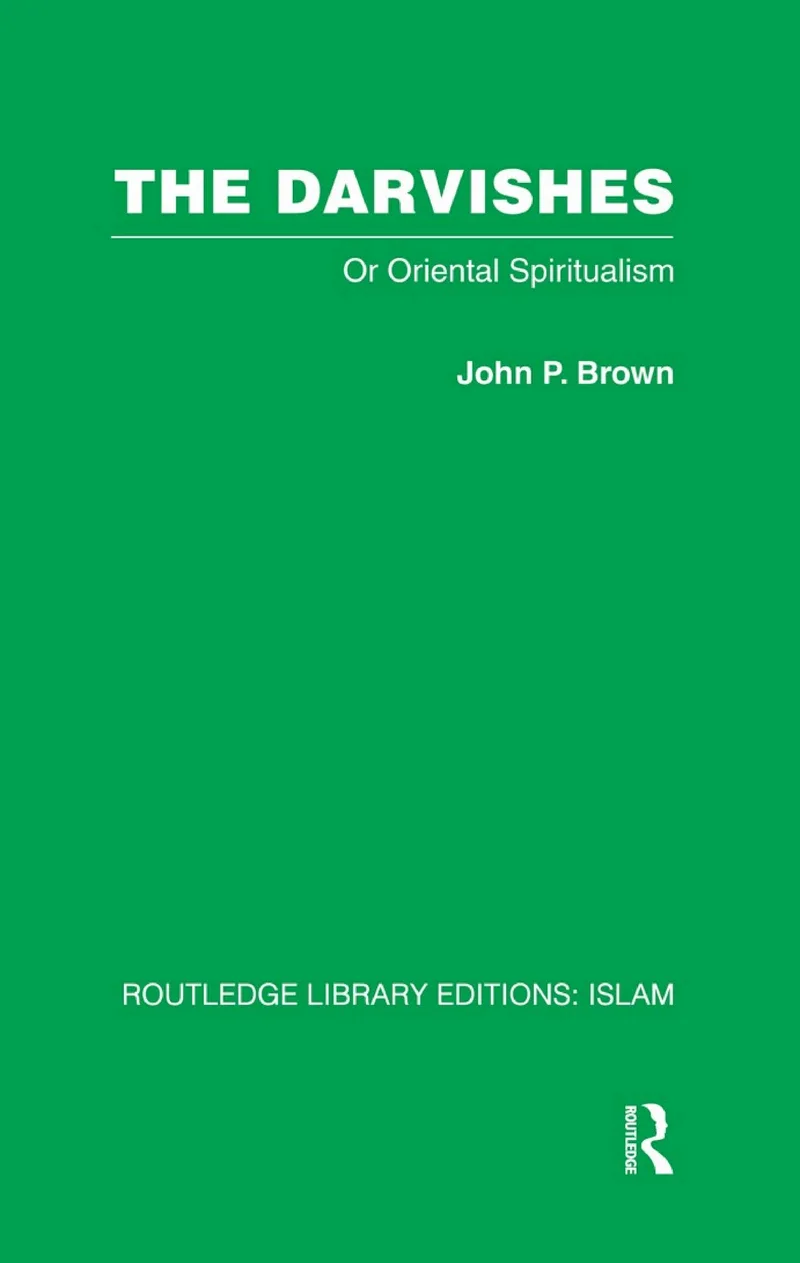
John P. Brown's 2013 work examines the Darvish Orders through original Oriental manuscripts.
John P. Brown's The Darvishes offers a scholarly examination of the Darvish Orders, drawing directly from original Turkish, Arabic, and Persian manuscripts. The text aims to be an accurate reference for these Sufi traditions, moving beyond historical accounts to address their living spiritual and metaphysical dimensions. It is intended for students of comparative religion, scholars of Islamic mysticism, and individuals seeking an in-depth understanding of Sufi orders. The work appeals to those who value primary source material and rigorous academic inquiry into esoteric traditions. Readers interested in the historical development and doctrinal nuances of Sufism will find it particularly valuable.
The book meticulously details the doctrines and historical trajectory of various Darvish orders. It unpacks the core spiritual principles that guide their practices, framing Sufism as a vibrant, living tradition. The metaphysical significance attributed to Sufi practices forms a central theme, offering insights into the experiential aspects of the path. Brown's commitment to Oriental sources positions the work within a tradition of scholarship striving for internal accuracy regarding the subject matter, contrasting with earlier, often romanticized, Western interpretations of Eastern spiritual practices.
The Darvishes by John P. Brown engages with the esoteric traditions of Sufism, specifically focusing on the practices and beliefs of various Darvish orders. It grounds its analysis in primary Oriental sources, aiming for an authentic representation of these mystical paths. This approach situates the book within a lineage of scholarship that seeks to understand Islamic mysticism not merely as historical theology but as a lived spiritual discipline with metaphysical underpinnings.
💡 Why Read This Book?
• Gain insight into the specific spiritual and metaphysical doctrines of various Darvish Orders, as Brown grounds his analysis in original Oriental works, offering a level of detail not commonly found in general texts. • Understand Sufism as a living tradition by exploring its doctrines and history, a key focus highlighted in the volume's examination of contemporary relevance. • Appreciate the author's commitment to authenticity, as Brown exclusively draws from Turkish, Arabic, and Persian manuscripts, providing a scholarly foundation for the study of these esoteric practices.
⭐ Reader Reviews
Honest opinions from readers who have explored this book.
❓ Frequently Asked Questions
What original languages does John P. Brown's "The Darvishes" draw from?
The book exclusively utilizes original Oriental works, specifically referencing Turkish, Arabic, and Persian manuscripts to ensure the authenticity of its study on Darvish Orders.
When was "The Darvishes" first published?
John P. Brown's "The Darvishes" was first published on May 13, 2013, making it a relatively recent scholarly contribution to the study of Sufi traditions.
What distinguishes "The Darvishes" from other books on Sufism?
Its primary distinction lies in its exclusive reliance on original Oriental manuscripts and its focus on the specific beliefs, spiritual principles, and metaphysical significance of the Darvish Orders.
Is "The Darvishes" suitable for beginners in esoteric studies?
While comprehensive, its scholarly nature and reliance on original sources might make it more suitable for intermediate to advanced students or academics rather than absolute beginners.
Does the book cover the history of the Darvish Orders?
Yes, "The Darvishes" includes a thorough examination of the history of the Darvish Orders alongside their doctrines and spiritual principles.
What aspect of Sufism does the book emphasize?
The book emphasizes the spiritual and metaphysical significance of Sufism as a living tradition, exploring its doctrines and practices in depth.
🔮 Key Themes & Symbolism
Authenticity of Sufi Teachings
Brown's central thesis revolves around presenting an authentic portrayal of the Darvish Orders, meticulously derived from primary Oriental sources. The work’s originality is stressed, distinguishing it from secondary interpretations. This commitment to manuscript accuracy underscores the spiritual principles and doctrines of the orders, ensuring that their teachings are understood as they were intended, free from later embellishments or misinterpretations.
Spiritual and Metaphysical Dimensions
Beyond historical accounts, the book explores the profound spiritual and metaphysical significance inherent in Sufism. It explores how Darvish practices are not merely ritualistic but are pathways to deeper understanding and experience. This aspect highlights Sufism as a living tradition, where esoteric knowledge is actively cultivated and lived, offering insights into the experiential core of the mystical path.
The Darvish Orders as Institutions
The volume provides a detailed examination of the structure, beliefs, and historical development of various Darvish Orders. It treats them as significant spiritual and cultural institutions whose influence has shaped mystical thought. By analyzing their doctrines, the work offers a framework for understanding the diversity within Sufism and the specific contributions of these orders to the broader esoteric landscape.
Bridging Text and Practice
A core strength of "The Darvishes" is its effort to connect textual scholarship with the lived experience of Sufi practitioners. By referencing original manuscripts, Brown aims to illuminate the practical application of esoteric principles. This approach ensures that the study of these orders is grounded in verifiable sources while acknowledging the dynamic, living nature of their spiritual traditions.
💬 Memorable Quotes
Direct passages from the work, attributed to the author.
“The work is drawn exclusively from the original Oriental works, and from Turkish, Arabic and Persian manuscripts.”
— This statement highlights the book's methodological rigor, emphasizing its foundation in primary source materials to ensure an accurate and authentic representation of Darvish traditions.
“An invaluable contribution to the study of the Belief and spiritual principles of the Darvish Orders.”
— This interpretation underscores the book's significance as a scholarly resource, positioning it as essential reading for anyone seeking a deep, credible understanding of Sufi orders.
“One of the most accurate reference works on the subject.”
— This highlights the author's aim for precision and reliability, suggesting the book serves as a definitive guide for scholars and practitioners interested in Darvish Orders.
“Originality and authenticity of the work is beyond doubt.”
— This assertion emphasizes the author's confidence in the sourced material and the unique value derived from direct engagement with original manuscripts in Turkish, Arabic, and Persian.
💡 Key Ideas
Editorial paraphrase of the work's core concepts — not direct quotes.
Examines the spiritual and metaphysical significance of Sufism as a living tradition.
This paraphrased concept points to the book's focus on Sufism not just as a historical subject but as a dynamic, ongoing spiritual path with profound metaphysical implications.
🌙 Esoteric Significance
Tradition
This work firmly situates itself within the esoteric lineage of Islamic mysticism, specifically focusing on Sufism and its diverse Darvish Orders. It aligns with traditions that emphasize direct experiential knowledge of the Divine, often through disciplined practices. Unlike Gnostic or Hermetic traditions which developed in different cultural spheres, Brown's work strictly adheres to the internal doctrines and historical trajectory of Sufi brotherhoods, offering a precise window into this specific esoteric path.
Symbolism
While specific symbols are deeply embedded within the practices of individual orders, the text implicitly engages with core Sufi motifs. Concepts like the 'heart' (*qalb*) as the locus of spiritual perception, the journey of the soul (*sayr wa suluk*), and the significance of the master-disciple relationship are central. The whirling of the Mevlevi dervishes, though not explicitly detailed in this summary, is an iconic example of symbolic movement representing cosmic order and spiritual ecstasy, often central to Darvish practice.
Modern Relevance
Contemporary scholars and practitioners of Sufism, particularly those interested in the historical development and specific lineages of the Darvish Orders, continue to find Brown's work valuable. Thinkers engaging with comparative mysticism or the sociology of religion might reference its detailed doctrinal analysis. Furthermore, individuals seeking to understand the roots of modern Sufi movements and their traditional underpinnings can draw upon its scholarly foundation for a deeper appreciation of the living tradition.
👥 Who Should Read This Book
["• Scholars of Islamic mysticism and comparative religion: Those researching the historical development and doctrinal nuances of Sufi orders will benefit from the book's reliance on original Oriental manuscripts.", '• Students of esoteric traditions: Individuals seeking an in-depth, authentic understanding of the beliefs and spiritual principles of Darvish Orders will find this a foundational text.', '• Practitioners of Sufism: Those interested in the historical context and metaphysical underpinnings of their practice may find valuable insights into the living tradition.']
📜 Historical Context
Published in 2013, John P. Brown's "The Darvishes" emerged during a period of sustained academic interest in Sufism, a field increasingly distinguished from broader Islamic studies. The author's deliberate grounding in Turkish, Arabic, and Persian manuscripts places the work within a lineage of Orientalist scholarship, yet Brown foregrounds the authenticity and originality derived from these primary sources. This approach sought to counter earlier Western romanticizations or simplified accounts of Eastern mysticism. While the book itself doesn't detail specific reception events, its rigorous methodology would have been of interest to scholars like Idries Shah, who, though sometimes critical of academic approaches, championed authentic transmission of Sufi teachings. Brown's work can be seen as contributing to a more nuanced, source-based understanding of Sufi orders, distinct from purely philosophical or syncretic interpretations that gained traction in the mid-20th century.
📔 Journal Prompts
The spiritual principles of the Darvish Orders as presented in Brown's work.
The metaphysical significance attributed to Sufism within the text.
The role of Turkish, Arabic, and Persian manuscripts in establishing authenticity.
How the book portrays Sufism as a living tradition.
The historical trajectory of the Darvish Orders according to the text.
🗂️ Glossary
Darvish Orders
Various Sufi brotherhoods or mystical orders within Islam, characterized by specific spiritual disciplines, rituals, and teachings aimed at achieving direct experience of the Divine.
Sufism
The mystical or esoteric dimension of Islam, focused on the pursuit of spiritual truth, inner purification, and direct communion with God, often through practices like meditation and remembrance.
Metaphysical Significance
The deeper, often transcendent or spiritual, meaning and implications of beliefs, practices, or phenomena, extending beyond the purely physical or empirical.
Oriental Works
Literary, historical, or religious texts originating from the East, particularly in this context, from the Middle East and South Asia, written in languages like Arabic, Persian, and Turkish.
Doctrines
A set of beliefs or principles held and taught by a religious, philosophical, or political group; in this context, the specific theological and spiritual tenets of the Darvish Orders.
Authenticity
The quality of being genuine, real, or true; in the context of the book, referring to the accuracy and unadulterated nature of the information derived from primary sources.
Living Tradition
A belief system, practice, or custom that is actively maintained, practiced, and evolving within a community, rather than being solely a historical artifact.