Vedanta
 80
80

Vedanta
Osho’s "Vedanta" offers a vigorous, if at times idiosyncratic, interpretation of the Akṣyupaniṣad. Rather than a scholarly exegesis, it functions as a series of extended meditations, urging the reader toward direct experience of the non-dual reality. The strength lies in Osho’s ability to reframe ancient doctrines with a contemporary, often provocative, flair. He compellingly argues against intellectual understanding alone, pushing for embodied realization. A limitation, however, is the occasional tendency to oversimplify complex philosophical arguments in favor of immediate psychological impact, which might alienate more traditional scholars. The discussion around the nature of the witness (Sakshi) is particularly potent, urging a detachment from the mind's constant churn. This is less a guide to Vedanta and more a catalyst for awakening.
📝 Description
80
Osho's 2007 discourses illuminate the Akṣyupaniṣad, a core Upanishad.
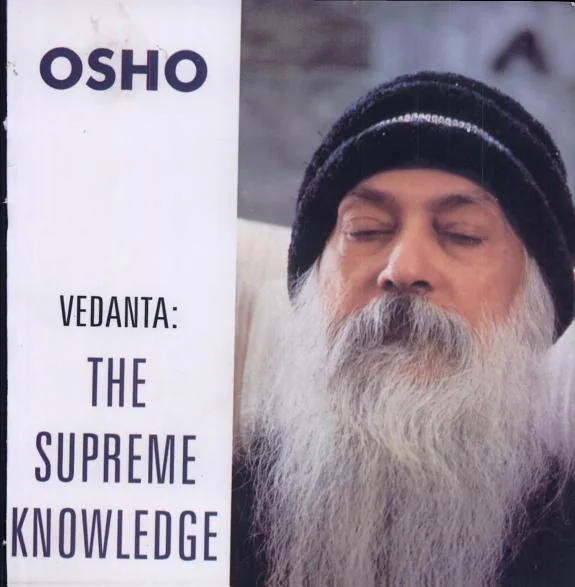
Vedanta, by Osho, presents discourses on the Akṣyupaniṣad, one of the principal Upanishads. This work is not an academic study but a lively interpretation of ancient Indian philosophical and spiritual ideas through Osho's distinct viewpoint. Its goal is to connect classical Vedanta with the experience of today's spiritual seeker.
This book is for individuals interested in the deeper philosophical foundations of Hinduism, especially the Advaita Vedanta tradition. It speaks to those who want to grasp concepts like Brahman, Atman, Maya, and liberation from a non-dual perspective. Readers should expect an intellectually and spiritually demanding, though potentially rewarding, engagement.
The Akṣyupaniṣad, the text Osho focuses on, is a primary scripture in the Vedanta philosophical system. Vedanta, meaning "the end of the Veda," signifies the peak of Vedic thought, concentrating on metaphysical questions. Osho's engagement with it in the late 20th and early 21st centuries relates his work to a long history of Indian religious and philosophical commentary, while also addressing modern existential questions.
The Akṣyupaniṣad is a foundational scripture within Vedanta, a major philosophical system in India that signifies the culmination of Vedic thought. Vedanta focuses on metaphysical inquiry into the nature of reality. Osho's discourses in this book engage with this tradition, particularly the Advaita Vedanta school, which emphasizes the non-dual nature of existence. His interpretation aims to make these ancient insights accessible to contemporary individuals seeking spiritual understanding.
💡 Why Read This Book?
• You will learn to distinguish between the observer and the observed, a core tenet of the Akṣyupaniṣad, allowing for a profound shift in self-perception. • You will gain a practical understanding of Maya, not as a mere philosophical concept but as the pervasive illusion that veils our true nature, as explored in Osho's discourses. • You will encounter a method for transcending the ego, moving beyond intellectual assent to a felt sense of unity with Brahman, a central aim of the Vedanta tradition.
⭐ Reader Reviews
Honest opinions from readers who have explored this book.
❓ Frequently Asked Questions
What is the primary Upanishad discussed in Osho's Vedanta?
The primary Upanishad explored in Osho's "Vedanta" is the Akṣyupaniṣad, one of the principal texts within the Vedanta tradition.
When was Osho's book 'Vedanta' first published?
Osho's "Vedanta" was first published in 2007, bringing his interpretations of the ancient text to a modern audience.
What is the central philosophy of Vedanta that Osho discusses?
The central philosophy discussed is Advaita Vedanta, which posits the non-dualistic identity between the individual soul (Atman) and the ultimate reality (Brahman).
Does Osho's 'Vedanta' require prior knowledge of Indian philosophy?
While prior knowledge can enhance understanding, Osho's style often makes complex ideas accessible. However, a willingness to engage with abstract concepts is beneficial.
What is Maya according to the Vedanta tradition discussed by Osho?
Maya, in the context of Vedanta as presented by Osho, refers to the illusory nature of the material world and the phenomenal universe, which obscures the true reality of Brahman.
How does Osho's interpretation of Vedanta differ from traditional commentaries?
Osho's interpretation often emphasizes psychological and experiential aspects over purely scholarly or ritualistic adherence, aiming for immediate realization rather than gradual study.
🔮 Key Themes & Symbolism
The Identity of Atman and Brahman
This theme is central to Advaita Vedanta and Osho's interpretation. The book expounds upon the Upanishadic assertion that the individual self (Atman) is fundamentally identical to the ultimate, unchanging reality (Brahman). Osho challenges the perceived separation between the two, urging readers to recognize their inherent divinity and unity with all existence. This is explored through the dissolution of egoic boundaries and the realization of consciousness as the sole substratum.
The Nature of Maya
Osho studies Maya, the concept of cosmic illusion, explaining how the perceived reality of the material world is a veil that obscures the true nature of existence. He presents Maya not as a negation but as a creative power that makes the one reality appear as many. Understanding Maya is presented as a crucial step towards liberation, enabling one to see through the phenomenal world to the underlying truth of Brahman.
The Path to Liberation (Moksha)
The discourses address the ultimate goal of Vedanta: Moksha, liberation from the cycle of birth and death (samsara). Osho outlines various approaches, emphasizing self-knowledge, meditation, and awareness as pathways to this state. The book encourages a shift from external seeking to internal realization, suggesting that liberation is not an achievement but a recognition of one's already-present true nature, free from ignorance and suffering.
The Role of the Witness (Sakshi)
A significant theme is the concept of the Sakshi, the detached observer. Osho guides readers to identify with this pure consciousness that witnesses all experiences – thoughts, emotions, sensations – without becoming entangled. Cultivating the awareness of the Sakshi is presented as a powerful tool for transcending the limitations of the ego and the incessant activity of the mind, leading to inner peace and clarity.
💬 Memorable Quotes
Direct passages from the work, attributed to the author.
“The world is not real, but it is not unreal either. It is Maya.”
— This statement captures the paradoxical nature of Maya in Vedanta. The phenomenal world possesses a functional reality, allowing us to interact with it, yet it lacks ultimate, independent existence, pointing towards a deeper, singular truth.
“You are not the body, you are not the mind, you are the witness.”
— This is a direct exhortation to identify with pure consciousness, the Sakshi. It challenges the common identification with transient physical and mental phenomena, urging a realization of the eternal, unchanging nature of the self.
“The ultimate truth is that there is no duality.”
— This captures the core tenet of Advaita Vedanta. Osho emphasizes that the perceived separation between the individual and the divine, the subject and object, is an illusion that dissolves upon true realization.
“To know yourself is to know God.”
— This interpretation highlights the Upanishadic teaching of the identity of Atman and Brahman. Self-realization is not about acquiring something new but about recognizing the divine essence that is already present within.
“Meditation is not a technique, it is a state of being.”
— Osho reframes meditation from a disciplined practice to a natural condition of awareness. It's about being present and conscious, rather than performing a specific action, aligning with the non-dualistic pursuit of Vedanta.
🌙 Esoteric Significance
Tradition
This work falls within the broad umbrella of Indic esoteric traditions, specifically Advaita Vedanta. While Vedanta itself is a major philosophical school, its emphasis on direct experiential realization of non-duality aligns with esoteric aims across various cultures. Osho’s approach emphasizes the mystical union of the individual consciousness with the universal, a concept resonant in Gnostic, Sufi, and Hermetic thought, though rooted firmly in the Vedic lineage.
Symbolism
The primary symbol is Brahman, representing the ultimate, undifferentiated reality, often described metaphorically as 'That' which is beyond conceptualization. Atman symbolizes the individual soul or self, which, in its true nature, is identical to Brahman. Maya functions as a symbol of illusion, the veil of multiplicity and phenomenal appearance that obscures the singular, underlying truth of existence.
Modern Relevance
Osho’s popularization of Vedanta concepts continues to influence contemporary spiritual seekers and mindfulness practitioners. His emphasis on awareness, non-duality, and psychological liberation finds echoes in modern self-help movements, transpersonal psychology, and various meditation retreats that aim to foster direct experience of consciousness beyond the ego.
👥 Who Should Read This Book
• Students of comparative philosophy and religion seeking to understand the core tenets of Advaita Vedanta through a modern, interpretive lens. • Spiritual seekers interested in non-dualistic philosophies and practices that aim for self-realization and liberation from suffering. • Readers familiar with Osho's previous works who wish to explore his engagement with classical Indian scriptures and metaphysical concepts.
📜 Historical Context
The Upanishads, including the Akṣyupaniṣad, emerged in India during the late Vedic period (c. 800-500 BCE), representing a shift from ritualistic focus to philosophical inquiry. Vedanta, as a systematization of Upanishadic thought, flourished over centuries, with key systematizers like Adi Shankara (c. 8th century CE) solidifying the Advaita (non-dual) school. Osho's discourses, delivered in the latter half of the 20th century and published posthumously, engage with this ancient tradition from a modern, psychological perspective. His work exists in a landscape populated by numerous interpretations of Vedanta, from traditional monastic lineages to more reformist movements. While not directly engaging with Western esoteric traditions in this specific work, his popularization of Indian spirituality in the West occurred alongside the continued influence of figures like Swami Vivekananda, who introduced Vedanta to a global audience in the late 19th century.
📔 Journal Prompts
The nature of the witness (Sakshi) in relation to fleeting thoughts.
Reflecting on personal experiences of Maya, the world's illusory quality.
The concept of Brahman as the ultimate reality.
Exploring the path to Moksha beyond intellectual understanding.
Identifying the boundaries of the ego versus the true self (Atman).
🗂️ Glossary
Advaita Vedanta
A school of Hindu philosophy emphasizing the non-dualistic nature of reality, asserting that the individual soul (Atman) is identical to the ultimate reality (Brahman).
Akṣyupaniṣad
A specific Upanishad, considered one of the principal texts of Vedanta, which serves as the basis for Osho's discourses in this book.
Atman
The individual soul, self, or essence. In Advaita Vedanta, it is considered identical to Brahman.
Brahman
The ultimate, unchanging, infinite reality or consciousness that is the source and substratum of all existence.
Maya
Cosmic illusion; the power or principle that conceals the true nature of reality and makes the one Brahman appear as the manifold world.
Moksha
Liberation or release from the cycle of birth, death, and rebirth (samsara); spiritual enlightenment.
Sakshi
The detached witness; pure consciousness that observes all phenomena without identification or judgment.