Maurice Maeterlinck
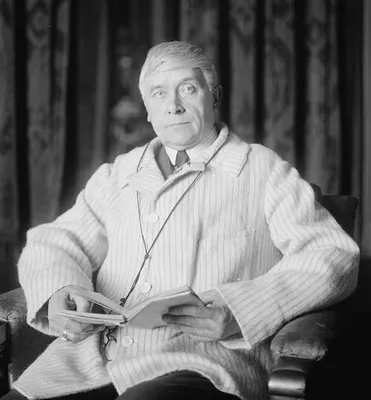
Maurice Maeterlinck, Nobel laureate Belgian playwright and essayist, explored themes of death and life's meaning, deeply influencing Symbolism.
Maurice Maeterlinck, born in Belgium in 1862, was a celebrated playwright, poet, and essayist who wrote in French and became a leading figure in the Symbolist movement. His early life, marked by a Jesuit education that instilled a dislike for organized religion and a law degree, led him to Paris where he encountered the Symbolist circle. His initial play, Princess Maleine, brought him immediate acclaim, followed by significant Symbolist works like The Intruder and The Blind, often exploring fatalism and mysticism. His relationship with actress Georgette Leblanc influenced his writing for two decades, and his work gradually shifted towards a more existential style, though mysticism remained a core element. He received the Nobel Prize in Literature in 1911 for his imaginative and poetic dramatic works, which often used fairy tale elements to explore profound philosophical questions.
Later in his career, Maeterlinck faced accusations of plagiarism, most notably for his book "The Life of Termites," which was found to closely mirror the work of Eugène Marais. Despite this controversy, his prolific output continued, focusing on themes of occultism, ethics, and natural history. He passed away in 1949, leaving behind a significant body of work that continues to be studied for its exploration of life's mysteries and the human condition.
Symbolism and Mystical Themes
Maeterlinck was a pivotal figure in the Symbolist literary movement, with his plays frequently characterized by a sense of fatalism and profound mysticism. His early dramatic works, such as "Intruder" and "The Blind," established a style that delved into the unknown and the subconscious, often employing allegorical or fairy-tale-like scenarios to explore deep philosophical questions. Death and the search for the meaning of life were central preoccupations, presented through veiled language and atmospheric settings that invited introspection. His characters often grappled with unseen forces and the limitations of human perception, reflecting a worldview that valued intuition and inner experience over empirical reality. This focus on the ineffable and the hidden aspects of existence resonated deeply with the Symbolist ethos.
Philosophical and Existential Explorations
Beyond his Symbolist roots, Maeterlinck's work evolved to incorporate existential concerns, particularly evident in his later writings. While mysticism remained a constant thread, his plays and essays began to examine the human condition from a more direct, albeit still poetic, perspective. The relationship between free will and destiny, the nature of consciousness, and the search for authentic meaning in a seemingly indifferent universe became recurring themes. His essay "The Intelligence of Flowers" hinted at socialist sympathies and a broader engagement with the natural world, suggesting a growing interest in ethical and social dimensions. Even in his later works, the underlying drive was to probe the fundamental questions of existence and human experience, often through a lens of profound contemplation.
Later Career and Controversies
In the latter part of his career, Maeterlinck continued to produce essays focusing on occultism, ethics, and natural history, though his theatrical output diminished. The period was also marked by significant controversy surrounding accusations of plagiarism. His 1926 book, "The Life of Termites," was found to have extensively borrowed from the work of Eugène Marais without proper attribution, a case widely cited as a classic instance of academic dishonesty. This overshadowed some of his later literary endeavors. Despite these challenges, Maeterlinck remained an internationally recognized figure, though the demand for his writings eventually declined, while his sales in France persisted longer.
Key Ideas
- Exploration of death and the meaning of life.
- Use of fairy tale elements to convey deep inspiration and stimulate imagination.
- Focus on mysticism, fatalism, and the subconscious.
- Shift towards existential themes alongside mystical preoccupations.
- Interest in occultism, ethics, and natural history in later works.
Books by Maurice Maeterlinck
4 free public domain books · Read online or download