The great secret

 83
83

The great secret
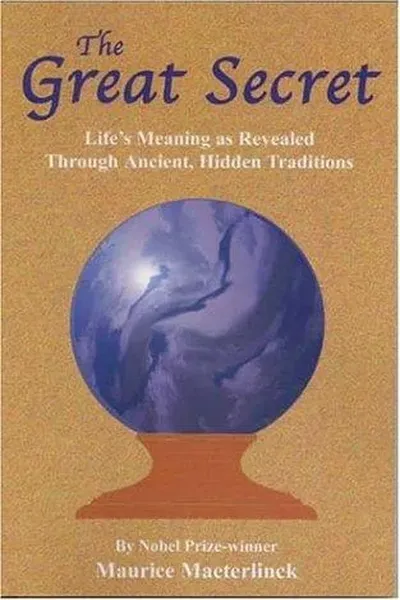
Maurice Maeterlinck’s "The Great Secret" offers a contemplative, almost melancholic, perspective on the hidden mechanisms of existence. Unlike many esoteric texts that promise immediate revelation, Maeterlinck guides the reader through a series of philosophical queries, questioning the very nature of our perceived reality. His strength lies in his ability to articulate profound uncertainties with poetic grace. The book’s primary limitation is its abstract nature; it demands significant reader engagement and a predisposition towards philosophical musing, which may alienate those seeking concrete practices. A particularly striking passage discusses the "unseen," suggesting it is not merely absent but actively present, shaping the visible world in ways we fail to perceive. "The Great Secret" is a valuable, albeit challenging, contemplation for the seasoned seeker.
📝 Description
83
Maurice Maeterlinck's "The Great Secret" was published posthumously, collecting his final thoughts on existence.
Maurice Maeterlinck's "The Great Secret" is not a guide to self-improvement, but a philosophical inquiry into consciousness and the hidden forces influencing our world. The book distills Maeterlinck's lifelong reflections on the invisible aspects of reality, questioning the boundaries of human perception and the possibility of understanding the cosmos more deeply. It is intended for readers who value metaphysical contemplation over practical advice.
Those interested in the connections between consciousness, science, and spirituality will find much to consider. The work appeals to individuals who ponder the nature of being and the unseen links within the universe. It does not offer quick self-help methods, but rather invites a deeper consideration of existence.
Published after his death, "The Great Secret" reflects Maeterlinck's philosophical engagement with mysticism and the unknown, a path he pursued alongside his career as a poet and playwright. His work engaged with Symbolism and the spiritualist currents of the late 19th and early 20th centuries. Unlike some more dogmatic occult groups, Maeterlinck maintained a distinct philosophical perspective, focusing on the subtle relationships between the visible and invisible realms.
💡 Why Read This Book?
• Understand Maeterlinck's unique philosophical stance on the unseen, learning how he posits it actively shapes our perceived reality, a concept distinct from simple absence. • Gain insight into the limitations of sensory perception as explored in the text, and consider how consciousness might be expanded beyond conventional boundaries. • Contemplate the idea of a universal interconnectedness, as Maeterlinck presents it, fostering a deeper appreciation for the subtle energies and unifying forces he describes.
⭐ Reader Reviews
Honest opinions from readers who have explored this book.
❓ Frequently Asked Questions
When was Maurice Maeterlinck's 'The Great Secret' first published?
Maurice Maeterlinck's 'The Great Secret' was first published in 1969, after his passing, bringing his later philosophical reflections to a wider audience.
What is the central theme of 'The Great Secret'?
The central theme revolves around the nature of existence, consciousness, and the hidden, interconnected forces that govern reality, suggesting a 'great secret' lies in understanding this unity.
Is 'The Great Secret' a practical guide to occult practices?
No, it is primarily a philosophical exploration and contemplation of metaphysical concepts, not a manual for performing rituals or achieving specific spiritual powers.
What esoteric traditions influenced Maurice Maeterlinck?
Maeterlinck was influenced by Symbolism and explored themes resonant with broader esoteric and mystical thought of his era, though he maintained a unique philosophical voice.
What is the significance of the 'Great Secret' as discussed by Maeterlinck?
The 'Great Secret' is not a single piece of knowledge but an emergent understanding of the fundamental unity and interconnectedness of all existence, accessible through deepened consciousness.
Where does 'The Great Secret' fit within Maeterlinck's larger body of work?
It represents a culmination of his lifelong philosophical inquiries into consciousness, the unseen world, and the nature of being, building upon themes present in his earlier literary and philosophical writings.
🔮 Key Themes & Symbolism
The Unseen and Perceived Reality
Maeterlinck posits that the 'unseen' is not merely an absence of what is visible but an active, pervasive force shaping our tangible world. He questions the adequacy of our senses to grasp this deeper stratum of existence, suggesting that true perception requires a qualitative shift in consciousness. This theme challenges readers to consider the limitations of empirical observation and the potential for intuitive understanding to reveal a more comprehensive reality, moving beyond mere physical phenomena.
Consciousness and Unity
A core concept is the idea of a universal consciousness or life force that permeates all things. Maeterlinck explores how individual human consciousness is a facet of this greater whole, and that true understanding arises from recognizing this inherent unity. The book suggests that through contemplation and a refined awareness, individuals can begin to perceive their connection to this universal mind, fostering a sense of belonging and shared existence beyond superficial differences.
The Nature of Knowledge
The work looks at different modes of knowing, contrasting empirical, sensory-based knowledge with intuitive and spiritual apprehension. Maeterlinck argues that the most profound truths, the 'great secret,' are not discoverable through purely rational or material analysis but through a deeper, inner realization. This challenges conventional epistemology, proposing that wisdom lies not in accumulating external facts but in cultivating an inner state receptive to existential truths.
Silence and Intuition
Silence is presented not as emptiness but as a fertile ground for genuine insight. Maeterlinck suggests that the constant external 'noise' of everyday life distracts from the subtle whispers of intuition and deeper understanding. By embracing moments of quiet contemplation, readers are encouraged to attune themselves to inner guidance and perceive truths that elude the analytical mind, highlighting intuition as a vital tool for metaphysical exploration.
💬 Memorable Quotes
Direct passages from the work, attributed to the author.
“The great secret is not a thing to be found, but a state to be realized.”
— This interpretation suggests that the profound truths Maeterlinck discusses are not external discoveries awaiting retrieval, but rather an internal shift in perception and being that one cultivates.
“We see only the surface of things. The true life is hidden beneath.”
— This concept highlights Maeterlinck's belief that our everyday sensory experience is superficial, and that a more profound, essential reality exists concealed from our ordinary awareness.
“To know is not to see, but to feel the presence of.”
— This emphasizes a non-empirical form of knowledge, proposing that true understanding comes not from visual observation but from an inner sense of awareness and connection to the essence of things.
“The greatest mystery is not in the stars, but within ourselves.”
— This points to the introspective nature of Maeterlinck's philosophy, suggesting that the ultimate secrets of existence are to be found by exploring the depths of human consciousness and the inner world.
💡 Key Ideas
Editorial paraphrase of the work's core concepts — not direct quotes.
The universe speaks in a language we have forgotten how to hear.
This paraphrased idea suggests that the cosmos communicates profound truths, but modern human consciousness, focused on material and rational understanding, has lost the intuitive faculty to interpret this universal dialogue.
🌙 Esoteric Significance
Tradition
Maeterlinck's work doesn't strictly adhere to a single esoteric lineage but draws broadly from mystical and philosophical traditions that explore consciousness and the hidden dimensions of reality. It shares affinities with Neoplatonism in its emphasis on emanation and unity, and with certain Hermetic ideas regarding the correspondence between the macrocosm and microcosm. However, his approach is less about ritual or codified systems and more about a philosophical contemplation of the universal mind and the limitations of human perception.
Symbolism
While not overtly symbolic in the manner of Tarot or Kabbalah, Maeterlinck's work uses concepts like 'silence' and 'the unseen' as potent motifs. Silence represents not an absence but a receptive state conducive to intuitive understanding, a space where the 'great secret' might be glimpsed. The 'unseen' symbolizes the pervasive, underlying reality that our senses fail to grasp, suggesting a hidden order or consciousness that animates the visible world.
Modern Relevance
Contemporary thinkers exploring consciousness studies, quantum mysticism, and philosophical explorations of interconnectedness find resonance in Maeterlinck's inquiries. His emphasis on the limitations of empirical observation and the potential of intuition aligns with modern discussions on subjective experience and non-dualistic philosophies. Authors and practitioners seeking to articulate the ineffable nature of reality and the potential for expanded awareness can find valuable conceptual frameworks within his writings.
👥 Who Should Read This Book
• Philosophically inclined readers interested in metaphysical questions about consciousness and existence, seeking a contemplative exploration rather than prescriptive guidance. • Students of literary symbolism and early 20th-century thought who wish to understand Maeterlinck's unique contribution to exploring the unseen. • Seekers who ponder the limitations of sensory perception and are open to considering intuitive and non-rational ways of understanding reality.
📜 Historical Context
Maurice Maeterlinck’s "The Great Secret" emerged from a fertile intellectual landscape deeply engaged with the nature of consciousness and the unseen. Published posthumously, it reflects themes explored throughout his career, particularly his Nobel Prize-winning work from 1911. The late 19th and early 20th centuries were a period where Symbolism, in which Maeterlinck was a key figure, sought to convey mystical and subjective experiences, moving away from purely representational art and literature. This era also saw the rise of Spiritualism and Theosophy, though Maeterlinck’s approach remained distinctly philosophical and less tied to specific occult doctrines or organized movements. His contemplative style offered an alternative to the more dogmatic or empirically focused explorations of the era, engaging with questions of existence that also occupied thinkers like Henri Bergson and William James.
📔 Journal Prompts
The concept of the 'unseen' as an active force shaping reality.
The contrast between sensory perception and intuitive knowing.
Maeterlinck's view on the role of silence in achieving understanding.
The potential for recognizing unity in the apparent diversity of existence.
Reflections on the 'great secret' as a state of being rather than a piece of information.
🗂️ Glossary
The Unseen
Refers to the dimension of reality that lies beyond the reach of ordinary human senses and empirical observation, posited by Maeterlinck as an active and formative aspect of existence.
Consciousness
In Maeterlinck's context, it extends beyond individual awareness to encompass a universal life force or mind that permeates all existence, suggesting an underlying unity.
Intuition
A faculty of direct knowing or apprehension that bypasses rational thought and sensory input, considered by Maeterlinck as a primary means of accessing deeper truths.
Perception
The process of becoming aware of something through the senses, which Maeterlinck critiques as limited and often insufficient for grasping the true nature of reality.
Silence
Not merely an absence of sound, but a state of inner receptivity and quietude that Maeterlinck suggests is essential for genuine spiritual or philosophical insight.
Unity
The fundamental interconnectedness and oneness of all things, a core tenet that Maeterlinck explores as the underlying truth of existence, obscured by apparent separation.
The Great Secret
Not a specific piece of knowledge, but an emergent understanding of universal unity and the pervasive nature of the unseen, achieved through a transformed state of consciousness.
🔮 Readers Also Liked
Browse all →



More by Maurice Maeterlinck
All books →

More Free Theosophy & Anthroposophy Books
View all →