The feng shui companion
 79
79

The feng shui companion
George Birdsall's The Feng Shui Companion arrives with a commendable aim: to distill the intricate art of Feng Shui into a usable format. Its strength lies in its methodical approach, dissecting concepts like the Five Elements and the Bagua with clarity that many practitioners struggle to achieve. The section on mitigating negative Qi, particularly the discussion on 'Sha Qi' (hostile energy) and practical remedies, offers tangible guidance. However, the book occasionally leans towards a simplified interpretation, which, while accessible, might lack the nuanced depth favored by seasoned practitioners of classical Feng Shui. For instance, the straightforward application of the Bagua map without extensive discussion of its different schools (e.g., Form School vs. Compass School) presents a more generalized perspective.
Ultimately, Birdsall provides a solid, if somewhat generalized, introduction to essential Feng Shui principles.
📝 Description
79
George Birdsall's 2000 book demystifies traditional Feng Shui for a Western audience.
The Feng Shui Companion, published in 2000, offers a clear guide to the principles and practices of traditional Feng Shui. George Birdsall breaks down the ancient Chinese art of spatial arrangement into actionable advice, aiming to help readers enhance harmony and balance in their homes and workplaces. The book focuses on making complex concepts accessible, translating them into practical steps that can be applied immediately.
This work is suited for anyone wishing to incorporate Feng Shui into their daily life. It caters to those new to its basic elements as well as individuals with some experience seeking to deepen their knowledge. Homeowners, interior designers, and others interested in creating more supportive and energetically balanced environments will find value here. Readers who prefer a structured, methodical approach to spiritual practices will likely find this book especially helpful.
Published in 2000, The Feng Shui Companion arrived as interest in Eastern philosophies like Feng Shui surged in the West. This book emerged to translate dense, culturally specific traditional texts into accessible formats. It situates itself within a lineage of spiritual development guides that seek to bridge cultural divides and make esoteric practices understandable for broader audiences. The early 2000s marked a period where Feng Shui began moving into mainstream interior design, and books like this played a role in that transition.
💡 Why Read This Book?
• Gain practical methods for identifying and influencing the flow of Qi in your personal environment, understanding how specific placements, as detailed in the chapter on 'The Bagua Map', can impact energy. • Learn to apply the principles of the Five Elements (Wood, Fire, Earth, Metal, Water) to your home or office decor, using concrete examples provided for color and material choices to foster balance. • Discover actionable techniques for addressing common spatial imbalances, such as using remedies for 'Sha Qi' as outlined in the book to mitigate negative energy and enhance well-being.
⭐ Reader Reviews
Honest opinions from readers who have explored this book.
❓ Frequently Asked Questions
When was The Feng Shui Companion first published?
The Feng Shui Companion by George Birdsall was first published in the year 2000, reflecting a period of increased Western interest in traditional Chinese geomancy.
What are the core principles discussed in Birdsall's book?
The book primarily focuses on the flow of Qi, the theory of the Five Elements (Wood, Fire, Earth, Metal, Water), and the application of the Bagua energy map.
Is The Feng Shui Companion suitable for beginners?
Yes, the book is designed to be accessible to beginners, breaking down complex Feng Shui concepts into actionable advice for practical application in homes and offices.
Does the book mention specific Feng Shui schools?
While it covers fundamental principles common across schools, it tends to offer a generalized approach rather than deeply differentiating between specific schools like the Form School or Compass School.
What is the significance of 'Sha Qi' in this book?
'Sha Qi' refers to hostile or negative energy. The book provides practical remedies and strategies for mitigating its effects within a given space to improve environmental harmony.
Who is the author, George Birdsall?
George Birdsall is the author of The Feng Shui Companion, a work aimed at demystifying and presenting the principles of Feng Shui for a broader audience, first published in 2000.
🔮 Key Themes & Symbolism
Qi and its Flow
The foundational concept of Qi, or vital energy, is central to Birdsall's exploration. The book emphasizes that Qi is the lifeblood of any space, and its harmonious circulation is paramount for well-being. It details how environmental factors, from furniture placement to architectural features, can either promote the smooth flow of Qi or create blockages and stagnation. Understanding this energetic current is presented as the first step toward creating an auspicious environment, influencing mood, health, and prosperity.
The Five Elements
Birdsall systematically introduces the Chinese Five Elements—Wood, Fire, Earth, Metal, and Water—and their complex interplay of productive and destructive cycles. The book explains how these elemental energies manifest in physical attributes like colors, shapes, materials, and even emotions. Applying this knowledge allows readers to balance the elemental forces within their homes or workplaces, preventing overemphasis of one element and fostering a stable, supportive energetic environment.
The Bagua Energy Map
A significant portion of the companion is dedicated to the Bagua, an octagonal or square grid used to map the energy of a space. Birdsall explains how each of the nine life areas (e.g., Wealth, Health, Love, Career) corresponds to a specific sector. The work provides guidance on identifying these sectors within any given layout and offers practical suggestions for enhancing the energy in each area through specific cures and enhancements.
Harmonizing Spaces
Ultimately, the book serves as a practical manual for harmonizing spaces. It moves beyond theory to offer concrete solutions for common environmental issues that disrupt energetic balance. From advising on the placement of water features to suggesting appropriate color palettes and material choices, Birdsall equips readers with the tools to actively shape their surroundings for improved quality of life.
💬 Memorable Quotes
Direct passages from the work, attributed to the author.
“The arrangement of your environment directly influences the flow of vital energy.”
— This statement expresses the core tenet of Feng Shui as presented in the book: that physical space is not inert but is imbued with dynamic energy (Qi) that affects inhabitants.
“Each of the Five Elements possesses unique qualities that can be balanced or disrupted.”
— This highlights the importance of elemental theory in Feng Shui, suggesting that understanding the properties of Wood, Fire, Earth, Metal, and Water is key to achieving equilibrium in one's surroundings.
“Stagnant Qi can lead to a lack of vitality in both the space and its occupants.”
— This interpretation of a concept likely discussed in the book points to the negative consequences of poor Feng Shui, linking environmental disharmony to a decline in personal well-being.
💡 Key Ideas
Editorial paraphrase of the work's core concepts — not direct quotes.
The Bagua provides a map to energize specific life aspirations within your home.
This paraphrase emphasizes the practical application of the Bagua, framing it as a tool for targeted improvement in areas like career, relationships, and prosperity by adjusting spatial energies.
Understanding 'Sha Qi' is crucial for identifying and mitigating harmful environmental influences.
This paraphrase underlines the necessity of recognizing negative or aggressive energy ('Sha Qi') and implementing remedies as taught in the book to protect against its detrimental effects.
🌙 Esoteric Significance
Tradition
The Feng Shui Companion operates within the broad tradition of Chinese geomancy, a practice deeply rooted in Taoist philosophy and cosmological principles. It draws heavily on concepts like Yin and Yang and the Five Elements, which are fundamental to much of East Asian esoteric thought. While not strictly adhering to a singular lineage, it engages with the practical application of these universal energies in the built environment, aligning with the Taoist aim of living in harmony with the natural order (the Tao).
Symbolism
Key symbols explored include the Dragon, often representing powerful Yang energy and good fortune, and the Tortoise, symbolizing stability, longevity, and protection. The Bagua itself is a potent symbol, representing the eight trigrams of the I Ching and the cosmic order. Birdsall likely interprets the arrangement and enhancement of these symbols within a space as a means to invoke their inherent qualities and influence the flow of Qi.
Modern Relevance
Contemporary thinkers in fields such as environmental psychology, sustainable design, and even positive psychology implicitly or explicitly draw upon Feng Shui principles. Modern practices in therapeutic environments, mindful living, and personal development often incorporate concepts of energetic balance and spatial harmony that have roots in traditions like those Birdsall outlines. The work remains relevant for those seeking practical methods to enhance well-being through their immediate surroundings.
👥 Who Should Read This Book
• Beginners interested in spatial harmony: Individuals new to Feng Shui seeking a clear, step-by-step introduction to core concepts like Qi, the Five Elements, and the Bagua. • Homeowners and renters aiming to improve their living space: Those looking for practical, actionable advice to enhance the energy and atmosphere of their homes for better well-being. • Design enthusiasts exploring holistic approaches: Individuals in interior design or related fields interested in integrating ancient wisdom with modern aesthetics to create balanced and supportive environments.
📜 Historical Context
George Birdsall's The Feng Shui Companion, published in 2000, arrived as Feng Shui transitioned from a niche esoteric interest to a more mainstream practice in Western cultures. The late 1990s and early 2000s witnessed a surge in popularity for Eastern philosophies, with Feng Shui becoming a buzzword in interior design and lifestyle publications. This period saw numerous books attempting to explain the practice, often adapting classical principles for Western homes and sensibilities. While traditional Feng Shui schools, like the influential Form School originating from ancient Chinese landscape observation, emphasized the importance of natural topography, Birdsall's work, like many of its contemporaries, focused on more readily applicable indoor adjustments. The reception was generally positive, contributing to the ongoing integration of Feng Shui concepts into contemporary living, though some purists argued against the simplification of complex, culturally rooted traditions.
📔 Journal Prompts
The Bagua's Wealth sector and its energetic enhancements.
Reflecting on the balance of the Five Elements in your primary living space.
Identifying areas of stagnant Qi and potential remedies.
The symbolic meaning of specific colors and their elemental associations.
How the placement of furniture impacts the flow of Qi.
🗂️ Glossary
Qi (Chi)
The fundamental life force or vital energy that animates all things. In Feng Shui, the aim is to cultivate and harmonize the flow of Qi within a space.
Five Elements
The cyclical relationship between Wood, Fire, Earth, Metal, and Water, considered the fundamental components of the universe and their interactions in Feng Shui.
Bagua
An energy map, typically octagonal or square, used in Feng Shui to divide a space into nine life areas, each corresponding to specific aspirations and energies.
Sha Qi
Negative, hostile, or aggressive energy that can arise from sharp angles, clutter, or unfavorable environmental conditions, potentially impacting well-being.
Yin and Yang
The Taoist concept of complementary, interconnected, and interdependent forces that shape the natural world. In Feng Shui, balance between Yin (passive, dark) and Yang (active, light) is crucial.
Gua
A trigram from the I Ching, often used in the Bagua to represent fundamental principles of change and natural forces.
The Three Harmonies
A concept often referring to Heaven, Earth, and Humanity, emphasizing the interconnectedness and need for balance among these three realms for auspicious outcomes.
🔮 Readers Also Liked
Browse all →







More by George Birdsall
All books →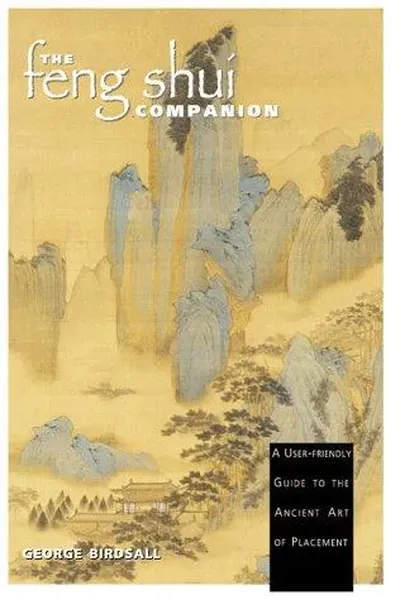

More Free Occult Philosophy Books
View all →