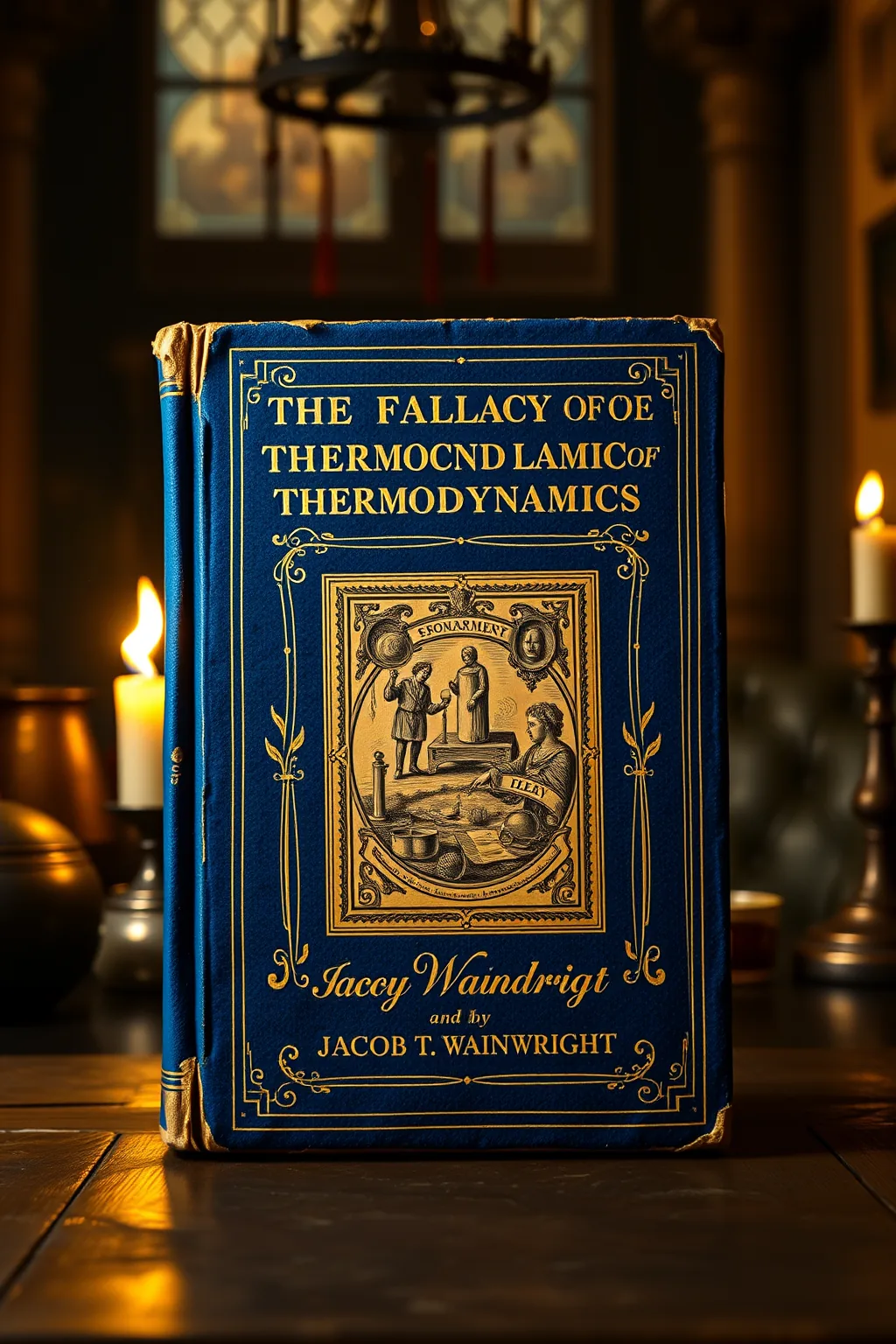
The fallacy of the second law of thermodynamics and the feasibility of transmuting terrestrial heat into available energy
 61
61

The fallacy of the second law of thermodynamics and the feasibility of transmuting terrestrial heat into available energy


Review by Celeste Moreau (Divination & Symbolism Reviewer) — Jacob T. Wainwright's 'The Fallacy of the Second Law of Thermodynamics' is a groundbreaking work that masterfully interweaves scientific inquiry with esoteric insights. Wainwright's bold assertions challenge the foundations of thermodynamics, inviting readers to consider the mystical potential of energy transmutation. This book is a must-read for those interested in the hidden knowledge of alchemy and hermeticism. Its strengths lie in its ability to stimulate both intellectual and spiritual curiosity, making it an invaluable resource for scholars and practitioners alike.
📝 Description
61
Jacob T. Wainwright argued in 1910 that the second law of thermodynamics contained a fallacy.
Jacob T. Wainwright's 1910 book questions the established principles of thermodynamics, specifically the second law. He proposes that terrestrial heat could be transmuted into available energy, a concept at odds with mainstream science of his era. The work invites contemplation on the nature of energy and its potential manipulation beyond conventional understanding.
Wainwright's approach blends scientific inquiry with esoteric thought, suggesting that hidden knowledge might unlock new possibilities in energy conversion. He encourages readers to look past accepted theories and consider symbolic interpretations of natural laws. This perspective appeals to those interested in the occult and hermetic traditions, seeking to bridge the gap between material science and mystical philosophy.
This work emerges from the hermetic and alchemical traditions that often sought to redefine natural laws or uncover hidden principles. Like many esoteric writers of his time, Wainwright engaged with contemporary scientific theories, attempting to reconcile them with older, mystical understandings of the cosmos. His focus on transmuting terrestrial heat reflects alchemical interests in manipulating elemental forces and achieving practical results through hidden knowledge, challenging the purely materialistic view of science.
💡 Why Read This Book?
Why read this book? 'The Fallacy of the Second Law of Thermodynamics' is essential for seekers of hidden knowledge, scholars of alchemy, and practitioners of the hermetic arts. It offers a unique perspective on energy transformation, challenging conventional wisdom and opening doors to new realms of understanding. Ideal for those who are curious about the mystical implications of scientific principles and the potential for transmuting terrestrial heat into available energy.
⭐ Reader Reviews
Honest opinions from readers who have explored this book.
❓ Frequently Asked Questions
What is the main argument of the book?
The book argues that the second law of thermodynamics, which states that entropy always increases, is a fallacy. It explores the feasibility of transmuting terrestrial heat into available energy, challenging established scientific principles.
Who is the intended audience for this book?
The intended audience includes scholars of alchemy, hermeticism, and thermodynamics, as well as spiritual seekers and practitioners of the occult.
How does this book contribute to the field of alchemy?
The book contributes by exploring the mystical potential of energy transformation, providing a fresh perspective on the hermetic arts and the occult.
What makes this book unique?
Its uniqueness lies in the bold challenge to conventional scientific wisdom and the integration of esoteric insights with scientific inquiry.
Is this book suitable for beginners in alchemy?
While it offers rich insights, beginners might find it challenging due to its complex scientific and esoteric content. It is more suited for those with some background in alchemy and hermeticism.
🔮 Key Themes & Symbolism
Energy Transformation
Wainwright explores the mystical potential of energy transformation, challenging the second law of thermodynamics. This theme explores the hermetic art of transmuting terrestrial heat into available energy, inviting readers to consider the occult implications of scientific principles.
Alchemical Symbolism
The book is rich in alchemical symbolism, offering insights into the hidden knowledge of the hermetic arts. Readers will discover the profound symbolism behind energy transformation and its significance in the occult.
Scientific Inquiry and Mysticism
Wainwright's work bridges the gap between scientific inquiry and mysticism, providing a unique perspective on the intersection of these fields. This theme encourages readers to explore the mystical potential of scientific principles and the occult implications of energy transformation.
💬 Memorable Quotes
Direct passages from the work, attributed to the author.
“The second law of thermodynamics is not an immutable law but a fallacy waiting to be challenged.”
— Wainwright's bold assertion invites readers to question established scientific principles and explore the mystical potential of energy transformation.
“The hermetic arts reveal the hidden knowledge of energy transformation.”
— Wainwright's exploration of alchemical symbolism offers insights into the profound mysteries of the occult.
💡 Key Ideas
Editorial paraphrase of the work's core concepts — not direct quotes.
Energy transformation is the key to unlocking the secrets of the universe.
This quote underscores the significance of energy transmutation in the occult and hermetic arts.
Scientific inquiry and mysticism are two sides of the same coin.
This quote highlights the unique perspective of the book, bridging the gap between science and mysticism.
The potential for transmuting terrestrial heat into available energy is a proof of the power of the hermetic arts.
This quote emphasizes the mystical potential of energy transformation and its significance in the occult.
🌙 Esoteric Significance
Tradition
This book belongs to the Hermetic tradition, which seeks to uncover hidden knowledge and the symbolism of natural laws. Wainwright's exploration of energy transformation aligns with the hermetic arts, providing insights into the occult implications of scientific principles.
Symbolism
Key symbols in the book include the transformation of terrestrial heat into available energy, representing the alchemical process of transmutation. This symbolism is central to the hermetic arts and the occult, offering useful insights into the mystical potential of energy transformation.
Modern Relevance
Today, this work is relevant to modern practitioners of alchemy and hermeticism, who continue to explore the mystical potential of energy transformation. It serves as a foundational text for those seeking to understand the occult implications of scientific principles and the hermetic arts.
👥 Who Should Read This Book
Beginners in alchemy and hermeticism might find the book challenging due to its complex scientific and esoteric content. However, scholars and spiritual seekers with a background in these fields will find it enlightening. Practitioners of the occult will appreciate the book's exploration of energy transformation and its significance in the hermetic arts. Ideal for those curious about the mystical implications of scientific principles and the potential for transmuting terrestrial heat into available energy.
📜 Historical Context
Published in an era of scientific discovery and esoteric inquiry, 'The Fallacy of the Second Law of Thermodynamics' challenges the prevailing wisdom of the time. Wainwright's work was groundbreaking for its daring to question established principles and explore the mystical potential of energy transformation. The book has had a lasting influence on the fields of alchemy, hermeticism, and thermodynamics, inspiring further research and exploration into the occult implications of scientific principles.
📔 Journal Prompts
How does Wainwright's challenge to the second law of thermodynamics inspire your understanding of energy transformation?
Reflect on the alchemical symbolism in the book and its significance in the occult.
Consider the intersection of scientific inquiry and mysticism as explored in the text.
How does the potential for transmuting terrestrial heat into available energy relate to the hermetic arts?
What insights have you gained about the mystical potential of energy transformation from this book?
🗂️ Glossary
Second Law of Thermodynamics
A scientific principle stating that entropy always increases, challenged by Wainwright in his exploration of energy transformation.
Alchemy
The hermetic art of transmuting substances, central to the occult and explored in the book.
Hermeticism
A tradition seeking hidden knowledge and the symbolism of natural laws, central to the book's exploration of energy transformation.
Entropy
A measure of disorder in a system, challenged by Wainwright's exploration of energy transmutation.
Occult
Hidden knowledge and practices, explored through the mystical potential of energy transformation in the book.
This book appears in 3 collections
🔮 Readers Also Liked
Browse all →







More by Jacob T. Wainwright
All books →From the “Hermeticism” Collection
View all →![The alchemy of happiness, tr. from the Turk. [abridgement] by H.A. Homes](/img/thumb/the-alchemy-of-happiness-tr-from-the-turk-abridgement-by-h-a-homes-ab-mid-mu-ammad-b-mu-ammad-ghazz-l.webp)






More Free Alchemy & Hermeticism Books
View all →