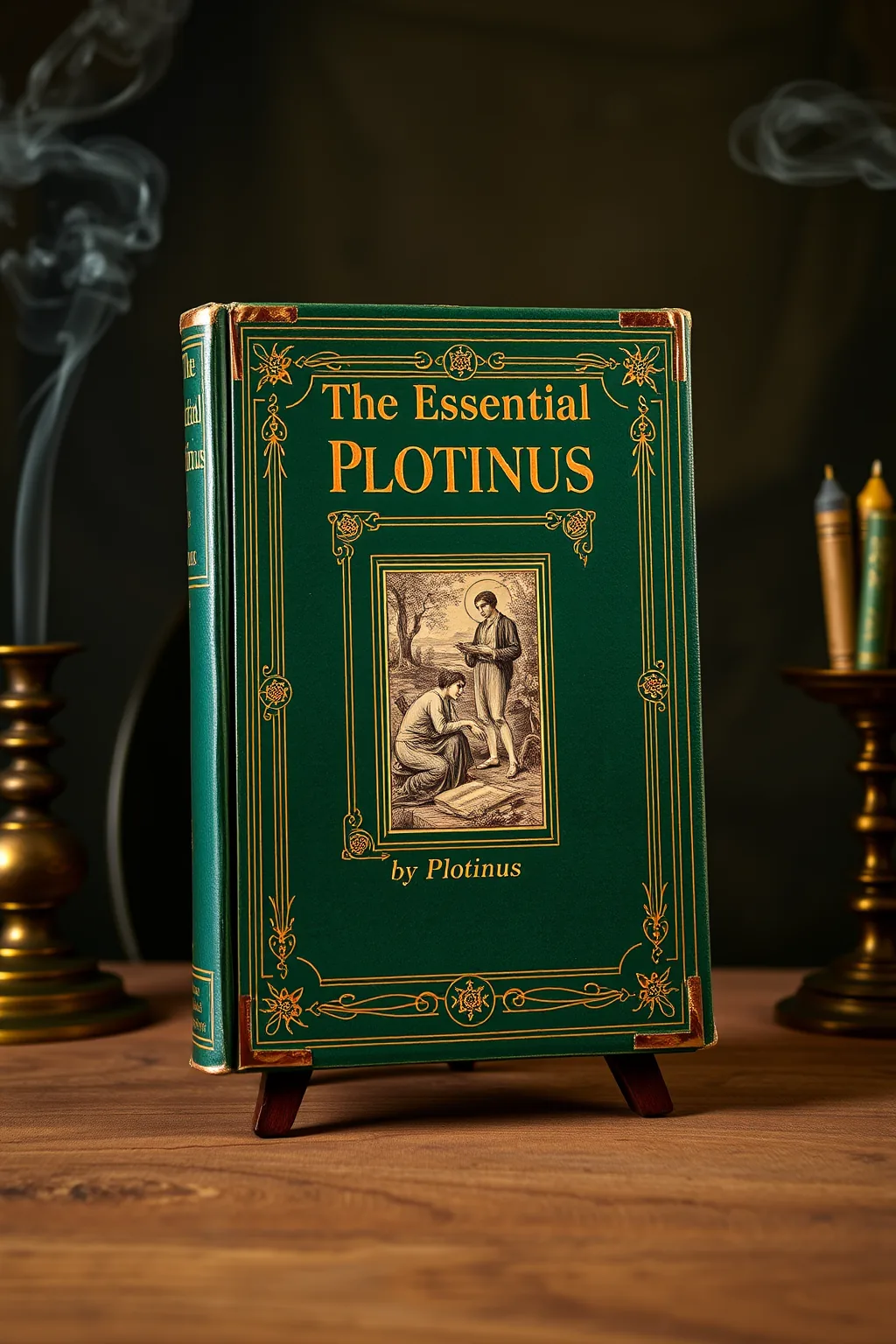
The essential Plotinus
 78
78

The essential Plotinus
The Essential Plotinus offers a judiciously chosen set of readings from the Enneads, presenting Plotinus’s complex ontology in manageable portions. The strength lies in its accessibility; it successfully distills dense philosophical arguments about the One, Intellect, and Soul without sacrificing their core tenets. However, the very act of selection inevitably leads to a limitation: the nuanced dialectic and repetitive reinforcement found in the original Enneads, crucial for grasping the gradual unfolding of Plotinus’s thought, are somewhat diminished. A particularly striking section concerns the nature of the Soul’s descent, where Plotinus describes its entanglement with the material world not as a punishment, but as a consequence of its own activity and a potential catalyst for self-awareness. It’s a valuable entry point for serious students of ancient philosophy and mysticism.
📝 Description
78
This 2024 edition presents selections from Plotinus's Enneads, a key Neoplatonic text compiled around 270 CE.
The Essential Plotinus collects important passages from the Enneads, the philosophical writings of Plotinus. His student Porphyry compiled these texts after Plotinus's death around 270 CE, and they form the basis of Neoplatonism. This edition focuses on Plotinus's main ideas about the One, Intellect (Nous), and Soul, aiming to make his complex system more understandable. It serves as an entry point into a philosophical tradition that significantly shaped Western thought for many centuries.
This book is for readers new to Neoplatonic philosophy. Students of ancient philosophy, comparative religion, and esoteric traditions will find it useful. Anyone interested in the history of mystical thought in the Hellenistic era, or those pondering questions about ultimate reality, consciousness, and existence, will discover relevant ideas. It also acts as a starting point for deeper study of Plotinus.
Plotinus taught in Rome in the mid-3rd century CE, a time of considerable philosophical and religious activity. His philosophy engaged with Stoicism, Aristotelianism, and earlier Platonic ideas, creating a unique system. Other movements like Gnosticism were also active, and early Christian theology was developing. Plotinus's concept of emanation from the ineffable One provided a metaphysical model that influenced thinkers from Augustine of Hippo to Renaissance mystics.
Plotinus's philosophy represents a crucial development in late antique Neoplatonism, a system that sought to synthesize Platonic thought with other philosophical and religious currents. His ideas about emanation from an ineffable, transcendent One, and the subsequent descent of Intellect and Soul into the material world, provided a spiritual cosmology. This cosmology offered a framework for understanding the divine, the human soul's connection to it, and the path of spiritual return. This Neoplatonic vision profoundly influenced mystical and esoteric traditions across Christianity, Islam, and Judaism for centuries.
💡 Why Read This Book?
• You will learn to articulate Plotinus’s concept of the One, a primary source for negative theology, enabling a deeper understanding of its influence on later mystical traditions. • You will gain insight into the Neoplatonic doctrine of emanation, specifically how Intellect (Nous) arises from the One, providing a framework for understanding hierarchical cosmologies. • You will encounter Plotinus’s perspective on the Soul’s relationship with the material world, learning about its potential for ascent through philosophical practice, as detailed in sections concerning the Soul.
⭐ Reader Reviews
Honest opinions from readers who have explored this book.
❓ Frequently Asked Questions
When did Plotinus live and teach?
Plotinus lived and taught in the 3rd century CE, primarily in Rome. His major works, the Enneads, were compiled by his student Porphyry around 270 CE, shortly after Plotinus's death.
What is Neoplatonism?
Neoplatonism is a philosophical system derived from Plato's philosophy, developed by Plotinus and his followers. It posits a hierarchical reality emanating from an ultimate, transcendent source known as 'The One'.
What are the Enneads?
The Enneads are the collected philosophical treatises of Plotinus, organized into nine books (hence 'ennead') by his student Porphyry. They cover a wide range of metaphysical, ethical, and epistemological topics.
How did Plotinus influence later thought?
Plotinus's ideas profoundly impacted Christian theology (especially Augustine), Islamic philosophy, Jewish mysticism, and Renaissance Neoplatonism, shaping concepts of divine transcendence and mystical experience.
What is the role of the Soul in Plotinus's philosophy?
In Plotinus's system, the Soul acts as an intermediary between the intelligible realm of Intellect and the material world. It possesses both divine and worldly aspects and can strive for union with higher realities.
Is 'The Essential Plotinus' a translation of the entire Enneads?
No, 'The Essential Plotinus' is typically a selection of key texts from the Enneads, designed to introduce readers to Plotinus's core philosophical concepts without requiring engagement with the complete, extensive work.
🔮 Key Themes & Symbolism
The Transcendent One
Central to Plotinus's metaphysics is the concept of 'The One' (or The Good), an ultimate principle of reality that is beyond being, thought, and description. It is not a being among beings, but the source from which all existence emanates. This principle is often approached through apophatic theology, emphasizing what it is not rather than what it is. The text explores how The One, despite its absolute transcendence, is the ultimate goal of all striving and the origin of the multiplicity of the cosmos. Understanding The One is presented as the apex of philosophical and mystical attainment.
Emanation and Hierarchy
Plotinus outlines a cosmology of emanation, where reality flows necessarily from The One without diminishing its source. This process generates a hierarchy: first, Intellect (Nous), the field of Forms and divine thought; then, Soul, which bridges the intelligible and sensible worlds; and finally, matter, the furthest point from The One. This concept of a structured, descending series of realities is fundamental to Neoplatonism. The work details how each level of existence participates in the reality above it, creating a unified cosmos.
The Soul's Journey
A significant focus is placed on the nature and destiny of the Soul. Plotinus describes the Soul as having a dual aspect: its divine, eternal part connected to Intellect, and its lower, active part that engages with the material world. The text often addresses the Soul's descent into corporeality, its subsequent forgetfulness of its divine origin, and its potential for ascent. This journey back towards The One is achieved through philosophical contemplation, ethical purification, and a turning inward of the soul's faculties.
Mystical Union
The ultimate aim of Plotinian philosophy is the mystical union (henosis) of the individual soul with The One. This is not an intellectual understanding but an ecstatic, ineffable experience that transcends ordinary consciousness. The selections describe the conditions and methods for achieving this state, often involving a stripping away of sensory and intellectual distractions to allow the soul's highest aspect to apprehend the divine source directly. This union is portrayed as the fulfillment of human existence.
💬 Memorable Quotes
Direct passages from the work, attributed to the author.
“The Intellect is a second principle, after the One.”
— This highlights the hierarchical structure of Plotinus's metaphysics. Intellect (Nous) is the first emanation from the ineffable One, containing the Platonic Forms and representing divine thought.
“We must not be surprised if the Soul, coming from the divine, finds itself in a foreign land.”
— This interpretation explains the soul's experience in the material world as a state of alienation from its true home, emphasizing the contrast between its divine origin and its current circumstances.
“The One is not anything; it is beyond all definition and description.”
— This captures the apophatic approach to The One. It asserts the absolute transcendence of the ultimate reality, stating that it cannot be comprehended through positive attributes or conceptualization.
💡 Key Ideas
Editorial paraphrase of the work's core concepts — not direct quotes.
The soul that is about to descend...
This passage signifies the soul's journey into the material realm. It implies a degree of voluntary engagement, a descent driven by the soul's own nature or seeking, rather than a forced exile.
The goal is for the soul to achieve stillness and recognize its own divine nature.
This paraphrases the ultimate aim of Plotinian practice: the soul’s return to its source through introspection and purification, leading to a direct apprehension of its divine origin and unity with the ultimate principle.
🌙 Esoteric Significance
Tradition
Plotinus is the foundational figure of Neoplatonism, a philosophical and mystical tradition that became a core part of Western esotericism. While not strictly Hermetic, Gnostic, or Kabbalistic, Neoplatonism profoundly influenced all these streams. His concept of emanation from an ineffable One, the hierarchical structure of reality, and the path of mystical ascent provided a sophisticated metaphysical language and cosmology that later esotericists adapted and integrated into their own systems.
Symbolism
Key symbols in Plotinus's work include 'The One,' representing absolute unity and transcendence, often described negatively (apophatic). 'Intellect' (Nous) symbolizes the field of divine Forms and perfect knowledge. 'The Soul' represents the mediating principle between the divine and material realms, often depicted as having fallen or become entangled in matter. The journey of the soul upward through purification and contemplation is a central motif, symbolizing the return to the divine source.
Modern Relevance
Contemporary esoteric practitioners, philosophers, and spiritual seekers continue to draw heavily on Plotinus. His ideas inform various forms of Western Hermeticism, mystical Christianity, and modern interpretations of Platonic and Neoplatonic thought. Thinkers and movements exploring consciousness, non-duality, and the nature of ultimate reality often find resonance and conceptual tools in Plotinus's Enneads, making his work relevant to contemporary spiritual and philosophical discourse.
👥 Who Should Read This Book
• Students of Western Esotericism: Those seeking to understand the philosophical underpinnings of traditions like Hermeticism, Theosophy, and certain branches of occultism will find Plotinus essential context. • Advanced Philosophy Undergraduates/Graduates: Readers engaging with ancient philosophy, metaphysics, and the history of ideas will benefit from direct exposure to a seminal thinker in the Neoplatonic lineage. • Mystical Seekers: Individuals exploring paths of contemplative practice and seeking a profound metaphysical framework for understanding divine reality and the soul's potential for union will find rich material.
📜 Historical Context
Plotinus taught in Rome around 250 CE, a period marked by intellectual cross-currents. His system emerged as a sophisticated synthesis of Platonic thought, infused with mystical elements and engaging with Aristotelian and Stoic ideas. This era also saw the rise of Gnosticism, a movement with which Plotinus engaged critically, often refuting its dualistic tendencies and asserting the goodness of the cosmos emanating from The One. His work was a significant development in Hellenistic philosophy, providing a metaphysical framework that profoundly influenced later thinkers. While direct contemporary reception details are sparse, Plotinus’s ideas quickly gained traction, influencing figures like Porphyry, Iamblichus, and later, through Porphyry's efforts, reaching thinkers like Augustine of Hippo, who cited Plotinus extensively in his early works.
📔 Journal Prompts
The Soul's entanglement with the sensible world: explore its implications.
Reflect on the concept of 'The One' as described by Plotinus.
The process of emanation: map its stages as presented.
Plotinus's view of Intellect (Nous): what are its characteristics?
Consider the path of ascent for the Soul: what practices are suggested?
🗂️ Glossary
The One
The ultimate, transcendent principle of reality in Plotinus's philosophy. It is beyond being, thought, and all categories, serving as the ineffable source from which all existence emanates.
Intellect (Nous)
The second principle in Plotinus's hierarchy, emanating from The One. It is the field of the Forms or Ideas, the divine mind containing all intelligible reality.
Soul
The third principle, mediating between Intellect and the material world. It has both a higher aspect connected to the divine and a lower aspect that animates and governs the physical body.
Emanation
The process by which reality flows from The One, through Intellect and Soul, down to the material world. It is a necessary outflow that does not diminish the source.
Henosis
The goal of the soul's journey: mystical union or ecstatic communion with The One. This experience transcends ordinary consciousness and intellectual understanding.
Matter
The furthest principle from The One, representing the absence of form and intelligence. It is seen as the potentiality for existence but lacks inherent being.
Apophatic
A method of theological or philosophical description that defines something by stating what it is not, often used to describe transcendent realities like The One.
🔮 Readers Also Liked
Browse all →









More by Plotinus
All books →



More Free Occult Philosophy Books
View all →