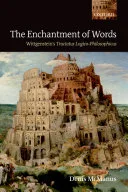
The Enchantment of Words
 84
84

The Enchantment of Words
Denis McManus's approach to Wittgenstein's *Tractatus Logico-Philosophicus* is commendably direct, eschewing overly academic jargon where possible to illuminate the text's dense propositions. The strength of this study lies in its focused attention on the ethical and metaphysical implications often overlooked in purely logical analyses of Wittgenstein's early work. McManus's interpretation of the 'showing' aspect of language, particularly its connection to ethical propositions, offers a compelling perspective. However, the book occasionally assumes a level of familiarity with Wittgensteinian terminology that may challenge readers new to the *Tractatus*. A more extensive glossary for terms like 'logical form' or 'state of affairs' might have been beneficial. Overall, *The Enchantment of Words* provides a valuable, if demanding, scholarly engagement with a foundational text of 20th-century philosophy.
📝 Description
84
Denis McManus's 2006 study examines Wittgenstein's 1921 *Tractatus Logico-Philosophicus*.
Denis McManus's book analyzes Ludwig Wittgenstein's *Tractatus Logico-Philosophicus*, originally published in 1921. The study dissects the arguments Wittgenstein presented regarding logic, language, and the boundaries of meaningful expression. McManus traces Wittgenstein's early philosophical system, which aimed to distinguish sense from nonsense through logical analysis.
The book is principally for students and scholars of philosophy, especially those focused on 20th-century analytic philosophy and linguistic theory. It will also interest readers engaged with metaphysics, ethics, and the philosophy of mind, particularly those encountering foundational texts that influenced later thought. Some familiarity with the *Tractatus* itself will aid understanding.
McManus's 2006 work engages with the philosophical currents surrounding Ludwig Wittgenstein's 1921 *Tractatus Logico-Philosophicus*. This period in analytic philosophy was marked by intense discussions on language's logical structure and its connection to reality. Bertrand Russell, a significant figure and Wittgenstein's teacher, had previously developed his theories of logical atomism, which the *Tractatus* both expanded upon and challenged. McManus places his analysis within the ongoing scholarly debate about the *Tractatus*'s lasting significance.
💡 Why Read This Book?
• Gain a structured understanding of Wittgenstein's *Tractatus Logico-Philosophicus* (1921), learning about its picture theory of language and the distinction between 'saying' and 'showing'. • Explore the metaphysical and ethical dimensions of Wittgenstein's philosophy, particularly how he conceptualized meaning's limits and the ineffable. • Understand the intellectual currents of early analytic philosophy by examining how McManus contextualizes the *Tractatus* within its historical and philosophical milieu.
⭐ Reader Reviews
Honest opinions from readers who have explored this book.
❓ Frequently Asked Questions
What is the central argument of Wittgenstein's Tractatus Logico-Philosophicus as discussed in this book?
The book explains Wittgenstein's early view that language functions as a logical picture of reality. It focuses on how propositions represent states of affairs and explores the limits of what can be meaningfully said.
How does The Enchantment of Words address the philosophy of mind?
McManus examines how Wittgenstein's early philosophy connects language, logic, and the structure of thought, touching upon the relationship between the logical form of propositions and the structure of the mind.
Is prior knowledge of Wittgenstein required to read this book?
While helpful, extensive prior knowledge is not strictly required. McManus aims to guide readers through the *Tractatus*, but familiarity with philosophical concepts will aid comprehension.
What is the significance of the 'saying versus showing' distinction discussed?
This distinction, central to the *Tractatus*, is explored by McManus to differentiate between propositions that state facts and logical/ethical truths that can only be demonstrated or 'shown' through language.
When was Wittgenstein's Tractatus Logico-Philosophicus originally published?
Wittgenstein's *Tractatus Logico-Philosophicus* was first published in 1921, a key year for the development of analytic philosophy and logical positivism.
Does this book offer an esoteric interpretation of Wittgenstein?
While the book focuses on philosophical analysis, it touches upon the 'mystical' aspects Wittgenstein alluded to in his *Tractatus*, exploring the ineffable dimensions of ethics and meaning beyond logical propositions.
🔮 Key Themes & Symbolism
Picture Theory of Language
McManus meticulously details Wittgenstein's early assertion that propositions are logical pictures of possible states of affairs. This theory posits a structural isomorphism between language and reality, where the form of a proposition mirrors the form of the reality it describes. The book explores how this concept forms the bedrock of Wittgenstein's logical atomism, attempting to provide a foundation for meaningful discourse by limiting it to propositions that can picture facts.
The Limits of Language
A core focus is Wittgenstein's demarcation of what can be meaningfully 'said' versus what can only be 'shown.' The study examines how, for Wittgenstein, logical, ethical, and mystical truths reside in the area of the unsayable. They cannot be captured by factual propositions but are instead manifested through the structure and use of language itself, indicating profound limitations on the scope of empirical and logical knowledge.
Ethics and the Mystical
McManus investigates Wittgenstein's late-stage reflections in the *Tractatus* on ethics and the mystical. Despite the work's logical rigor, Wittgenstein suggests that the most important aspects of life—ethical values and the sense of the world—lie beyond the grasp of scientific or logical propositions. This section probes the tension between the formal constraints of language and the ineffable nature of profound human experience.
Logic and Metaphysics
The study offers readings of how Wittgenstein's logical investigations in the *Tractatus* have significant metaphysical implications. By analyzing the structure of logical propositions and their relationship to facts, the book explores Wittgenstein's early metaphysical outlook, including his views on atomic facts, possibility, and the nature of reality as determined by the limits of logical expression.
💬 Memorable Quotes
Direct passages from the work, attributed to the author.
“The *Tractatus* sought to establish the limits of language and, by extension, the limits of the world.”
— This highlights Wittgenstein's ambitious project to define what can be meaningfully articulated, suggesting that our understanding of reality is intrinsically bound by the structure of our language.
“Wittgenstein distinguished between what can be stated propositionally and what can only be demonstrated.”
— This refers to the crucial 'showing' vs. 'saying' distinction, where logical truths or ethical propositions cannot be asserted as facts but are revealed through the very form of expression.
“The picture theory proposes that propositions are logical models of reality.”
— This captures the core idea that meaningful sentences mirror the structure of possible states of affairs in the world, forming the basis of Wittgenstein's early philosophy of language.
“Ethics and the mystical lie outside the bounds of factual assertion.”
— This points to Wittgenstein's view that ultimate values and subjective experience, while profoundly important, cannot be captured by the descriptive language of science or logic.
“The work explores the relationship between the logical structure of language and the structure of thought.”
— This emphasizes the connection Wittgenstein drew between the rules of logic and the fundamental framework of human cognition and understanding.
🌙 Esoteric Significance
Tradition
While not explicitly aligned with a single esoteric lineage, McManus's work touches upon themes that resonate with mystical and Gnostic traditions. The *Tractatus*'s emphasis on the limits of language and the ineffable aspects of existence—particularly in ethics and the mystical—parallels esoteric attempts to describe realities beyond ordinary perception. The book indirectly explores how formal systems, when pushed to their limits, can point towards a transcendent or ineffable domain.
Symbolism
The primary 'symbol' explored is the logical structure of language itself, which Wittgenstein's *Tractatus* attempts to map. Within this framework, the concept of 'showing' can be seen as a symbolic representation of how meaning or truth can be conveyed implicitly rather than explicitly stated. The book also touches on the limits of propositions, which can symbolize the boundaries of the material or empirical world, suggesting that deeper realities lie beyond these constraints.
Modern Relevance
Contemporary thinkers in fields ranging from philosophy of mind to artificial intelligence continue to grapple with Wittgenstein's ideas on language and logic. His exploration of meaning's boundaries remains relevant for computational linguistics and cognitive science. Furthermore, artists and writers still draw inspiration from the *Tractatus*'s attempt to articulate the ineffable, finding in its structure a model for exploring subjective experience and existential themes that transcend purely empirical description.
👥 Who Should Read This Book
• Philosophy students specializing in 20th-century analytic philosophy or the philosophy of language, seeking a detailed breakdown of Wittgenstein's *Tractatus Logico-Philosophicus*. • Scholars of logic and metaphysics interested in the foundational arguments concerning the relationship between language, reality, and thought as presented in Wittgenstein's early work. • Individuals curious about the philosophical underpinnings of meaning, ethics, and the limits of human knowledge, particularly as explored through logical analysis.
📜 Historical Context
Denis McManus's *The Enchantment of Words*, published in 2006, engages with a philosophical landscape profoundly shaped by Ludwig Wittgenstein's *Tractatus Logico-Philosophicus*, first appearing in 1921. The early 20th century was a fertile ground for logical analysis, with figures like Bertrand Russell and Gottlob Frege pioneering formal logic. The *Tractatus* emerged during a period of intense intellectual ferment, challenging prevailing empiricist and idealist views. Its publication sparked considerable debate, influencing logical positivism and the Vienna Circle, though Wittgenstein himself later distanced himself from some of its tenets. The work’s reception was complex; while initially hailed for its logical rigor, its later reinterpretations, particularly concerning ethics and mysticism, have continued to fuel scholarly discussion for decades. McManus's study arrives in an era where Wittgenstein's legacy is well-established, contributing to the ongoing re-evaluation of his early masterpiece.
📔 Journal Prompts
The *Tractatus*'s picture theory of language: how does it structure your understanding of reality?
Reflect on the distinction between what Wittgenstein believed could be 'said' versus 'shown'.
Consider the ethical and mystical dimensions Wittgenstein suggested lie beyond logical propositions.
Analyze the metaphysical implications of Wittgenstein's focus on the logical form of sentences.
How does the concept of 'logical form' in the *Tractatus* relate to the structure of your own thoughts?
🗂️ Glossary
Tractatus Logico-Philosophicus
Ludwig Wittgenstein's seminal 1921 work that outlines his early philosophy of language, logic, and metaphysics, proposing that propositions are logical pictures of facts.
Picture Theory of Language
Wittgenstein's early theory stating that meaningful propositions function as logical pictures of possible states of affairs in the world, possessing a shared logical form.
Saying vs. Showing
A distinction in the *Tractatus* where 'saying' refers to stating facts through propositions, while 'showing' refers to the ineffable presentation of logical form, ethics, or the mystical.
Logical Form
The underlying structure or schema of a proposition that determines its relationship to reality and its capacity to picture a state of affairs.
State of Affairs
A configuration of objects in the world that a proposition can describe or picture; the atomic facts that constitute reality.
Metaphysics
The branch of philosophy concerned with the fundamental nature of reality, existence, and the world, often explored through logic and conceptual analysis.
Ethics
Moral principles that govern a person's behavior or the conducting of an activity; in the *Tractatus*, considered to be beyond factual assertion.