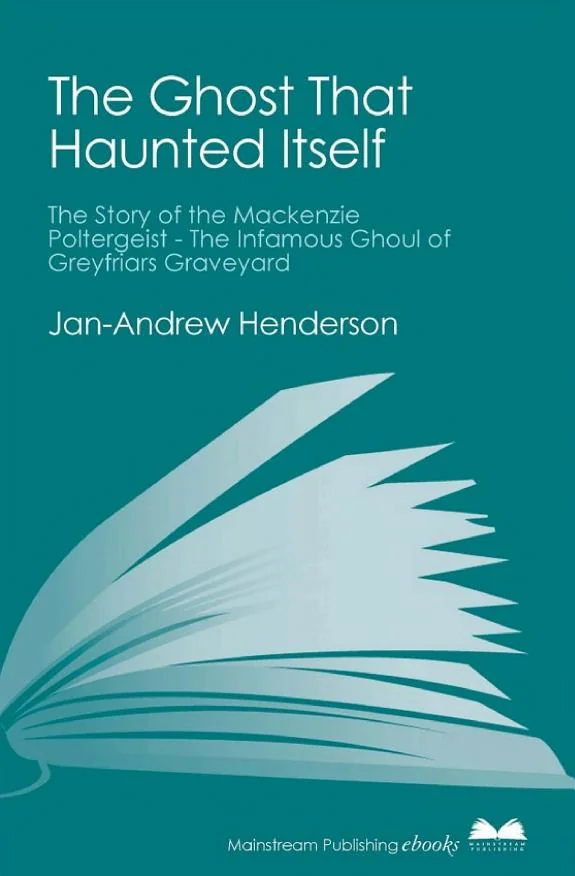
The Ghost That Haunted Itself
 82
82

The Ghost That Haunted Itself
Henderson’s meticulous detailing of the Greyfriars Kirkyard phenomena is commendable, presenting a dense chronology of reported incidents from 1998 onwards. The strength lies in its collation of disparate accounts, painting a picture of escalating, often physically impactful, paranormal activity. However, the narrative occasionally suffers from a lack of critical analysis, leaning heavily on the reported experiences without robustly questioning potential mundane explanations. A particularly striking passage describes visitors being cut and bruised by unseen forces, a visceral detail that underscores the unsettling nature of the events. While the historical context of Greyfriars is rich, the book could have benefited from a deeper exploration of the psychological underpinnings of reported hauntings. Ultimately, 'The Ghost That Haunted Itself' serves as an exhaustive catalog of one of Scotland's most notorious haunted sites.
📝 Description
82
Jan-Andrew Henderson's 2005 book details paranormal events at Edinburgh's Greyfriars Kirkyard starting in 1998.
The Ghost That Haunted Itself examines a series of unexplained occurrences at Edinburgh's Greyfriars Kirkyard that began in 1998. Jan-Andrew Henderson documents incidents including unexplained injuries, sensory disturbances, and a pervasive sense of dread reported by visitors. The book chronicles the escalation of these events within the graveyard, a location already known for its dark history and folklore.
The narrative is set against the backdrop of Greyfriars Kirkyard, a site with a documented past. Its history includes associations with witchcraft trials, body-snatching for anatomical study in the early 19th century, and alleged mass burials. Henderson investigates how these historical layers might connect to the more recent reported phenomena, linking past events to present paranormal activity.
Henderson discusses residual hauntings against intelligent hauntings, questioning if the activity is an echo of the past or a conscious entity. The work also considers the psychological and physiological effects witnesses reported, such as nausea and unexplained injuries, raising questions about the nature of the alleged haunting and its impact on those who experience it. The book compiles evidence from two years of documented incidents.
This book fits within the broader tradition of spiritualist and paranormal investigation literature. It seeks to document and analyze specific alleged hauntings, drawing connections between historical events and contemporary experiences. Such works often attempt to differentiate between types of paranormal activity, like residual energy versus sentient apparitions, and consider the impact on human perception. The focus on a specific, geographically and historically rich location like Greyfriars Kirkyard is common in accounts aiming to understand the mechanics of spiritual phenomena.
💡 Why Read This Book?
• Gain insight into the specific documented paranormal events at Greyfriars Kirkyard beginning in 1998, understanding the types of phenomena reported by visitors. • Explore the historical layers of Greyfriars Kirkyard, connecting its centuries-old reputation for witchcraft and bodysnatching to modern alleged hauntings. • Examine the concept of 'cold spots' and unexplained physical injuries reported in the graveyard, prompting contemplation on the nature of spectral interactions.
⭐ Reader Reviews
Honest opinions from readers who have explored this book.
❓ Frequently Asked Questions
What historical events contribute to Greyfriars Kirkyard's haunted reputation?
Greyfriars Kirkyard's reputation is linked to centuries of dark history, including its use for mass burials, alleged witchcraft, bodysnatching, and desecration, creating a potent atmosphere for reported paranormal activity.
When did the reported inexplicable phenomena in Greyfriars Kirkyard begin?
The book details that inexplicable phenomena, such as cold spots, strange smells, and physical encounters, began occurring in Greyfriars Kirkyard in 1998.
What kinds of physical effects did visitors report experiencing?
Visitors reported experiencing a range of physical effects, including unexplained nausea, and being cut or bruised by something unseen within the graveyard.
Who is the author of 'The Ghost That Haunted Itself'?
The author is Jan-Andrew Henderson, with the book first published in 2012.
What is the primary focus of the book's paranormal investigation?
The book's primary focus is on the escalating paranormal activity reported within Edinburgh's Greyfriars Kirkyard, particularly the events that transpired between 1998 and 2000.
Does the book discuss different types of hauntings?
Yes, the work explores concepts related to hauntings, potentially distinguishing between residual phenomena and more active or intelligent spectral presences within the graveyard.
🔮 Key Themes & Symbolism
Historical Trauma and Spectral Echoes
The book posits that the violent and often macabre history of Greyfriars Kirkyard—from its use in witchcraft trials to the grim reality of bodysnatching in the 19th century—has imprinted itself onto the location. Henderson explores how these historical traumas might manifest as residual energy or active spectral disturbances. The work examines the idea that the graveyard acts as a repository for intense emotional and physical events, which can then be perceived by sensitive individuals in the present day, suggesting a direct correlation between past suffering and current paranormal phenomena.
The Nature of Unexplained Phenomena
Central to 'The Ghost That Haunted Itself' is the investigation into the nature of the reported occurrences. The book presents detailed accounts of sensory disturbances—unexplained smells, cold spots—and physical interactions, such as cuts and bruises. Henderson grapples with classifying these events, questioning whether they represent intelligent hauntings, environmental anomalies, or something entirely beyond conventional understanding. The work encourages readers to consider the boundaries of perception and the potential for phenomena that defy easy categorization.
Witness Testimony and Psychological Impact
The compilation of visitor accounts forms the backbone of the narrative. Henderson highlights the subjective experiences of those who encountered phenomena in Greyfriars Kirkyard, including feelings of nausea and disorientation. The book implicitly questions the reliability of witness testimony while simultaneously presenting it as primary evidence. It examines the psychological and physiological effects of alleged encounters, prompting reflection on how the human mind and body react to perceived supernatural forces within a historically charged environment.
Edinburgh's Folklore and Haunted Landscape
Beyond Greyfriars itself, the book situates the events within the broader context of Edinburgh's reputation as one of the most haunted cities in the world. Henderson touches upon the body of Scottish folklore and ghost stories that contribute to the city's mystique. The graveyard’s specific history of live burials and corpse dumping adds to this unsettling landscape. The work suggests that the intense historical and folkloric weight of the location creates fertile ground for the paranormal activity documented since 1998.
💬 Memorable Quotes
Direct passages from the work, attributed to the author.
“They found themselves overcome by nausea, or cut and bruised by something they could not see.”
— This highlights the tangible, physical impact reported by witnesses, moving beyond mere atmospheric disturbances to direct, unexplained harm, raising questions about the nature and intent of the phenomena.
“Greyfriar's Cemetery in Edinburgh has a centuries old reputation for being haunted.”
— This sets the stage by establishing the deep historical roots and established notoriety of the location, implying that the reported 1998 events are not isolated but part of a longer, darker narrative.
“Its gruesome history includes use as a mass prison, headstone removal, witchcraft, bodysnatching, desecration, corpse dumping and live burial.”
— This lists specific historical transgressions associated with the graveyard, providing concrete examples of the violent and disturbing past that the book suggests may fuel present-day paranormal activity.
“Over the space of two years, twenty...”
— This incomplete sentence from the blurb hints at a significant number of incidents or witnesses within a defined period, underscoring the intensity and duration of the paranormal surge documented in the book.
💡 Key Ideas
Editorial paraphrase of the work's core concepts — not direct quotes.
Visitors encountered 'cold spots', strange smells and banging noises.
This passage captures the initial, sensory-based manifestations of the haunting, suggesting a presence that affects the environment and the senses before potentially escalating to more direct interactions.
🌙 Esoteric Significance
Tradition
While not explicitly tied to a single esoteric lineage like Hermeticism or Kabbalah, 'The Ghost That Haunted Itself' engages with broader themes present in occult and spiritualist traditions. It touches upon concepts of psychogeography—the influence of place on spiritual and psychological states—and the idea of imprinted energies from historical events. The work aligns with spiritualist beliefs in the persistence of consciousness and the possibility of communication with or observation of the deceased, examining phenomena often discussed in mediums' circles and hauntings investigations.
Symbolism
The primary symbolic landscape is Greyfriars Kirkyard itself, a potent symbol of death, remembrance, and the veil between worlds. The 'cold spots' can be interpreted as localized manifestations of spectral presence, indicating a drop in energetic temperature associated with spirits. Unexplained injuries symbolize the potential for the spectral realm to interact physically with the material world, a concept explored in many occult traditions regarding the power of non-corporeal entities.
Modern Relevance
This work speaks to contemporary paranormal investigators and researchers who utilize systematic data collection and analysis, echoing methodologies found in early 20th-century spiritualist societies but updated with modern technology and documentation. It contributes to the ongoing popular fascination with haunted locations and provides case material for discussions in comparative religion, folklore studies, and even fringe psychological research into collective experience and environmental influence.
👥 Who Should Read This Book
• Researchers of urban legends and local hauntings, particularly those interested in detailed accounts from specific, historically significant locations like Edinburgh's Greyfriars. • Individuals fascinated by psychogeography and the energetic imprints of history on landscapes, seeking to understand how past events might manifest in the present. • Enthusiasts of paranormal investigation who appreciate case studies focusing on a variety of reported phenomena, from sensory disturbances to physical interactions.
📜 Historical Context
Jan-Andrew Henderson’s 'The Ghost That Haunted Itself,' first published in 2012, emerges in an era marked by a resurgence of interest in the paranormal, fueled by popular media and a growing number of dedicated researchers. The early 21st century saw a proliferation of ghost-hunting shows and a wider acceptance of anecdotal evidence in popular discourse. This work situates itself within that milieu, focusing intensely on the specific case of Greyfriars Kirkyard, a site already legendary in Scotland. While the early 19th century saw the notorious activities of William Burke and William Hare exploiting the demand for bodies for anatomical study—a practice directly linked to bodysnatching in graveyards like Greyfriars—Henderson's book looks at a more recent surge of activity beginning in 1998. The work engages with the tradition of Scottish ghost lore, a field rich with tales often tied to historical atrocities and folklore, contrasting with more academic approaches to folklore studies emerging concurrently. The reception of such works often involves a spectrum from skeptical analysis to uncritical acceptance, with Henderson's book primarily serving as a detailed compilation of reported experiences.
📔 Journal Prompts
Greyfriars Kirkyard's history of bodysnatching and its connection to reported phenomena.
The subjective experience of unexplained cold spots and sensory disturbances.
Analysis of witness accounts detailing cuts and bruises from unseen forces.
The concept of residual energy versus intelligent hauntings in a specific location.
Edinburgh's reputation as a haunted city and the role of Greyfriars within it.
🗂️ Glossary
Bodysnatching
The act of stealing corpses from graves, historically prevalent in the 18th and 19th centuries to supply cadavers for anatomical dissection by medical professionals.
Cold Spots
Localized areas within a potentially haunted location where the ambient temperature inexplicably drops, often interpreted as a sign of paranormal presence.
Residual Haunting
A type of haunting theorized to be an imprint or echo of past events, replaying like a recording without conscious interaction or awareness.
Intelligent Haunting
A type of haunting where a spirit or entity is believed to be aware of its surroundings and capable of interacting consciously with the living.
Desecration
The act of violating or profaning something sacred or holy, in the context of a cemetery, this can include vandalism or disrespectful treatment of graves.
Psychogeography
The study of the specific effects of a geographical environment on the emotions and behavior of individuals; the influence of place on the psyche.
Witchcraft Trials
Historical legal proceedings designed to prosecute individuals, predominantly women, accused of practicing witchcraft, often involving torture and execution.
This book appears in 1 collection
🔮 Readers Also Liked
Browse all →









From the “Poltergeist” Collection
View all →









More Free Occult Philosophy Books
View all →