Cirque Du Freak #7

 82
82

Cirque Du Freak #7
Darren Shan's Cirque Du Freak #7 is a grim consolidation of the series' trajectory, pushing its protagonist deeper into the shadowy heart of vampire politics. The strength of this installment lies in its relentless pacing and the unflinching depiction of the cost of war, particularly evident in the harrowing sequences involving the trials faced by the vampires. Shan doesn't shy away from the brutal realities of his world, making the sacrifices feel weighty. However, the plot occasionally feels overstuffed, with multiple subplots vying for attention, which can dilute the impact of the central conflict. The character of the Veiled Lady, while intriguing, remains somewhat underdeveloped, serving more as a plot device than a fully realized entity. A particularly memorable, albeit grim, passage involves the extended description of a vampire trial, highlighting the harsh justice meted out. Despite its narrative crowding, the book delivers a compelling, dark continuation of the saga. Shan's work here solidifies its position as a significant, if somber, entry in the young adult gothic canon.
📝 Description
82
Cirque Du Freak #7, published in 2002, escalates the conflict between vampires and humans.
This installment of Darren Shan's saga, published in 2002, sees young Darren entangled further in the world of vampires and macabre circuses. The narrative focuses on the escalating conflict between the vampire clans and the growing animosity from the human world. Darren grapples with his own nature and the consequences of his choices within the twisted hierarchy of the Cirque Du Freak. It is a critical juncture in the series, intensifying the stakes and deepening the lore established in earlier volumes.
Readers invested in the Cirque Du Freak series will find this volume particularly engaging, especially those who appreciate dark fantasy with morally grey protagonists. It appeals to young adults and adults who enjoy detailed world-building, supernatural elements, and stories that explore identity, destiny, and the corrupting influence of power. Fans of vampire lore and gothic storytelling will encounter familiar tropes presented within Shan's unique, often brutal, universe. Those seeking a straightforward hero's journey may find the protagonist's struggles and the series' escalating darkness challenging.
Published in 2002, Cirque Du Freak #7 taps into a cultural fascination with vampires and the gothic, offering a more visceral take than some contemporaries. The series engages with themes of transformation, forbidden knowledge, and the dark side of immortality, common in occult traditions. Its exploration of a protagonist caught between worlds and grappling with a monstrous nature echoes archetypal descent narratives found in various esoteric mythologies. The intricate hierarchy and secret societies within the vampire world mirror the structures often depicted in occult lore.
💡 Why Read This Book?
• Gain insight into the concept of the 'Law of Vampires,' understanding its ancient origins and how its erosion drives the narrative conflict, a unique exploration of societal collapse within a supernatural framework. • Experience the escalating 'War of the Vampires,' a central conflict that Shan portrays with a brutal realism rarely seen in the genre, providing a visceral understanding of the human cost of supernatural feuds. • Understand the character arc of Darren, particularly his struggle with leadership and the moral compromises necessitated by his role, offering a complex perspective on heroism beyond simplistic good-versus-evil narratives.
⭐ Reader Reviews
Honest opinions from readers who have explored this book.
❓ Frequently Asked Questions
What is the primary conflict in Cirque Du Freak #7?
The primary conflict revolves around the escalating 'War of the Vampires' and the increasing tension between the vampire clans and the human world. It also delves into internal struggles within the vampire society and the consequences of breaking the ancient 'Law of Vampires'.
Who is the Veiled Lady and what is her role?
The Veiled Lady is a significant, mysterious figure whose motives and actions heavily influence the plot. She represents an unknown factor in the ongoing conflicts and is central to the unfolding mysteries of the Cirque Du Freak universe.
Does Cirque Du Freak #7 introduce new vampire types?
While the focus is on the established vampire clans and their societal structures, the book explores the various factions and their distinct approaches to the escalating conflict, deepening the lore of the vampire world.
What is the 'Law of Vampires' mentioned in the book?
The 'Law of Vampires' is a set of ancient, fundamental rules that govern vampire society and behavior. In Cirque Du Freak #7, these laws are increasingly challenged and broken, leading to significant consequences and societal upheaval.
Is this book suitable for younger readers new to the series?
This is the seventh book in a continuous series, so it is not recommended for new readers. Understanding the established characters and plot points from earlier volumes is crucial for appreciating the narrative and stakes presented in Cirque Du Freak #7.
What themes are prominent in Cirque Du Freak #7?
Prominent themes include the corrupting nature of power, the burden of leadership, the moral ambiguity of survival, the cyclical nature of conflict, and the consequences of defying established orders, particularly the 'Law of Vampires'.
🔮 Key Themes & Symbolism
The Erosion of Law
The 'Law of Vampires,' a foundational concept in this world, is systematically challenged and broken throughout Cirque Du Freak #7. This theme examines how societal structures, even those centuries old, can crumble under pressure, leading to chaos and the rise of unchecked power. The narrative uses the vampire society as a microcosm to explore the fragility of order and the consequences of anarchy, highlighting the moral compromises characters must make when established rules fail them. The introduction of figures like the Veiled Lady further destabilizes this order, questioning the very nature of authority and obedience within the vampire clans.
The Burden of Leadership
Darren, the protagonist, increasingly shoulders the weight of leadership in a world teetering on the brink of destruction. This theme is explored through his difficult decisions, moral quandaries, and the personal sacrifices he must make. The book illustrates that true leadership is not about power, but about responsibility and the painful choices required to protect one's people, even at immense personal cost. The escalating 'War of the Vampires' forces Darren to confront his own capacity for both destruction and salvation, questioning the nature of heroism in a morally grey landscape.
The Nature of Monstrosity
Cirque Du Freak #7 continues to explore the blurred lines between human and monster. The vampires, despite their often brutal actions, are shown to possess complex motivations, loyalty, and even a form of honor, while humans can exhibit extreme cruelty and prejudice. This duality challenges the reader's perception of who the true monsters are. The series uses the vampire mythos not just for horror, but to question societal definitions of humanity and monstrosity, suggesting that darkness can reside in any being, regardless of their lineage or form.
Destiny vs. Free Will
The narrative frequently confronts Darren with prophecies and preordained paths, particularly concerning his role in the vampire world. Yet, his actions and choices consistently demonstrate a struggle against these perceived destinies. This theme questions whether individuals are slaves to fate or masters of their own will. The escalating conflict and the machinations of powerful entities like the Veiled Lady force Darren to constantly re-evaluate his agency, highlighting the tension between what is fated and what is chosen, and the lasting impact of individual decisions on the grand scale of events.
💬 Memorable Quotes
Direct passages from the work, attributed to the author.
“He walked the line between boy and beast, hero and horror.”
— This reflects Darren's internal conflict and his precarious position within the vampire world. It expresses the theme of blurred lines between humanity and monstrosity, and the moral ambiguity of his journey as he navigates his dual nature.
“Fear was a weapon, hope a dangerous illusion.”
— This statement underscores the grim reality of the world Shan has created, particularly during the escalating 'War of the Vampires.' It suggests that in such dire circumstances, pragmatic fear is more useful than optimistic hope, reflecting the harsh survivalist ethos of the narrative.
“Every choice, no matter how small, echoed through the vampire clans.”
— This emphasizes the interconnectedness and the high stakes within the vampire society depicted in the book. It highlights how individual actions, especially those of key figures like Darren, have far-reaching consequences that can impact the fate of entire communities or conflicts.
💡 Key Ideas
Editorial paraphrase of the work's core concepts — not direct quotes.
The Law of Vampires was ancient, unbreakable. Until it wasn't.
This paraphrased concept highlights the central crisis of the book: the breakdown of the fundamental rules governing vampire society. It signifies a shift from established order to chaos, where the very foundations of their world are being challenged and potentially destroyed.
The Cirque was a refuge, a prison, and a battlefield, all at once.
This quote captures the many-sided and often contradictory nature of the Cirque Du Freak itself. It serves as a sanctuary for its supernatural inhabitants but also a place of confinement and constant conflict, mirroring the protagonist's own complex relationship with it.
🌙 Esoteric Significance
Tradition
While not explicitly aligned with a single esoteric tradition, Cirque Du Freak #7 draws heavily on Western occult tropes associated with vampirism and the concept of ancient, hidden societies. Its exploration of rigid societal laws ('Law of Vampires'), hidden powers, and the struggle against a perceived destiny echoes Gnostic themes of liberation from oppressive cosmic structures and Manichaean struggles between light and dark. The 'Cirque' itself functions as a liminal space, akin to alchemical vessels or the 'otherworld' in Celtic lore, where transformations and conflicts of a spiritual nature occur.
Symbolism
The 'Cirque Du Freak' itself serves as a potent symbol, representing a hidden, often terrifying, reality existing alongside the mundane world. Vampires, as figures of eternal life and predatory instinct, symbolize both forbidden desires and the corrupting nature of power. The 'Veiled Lady' embodies the unknown, the hidden feminine principle, or a controlling fate whose true nature is obscured. The recurring motif of blood signifies life, death, and the primal connection that binds the characters, representing both sustenance and the ultimate sacrifice.
Modern Relevance
Contemporary urban fantasy and paranormal romance continue to explore the archetypes introduced in works like Cirque Du Freak. The series' focus on the moral complexities of supernatural beings and the struggle for identity in a world of hidden rules appeals to modern narratives that question traditional hero/villain dichotomies. Thinkers and practitioners in subcultures exploring dark fantasy, vampiric lore, and existential themes might find Shan's unflinching portrayal of consequence and power dynamics relevant to contemporary discussions on ethics, survival, and the nature of the 'other'.
👥 Who Should Read This Book
• Young Adult readers aged 14+ who appreciate dark fantasy and gothic storytelling, seeking narratives that explore complex moral landscapes beyond simple good versus evil. • Fans of vampire lore and supernatural fiction who are looking for a more mature, intense, and lore-heavy take on the genre, moving beyond typical romanticized portrayals. • Readers interested in character-driven sagas focusing on the psychological toll of war, leadership, and difficult ethical choices within a fantastical, high-stakes setting.
📜 Historical Context
Published in 2002, Darren Shan's Cirque Du Freak #7 arrived during a boom in gothic and paranormal young adult literature, a trend amplified by authors like Stephenie Meyer and the enduring influence of Anne Rice’s vampire sagas. Shan’s work distinguished itself by eschewing romanticism for a grittier, more visceral depiction of vampire life and the macabre. While competing schools of thought in fantasy often focused on epic quests or clear-cut heroes, Shan’s narrative embraced moral ambiguity and anti-heroic protagonists. The series garnered attention for its dark themes and unflinching portrayal of violence, which led to discussions about its suitability for younger audiences in some educational circles, though it largely escaped major censorship controversies. Its success alongside contemporaries like the *Twilight* series solidified a market for darker, more complex supernatural narratives aimed at a younger demographic, demonstrating a shift in popular taste.
📔 Journal Prompts
The fracturing 'Law of Vampires' and its impact on societal order.
Darren's evolving role as a leader amidst the 'War of the Vampires'.
The symbolic significance of the Cirque Du Freak as a liminal space.
Reflections on the Veiled Lady's enigmatic influence on events.
The blurred lines between humanity and monstrosity in the characters' actions.
🗂️ Glossary
Cirque Du Freak
A traveling circus populated by supernatural beings, serving as both a home and a battleground for its members, including vampires and other strange creatures.
Vampaneze
A term used within the series to refer to vampires, often denoting a specific cultural or societal identity within the broader vampire community.
Law of Vampires
An ancient, fundamental set of rules that govern vampire society, dictating behavior, hierarchy, and interaction. Its erosion is a key plot point.
War of the Vampires
The ongoing, large-scale conflict between various vampire clans and potentially other supernatural factions, which escalates significantly in this volume.
Veiled Lady
A mysterious and powerful female entity whose presence and motives are central to the unfolding plot and the overarching conflicts.
Little People
The diminutive, yet powerful and often enigmatic, inhabitants of the Cirque Du Freak, possessing unique abilities and playing a significant role.
Trials
Formal or informal processes of judgment and punishment within vampire society, often harsh and reflecting the 'Law of Vampires'.
🔮 Readers Also Liked
Browse all →







More by Darren Shan
All books →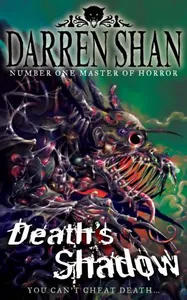



More Free Occult Philosophy Books
View all →