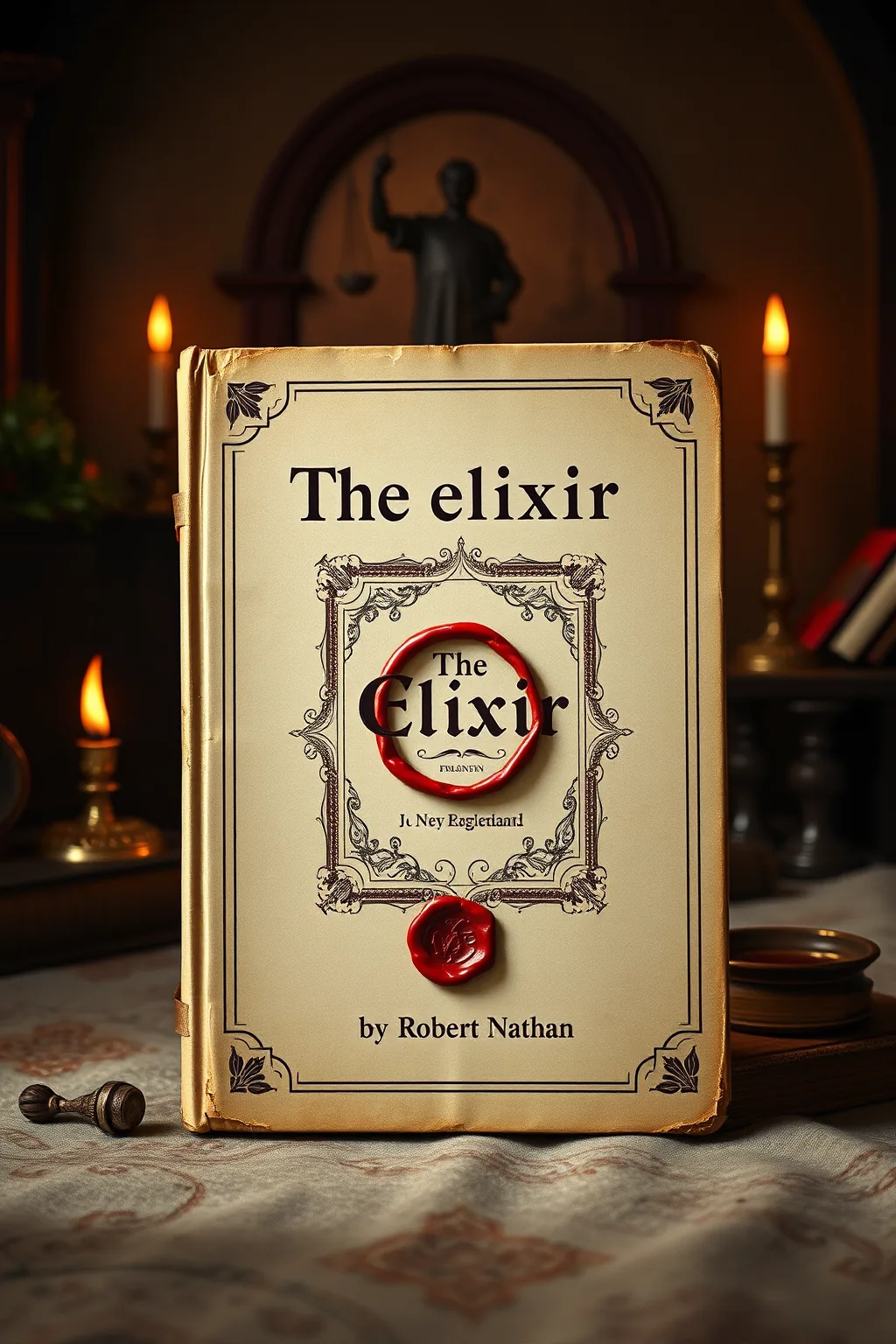
The elixir
 71
71

The elixir
Robert Nathan’s The Elixir presents a gentle, almost melancholic, rumination on the human yearning for something more. Its strength lies in Nathan’s elegant prose, which imbues even simple allegories with a certain weight. The central metaphor of the elixir, representing a cure for mortality or unhappiness, is explored with a characteristic subtlety that avoids didacticism. However, the narrative’s deliberate pacing and ethereal quality might leave readers accustomed to more direct plot progression feeling adrift. A passage concerning the protagonist’s encounter with a fleeting vision of perfect peace, only to have it dissolve like mist, exemplifies the book’s delicate touch and its exploration of unattainable ideals. It’s a work that offers quiet contemplation rather than dramatic revelation.
📝 Description
71
Robert Nathan's 1971 novel, The Elixir, uses allegory to examine human existence.
Robert Nathan's 1971 novel, The Elixir, is a literary work that contemplates existence, transformation, and the search for meaning. It is not a practical guide to alchemy but a fictional exploration of philosophical questions about reality and the human condition. The story features characters facing existential crises, searching for deeper life purpose or a way to transcend mortal limits.
Readers who enjoy philosophical fiction and allegorical narratives will find resonance in this book. It is for those who wish to consider themes of life and death through a literary lens, rather than a strictly academic or practical occult approach. Nathan's distinctive prose style shapes this contemplation on pursuing something beyond the ordinary.
The core idea of the "elixir" functions as a metaphor for a state of being or a transformative principle, such as enlightenment, perfect happiness, or immortality. The novel frequently probes the human yearning for such a state and how its pursuit can often be illusory. Nathan encourages readers to reflect on what truly constitutes such an ultimate attainment.
Published in 1971, The Elixir reflects a period of societal introspection and interest in alternative understandings of existence. This coincided with a growing interest in Jungian psychology and various spiritual inquiries. While not directly aligned with the burgeoning New Age movement, Nathan's novel resonates with a broader cultural shift questioning established norms and exploring concepts of consciousness and transcendence.
💡 Why Read This Book?
• Gain insight into the allegorical representation of existential quests, understanding how Nathan uses the 'elixir' as a symbol for ultimate fulfillment, a concept explored in his 1971 novel. • Experience Nathan's distinctive literary style, appreciating his nuanced approach to themes of mortality and desire, as demonstrated in his character portrayals. • Contemplate the nature of happiness and the pursuit of the unattainable, reflecting on the philosophical underpinnings of the search for an 'elixir' through literary narrative.
⭐ Reader Reviews
Honest opinions from readers who have explored this book.
❓ Frequently Asked Questions
Is 'The Elixir' a practical guide to alchemy?
No, Robert Nathan's 'The Elixir' is a work of philosophical fiction, first published in 1971. It uses the concept of an elixir metaphorically to explore themes of existence and transformation, rather than providing alchemical instructions.
What are the main themes in Robert Nathan's 'The Elixir'?
The book primarily explores existential themes such as the human search for meaning, the desire for immortality or perfect happiness, and the nature of reality. It uses allegorical characters and situations to examine these profound questions.
When was Robert Nathan's 'The Elixir' first published?
Robert Nathan's novel 'The Elixir' was first published in the year 1971, placing it within a period of significant cultural and philosophical introspection.
What kind of literary style does Robert Nathan employ in 'The Elixir'?
Nathan is known for his elegant, often lyrical and allegorical prose. In 'The Elixir,' this style contributes to a contemplative and philosophical atmosphere, focusing on the inner lives of characters and abstract concepts.
Who would appreciate 'The Elixir' by Robert Nathan?
Readers who enjoy philosophical novels, allegorical storytelling, and contemplative explorations of life's deeper questions would find 'The Elixir' appealing. It is suited for those interested in literature that prompts introspection.
Does 'The Elixir' offer any answers about achieving immortality?
The novel treats the idea of immortality and ultimate fulfillment metaphorically. It explores the human yearning for such states but does not offer literal solutions, instead prompting reflection on what constitutes a meaningful existence.
🔮 Key Themes & Symbolism
The Metaphorical Elixir
The central concept is the 'elixir,' not as a physical substance but as a symbol for ultimate peace, immortality, or profound contentment. Robert Nathan uses this in his 1971 work to represent the human drive towards an idealized state of being. The narrative questions whether such an elixir can be found externally or if its essence lies within the individual's perception and acceptance of reality. This theme invites contemplation on what truly constitutes a fulfilled existence beyond mortal limitations.
Existential Yearning
Nathan's characters often embody a deep-seated yearning for something beyond the mundane. This existential ache is a driving force, compelling them to seek answers or transformations. The pursuit of the titular elixir becomes a manifestation of this fundamental human desire to escape suffering, find purpose, or transcend ordinary consciousness. The book explores the often-illusory nature of these quests and the internal states they reflect.
Perception and Reality
A recurring motif is the interplay between subjective perception and objective reality. The characters' understanding of the elixir, and indeed of life itself, is filtered through their individual consciousness. Robert Nathan suggests that the 'elixir' might be a state of mind, attainable through a shift in perspective rather than a tangible discovery. This theme encourages readers to examine how their own beliefs shape their experience of the world.
Mortality and Transcendence
The novel grapples with the human condition of mortality and the desire to transcend it. The idea of an elixir offering eternal life or perfect happiness is a direct confrontation with death and decay. Nathan's approach is less about literal solutions and more about the psychological and philosophical implications of facing one's finitude. The work probes the meaning we derive from our limited time.
💬 Memorable Quotes
Direct passages from the work, attributed to the author.
“Is happiness found, or is it created?”
— This question, central to the book's philosophical inquiry, challenges the notion of happiness as an external acquisition. It suggests that true contentment might stem from an internal disposition or a conscious effort to cultivate a positive outlook, rather than from external circumstances or a magical remedy.
“The vision of perfection dissolved like mist.”
— This conceptual quote captures the ephemeral nature of idealized states. It illustrates how fleeting moments of perceived ultimate truth or happiness can vanish upon closer examination or when confronted with the mundane realities of existence, reflecting the difficulty of attaining lasting transcendence.
“What is real, if not what we experience?”
— This reflects the book's exploration of subjective reality. It questions the basis of our understanding of the world, suggesting that our personal perceptions and experiences form the foundation of what we consider 'real,' even when contemplating abstract concepts like an elixir.
“The true elixir might be acceptance.”
— This interpretation posits that the ultimate solution to existential angst or the pursuit of an ideal state may not lie in external discovery but in internal acceptance. It suggests that peace can be found by embracing the present reality, including its limitations and imperfections.
💡 Key Ideas
Editorial paraphrase of the work's core concepts — not direct quotes.
The search for the elixir implies a dissatisfaction with the present state.
This paraphrased concept highlights how the very act of seeking an ultimate solution or transformation reveals an underlying discontent with current circumstances. It suggests that the desire for an 'elixir' is born from a perceived lack or imperfection in one's life.
🌙 Esoteric Significance
Tradition
While not strictly adhering to a single esoteric lineage, *The Elixir* engages with perennial philosophical themes common in Western esotericism, particularly Hermeticism and Neoplatonism. Its exploration of transformation, the search for ultimate knowledge or a perfect state (akin to the Philosopher's Stone or Aqua Vitae), and the nature of reality aligns with these traditions. Nathan's work departs from traditional grimoires or direct occult instruction, instead offering a literary allegory that invites contemplation on these concepts through narrative and character.
Symbolism
The primary symbol is the 'elixir' itself, representing not just literal immortality or a cure, but any idealized state – be it perfect happiness, enlightenment, or escape from suffering. Characters’ quests for it symbolize humanity’s innate desire for transcendence. Another motif is the ephemeral nature of visions or perfect moments, often depicted as dissolving like mist, symbolizing the elusive quality of ultimate truths and the gap between aspiration and attainment in the material world.
Modern Relevance
Contemporary thinkers and practitioners in fields like philosophical psychology and literary spirituality can find *The Elixir* relevant. Its allegorical approach to existential angst and the pursuit of meaning continues to inform discussions on subjective well-being and the limitations of external solutions for internal peace. Authors and artists seeking to explore themes of longing, illusion, and the search for ultimate fulfillment through metaphorical narratives can draw inspiration from Nathan's delicate handling of these profound subjects.
👥 Who Should Read This Book
• Readers of philosophical fiction and allegorical literature who appreciate nuanced explorations of existential themes, particularly those interested in how authors like Robert Nathan (in his 1971 novel) use metaphor to examine life's deeper questions. • Individuals seeking contemplative works that prompt introspection on happiness, mortality, and the nature of reality, offering a literary rather than a didactic approach to these subjects. • Those interested in the broader cultural currents of the mid-20th century, exploring how literature reflected a growing societal introspection and a search for meaning beyond conventional frameworks.
📜 Historical Context
Robert Nathan’s *The Elixir*, published in 1971, arrived during a period marked by profound societal introspection and a burgeoning interest in alternative spiritualities and philosophies. The counterculture movement had challenged traditional values, leading many to seek deeper meaning beyond established norms. While not directly aligned with the emerging New Age movement, Nathan’s allegorical novel tapped into this zeitgeist of existential questioning and the search for transcendence. It resonated with a readership exploring Jungian psychology, Eastern thought, and various forms of personal enlightenment. The era was also characterized by a literary landscape where authors like Hermann Hesse, with his own allegorical works exploring spiritual journeys, were widely read and influential. Nathan’s subtle, introspective style offered a contemplative counterpoint to more overtly political or experimental literature of the time, focusing on the internal field of the human condition.
📔 Journal Prompts
The yearning for an 'elixir' as a reflection of personal dissatisfaction.
The ephemeral nature of idealized states and their impact on perception.
Defining 'happiness' beyond external acquisition.
The role of acceptance in achieving inner peace.
Comparing the quest for the elixir in the book to personal aspirations.
🗂️ Glossary
Allegory
A literary device where characters, events, and settings represent abstract ideas or principles. In *The Elixir*, the narrative functions allegorically to explore philosophical concepts like the search for meaning and transcendence.
Existentialism
A philosophical movement emphasizing individual existence, freedom, and choice. Characters in *The Elixir* often grapple with questions of purpose, meaning, and their place in the universe.
Metaphor
A figure of speech where a word or phrase is applied to an object or action to which it is not literally applicable. The 'elixir' itself serves as a central metaphor in the book.
Transcendence
The state of existing above or beyond the limits of material experience. Characters in the novel often seek a form of transcendence from their mortal condition or existential anxieties.
Perennial Philosophy
A concept suggesting that all religions and spiritual traditions share a common, underlying truth. *The Elixir*'s themes resonate with this idea through its universal exploration of human desires.
Subjective Reality
The reality as perceived and experienced by an individual, distinct from objective reality. The book explores how personal viewpoints shape understanding of concepts like happiness and fulfillment.
Allegorical Quest
A narrative journey undertaken by characters who represent abstract concepts or ideals. The pursuit of the elixir in the novel is an allegorical quest for a perfect state.
🔮 Readers Also Liked
Browse all →








More by Robert Nathan
All books →
More Free Occult Philosophy Books
View all →