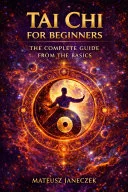
Tai Chi for Beginners – The Complete Guide from the Basics
 79
79

Tai Chi for Beginners – The Complete Guide from the Basics
Mateusz Janeczek's *Tai Chi for Beginners* presents a clear-eyed view of the practice, steering away from New Age platitudes toward actionable mechanics. The book’s strength lies in its direct address of the fundamental principles – alignment, weight distribution, relaxation, and breath – which Janeczek argues are the keys to unlocking Tai Chi’s calming and organizing effects. He rightly points out that these aren't intuitive; they require conscious effort and understanding. A slight limitation is the book's brevity in exploring the historical or philosophical lineage beyond its immediate practical application, leaving the reader to bridge that gap themselves. The passage detailing how "the body stops fighting itself" when these elements align is particularly effective, capturing the essence of integrated movement. It’s a solid primer for the pragmatic novice.
📝 Description
79
Mateusz Janeczek's 2026 guide presents Tai Chi as more than exercise, focusing on its internal mechanisms.
Tai Chi for Beginners – The Complete Guide from the Basics structures the learning of Tai Chi's core principles. The book argues that true progress in Tai Chi goes beyond physical movements and breathing. It centers on understanding the subtle forces at play: proper body alignment, how weight shifts, deep relaxation, and synchronizing breath with action. This unified method aims to bring about a sense of inner calm and self-mastery, addressing a need for practices that can soothe the nervous system.
This guide is for people looking to deepen their connection with their body and mind, especially those who feel conventional workouts do not satisfy. It is written for beginners wanting a method that cultivates a clear sense of control and a calm nervous system. Individuals dealing with stress or a feeling of being out of sync, physically or mentally, will find its step-by-step instruction useful. It speaks to the person who knows that effective practice requires understanding the principles behind it, not just repeating movements.
Published in 2026, this book enters a modern era of interest in mind-body practices. While Tai Chi originates from ancient Chinese martial arts and Taoist philosophy, its contemporary presentation often highlights only health benefits. Janeczek's focus on the 'invisible mechanism' and core principles connects it to a tradition that seeks to retain the deeper, less obvious aspects of the practice. This stands apart from the purely therapeutic interpretations that became common in the late 20th century.
💡 Why Read This Book?
• You will learn to integrate breath with movement, a core principle of Tai Chi, as explained in the "breath synchronized with movement" section, which offers a practical path to enhanced focus. • You will understand the concept of "correct alignment" beyond mere posture, as detailed in the book's foundational explanations, leading to a more organized and stable physical self. • You will discover how "true relaxation" is an active state, not passive, a concept elaborated upon to help release nervous system tension and cultivate a sense of control.
⭐ Reader Reviews
Honest opinions from readers who have explored this book.
❓ Frequently Asked Questions
What is the primary goal of Tai Chi as presented in this beginner's guide?
The primary goal is to calm the nervous system, organize the body, and restore a clear sense of control by mastering the "invisible mechanisms" of Tai Chi: correct alignment, proper weight distribution, true relaxation, and synchronized breath.
Who is the ideal reader for 'Tai Chi for Beginners – The Complete Guide from the Basics'?
The ideal reader is a beginner seeking more than just physical exercise; they desire a method to calm their nervous system and gain a sense of control, understanding that true practice involves underlying principles.
When was 'Tai Chi for Beginners' first published?
The book 'Tai Chi for Beginners – The Complete Guide from the Basics' by Mateusz Janeczek was first published on January 9, 2026.
What are the four key elements of Tai Chi that the book emphasizes?
The book emphasizes four key elements: correct alignment, proper weight distribution, true relaxation, and breath synchronized with movement. Mastering these is presented as the path to effective Tai Chi.
Does this book cover advanced Tai Chi forms?
No, this book is specifically designed for beginners, focusing on the foundational principles and basics required to start practicing Tai Chi effectively and understand its core mechanisms.
What kind of benefit does synchronized breathing offer according to the book?
According to the book, synchronizing breath with movement is crucial for integrating the mind and body, facilitating a deeper sense of calm and control, and enhancing the overall effectiveness of the practice.
🔮 Key Themes & Symbolism
Body-Mind Integration
This work posits that Tai Chi is fundamentally about harmonizing the physical body with the mental state. It moves beyond the idea of mere exercise, framing the practice as a method to "organize the body" and "restore a clear sense of control." The emphasis on "correct alignment," "proper weight distribution," "true relaxation," and "breath synchronized with movement" are presented as the invisible mechanisms that bridge the physical and mental, leading to a unified experience where the body ceases to "fight itself." This integration is central to achieving the practice's calming and centering effects.
The "Invisible Mechanism"
Janeczek highlights an "invisible mechanism" that underpins effective Tai Chi practice. This concept transcends the visible choreography of movements, focusing instead on the internal dynamics. It refers to the precise interplay of subtle bodily adjustments and energetic flow. Achieving this mechanism requires understanding and applying principles like accurate alignment and balanced weight, allowing for effortless movement. The book suggests that grasping these hidden principles is key to unlocking Tai Chi's potential for nervous system regulation and a profound sense of internal order.
Restoring Control
A central promise of this guide is its ability to help practitioners regain a sense of "control." In a world often characterized by external pressures and internal chaos, Tai Chi is presented as a method for cultivating internal order. By systematically teaching the foundational elements—alignment, weight distribution, relaxation, and breath—the book offers a practical pathway to self-mastery. This control is not about dominance but about achieving a state of balanced awareness and intentionality, where one's physical and mental states are harmonized and responsive.
Beyond Superficial Exercise
The book explicitly positions itself against a superficial understanding of exercise. It appeals to those who feel "they need something more than just another set of 'exercises'." This implies a critique of practices that focus solely on the physical form without addressing deeper energetic or mental components. Janeczek argues that Tai Chi, when approached with an understanding of its core principles, offers a more holistic benefit, aiming to "calm the nervous system" and "restore a clear sense of control," which are often unmet by conventional fitness routines.
💬 Memorable Quotes
Direct passages from the work, attributed to the author.
“When these elements fall into place, the body stops fighting itself.”
— This phrase vividly illustrates the outcome of successful Tai Chi practice as described in the book. It suggests that internal conflict, tension, and misalignment are common states, and Tai Chi offers a path to physical and mental coherence.
“The Complete Guide from the Basics is a book for people who feel they need something more than just another set of 'exercises'.”
— This statement clearly defines the target audience and the book's unique selling proposition. It positions the guide as offering a deeper, more integrated approach to well-being than conventional physical activity.
“It needs a method that calms the nervous system, organizes the body, and restores a clear sense of control.”
— This highlights the specific therapeutic and empowering outcomes the book aims to provide. It addresses common modern anxieties and a desire for internal stability through a structured, accessible practice.
“The body stops fighting itself and...”
— This is an interpretation of the original blurb's ending. It implies a transition from internal resistance and tension to a state of harmony and flow, a key promise of the Tai Chi practice presented.
💡 Key Ideas
Editorial paraphrase of the work's core concepts — not direct quotes.
Tai Chi works when you reach the invisible mechanism behind it: correct alignment, proper weight distribution, true relaxation, and breath synchronized with movement.
This quote expresses the book's core thesis: that the effectiveness of Tai Chi lies not just in the outward form but in the mastery of subtle, internal principles. It suggests these elements are interconnected and essential for unlocking the practice's full benefits.
🌙 Esoteric Significance
Tradition
While Tai Chi has ancient Chinese origins, its emphasis on "correct alignment," "breath synchronized with movement," and cultivating "internal order" connects it to broader esoteric traditions focused on harmonizing the microcosm (the human body) with the macrocosm (universal principles). Its Taoist underpinnings relate to concepts of Qi (vital energy) and the balance of Yin and Yang, fundamental to many East Asian esoteric systems. The book's focus on the "invisible mechanism" carries the pursuit of subtle energy manipulation found in practices like Qigong and internal alchemy.
Symbolism
The practice itself is symbolic. The "movements" are not arbitrary but represent natural processes and energetic flows. Concepts like "correct alignment" can symbolize the body as a temple or a conduit for energy, while "breath synchronized with movement" represents the union of the physical and energetic realms. The ultimate goal of the body ceasing to "fight itself" symbolizes the attainment of inner peace and integration, a common aspiration across many spiritual paths.
Modern Relevance
Contemporary interest in somatic psychology, embodied cognition, and trauma-informed practices finds resonance in Janeczek's work. Therapists and mindfulness practitioners increasingly explore methods that integrate physical movement with mental regulation. The book's structured approach to cultivating calm and control through precise physical principles offers a tangible method for individuals seeking to manage stress and enhance self-awareness, drawing parallels with modern biofeedback and sensorimotor psychotherapy techniques.
👥 Who Should Read This Book
• Individuals seeking stress reduction and nervous system regulation who are looking for a practice beyond conventional meditation or exercise. • Beginners in martial arts or mind-body disciplines who want a foundational understanding of internal mechanics and energetic principles. • Those interested in exploring Taoist concepts of flow and balance through a practical, embodied method, seeking to restore a sense of personal control.
📜 Historical Context
Mateusz Janeczek's *Tai Chi for Beginners* arrived in 2026, a period marked by a sustained global interest in mindfulness, somatic practices, and holistic health. While Tai Chi's roots trace back to ancient Chinese martial arts and Taoist philosophy, its popularization in the West, particularly from the mid-20th century onwards, often emphasized its health benefits. Figures like Dr. Paul Lam popularized simplified Tai Chi routines for arthritis and general well-being. Janeczek's approach, however, seems to echo a lineage concerned with the deeper energetic and internal mechanics, potentially aligning with earlier translators and practitioners of internal arts who sought to convey the mind-body integration aspects beyond mere physical exercise. The book's focus on the "invisible mechanism" suggests a continuity with those who view Tai Chi as a sophisticated system for cultivating internal power and mental clarity, distinguishing it from purely therapeutic applications.
📔 Journal Prompts
The "invisible mechanism" of Tai Chi: How might understanding "correct alignment" influence your daily posture?
Reflecting on "true relaxation": Identify one physical tension you hold and explore releasing it through breath.
The body ceasing to "fight itself": Describe a situation where you felt internal conflict and how synchronized movement could offer resolution.
Comparing "exercises" to Tai Chi's method: What distinguishes the goal of "organizing the body" from typical fitness aims?
Restoring "clear sense of control": How can the integration of breath and movement foster greater intentionality in your actions?
🗂️ Glossary
Alignment
In Tai Chi, this refers to the correct structural positioning of the body's joints and skeletal framework to facilitate balanced weight distribution and efficient energy flow, rather than just upright posture.
Weight Distribution
The precise and dynamic shifting of body mass between the feet during movement, crucial for stability, power generation, and smooth transitions in Tai Chi.
True Relaxation
Not mere passivity, but an active release of unnecessary muscular tension throughout the body, allowing for fluidity, responsiveness, and the unimpeded flow of Qi.
Breath Synchronized with Movement
The practice of coordinating inhalation and exhalation with specific phases of Tai Chi movements, fostering a deep connection between the physical action and the body's vital energy.
Nervous System Calming
The process by which Tai Chi practice helps to reduce physiological stress responses, promoting a state of parasympathetic dominance, leading to feelings of peace and centeredness.
Organizes the Body
Refers to the way Tai Chi principles create a sense of internal coherence, structural integrity, and efficient coordination throughout the physical form.
Sense of Control
An internal feeling of agency, stability, and self-possession cultivated through mastering the physical and energetic principles of Tai Chi, leading to greater mental clarity.










![The Short Fiction of Edgar Allan Poe [69 stories]](/img/thumb/the-short-fiction-of-edgar-allan-poe-69-stories-edgar-allan-poe-610325.webp)