The education of children from the standpoint of theosophy
 84
84

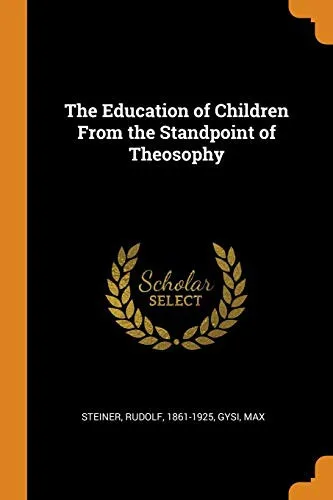
The education of children from the standpoint of theosophy
Rudolf Steiner’s approach to child education, as presented here, offers a stark counterpoint to modern pedagogical trends focused on standardized testing and purely cognitive development. The book’s strength lies in its comprehensive, albeit challenging, spiritual framework for understanding the child as a multi-faceted being. Steiner’s insistence on the etheric and astral bodies, concepts alien to most secular educators, provides a unique lens. However, the abstract nature of these spiritual bodies and their direct application can be obscure. For instance, the discussion on the transition from imitation to authority, while conceptually rich, requires significant interpretive effort. The work’s limitation is its demand for a pre-existing acceptance of its esoteric premises. Nevertheless, for those willing to engage with its unique cosmology, it offers a radically different perspective on human potential.
This work provides a profound spiritual cosmology for education.
📝 Description
84
Rudolf Steiner delivered lectures on child education through a Theosophical lens in the early 20th century.
This volume collects Rudolf Steiner's lectures concerning the education of children, viewed from a Theosophical perspective. Steiner proposed a spiritual-scientific method for child development, aiming to move beyond conventional, materialist approaches to pedagogy. He argued that a child's inner life needs careful attention, influenced by spiritual realities that affect physical and mental growth. The book discusses the interconnectedness of a child's various bodies—physical, etheric, astral, and egoic—and emphasizes how understanding these is vital for effective upbringing and teaching.
The intended audience includes educators, parents, and anyone involved in children's formative years who desires a deeper, more spiritual outlook on education. It is particularly useful for those interested in Anthroposophy and Steiner's specific developmental stages. Individuals seeking to weave spiritual principles into their teaching or parenting, or those questioning the limits of secular educational models, will find considerable material here. It is not a book of practical lesson plans, but a philosophical examination of educational principles.
Rudolf Steiner's lectures were given during a time of intense esoteric interest in Europe, particularly influenced by Helena Blavatsky's Theosophy. Steiner himself was a significant figure in the Theosophical Society before establishing Anthroposophy. His approach sought to apply a spiritual scientific method to understanding human development and education, contrasting with the dominant positivist and materialist philosophies of the era. This work represents his effort to articulate a view of the child and learning grounded in spiritual realities, rather than purely empirical observation.
💡 Why Read This Book?
• Learn about the four human bodies (physical, etheric, astral, ego) as presented by Steiner, understanding how their distinct roles inform a child's development and learning needs. • Grasp the concept of developmental epochs, recognizing how Steiner believed children pass through distinct seven-year stages requiring different educational approaches. • Explore the role of spiritual science in education, gaining insight into how Steiner integrated concepts like karma and reincarnation into his pedagogical philosophy.
⭐ Reader Reviews
Honest opinions from readers who have explored this book.
❓ Frequently Asked Questions
What is the primary philosophical basis of Rudolf Steiner's educational approach?
The primary basis is Anthroposophy, a spiritual philosophy developed by Steiner that views the human being as a complex spiritual, soul, and physical entity, requiring education that addresses all these dimensions.
When were these lectures on education originally given?
Rudolf Steiner delivered lectures on education extensively in the early 20th century, with many forming the basis of books published from around 1907 onwards.
How does Steiner's view of the child differ from modern psychology?
Steiner viewed the child as possessing not only physical and psychological aspects but also etheric (life forces) and astral (soul/consciousness) bodies, which require specific cultivation beyond purely cognitive or emotional development.
What is the significance of imitation in Steiner's early childhood education?
Imitation is paramount in the early years (birth to age seven) as children learn primarily through observing and mirroring the world and adults around them, shaping their etheric and astral bodies.
Is this book a practical guide for classroom teaching?
No, it is primarily a philosophical and theoretical exploration of the spiritual underpinnings of child development and education, rather than a manual of specific teaching methods.
Who was Max Gysi in relation to this work?
Max Gysi was a significant figure in the early Anthroposophical movement and played a role in compiling and editing many of Rudolf Steiner's lecture cycles, including those concerning education.
🔮 Key Themes & Symbolism
Spiritual Anatomy of the Child
The work details Steiner's concept of the child's fourfold constitution: the physical body, the etheric body (life forces), the astral body (soul and consciousness), and the ego (spiritual individuality). Understanding these distinct but interconnected layers is presented as fundamental to effective pedagogy. The etheric body governs growth and vitality, while the astral body is the seat of feeling, instinct, and early consciousness. Cultivating these subtle bodies through appropriate environmental influences, rhythm, and artistic activity is emphasized as crucial for healthy development, laying the groundwork for intellectual capacity later on.
Developmental Epochs
Steiner posits that human development occurs in distinct seven-year phases, or epochs. The first epoch (0-7 years) is characterized by learning through imitation and the formation of the etheric body, requiring a nurturing, artistic, and rhythmic environment. The second epoch (7-14 years) focuses on developing inner capacities through authority, imagination, and the engagement of the astral body. The third epoch (14-21 years) sees the awakening of independent thinking and the developing ego. Recognizing these stages allows educators to tailor their approach to the child's evolving spiritual and psychological needs.
The Role of the Teacher
The educator is seen not merely as an instructor but as a spiritual guide responsible for nurturing the child's entire being. Teachers must cultivate their own spiritual perception to understand the unique karmic path and spiritual capacities of each child. Their task involves creating an environment that supports the healthy development of the etheric and astral bodies through art, music, storytelling, and meaningful activity, fostering a sense of wonder and reverence. The teacher’s own inner development is therefore intrinsically linked to their ability to educate.
Rhythm and Artistic Expression
Rhythm, in both daily routines and the broader developmental epochs, is presented as essential for grounding the child's etheric forces. Artistic activities – drawing, painting, music, movement, and storytelling – are not mere diversions but vital tools for engaging the child's soul and spirit. These practices allow for the free expression and development of the astral body and provide a means to work consciously with the spiritual forces that shape the child, fostering creativity and a balanced inner life.
💬 Memorable Quotes
Direct passages from the work, attributed to the author.
“The child must be educated by the spirit.”
— This statement captures Steiner's view that education transcends mere intellectual instruction. It implies a need to cultivate the child's spiritual capacities and connect them with higher realities, seeing the teacher as a conduit for this spiritual impartation.
“Imitation is the highest form of learning in early childhood.”
— Steiner believed that young children, particularly in their first seven years, learn and develop by unconsciously mirroring the actions, attitudes, and environment presented to them by adults and their surroundings.
“The teacher must strive to perceive the spiritual in the human being.”
— This highlights the educator's role beyond the physical and psychological. It calls for the teacher to develop inner perception to understand the child's spiritual essence and developmental trajectory.
“The etheric body must be strengthened through rhythm and repetition.”
— This points to a core concept in Steiner's pedagogy, suggesting that the life forces (etheric body) are best supported and developed through consistent, predictable patterns and routines.
“Education is an art.”
— This suggests that teaching requires creativity, intuition, and a deep understanding of the human soul, akin to artistic creation, rather than just the application of scientific principles or techniques.
🌙 Esoteric Significance
Tradition
This work is firmly rooted in the Theosophical tradition, specifically as interpreted and expanded by Rudolf Steiner through his own developed system of Anthroposophy. While drawing from Theosophy's foundational ideas on spiritual evolution, karma, and reincarnation, Steiner articulated a more detailed cosmology and method, termed 'spiritual science.' This book applies that framework directly to the practical, yet spiritually informed, field of education, viewing it as a crucial aspect of human evolution and the unfolding of individual spiritual destinies.
Symbolism
A key symbolic concept is the 'four human bodies' (physical, etheric, astral, ego), representing layers of being that require distinct cultivation. The number seven is also symbolically potent, denoting the length of the developmental epochs Steiner identified. The 'etheric body' itself symbolizes life forces and formative energies, while the 'astral body' represents consciousness, feeling, and instinctual life, both crucial elements in early childhood development according to Steiner's system.
Modern Relevance
Steiner's educational philosophy continues to inspire the global Waldorf (Steiner) school movement, which actively implements his pedagogical principles. Contemporary thinkers in holistic education, consciousness studies, and integral philosophy often reference Steiner's work for its profound understanding of child development and its emphasis on spiritual growth. His ideas are relevant to modern discussions about the limitations of purely secular education and the need for a more comprehensive, soul-nourishing approach to raising children.
👥 Who Should Read This Book
• Parents and guardians seeking a spiritual framework for understanding their children's development, moving beyond purely psychological or behavioral models. • Educators, particularly those within or interested in the Waldorf (Steiner) education system, looking to deepen their grasp of the underlying Anthroposophical principles. • Students of esoteric philosophy and comparative religion interested in how spiritual concepts are applied to practical fields like pedagogy and child-rearing.
📜 Historical Context
Rudolf Steiner's lectures on education, delivered in the early 20th century (many between 1907 and the 1920s), emerged during a period of intense spiritual and philosophical inquiry across Europe. Theosophy, with Helena Blavatsky at its forefront, had significantly influenced esoteric thought, and Steiner himself was a prominent figure within it before establishing Anthroposophy in 1912. His pedagogical ideas were a radical departure from the prevailing materialist and scientific approaches to education prevalent in the German-speaking world, influenced by thinkers like Johann Friedrich Herbart. Steiner offered a spiritual-scientific alternative, emphasizing the child’s inner development through concepts like the four bodies and developmental epochs. His work stood in contrast to secular educational reform movements and offered a holistic perspective that engaged with karma and reincarnation, concepts often viewed with skepticism or outright rejection by mainstream academia and religious institutions of the time.
📔 Journal Prompts
The etheric body's role in rhythm and habit formation.
The influence of imitation on the astral body's development.
Connecting the seven-year developmental epochs to practical parenting.
The teacher's responsibility in perceiving the spiritual needs of a child.
Artistic expression as a means to cultivate the soul.
🗂️ Glossary
Anthroposophy
A spiritual philosophy founded by Rudolf Steiner, seeking to understand the human being and the universe through spiritual perception and insight, often termed 'spiritual science'.
Etheric Body
In Steiner's system, the life or formative forces that organize and sustain the physical body, responsible for growth, vitality, and healing. It is seen as distinct from the physical form.
Astral Body
The vehicle of consciousness, feeling, sensation, and instinct in Steiner's cosmology. It is associated with the soul-life and the awakening of subjective experience.
Ego
The spiritual individuality or core self, which Steiner believed develops more fully in later childhood and adolescence, bringing self-awareness and moral responsibility.
Developmental Epochs
Rudolf Steiner's concept of distinct seven-year periods in human life, each characterized by specific physical, soul, and spiritual developmental tasks and needs.
Spiritual Science
Steiner's term for his method of investigating the spiritual world through disciplined inner development and clairvoyant perception, applied to understanding humanity and the cosmos.
Karma
The principle of cause and effect in spiritual development, influencing an individual's life circumstances, challenges, and capacities across lifetimes, as understood in Theosophy and Anthroposophy.
🔮 Readers Also Liked
Browse all →






More by Rudolf Steiner, Gysi Max
All books →
More Free Theosophy & Anthroposophy Books
View all →