The Early Kabbalah

 66
66

The Early Kabbalah

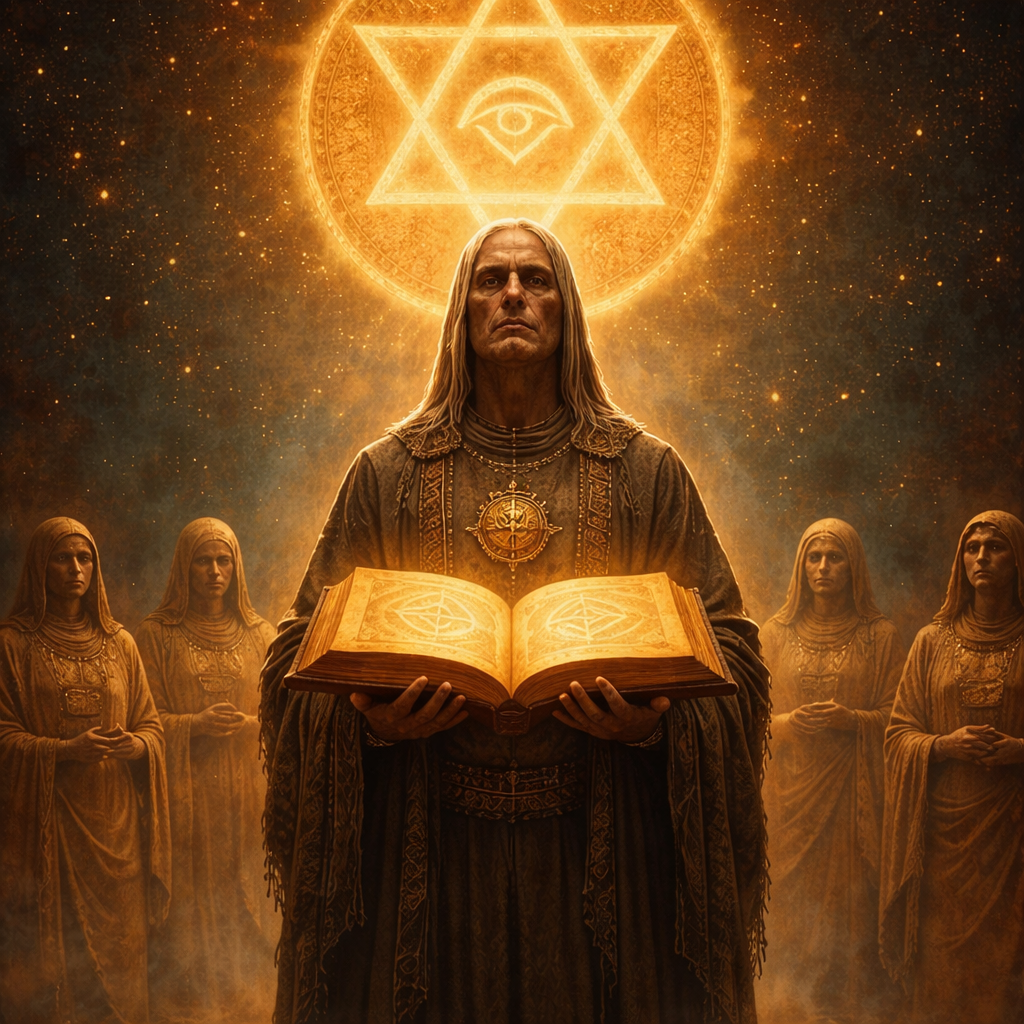

Joseph Dan's 'The Early Kabbalah' is an essential, illuminating text for anyone seeking to understand the genesis of Jewish mystical thought. Dan, a preeminent scholar in the field, provides clear translations and insightful commentary, demystifying complex early Kabbalistic concepts. The book excels at revealing the intellectual and spiritual currents that coalesced into the Kabbalah, highlighting its unique theological and cosmological explorations. Its strength lies in its accessibility without sacrificing scholarly rigor, making it ideal for both advanced students of mysticism and those new to the subject. A truly groundbreaking contribution to the study of esoteric traditions.
📝 Description
66
Joseph Dan's 'The Early Kabbalah' (1986) examines the foundational texts of Jewish mysticism.
This volume presents the early writings that formed the Kabbalistic tradition. Joseph Dan focuses on the esoteric doctrines and the texts themselves, offering a view into the development of these mystical ideas. He discusses concepts like divine emanations, the soul's ascent, and the mystical role of Hebrew letters. The book details the complex symbolic language and philosophical foundations that characterize this tradition. It is aimed at readers interested in the origins of Jewish mysticism and its core tenets.
Dan's work provides access to a rich esoteric heritage. It reveals how the universe was understood as a divine manifestation within this mystical framework. The book encourages an understanding of gnosis and contemplative practice as paths to this knowledge. It highlights the intellectual and spiritual architecture that shaped this lineage over time. The translation makes these early Kabbalistic ideas accessible to a wider audience.
The Early Kabbalah traces the emergence of a mystical dimension within Judaism that developed between the 12th and 15th centuries. This tradition, known as Kabbalah, sought direct experience of the divine and understanding of cosmic mysteries. It drew upon earlier Jewish mystical traditions, including Merkavah mysticism, and integrated philosophical and symbolic systems. The texts examined in Dan's work represent the formative period of this complex and influential esoteric movement.
💡 Why Read This Book?
Delve into the foundational wisdom of Jewish mysticism. 'The Early Kabbalah' offers unparalleled insight into the origins of Kabbalistic thought, revealing ancient esoteric doctrines and potent symbolism. It is essential for scholars seeking academic depth, practitioners aiming to connect with ancient meditative practices, and spiritual seekers yearning to understand the divine architecture of the cosmos. Read this to unlock the secrets of a profound mystical lineage.
⭐ Reader Reviews
Honest opinions from readers who have explored this book.
❓ Frequently Asked Questions
What is Kabbalah?
Kabbalah is a system of Jewish mysticism that explores the divine nature, the creation of the universe, and the relationship between God and humanity through esoteric interpretations of religious texts and symbolism.
What distinguishes 'Early Kabbalah'?
'Early Kabbalah' refers to the foundational period of Kabbalistic thought, predating its later developments. This book focuses on the initial texts and concepts that laid the groundwork for the entire tradition.
Is prior knowledge of Judaism required?
While familiarity with basic Jewish concepts can enhance understanding, Joseph Dan's insightful introductions and clear translations make 'The Early Kabbalah' accessible even to those without extensive prior knowledge of Judaism.
What are the key concepts explored?
Key concepts include divine emanations (Sefirot), celestial ascent, the mystical interpretation of Torah, the nature of prayer, and the hidden meanings within Hebrew letters and scriptural passages.
Who is Joseph Dan?
Joseph Dan is a renowned scholar of Jewish mysticism and Kabbalah, recognized for his authoritative research and profound contributions to understanding these esoteric traditions.
🔮 Key Themes & Symbolism
The Emanatory Schema
This theme looks at the foundational Kabbalistic concept of divine emanation, exploring how the infinite Godhead manifests into a multiplicity of divine attributes and realms. Dan meticulously unpacks the early formulations of the Sefirot, the ten divine emanations that form the architecture of creation and serve as conduits for divine energy. Understanding this schema is crucial for grasping the cosmological framework of early Kabbalah, revealing a universe imbued with divine presence and structured through intricate mystical pathways. It illuminates the relationship between the transcendent and the immanent, guiding the practitioner towards a deeper comprehension of the divine unfolding in existence.
The Ascent of the Soul
Central to early Kabbalah is the concept of the soul's journey towards divine union. This theme explores the techniques, visions, and spiritual disciplines employed by early mystics to transcend the earthly realm and ascend through the celestial spheres. Dan illuminates practices such as contemplative meditation, ecstatic prayer, and visionary experiences that facilitated direct communion with the divine. The texts reveal a profound understanding of the soul's potential for spiritual evolution, offering a roadmap for seekers aiming to achieve gnosis and experience the divine presence firsthand. This journey is not merely intellectual but a transformative endeavor of the entire being.
Symbolic Language and Gematria
The esoteric power of language is a central to early Kabbalistic thought, and this theme dissects its many-sided role. Dan highlights how Hebrew letters, words, and numerical values (Gematria) are not merely linguistic tools but potent vessels of divine revelation. The texts reveal a sophisticated system of symbolic interpretation, where every element of scripture and creation is imbued with hidden meanings accessible through mystical exegesis. This approach unveils a universe communicating through divine signs, urging the reader to engage with texts and existence on a profound, symbolic level, unlocking deeper layers of spiritual understanding and connection.
💬 Memorable Quotes
Direct passages from the work, attributed to the author.
“Through contemplation, the soul finds its celestial path.”
— Highlights the mystical practice of meditation and inner focus as a means for the soul to ascend and connect with higher spiritual realms.
“Each letter, a key to the divine treasury.”
— Emphasizes the symbolic power of Hebrew letters in Kabbalah, suggesting they hold profound, hidden meanings and unlock access to divine wisdom.
“The universe breathes with hidden correspondences.”
— Points to the intricate web of symbolic connections and relationships that early Kabbalists perceived throughout creation, linking the macrocosm and microcosm.
“Seek the hidden spark within the revealed word.”
— Encourages a deeper, mystical reading of sacred texts, revealing that the true divine message lies beneath the surface, accessible through esoteric interpretation.
💡 Key Ideas
Editorial paraphrase of the work's core concepts — not direct quotes.
The divine light streams forth, shaping the void.
This quote expresses the concept of divine emanation, where God's essence actively creates and structures reality, informative the mystical process of creation.
🌙 Esoteric Significance
Tradition
The esoteric tradition explored is Kabbalah, a profound system of Jewish mysticism. It looks at the hidden dimensions of God, creation, and the human soul, seeking direct experience of the divine through contemplation, symbolism, and ritual. It offers a complex cosmological map and a path for spiritual ascent, aiming to restore cosmic harmony and achieve union with the divine essence.
Symbolism
Key symbols include the Sefirot (divine emanations), often depicted as a tree of life, representing the structure of reality and the flow of divine energy. Hebrew letters are imbued with mystical power, serving as building blocks of creation and conduits for spiritual knowledge. The divine name, light, and various celestial beings also play crucial symbolic roles in conveying esoteric truths about the divine-human relationship.
Modern Relevance
The early Kabbalistic concepts of divine presence in all things, the interconnectedness of the cosmos, and the potential for human spiritual transformation continue to resonate today. Its focus on inner exploration, symbolic understanding, and the pursuit of wisdom offers valuable frameworks for modern seekers interested in consciousness, spirituality, and the deeper meaning of existence, transcending religious boundaries.
👥 Who Should Read This Book
This important work is essential for seasoned scholars of comparative religion and Jewish studies, offering rigorous textual analysis and historical context. Spiritual seekers and practitioners of mysticism will find invaluable insights into ancient meditative techniques, esoteric symbolism, and the profound spiritual architecture of the Kabbalah. Beginners to the subject will benefit from Joseph Dan's clear exposition, which clarifies complex concepts without sacrificing depth. It is a crucial resource for anyone interested in the roots of Western esoteric traditions and the enduring quest for divine knowledge.
📜 Historical Context
The formative centuries of Kabbalah, roughly from the 12th to the 14th centuries, were a period of intense spiritual and intellectual ferment within medieval Judaism. Emerging from the milieu of Provence, Spain, and early Germany, Kabbalistic thought arose as a response to various historical and philosophical currents, including Neoplatonism, Gnosticism, and internal Jewish traditions like Merkavah mysticism. The expulsion of Jews from Spain in 1492 and other historical upheavals undoubtedly influenced the development and dissemination of Kabbalistic ideas, often imbuing them with a sense of urgency and messianic expectation. This era witnessed the compilation of key texts like the Sefer Bahir and the Zohar, which served as foundational documents, shaping the trajectory of Jewish mysticism for centuries to come and influencing subsequent esoteric traditions across the globe.
📔 Journal Prompts
Reflect on a time you felt a sense of divine emanation in nature. What did it reveal to you?
How can the concept of the soul's ascent be applied to personal growth and overcoming challenges?
Explore a Hebrew letter or a word significant to you. What hidden meanings might it hold?
Consider the idea of the universe communicating through symbols. What symbols are you currently noticing in your life?
What does the pursuit of 'hidden knowledge' mean to you in your spiritual journey?
🗂️ Glossary
Sefirot
The ten divine emanations or attributes through which God manifests and creates the universe in Kabbalistic cosmology. They form a hierarchical structure often depicted as the Tree of Life.
Gematria
A system of Jewish numerology that assigns numerical values to Hebrew letters, used to interpret the hidden meanings of words and phrases within sacred texts and mystical traditions.
Merkavah Mysticism
An early form of Jewish mysticism focused on visionary ascents to the divine throne (Merkavah) through ecstatic practices and contemplation of biblical visions, particularly Ezekiel's.
Ein Sof
The Kabbalistic concept of God as 'without end' or 'infinite,' representing the unknowable, transcendent Godhead beyond all comprehension or manifestation.
Gnosis
Spiritual knowledge or insight, particularly the direct apprehension of divine truth and reality, often achieved through mystical experience and contemplation.
This book appears in 1 collection
🔮 Readers Also Liked
Browse all →








More by Joseph Dan
All books →

From the “Kabbalah” Collection
View all →








More Free Kabbalah & Jewish Mysticism Books
View all →