Icons
 80
80

Icons
Richard Temple's *Icons* performs a necessary, if sometimes dry, dissection of sacred imagery. The strength lies in its scholarly rigor, meticulously tracing the semiotics of devotional art across disparate traditions. Temple is particularly adept at explaining how seemingly simple visual cues function as complex mnemonic devices and spiritual keys, a point he elaborates on when discussing the geometric underpinnings of mandalas. However, the work occasionally suffers from an overabundance of academic detachment; the passion inherent in the subject matter can feel muted beneath layers of critical analysis. A key passage on the symbolism of the Ouroboros, while informative, could benefit from a more evocative rendering of its cyclical implications. Despite this, *Icons* offers a valuable resource for understanding the visual grammar of the sacred.
📝 Description
80
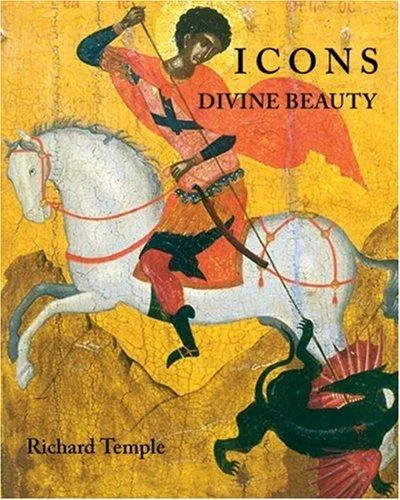
Richard Temple's 2004 book, Icons, examines sacred imagery within esoteric traditions.
Icons, published in 2004, offers a scholarly look at sacred imagery in esoteric traditions. The book moves past surface appearances to analyze the symbolic language within religious and mystical art. Temple dissects visual representations, showing their deeper meanings and how they function in spiritual understanding and practice. His approach is analytical, aiming to decode the intentions behind creating and interpreting iconographic art. This work is valuable for students and practitioners of comparative religion, art history focused on symbolism, and those involved with Western esotericism. Readers interested in the connection between art, spirituality, and occult studies will find its detailed analysis useful. It provides a rigorous, academic viewpoint on sacred visual culture, going beyond devotional or aesthetic appreciation to explain the underlying philosophical and spiritual frameworks.
Published in 2004, Icons appeared during a time of growing academic and popular interest in esoteric traditions. This period saw renewed attention on early 20th-century movements like Theosophy and Anthroposophy, which frequently stressed symbolic visual representation. Temple's study contributes to this discussion by concentrating on the iconographic aspect. It situates this focus within the wider context of mystical thought that had been developing since the late 19th century, influenced by figures such as Helena Blavatsky and Rudolf Steiner.
💡 Why Read This Book?
• Gain an understanding of how specific visual elements in sacred art, such as the use of the color blue in Marian iconography, function as coded esoteric language, offering insights unavailable in general art history texts. • Learn about the historical transmission of iconographic motifs, tracing their lineage from ancient traditions to their adoption in movements like Theosophy, providing a unique historical perspective on visual spiritual communication. • Discover how specific symbolic forms, like the lotus flower's representation across Eastern traditions, serve as meditative focal points, revealing practical applications for spiritual development beyond mere aesthetic appreciation.
⭐ Reader Reviews
Honest opinions from readers who have explored this book.
❓ Frequently Asked Questions
What is the primary focus of Richard Temple's 'Icons' regarding sacred imagery?
The book focuses on the symbolic language and esoteric functions of sacred imagery, treating icons not just as art but as vehicles for spiritual knowledge and divine presence, particularly within Western esoteric traditions.
When was Richard Temple's 'Icons' first published?
Richard Temple's 'Icons' was first published in 2004, placing it within a period of resurgence for academic and popular interest in esoteric studies.
Does 'Icons' discuss specific religious traditions?
Yes, the work explores sacred imagery across various traditions, examining how similar symbolic motifs and iconographic principles appear in different religious and mystical systems.
Is 'Icons' suitable for beginners in esoteric studies?
While scholarly, the book provides foundational insights into the visual language of esotericism. Beginners interested in a deeper, analytical understanding of sacred art will find it beneficial, though it assumes some academic engagement.
What kind of analysis does Richard Temple apply to sacred images?
Temple applies a semiotic and historical-analytical approach, dissecting the components of icons to reveal their intended meanings, spiritual functions, and transmission pathways across cultures and time.
Can 'Icons' help in understanding modern spiritual art?
By examining the historical roots and symbolic structures of traditional sacred images, the book equips readers to better interpret and understand the visual language employed in contemporary spiritual and esoteric art.
🔮 Key Themes & Symbolism
Icon as Spiritual Technology
The book posits that sacred icons are more than mere devotional objects; they function as sophisticated technologies for spiritual transmission and realization. Temple details how specific arrangements of color, form, and gesture are designed to bypass the rational mind and directly engage the viewer's spiritual perception. This perspective highlights the icon's role as an active agent in the practitioner's journey, intended to facilitate altered states of consciousness or impart esoteric knowledge, aligning with traditions that view images as potent tools for transformation.
Cross-Cultural Symbolism
A significant theme is the recurring presence of universal symbols across diverse cultural and religious landscapes. Temple investigates how motifs like the circle, the serpent, or specific animal archetypes carry consistent symbolic weight, often pointing to similar metaphysical concepts. This comparative approach underscores an underlying unity in human spiritual expression, suggesting a shared symbolic grammar that transcends specific doctrines. The work illustrates how these common symbols act as bridges between different esoteric lineages and practices.
The Geometry of the Sacred
The inherent mathematical and geometric principles underlying sacred art are thoroughly explored. Temple demonstrates how proportions, ratios, and geometric forms are deliberately employed to create harmonious and spiritually charged compositions. This relates to ancient architectural and artistic traditions that believed the physical world mirrors divine order, and that sacred spaces and images built on these principles could serve as microcosms of the cosmos, influencing the viewer's consciousness and aligning them with universal laws.
Transmission and Lineage
Icons examines the historical pathways through which iconographic knowledge and styles are transmitted. Temple discusses how artistic schools and esoteric orders preserved and evolved visual vocabularies over centuries. This focus on lineage emphasizes the importance of tradition in maintaining the integrity and efficacy of sacred imagery. Understanding this transmission process reveals how esoteric ideas are encoded and passed down through generations, often through visual means, ensuring continuity of spiritual practice and knowledge.
💬 Memorable Quotes
Direct passages from the work, attributed to the author.
“The visual language of the sacred is a codified system designed to convey metaphysical truths.”
— This statement captures the essence of the book's argument: that images in religious and esoteric contexts are not arbitrary but intentionally constructed to communicate specific, often hidden, spiritual concepts through a symbolic grammar.
“Icons function as focal points, bridging the material and the immaterial realms for the practitioner.”
— This highlights the active role of the icon, suggesting it serves as a conduit or interface. It's not just observed but interacted with, facilitating a connection between the viewer's physical reality and higher spiritual dimensions.
“Geometric purity underlies the aesthetic and spiritual power of many sacred forms.”
— This points to the integral role of mathematics and geometry in the creation of effective sacred art, implying that adherence to certain proportions and forms enhances the image's ability to evoke spiritual states or reflect cosmic order.
“The recurrence of certain symbols across cultures suggests a universal esoteric lexicon.”
— This observation emphasizes the comparative aspect of the work, proposing that shared symbols like the serpent or the circle indicate common roots or parallel understandings in spiritual traditions worldwide.
“Understanding iconographic transmission reveals the lineage of spiritual ideas.”
— This suggests that tracing the history and evolution of religious imagery provides a tangible method for understanding how esoteric philosophies and practices have been preserved and propagated through time.
🌙 Esoteric Significance
Tradition
The work aligns predominantly with the study of Western Esotericism, drawing connections to Hermeticism, Gnosticism, and Renaissance Neoplatonism through its analysis of symbolic imagery. It fits within the scholarly tradition that views these traditions not as isolated phenomena but as interconnected currents in a continuous stream of mystical thought. Temple's approach emphasizes the visual transmission of esoteric knowledge, a method central to many of these lineages, which often relied on allegorical images and symbolic systems to convey complex doctrines.
Symbolism
Key symbols explored include the circle, representing unity and eternity, often found in mandalas and cosmic diagrams; and the serpent, symbolizing cyclicality, transformation, and hidden knowledge, prevalent in Gnostic and Hermetic traditions. The geometric purity of forms, such as the equilateral triangle or the pentagram, is also highlighted as embodying fundamental cosmic principles and acting as potent visual keys for spiritual understanding and invocation within esoteric practice.
Modern Relevance
Contemporary practitioners of ceremonial magic, comparative mythology scholars, and artists exploring spiritual themes often reference the principles discussed in *Icons*. Thinkers within fields like archetypal psychology, which also engages with symbolic imagery, find Temple's analysis of cross-cultural motifs valuable. The book's detailed exploration of how images function as conduits for consciousness continues to inform modern approaches to meditation, visualization, and the creation of contemporary sacred art that seeks to connect with ancient symbolic resonances.
👥 Who Should Read This Book
• Students of Western Esotericism seeking to understand the visual language underpinning traditions like Hermeticism and Gnosticism, gaining insight into how these philosophies are encoded in art. • Art historians specializing in religious or symbolic art who wish to explore the deeper esoteric meanings and functions of icons beyond purely aesthetic or historical analysis. • Practitioners of meditation and visualization techniques looking for a scholarly framework to understand the power and construction of sacred imagery as tools for spiritual development.
📜 Historical Context
Richard Temple's *Icons*, published in 2004, emerged during a period of burgeoning academic and popular engagement with esoteric traditions, a trend that gained significant momentum in the late 20th century. This era saw a re-evaluation of movements like Theosophy and Anthroposophy, which placed considerable emphasis on the symbolic power of visual art. Temple’s work contributes to this intellectual milieu by focusing specifically on the iconographic dimension, providing a structured analysis that complements broader studies of Western esotericism. Contemporaries like Antoine Faivre were also instrumental in defining the academic study of Western esotericism during this time, though Faivre's focus was broader. Temple's book addressed a specific need for detailed examination of visual symbolism, a subject often treated superficially in popular accounts, offering a more rigorous approach grounded in art history and comparative religion.
📔 Journal Prompts
Reflect on the geometric principles present in the iconography of the Ouroboros.
Consider how the color symbolism discussed in the text might apply to your personal spiritual practice.
Analyze a piece of religious art you are familiar with using the concept of icons as spiritual technology.
Explore the potential for cross-cultural understanding through shared symbols like the serpent.
How does the concept of iconographic transmission inform your view of inherited spiritual traditions?
🗂️ Glossary
Icon
In this context, not just a religious image, but a visual representation imbued with symbolic meaning and intended to serve as a conduit for spiritual knowledge or divine presence.
Semiotics
The study of signs and symbols and their interpretation. In the book, it refers to analyzing the visual elements of icons as a system of meaning.
Esotericism
Systems of thought and practice concerned with hidden knowledge, spiritual transformation, and direct experience of the divine, often transmitted through symbolic language and initiatory processes.
Metaphysical
Relating to the fundamental nature of reality, existence, and the cosmos, often beyond the scope of empirical observation or conventional scientific inquiry.
Gnosticism
An ancient religious movement characterized by the belief that salvation comes from secret knowledge (gnosis) and a complex cosmology involving divine emanations.
Hermeticism
A philosophical and religious tradition based primarily upon writings attributed to Hermes Trismegistus, emphasizing divine wisdom and the interconnectedness of the cosmos.
Archetype
A primordial, universal symbol or pattern of behavior in the collective unconscious, often appearing in myths, dreams, and art across cultures.
🔮 Readers Also Liked
Browse all →


![[Bat i le-gani] =](/img/thumb/bat-i-le-gani-joseph-isaac-schneersohn-604811.webp)



More Free Mysticism & Contemplation Books
View all →