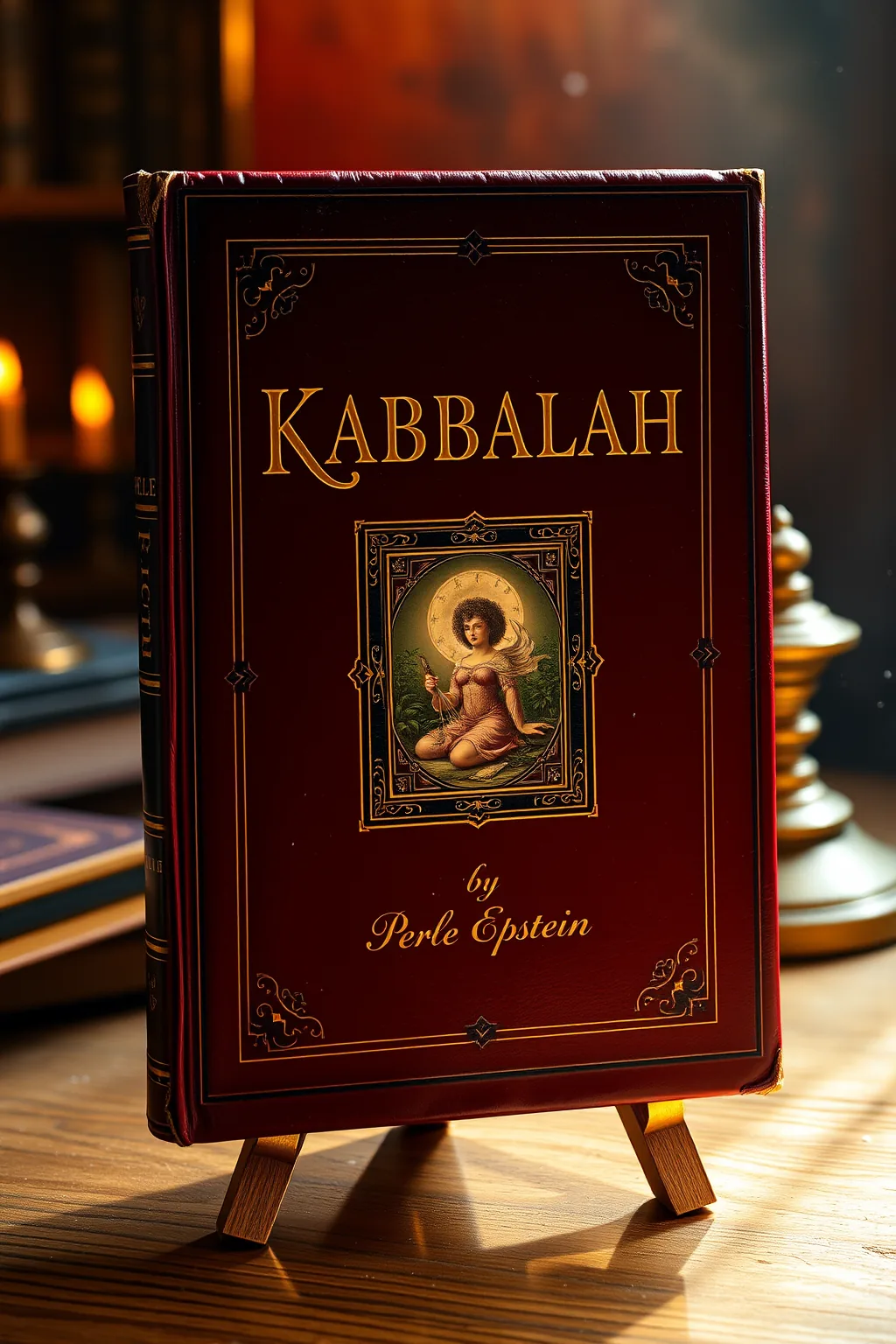
Kabbalah
 61
61

Kabbalah



Perle Epstein's 'Kabbalah' is an indispensable guide for navigating the intricate pathways of Jewish mysticism. As a seasoned explorer of esoteric lore, I find Epstein's ability to distill complex concepts into accessible yet profound insights truly remarkable. She illuminates the hidden realms of the divine, the cyclical nature of creation, and the soul's yearning for return with clarity and depth. This work serves as both a scholarly foundation and a practical primer for practitioners seeking to understand the esoteric underpinnings of Hasidism and the broader Cabalistic tradition. It is a meticulously researched and beautifully rendered exploration that will resonate deeply with serious students of the occult and the sacred.
📝 Description
61
Perle Epstein's 1978 book introduces Kabbalah's complex ideas to a Western audience.
Perle Epstein's work on Kabbalah serves as an accessible introduction to Jewish mysticism. She explains the system of divine emanations, known as the Sefirot, and their role in creation. The book also touches on the soul's journey toward divine union and the mystical practices associated with Kabbalah.
Epstein draws upon primary Kabbalistic texts and scholarship to illuminate the symbolism and philosophical concepts. She connects these ideas to broader currents within Jewish spiritual history, including Hasidic thought. The aim is to offer readers a clear understanding of the esoteric framework that underlies much of Jewish mysticism.
Kabbalah, the esoteric tradition of Jewish mysticism, offers a framework for understanding God's relationship with the created world. It uses symbolic language and contemplative practices to explore divine mysteries, creation, and the human soul's connection to the divine. This book presents those complex ideas, including the structure of the Sefirot and the mystical path, in a manner intended for those unfamiliar with the tradition.
💡 Why Read This Book?
Dive into the ancient wisdom of Kabbalah, a profound exploration of divine consciousness, creation, and the human soul's ascent. Perle Epstein's 'Kabbalah' offers a lucid and evocative journey into the heart of Jewish mysticism, revealing hidden knowledge and potent symbolism. Ideal for seekers of spiritual truth, scholars of comparative religion, and practitioners of esoteric arts yearning for a deeper understanding of this transformative tradition.
⭐ Reader Reviews
Honest opinions from readers who have explored this book.
❓ Frequently Asked Questions
What is Kabbalah?
Kabbalah is a mystical tradition within Judaism that seeks to understand the divine nature, the creation of the universe, and the relationship between God and humanity through esoteric interpretation of sacred texts.
Who was Perle Epstein?
Perle Epstein was a respected scholar and author renowned for her insightful explorations of Jewish mysticism, particularly Kabbalah and Hasidism, bridging academic rigor with esoteric understanding.
What are the Sefirot?
The Sefirot are the ten divine emanations or attributes through which God, the infinite, is understood to have created and continues to sustain the universe, forming a central diagram in Kabbalistic cosmology.
Is this book suitable for beginners?
Yes, while dense with information, Epstein's writing is clear and accessible, making it an excellent starting point for those new to Kabbalah seeking a foundational understanding.
What is the connection between Kabbalah and Hasidism?
Hasidism is a spiritual movement deeply rooted in Kabbalistic teachings, emphasizing ecstatic prayer, devotion, and the immanence of God in all aspects of life, often drawing on Kabbalistic concepts.
🔮 Key Themes & Symbolism
The Tree of Life and Divine Emanation
This theme studies the central Kabbalistic diagram, the Tree of Life (Etz Chaim), illustrating the ten Sefirot as stages of divine emanation from the Infinite (Ein Sof) into the manifest world. It explores the interconnectedness of these divine attributes, their symbolic representation, and their role in understanding creation, consciousness, and the human soul's journey towards union with the divine. The intricate relationships and pathways between the Sefirot offer a profound map of cosmic order and spiritual potential.
The Nature of the Divine and the Infinite
This section examines the Kabbalistic conception of God, moving from the unknowable, absolute Infinite (Ein Sof) to the manifest divine presence. It explores the paradoxes of divine unity and multiplicity, the concept of divine light (Ohr) as the source of all existence, and the various names and aspects of God revealed through mystical experience. The text illuminates how Kabbalah grapples with the ultimate mystery of divinity, offering frameworks for contemplating God's immanence and transcendence.
The Soul's Journey and Spiritual Ascent
Central to Kabbalistic thought is the nature of the human soul (Neshamah) and its quest for spiritual perfection and reunion with its divine source. This theme explores the different levels of the soul, the concept of tikkun (rectification) of the soul and the cosmos, and the practices and meditations employed to achieve spiritual elevation. It highlights the Kabbalistic belief in the soul's inherent divine spark and its potential for profound transformation through wisdom and devotion.
💬 Memorable Quotes
Direct passages from the work, attributed to the author.
“To study Kabbalah is to enter a garden.”
— This metaphor suggests Kabbalah is a area of beauty and clear insights, but also one requiring careful navigation and respect for its hidden dangers.
“The Tree of Life is the blueprint of creation.”
— This highlights the Sefirot's central role as a cosmic map, detailing the divine structure and order through which all existence unfolds.
“The soul yearns for its divine source.”
— This captures the core spiritual drive in Kabbalah: the innate longing of the human spirit to reconnect with its origin in the divine.
“Hidden knowledge illuminates the path.”
— Emphasizes the esoteric nature of Kabbalah, where secret wisdom is key to understanding the deeper realities of existence.
“God's light permeates all.”
— This points to the concept of divine immanence, suggesting that the divine presence is not distant but actively present in the fabric of the universe.
🌙 Esoteric Significance
Tradition
Kabbalah is a foundational esoteric tradition within Judaism, offering a comprehensive mystical cosmology and theology. It studies the hidden dimensions of Torah, the divine nature, and the structure of reality, aiming to facilitate spiritual connection and understanding of the divine will. Its practices and teachings have profoundly influenced subsequent mystical movements and continue to be a vital source of esoteric wisdom.
Symbolism
Fundamentally, Kabbalah is a system of profound symbolism, employing the Hebrew alphabet, gematria (numerical values of letters), and scriptural exegesis to reveal deeper, hidden meanings. The Tree of Life, the Sefirot, and the divine names are paramount symbols representing cosmic order, divine attributes, and the pathways of creation and spiritual ascent. These symbols are not mere representations but active conduits for understanding and experiencing the divine.
Modern Relevance
In contemporary times, Kabbalah retains significant relevance for scholars, spiritual seekers, and practitioners of various esoteric disciplines. Its exploration of consciousness, the interconnectedness of all things, and the quest for meaning appeals to modern inquiries into metaphysics and spirituality. The emphasis on personal transformation and the intricate mapping of the divine-human relationship offer enduring insights for those seeking deeper self-understanding and spiritual fulfillment.
👥 Who Should Read This Book
This profound work on Kabbalah is essential for a diverse audience. Serious students of Jewish mysticism and comparative religion will find it a scholarly and insightful resource. Spiritual seekers and those drawn to esoteric philosophies will discover a lucid and evocative guide to a complex yet rewarding tradition. Practitioners interested in the deeper currents of contemplative practice will gain a foundational understanding of Kabbalistic principles. Even those new to the subject will find Perle Epstein's clear exposition an accessible and compelling introduction to the radiant mysteries of Kabbalah.
📜 Historical Context
Perle Epstein's exploration of Kabbalah emerges from a rich and complex historical range, deeply interwoven with the intellectual and spiritual currents of medieval and early modern European Jewry. Emerging prominently in the 12th and 13th centuries with foundational texts like the Zohar, Kabbalah offered a profound counterpoint to rationalist philosophies, providing a mystical framework for understanding God, creation, and the human role within the divine plan. Its influence spread across Jewish communities, particularly in Safed during the 16th century, a period of intense mystical activity and the development of Lurianic Kabbalah. The subsequent emergence of Hasidism in the 18th century saw Kabbalistic ideas democratized and integrated into popular devotional practice. Epstein's work thus stands on the shoulders of centuries of esoteric contemplation, translation, and spiritual innovation within Judaism.
📔 Journal Prompts
Reflect on the 'dangerous garden' metaphor for studying Kabbalah. What aspects might be considered perilous, and what rewards lie within?
Meditate on the concept of divine emanation. How might the Sefirot be understood as stages in your own personal unfolding or growth?
Consider the yearning of the soul for its divine source. What practices or thoughts help you feel more connected to something larger than yourself?
Explore a specific symbol from Kabbalah (e.g., a Hebrew letter, a Sefirah). What deeper meanings might it hold for you personally?
How does the idea of 'hidden knowledge' in Kabbalah challenge or resonate with your current understanding of truth and wisdom?
🗂️ Glossary
Ein Sof
The Kabbalistic term for the 'Infinite' or 'Without End,' representing the absolute, unknowable, and transcendent aspect of God before any manifestation or creation.
Sefirot
The ten divine emanations or attributes through which God creates and sustains the universe, forming the structure of the Kabbalistic Tree of Life.
Tikkun
A central concept meaning 'rectification' or 'repair,' referring to the process of restoring spiritual harmony to the world and the soul, often through fulfilling divine commandments and ethical action.
Neshamah
The Hebrew word for 'soul,' typically referring to the highest spiritual aspect of a human being, the divine spark that connects them to God.
Gematria
A system of Jewish numerology that assigns a numerical value to each Hebrew letter, used to interpret the hidden meanings of words and phrases in sacred texts.
This book appears in 1 collection
🔮 Readers Also Liked
Browse all →








From the “Kabbalah” Collection
View all →








More Free Kabbalah & Jewish Mysticism Books
View all →