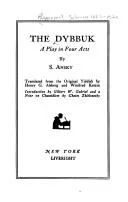
The Dybbuk
 76
76

The Dybbuk
S. Ansky's "The Dybbuk" presents a compelling, albeit somber, dramatization of possession rooted in robust Kabbalistic tradition. The play's strength lies in its faithful depiction of a dybbuk's torment and the spiritual struggle to expel it, particularly evident in the intense scenes involving the exorcism by Rabbi Hanan. The narrative effectively captures the psychological distress of Leah, whose consciousness is invaded by the spirit of her deceased betrothed. However, the character development, outside of Leah and Chanon, can feel somewhat archetypal, serving more as conduits for the theological and spiritual exposition than fully fleshed-out individuals. The pacing, especially in the early acts leading to the possession, might feel deliberate to modern readers accustomed to faster narrative arcs. Despite this, the final confrontation and the spiritual resolution offer a potent, albeit melancholic, conclusion. It is a work that demands engagement with its spiritual framework.
📝 Description
76
S. Ansky's play "The Dybbuk" was first published in 1926.
The play centers on the tragic love of Leah and Chanon. When Chanon dies, his spirit, a dybbuk, possesses Leah's body to reunite with her. This narrative draws heavily on Kabbalistic ideas about the soul's fate and its potential to become trapped.
The story unfolds within the context of Jewish folklore and mystical traditions. It examines themes of spiritual possession, the afterlife, and the complex relationship between the physical and spiritual worlds. The play's dramatic structure and exploration of these themes have made it a significant work in Yiddish literature.
Ansky's work is rooted in the rich tradition of Jewish mysticism, particularly Kabbalah. It engages with concepts of the soul's transmigration, the nature of spirits, and the methods used in folklore to deal with demonic or disembodied entities. The play reflects a period of intense spiritual and cultural inquiry within Eastern European Jewish communities, drawing on both ancient mystical texts and popular folk beliefs.
💡 Why Read This Book?
• Understand the Kabbalistic concept of the dybbuk, a dislocated soul or demon that can possess the living, as depicted in the harrowing experiences of Leah. • Explore the role of ritualistic exorcism and spiritual authority within Jewish mysticism, as demonstrated by the actions of Rabbi Hanan in confronting the possessed Leah. • Grasp the thematic interplay between tragic love, death, and the afterlife, particularly how the unresolved desires of Chanon impact the earthly plane post-1926.
⭐ Reader Reviews
Honest opinions from readers who have explored this book.
❓ Frequently Asked Questions
What is a dybbuk in Jewish folklore?
A dybbuk is a restless spirit of a deceased person, often a sinner, that is believed to possess the living. In "The Dybbuk," it is the spirit of Chanon, a young man who died of a broken heart, that seeks to inhabit Leah.
What is the original language of "The Dybbuk"?
S. Ansky wrote "The Dybbuk" in Hebrew, but it was later translated into Yiddish by Hayim Nahman Bialik and others, which is how it gained widespread popularity.
When was "The Dybbuk" first performed?
The play "The Dybbuk" received its premiere performance in Warsaw on December 10, 1920, after Ansky's death. It became a sensation in the Yiddish theatre world.
What is the significance of the Kabbalah in the play?
The play is deeply steeped in Kabbalistic lore, particularly concepts like gilgul neshamot (reincarnation) and the spiritual ramifications of intense desire or unfulfilled earthly connections.
Is "The Dybbuk" based on a true story?
While "The Dybbuk" draws heavily on Jewish folklore and mystical beliefs, it is not based on a single documented true event. Ansky synthesized various legends and spiritual concepts into his narrative.
What is the historical context of "The Dybbuk"'s publication?
First published in 1926, the play emerged during a period of intense interest in spiritualism and folk traditions following World War I, resonating with a desire to explore the unseen and the mystical.
🔮 Key Themes & Symbolism
The Nature of the Dybbuk
The central concept of the dybbuk—a dislocated soul driven by unresolved earthly ties—is explored through Chanon's tragic fate. This entity represents not just external malevolence but the internal consequences of intense desire, grief, and spiritual imbalance. Ansky's portrayal studies the Kabbalistic understanding of how a soul, unable to move on, can latch onto a living host, creating a profound psychological and spiritual disturbance. The narrative questions the boundary between the living and the dead, and how the spiritual realm can intrude upon the physical.
Kabbalistic Soul Concepts
The play is a rich illustration of Kabbalistic ideas surrounding the soul's journey. Concepts like 'gilgul neshamot' (reincarnation) and the 'Sod Ha'ibbur' (the secret of conception, often interpreted in a spiritual context) are implicitly present. Chanon's spirit is trapped, unable to complete its earthly cycle, leading to its desperate attempt to find a new existence. The work examines the consequences of spiritual 'uncompletion' and the rituals required to restore order, reflecting the intricate cosmology and soteriology found within Jewish mysticism.
Love, Death, and Spiritual Entanglement
Fundamentally, , "The Dybbuk" is a tragic love story intertwined with themes of death and the afterlife. The profound love between Leah and Chanon, cut short by his sudden demise, fuels the spiritual entanglement. The play suggests that such intense emotional bonds, when severed abruptly or fraught with unfulfilled desire, can create spiritual vulnerabilities. The dybbuk's manifestation is a direct consequence of this powerful, yet tragically terminated, earthly connection, highlighting the spiritual resonance of human relationships beyond the physical plane.
Ritual and Spiritual Authority
The narrative prominently features the role of spiritual authority and ritual in confronting and dispelling the dybbuk. The figure of Rabbi Hanan, an exorcist, embodies the belief in the efficacy of sacred knowledge and divine intervention. The exorcism scenes are crucial, illustrating the power attributed to rabbinic figures and mystical practices in restoring balance and freeing both the possessed and the possessing spirit. This highlights the practical application of esoteric traditions in addressing spiritual disturbances within the community.
💬 Memorable Quotes
Direct passages from the work, attributed to the author.
“The dybbuk is the soul of a dead man who clings to the living.”
— This concisely defines the core entity of the play, framing the possession not as an external demonic force but as the persistent, earthbound spirit of a deceased individual, driven by unfinished business or intense emotion.
“The world is full of spirits, and we are blind to them.”
— This statement underscores the play's exploration of the unseen realms and the limitations of human perception. It suggests that the spiritual world constantly interacts with ours, often unnoticed, highlighting the esoteric premise that reality extends beyond the material.
“Her body is a temple, defiled by a stranger's soul.”
— This highlights the violation experienced by Leah, whose physical form has become a vessel for Chanon's spirit. It speaks to the sacredness of the human body within certain spiritual traditions and the profound disruption caused by possession.
“Love that is not fulfilled in life can bind a soul to this world.”
— This interpretation of Chanon's fate points to the potent force of unrequited or tragically ended love, suggesting that such intense emotional states can prevent a soul from transitioning, leading to its entanglement with the earthly plane.
“The power of the Name can cast out any unclean spirit.”
— This reflects the belief in the efficacy of divine names and sacred utterances within Kabbalistic practice. It emphasizes the spiritual authority and power vested in specific invocations for exorcism and spiritual cleansing.
🌙 Esoteric Significance
Tradition
The Dybbuk is firmly rooted in the tradition of Jewish mysticism, particularly Kabbalah. It draws heavily on concepts like the nature of the soul, its potential for transmigration ('gilgul neshamot'), and the existence of spiritual entities that can influence the physical world. The play's narrative structure, involving possession and exorcism, reflects practical Kabbalistic concerns and the belief in the power of ritual to restore spiritual equilibrium. It departs from purely theoretical Kabbalah by presenting these ideas through a dramatic, narrative lens, making them accessible and emotionally resonant.
Symbolism
The primary symbol is the dybbuk itself, representing a soul bound by unresolved earthly desires, grief, or sin, unable to pass into the afterlife. Leah's possession symbolizes the vulnerability of the physical form to spiritual intrusion and the profound psychological torment this can inflict. The figure of Rabbi Hanan, the exorcist, symbolizes spiritual authority and the power of divine knowledge and ritual to confront and expel negative spiritual influences, restoring order and purity.
Modern Relevance
Contemporary practitioners of Jewish mysticism, particularly those exploring practical Kabbalah and the phenomenology of spiritual experience, find "The Dybbuk" a valuable narrative illustration of core concepts. It continues to be referenced in comparative studies of possession and exorcism across different religious traditions. The play's themes of love, loss, and the persistent influence of the past also resonate in modern psychological and philosophical discourse concerning trauma, memory, and the nature of consciousness.
👥 Who Should Read This Book
• Students of Yiddish literature and culture seeking to understand a foundational work that explores Jewish identity, folklore, and spiritual beliefs. • Scholars of comparative religion and folklore interested in the cross-cultural study of possession, exorcism, and beliefs about the afterlife. • Enthusiasts of esoteric traditions, particularly Kabbalah, looking for a dramatic and accessible exploration of its concepts concerning the soul and spiritual entities.
📜 Historical Context
S. Ansky's "The Dybbuk" emerged from the vibrant Yiddish cultural milieu of the early 20th century, a period marked by both intense spiritual seeking and the preservation of traditional Jewish life. First published in 1926, the play was written against a backdrop of post-World War I upheaval and rising antisemitism, yet also amid a flourishing of Yiddish literature and theatre. This era saw a resurgence of interest in Jewish folklore and Kabbalah, partly as a means of cultural affirmation. While not directly engaging with contemporary occult movements like Theosophy or Western Hermeticism, "The Dybbuk" tapped into a broader European fascination with the supernatural and the spiritual, which also fueled spiritualist societies and occult studies. The play's wide impact was immediate, with its premiere in 1920 sparking widespread acclaim and leading to numerous translations and adaptations, solidifying its status as an important work of Yiddish modernism and a significant cultural artifact that transcended its specific origins.
📔 Journal Prompts
The unresolved desires of Chanon and their impact on Leah.
The symbolic meaning of Leah's possession and subsequent struggle.
Rabbi Hanan's role as an agent of spiritual restoration.
The Kabbalistic concept of the dybbuk and its manifestation.
Reflections on the boundary between life and death as depicted in the play.
🗂️ Glossary
Dybbuk
A dislocated soul or spirit of a deceased person that possesses the body of a living person, often due to unfulfilled desires or unfinished earthly business.
Kabbalah
A system of Jewish mysticism that explores the nature of God, the creation of the universe, and the spiritual connection between the divine and the human.
Gilgul Neshamot
A Kabbalistic concept referring to the transmigration or reincarnation of souls, suggesting that souls may inhabit multiple bodies across different lifetimes.
Exorcism
A ritual performed to expel evil spirits or demonic entities from a person, place, or object, often involving prayer, incantations, and symbolic actions.
Sod Ha'ibbur
Literally 'the secret of conception/impregnation,' a Kabbalistic concept that can refer to the spiritual process of soul formation or the potential for souls to be drawn into existence.
Yiddish Theatre
A theatrical tradition performed in the Yiddish language, which flourished in the late 19th and 20th centuries, often dealing with themes of Jewish life, folklore, and spirituality.
Messianic Era
In Jewish eschatology, a future period of universal peace, justice, and redemption, often associated with the coming of the Messiah.
🔮 Readers Also Liked
Browse all →








More by S. Ansky
All books →
More Free Occult Philosophy Books
View all →