The Hindu temple
 80
80

The Hindu temple
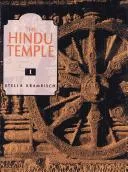
Stella Kramrisch's "The Hindu Temple" is not an accessible primer, but rather a rigorous academic inquiry. The author's deep scholarship is evident on every page, particularly in her meticulous analysis of the underlying metaphysical principles guiding temple construction. While the density of information can be overwhelming for the uninitiated, her detailed exposition of the concept of the *mandala* as a cosmic diagram is particularly illuminating. A limitation, however, is the book's relative scarcity of visual aids, which can make abstract descriptions challenging to visualize. Despite this, Kramrisch provides an indispensable scholarly resource for understanding the Hindu temple as a physical and spiritual cosmos. It stands as a foundational text for serious study.
📝 Description
80
Stella Kramrisch's 1986 study examines the Hindu temple as a cosmic blueprint.
First published in 1986, Stella Kramrisch's work dissects the Hindu temple beyond its architectural form. It investigates the philosophical and cosmological ideas that shape these sacred structures. Kramrisch presents the temple not merely as a building, but as a physical expression of divine order and universal principles. This volume is for students of religious studies, art history, comparative philosophy, and architects interested in sacred geometry and ancient building practices.
The book places the Hindu temple within the larger context of Indian cultural and religious history. It traces architectural developments from early rock-cut shrines to later stone edifices. Kramrisch shows how these structures functioned as centers for community, ritual, and royal patronage, mirroring the societal organization of their eras. The text illuminates key concepts like the temple as a universe microcosm, deity representation, and the devotee's symbolic path. It explains how layout and iconography aim to foster spiritual insight and link the earthly plane with the divine.
This study engages with the Indic tradition's understanding of sacred architecture as a vehicle for spiritual realization. It examines how the physical construction and symbolic elements of the Hindu temple are designed to mirror cosmic order and facilitate a connection between the human and the divine. The book treats the temple as a diagram of universal truths, intended to guide the practitioner towards understanding their place within the cosmos.
💡 Why Read This Book?
• Gain an understanding of the *mandala* as a cosmic blueprint for temple design, a concept central to the philosophical structure of Hindu sacred architecture. • Learn about the historical development of temple architecture, tracing its evolution from early rock-cut forms to monumental stone edifices by the Gupta period. • Grasp the symbolic representation of deities and the cosmic order within the temple's physical layout, a key aspect of its spiritual function.
⭐ Reader Reviews
Honest opinions from readers who have explored this book.
❓ Frequently Asked Questions
When was Stella Kramrisch's "The Hindu Temple" first published?
Stella Kramrisch's influential work, "The Hindu Temple," was first published in 1986, making it a cornerstone of scholarly inquiry into the subject for decades.
What is the primary focus of "The Hindu Temple" by Stella Kramrisch?
The book focuses on the philosophical and cosmological principles underlying Hindu temple architecture, exploring their design, symbolism, and function as sacred spaces.
Is "The Hindu Temple" suitable for beginners interested in Indian architecture?
While comprehensive, the book's academic depth may be challenging for absolute beginners. It is best suited for students and scholars of religious studies, art history, or architecture seeking in-depth analysis.
What historical periods does "The Hindu Temple" cover?
Kramrisch's work examines the evolution of Hindu temples across various historical periods, from early rock-cut examples to the grand stone structures of later dynasties.
Does the book explain the symbolism within Hindu temples?
Yes, a significant aspect of the book is its detailed explanation of the symbolism inherent in temple design, iconography, and layout, connecting them to cosmic principles.
What is the significance of the 'mandala' in the context of the Hindu temple?
The book explains the *mandala* as a fundamental organizing principle, representing the cosmos and structuring the temple's layout and orientation according to sacred geometry.
🔮 Key Themes & Symbolism
Cosmic Order and Temple Design
Kramrisch elucidates how the Hindu temple is conceived as a microcosm of the universe. The layout, often based on the *mandala*, represents the cosmic order (*rta*). Each element, from the base to the pinnacle, signifies a stage in creation or a divine principle. This is not mere decoration but a deliberate architectural expression of metaphysical beliefs, guiding the devotee through a symbolic journey from the earthly to the divine realm. The book details how this ordering principle influences the placement of sanctuaries, courtyards, and subsidiary shrines.
The Temple as Divine Manifestation
This work explores the temple as the physical embodiment of the deity and the divine presence. It details how the iconography and architectural forms are intended to invoke and house the gods. Kramrisch examines the concept of *prana* (life force) and its architectural translation, as well as the role of specific architectural elements like the *shikhara* (tower) or *garbhagriha* (sanctum) in mediating between the human and the divine. The temple becomes a locus of divine energy accessible to worshippers.
Evolution of Sacred Architecture
Kramrisch traces the historical development of Hindu temple architecture, providing context for the forms and functions discussed. The book highlights key periods and regional variations, showing how architectural styles evolved from early cave sanctuaries to the sophisticated stone temples of classical India. This historical perspective is crucial for understanding the continuity and transformation of religious ideas expressed through built form, demonstrating the enduring legacy of these sacred structures.
The Devotee's Path
Beyond the structure itself, the book examines the temple's role in the spiritual life of the devotee. Kramrisch discusses how the architecture facilitates ritual and meditation, guiding the worshipper through circumambulation and towards the inner sanctum. The temple is presented as a tool for spiritual realization, a place where the devotee can experience the sacred and connect with the divine. This aspect underscores the functional purpose of the temple in fostering devotion and spiritual growth.
💬 Memorable Quotes
Direct passages from the work, attributed to the author.
“The temple is a body of the god, and the god is the dweller in the temple.”
— This statement captures the core idea that the Hindu temple is not just a dwelling for a deity, but is itself a manifestation of the divine form, inseparable from the god it houses.
“The temple is a mandala, a cosmic diagram.”
— This highlights the fundamental principle that the temple's architectural plan is often based on the *mandala*, a sacred geometric pattern representing the universe and its underlying order.
“The plan of the temple is a system of coordinates for the cosmos.”
— This emphasizes the functional aspect of the temple's design, which serves to orient worshippers within a sacred space that mirrors the structure of the universe.
“The temple is built for the sake of the god, but it is also built for the sake of man.”
— This interpretation points to the dual purpose of the temple: to honor and house the divine, while simultaneously providing a means for human spiritual connection and liberation.
“The Indian temple is a crystallization of the Indian world.”
— This evocative phrase suggests that the temple expresses and reflects the totality of Indian culture, beliefs, and worldview within its architectural form.
🌙 Esoteric Significance
Tradition
Kramrisch's work draws implicitly from the rich philosophical traditions of Hinduism, particularly Vedanta and Tantra, which inform the understanding of the cosmos and the divine. While not explicitly aligned with Western esoteric lineages like Theosophy or Hermeticism, her exploration of sacred geometry, cosmic symbolism, and the temple as a conduit for spiritual energy aligns with the broader concerns of esoteric philosophy worldwide. It serves as a bridge, offering an academic yet deeply spiritual interpretation of practices and beliefs that resonate with esoteric seekers.
Symbolism
The *mandala* is a paramount symbol, representing the universe in its ordered entirety and serving as the blueprint for temple construction. The *shikhara* (tower) symbolizes the ascent to the heavens or the cosmic mountain Meru. The *garbhagriha* (sanctum sanctorum) embodies the cosmic egg or the womb of creation, the innermost point of spiritual potency where the deity resides. These symbols are not mere decoration but integral components of the temple's spiritual function.
Modern Relevance
Contemporary practitioners of sacred geometry, architectural theorists exploring the phenomenology of sacred space, and students of comparative spirituality often reference Kramrisch's meticulous analysis. Her work informs modern interpretations of how built environments can influence consciousness and facilitate spiritual experience. Thinkers in fields like consciousness studies and integral theory may also find value in her articulation of the temple as a model for organized spiritual energy and cosmic awareness.
👥 Who Should Read This Book
• Students of comparative religion and Indian philosophy seeking to understand the physical manifestation of Hindu cosmology. • Architects and designers interested in the principles of sacred geometry and the historical relationship between structure and spiritual intent. • Scholars of art history and religious studies requiring a foundational text for the in-depth analysis of Hindu temple architecture and its symbolic language.
📜 Historical Context
When Stella Kramrisch's "The Hindu Temple" was published in 1986, it entered a scholarly landscape already engaged with Indian art and architecture, but often through lenses focused more on stylistic classification or purely archaeological detail. Scholars like Ananda Coomaraswamy had previously emphasized the philosophical underpinnings of Indian art, but Kramrisch's work provided an exceptional synthesis of architectural analysis and deep metaphysical interpretation. The book emerged during a period of burgeoning interest in comparative religion and esoteric studies in the West. While the dominant academic approach might have been secular art history, Kramrisch's text brought a profound understanding of the religious and cosmological intent behind the structures. Its reception was largely one of acclaim from specialists, solidifying its status as a foundational text that reoriented the study of temple architecture towards its integral spiritual dimension.
📔 Journal Prompts
The *mandala* as a cosmic diagram in temple planning.
The temple's architectural features and their representation of divine presence.
The symbolic journey of the devotee through the temple's spatial organization.
Historical evolution of temple architecture and its philosophical underpinnings.
The temple as a microcosm of the universe.
🗂️ Glossary
Mandala
A geometric configuration of symbols, often circular, used in Hindu and Buddhist traditions as a diagram of the cosmos or for meditation; it serves as a foundational blueprint for temple design.
Shikhara
The superstructure or spire of a Hindu temple, rising above the sanctum, often symbolizing the cosmic mountain or the path to the heavens.
Garbhagriha
The innermost sanctuary of a Hindu temple, housing the principal deity; it is considered the most sacred part and represents the cosmic womb.
Rta
An ancient Vedic concept representing cosmic order, truth, and the natural law that governs the universe; the temple architecture often seeks to embody this principle.
Prana
The vital life force or energy that pervades the universe and living beings; its architectural and symbolic representation is explored in relation to temple design.
Vastu Shastra
An ancient Indian system of architecture and design concerned with the principles of space, orientation, and construction to harmonize with natural forces and promote well-being.
Cosmology
The study of the origin, evolution, and structure of the universe; in the context of the Hindu temple, it refers to the architectural embodiment of the Hindu worldview.
🔮 Readers Also Liked
Browse all →









More by Stella Kramrisch
All books →
More Free Occult Philosophy Books
View all →