The Book of Divination
 75
75

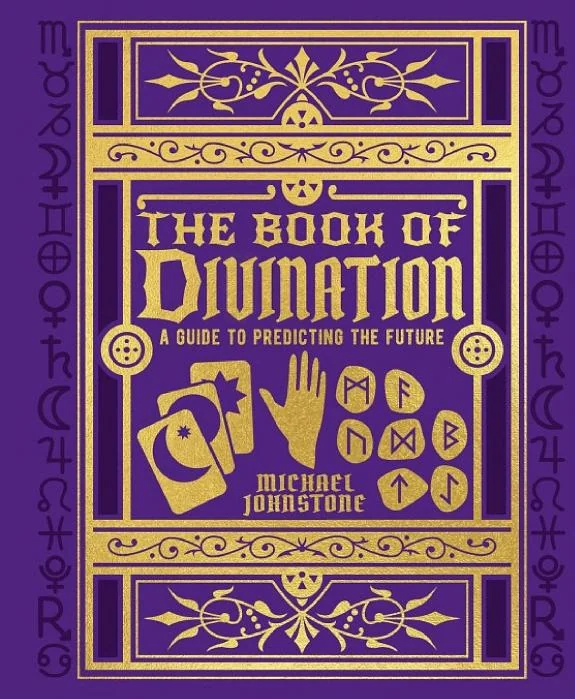
The Book of Divination
Michael Johnstone's The Book of Divination presents a solid, if somewhat encyclopedic, survey of fortune-telling traditions. The volume's strength lies in its thoroughness, cataloging a wide array of practices from cartomancy to crystal gazing with commendable detail. The inclusion of historical context for each method is particularly valuable, moving beyond mere instruction to situate these arts within their cultural origins. However, the text occasionally feels more like a reference manual than an inspirational guide. While it provides the 'how,' it sometimes lacks the deeper 'why' that might truly ignite a practitioner's intuition. A standout section is the detailed explanation of interpreting patterns in tea leaves, offering a nuanced approach often overlooked in more superficial treatments. Despite its occasional dryness, Johnstone offers a competent and well-researched compendium for those serious about exploring the mechanics of divination.
📝 Description
75
Michael Johnstone's The Book of Divination, published in 2022, details historical methods for interpreting omens and seeking guidance.
This 2022 volume details a wide array of historical methods for foretelling the future. It covers well-known practices like Tarot and palmistry alongside less common forms of scrying and augury. Johnstone emphasizes the practical application of these arts, with clear instructions and illustrative aids.
The book is aimed at those with a serious interest in divination's history and practice. It serves beginners needing a basic understanding of prophetic techniques and experienced practitioners seeking to broaden their knowledge. The work's presentation also suits collectors of esoteric texts.
Divination has been a persistent human endeavor, evolving across cultures and eras. From Mesopotamian hepatoscopy to the Sibylline Books of ancient Rome, societies have sought to understand divine will or future events through symbolic interpretation. Johnstone's work situates these practices within this broad historical sweep, acknowledging their enduring appeal and adaptation through different historical periods and belief systems.
💡 Why Read This Book?
• Gain practical knowledge of diverse divinatory systems, including detailed instructions for techniques like tea leaf reading, as presented in the book's extensive guides, allowing for hands-on exploration. • Understand the historical roots of divination, connecting practices discussed to specific eras and cultural contexts, providing a richer framework for interpretation than generic historical accounts. • Develop interpretive skills by learning to recognize symbolic language and patterns, a core concept explored throughout Johnstone's work, fostering a deeper intuitive connection with divinatory tools.
⭐ Reader Reviews
Honest opinions from readers who have explored this book.
❓ Frequently Asked Questions
What specific divination methods are covered in The Book of Divination?
The book details numerous methods, including Tarot, playing cards, palmistry, crystal ball gazing, tea leaf reading, and various forms of augury and scrying, offering a broad overview of prophetic arts.
Is The Book of Divination suitable for absolute beginners?
Yes, the book is structured to guide beginners through the foundational principles and practical applications of various divination techniques, making it accessible for those new to the subject.
When was The Book of Divination first published?
The Book of Divination by Michael Johnstone was first published on February 28, 2022, making it a contemporary exploration of ancient practices.
Does the book include illustrations or diagrams?
Yes, the original description mentions that illustrations, diagrams, and charts are included to aid the reader in mastering the prophetic arts discussed within the volume.
What is the physical format of The Book of Divination?
The book is presented as an elegant Wibalin bound volume with gilded page edges, suggesting a high-quality production suitable for collectors and serious students.
What is the author's approach to divination?
Michael Johnstone's approach appears to be both historical and practical, aiming to provide readers with a comprehensive understanding and the tools to engage with various divinatory practices effectively.
🔮 Key Themes & Symbolism
Historical Survey of Prophetic Arts
The work meticulously traces the lineage of divination, from ancient Mesopotamian practices to modern interpretations. It highlights how diverse cultures, such as those in ancient Rome with the Sibylline Books, developed unique methods for seeking future knowledge. Johnstone emphasizes that these practices are not isolated curiosities but integral threads in the human quest for meaning and understanding of fate, showing their consistent presence across historical epochs.
Practical Application and Technique
Beyond historical context, the book focuses on the actionable 'how-to' of divination. It breaks down complex methods like scrying and cartomancy into understandable steps, supported by visual aids. The emphasis is on equipping the reader with the skills to perform these divinations themselves, encouraging an empirical engagement with the material rather than purely theoretical study.
The Language of Symbols
A core theme is the understanding and interpretation of symbolic language inherent in divinatory tools. Whether it's the archetypes in Tarot cards or the patterns in spilled tea leaves, the book guides readers to perceive meaning in visual or circumstantial cues. This involves developing an intuitive sensitivity to symbolism and its potential messages about the present and future.
Divination as Self-Discovery
Johnstone frames divination not merely as fortune-telling but as a pathway to introspection and self-awareness. By engaging with the symbolic language and intuitive insights prompted by these practices, individuals can gain deeper perspectives on their own lives, motivations, and potential paths forward. It suggests that the future is not fixed but a field of possibilities revealed through inner perception.
💬 Memorable Quotes
Direct passages from the work, attributed to the author.
“The history of fortune-telling is a long and fascinating one.”
— This statement underscores the enduring human impulse to seek knowledge beyond the immediate present, framing divination as a continuous thread in our collective past and present.
“Whether it's reading tea leaves, using tarot or playing cards, palmistry, or crystal ball gazing...”
— This enumerates a diverse range of classic divinatory methods, setting the stage for the book's comprehensive exploration of these varied practices.
“The Book of Divination is the perfect companion for mastering these prophetic arts.”
— This positions the book as an essential, practical guide for anyone wishing to learn or improve their skills in various forms of divination.
“Illustrations, diagrams and charts are included to aid”
— This highlights the book's pedagogical approach, emphasizing the use of visual learning tools to enhance reader comprehension and practical application.
“Human beings have tried to understand the forces of fate through a variety of imaginative and mystical means.”
— This foundational idea suggests that the desire to comprehend destiny is a universal human trait, expressed through creative and esoteric channels throughout history.
🌙 Esoteric Significance
Tradition
This work draws primarily from the Western esoteric tradition, encompassing a broad spectrum of practices that have been historically associated with seeking knowledge of the unseen or future. While not strictly adhering to a single lineage like Kabbalah or Hermeticism, it synthesizes methods popular within these traditions and folk magic, making them accessible. Its departure lies in its contemporary, practical focus, aiming for broad applicability rather than initiation into a specific, closed system.
Symbolism
Key symbols often revolve around archetypal imagery found in Tarot, where figures like The Fool or The High Priestess represent stages of spiritual journey or modes of perception. In palmistry, the lines and mounts on the hand are read as symbolic maps of life potential and character. Crystal ball gazing utilizes the symbolic potential of light and reflection, interpreted as a gateway to visions or subconscious insights.
Modern Relevance
Contemporary thinkers and practitioners in fields like intuitive development, modern witchcraft, and even some forms of depth psychology find value in Johnstone's work. It provides a structured introduction to techniques that complement practices such as mindfulness and Jungian shadow work, by offering tools for externalizing internal processes and exploring symbolic narratives of the self and the world.
👥 Who Should Read This Book
• Aspiring diviners seeking a comprehensive, practical manual to learn multiple techniques, from card reading to scrying. • Students of esoteric history interested in the evolution and application of divination across different cultures and eras. • Individuals exploring personal growth and intuition development who want structured methods to enhance self-understanding through symbolic interpretation.
📜 Historical Context
The early 21st century saw a resurgence of interest in esoteric practices, often fueled by digital access to information and a counter-cultural search for meaning outside mainstream paradigms. Michael Johnstone’s The Book of Divination, published in 2022, arrives in this milieu, building upon a long tradition that gained significant traction in the 19th century with figures like Madame Blavatsky and the rise of Theosophy, and later in the 20th century with New Age movements. While contemporaries like Mitch Horowitz explored historical occultism, Johnstone’s work focuses more on the practical transmission of divinatory techniques themselves. It implicitly engages with the broader intellectual current of seeking alternative knowledge systems, drawing from practices that have existed since antiquity, predating even the Hermetic tradition, and continuing through various folk magic and organized esoteric orders.
📔 Journal Prompts
The symbolic language of Tarot cards.
Interpreting patterns in tea leaves.
The historical evolution of palmistry.
The role of intuition in crystal ball gazing.
Connecting divination practices to understanding fate.
🗂️ Glossary
Augury
A form of divination practiced in ancient Rome, involving the observation of bird flight patterns and behavior to interpret omens and divine the will of the gods.
Cartomancy
The practice of fortune-telling or divination using playing cards, often involving specific spreads and interpretations of card combinations.
Divination
The practice of seeking knowledge of the future or the unknown by supernatural means; the interpretation of omens and signs.
Palmistry
A practice that claims to interpret character and predict the future through the study of the palm, including the lines, mounts, and shape of the hand.
Prophetic arts
A collective term for various methods and disciplines used to predict future events or gain insight into the unknown, encompassing divination techniques.
Scrying
A form of divination involving gazing into a reflective surface, such as a crystal ball, mirror, or bowl of water, to receive visions or insights.
Synchronicity
The occurrence of events that appear meaningfully related but have no discernible causal connection, often seen as significant in divinatory interpretations.
This book appears in 1 collection
🔮 Readers Also Liked
Browse all →









From the “Crystal Ball Gazing” Collection
View all →






More Free Occult Philosophy Books
View all →