Sleep Paralysis
 72
72

Sleep Paralysis
Brian A. Sharpless and Karl Doghramji's "Sleep Paralysis" presents a robust, if occasionally dry, survey of a phenomenon that straddles the line between medical anomaly and cultural touchstone. The authors excel in dissecting the clinical aspects, providing clear diagnostic criteria and therapeutic strategies that will prove invaluable for practitioners. Their approach, grounded in empirical evidence, successfully demystifies the terror often associated with these episodes. However, the book's strength in clinical detail sometimes overshadows a more nuanced exploration of the profound existential questions sleep paralysis can provoke. For instance, while the historical accounts of incubus and succubus visitations are presented factually, their deeper symbolic weight within esoteric traditions feels somewhat underserved. Despite this, the work's comprehensive medical guidance and historical overview make it a significant contribution. It is a meticulously researched resource for understanding the mechanics of sleep paralysis.
📝 Description
72
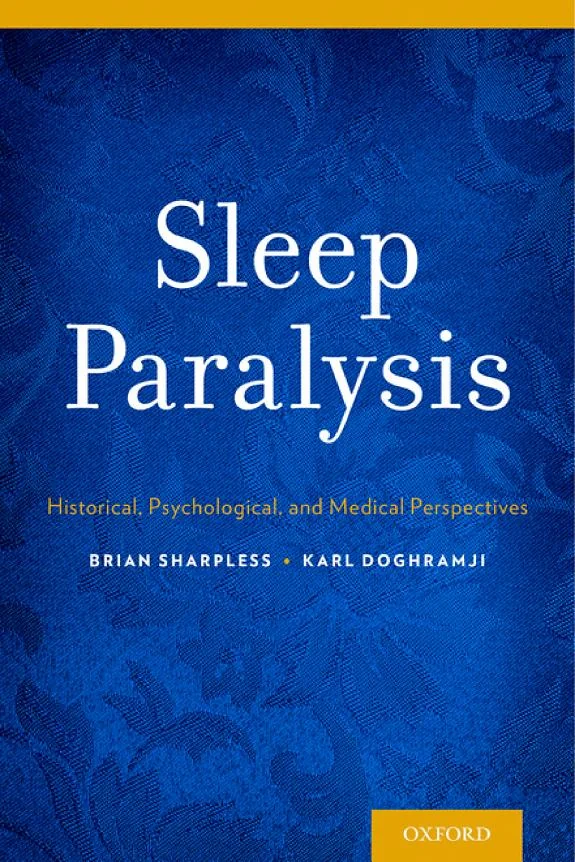
Brian A. Sharpless and Karl Doghramji's 2019 book examines sleep paralysis.
This book investigates sleep paralysis, a state where wakefulness coincides with an inability to move. It moves beyond personal stories to detail the condition's clinical signs, historical interpretations, and psychological roots. The authors discuss the neurological basis, specifically REM sleep atonia, and the psychological effects, such as hypnagogic and hypnopompic hallucinations. Cultural narratives that influence the subjective experience of paralysis and accompanying visions are also covered.
The work is written for mental health professionals, including therapists, psychiatrists, and sleep specialists, who need to diagnose and manage patients with sleep paralysis. It will also interest researchers in psychology and neuroscience. Individuals curious about the connections between consciousness, sleep, and beliefs surrounding this phenomenon will find it informative. The authors trace how sleep paralysis perceptions have changed over centuries. Historically, it was linked to supernatural causes like demonic possession or divine encounters across various cultures. This contrasts with current scientific views, showing the shift from ancient folklore to late 20th century clinical definitions.
Across cultures and history, sleep paralysis has been framed within supernatural or spiritual contexts, often viewed as encounters with spirits, demons, or divine messengers. This book addresses these historical interpretations, contrasting them with modern scientific understanding of the neurological and psychological underpinnings of the phenomenon. It acknowledges the subjective experience, often described with vivid hallucinations, which has fueled these spiritual narratives for centuries, thereby placing the scientific explanation within a broader, historically rich, and sometimes mystical, human experience of altered consciousness during sleep transitions.
💡 Why Read This Book?
• Gain practical diagnostic tools and treatment approaches for sleep paralysis, directly from the clinical guidance provided in the sections on differential diagnosis and medication, enabling a professional understanding of the condition. • Understand the historical evolution of sleep paralysis interpretations, from pre-scientific demonology to the neurobiological explanations offered since the mid-20th century, providing a unique chronological perspective. • Explore the psychological underpinnings of sleep paralysis, including the specific nature of hypnagogic and hypnopompic hallucinations, as detailed in the book's exploration of REM sleep phenomena.
⭐ Reader Reviews
Honest opinions from readers who have explored this book.
❓ Frequently Asked Questions
What is sleep paralysis and how does it differ from other sleep disorders?
Sleep paralysis is a temporary inability to move or speak that occurs when you are waking up or falling asleep. It's distinct from disorders like narcolepsy or sleep apnea, focusing specifically on the state of temporary paralysis and often accompanied by hallucinations.
What are hypnagogic and hypnopompic hallucinations?
These are sensory experiences that occur during the transition between wakefulness and sleep. Hypnagogic hallucinations happen when falling asleep, while hypnopompic hallucinations occur when waking up. They are commonly associated with sleep paralysis.
How has the understanding of sleep paralysis changed historically?
Historically, sleep paralysis was often attributed to supernatural causes like demonic possession. Modern understanding, developed significantly in the 20th century, views it as a neurological event related to REM sleep.
What are common cultural interpretations of sleep paralysis?
Across cultures, sleep paralysis has been explained as visitations by spirits, demons (like incubi or succubi), or witchcraft. These narratives often reflect societal anxieties and beliefs about the supernatural.
Who are the primary authors of 'Sleep Paralysis: Historical, Psychological, and Medical Perspectives'?
The book was written by Dr. Brian A. Sharpless and Dr. Karl Doghramji. It was first published in 2015.
What are the main treatment strategies discussed for sleep paralysis?
The book outlines various treatment approaches, including cognitive behavioral therapy for insomnia (CBT-I), medication guidance for associated symptoms, and a novel treatment approach specifically designed for mental health professionals.
🔮 Key Themes & Symbolism
The Spectral Visitor
This theme examines the long-standing association of sleep paralysis with encounters of spectral entities, often interpreted as demons, ghosts, or otherworldly beings. The work meticulously documents historical accounts from various cultures, where these experiences were attributed to supernatural forces like the incubus or succubus. It contrasts these ancient beliefs with modern neurological explanations, highlighting how the subjective experience of an oppressive presence during paralysis can be understood through the lens of REM sleep atonia and associated hallucinations.
REM Sleep and Consciousness
A central focus is the neurological basis of sleep paralysis, particularly its connection to Rapid Eye Movement (REM) sleep. The book details how the paralysis that normally accompanies REM sleep to prevent acting out dreams can intrude into wakefulness. This disruption of consciousness during the sleep-wake transition, leading to phenomena like hypnagogic hallucinations, is explored in depth, bridging the gap between sleep science and the subjective experience of altered states.
Cultural Narratives of Fear
The work studies how diverse cultural narratives have shaped the interpretation and experience of sleep paralysis. From medieval European folklore to indigenous beliefs, the phenomenon has been woven into mythologies, often serving as a repository for societal fears and anxieties. The book analyzes these varied interpretations, demonstrating how cultural context influences whether sleep paralysis is seen as a medical condition or a spiritual encounter.
Clinical Diagnosis and Treatment
Beyond its historical and cultural dimensions, the book provides a practical framework for clinicians. It offers detailed guidance on differential diagnosis to distinguish sleep paralysis from other sleep disorders and neurological conditions. Furthermore, it presents evidence-based treatment strategies, including pharmacological interventions and psychological therapies, equipping mental health professionals with tools to manage the condition effectively.
💬 Memorable Quotes
Direct passages from the work, attributed to the author.
“The phenomenon is experienced as a temporary inability to move or speak that occurs when waking up or falling asleep.”
— This concise definition captures the core physical experience of sleep paralysis, setting the stage for deeper explorations into its causes and interpretations.
“Historical accounts often attributed sleep paralysis to supernatural agents, such as demons or witches.”
— This highlights the significant shift in understanding from ancient folklore and demonology to modern medical perspectives, underscoring the cultural evolution of interpreting this phenomenon.
“Hypnagogic and hypnopompic hallucinations can occur during episodes of sleep paralysis.”
— This points to the vivid, often terrifying, sensory experiences that accompany the physical paralysis, explaining a key component of the subjective distress.
“Differential diagnosis is crucial for identifying sleep paralysis and ruling out other conditions.”
— This emphasizes the importance of a clinical approach, distinguishing the disorder from other neurological or psychological issues that might present with similar symptoms.
“A new treatment approach is presented for mental health professionals.”
— This signals the book's contribution to therapeutic practice, offering novel strategies beyond established methods for addressing sleep paralysis.
🌙 Esoteric Significance
Tradition
While primarily a clinical and historical text, "Sleep Paralysis" touches upon themes resonant with esoteric traditions that explore altered states of consciousness and perceived encounters with non-corporeal entities. It indirectly engages with Gnostic ideas of spiritual entrapment and theosophical concepts of astral projection or interference from lower psychic realms, by detailing experiences often mistaken for such phenomena. The book's departure lies in its systematic demystification, grounding these experiences in neurology rather than exclusively spiritual causality.
Symbolism
The paralysis itself can be seen as a symbol of spiritual immobility or stagnation, a state of being caught between worlds. The associated hallucinations, often involving shadowy figures or oppressive presences, echo archetypal symbols of the shadow self or the trickster archetype from Jungian psychology, which itself has deep roots in esoteric thought. The feeling of suffocation or being crushed relates to symbols of overwhelming psychic burden or existential dread.
Modern Relevance
Contemporary practitioners of lucid dreaming, out-of-body experiences (OBEs), and astral projection often reference the boundary between sleep paralysis and voluntary out-of-body states. Thinkers and communities exploring consciousness expansion, such as those influenced by Robert Monroe's work, find value in distinguishing between involuntary sleep paralysis episodes and intentionally cultivated non-ordinary states of consciousness, using the book's insights to refine their practices and understanding.
👥 Who Should Read This Book
• Mental health professionals and sleep specialists seeking to refine their diagnostic accuracy and therapeutic interventions for patients experiencing sleep paralysis, leveraging the book's clinical guidance and novel treatment approaches. • Students and researchers of psychology, neuroscience, and cultural history interested in the intersection of sleep science, altered states of consciousness, and historical interpretations of the phenomenon. • Individuals who have personally experienced sleep paralysis and wish to understand its neurological basis, historical context, and potential psychological implications beyond anecdotal accounts.
📜 Historical Context
Published in 2015, "Sleep Paralysis: Historical, Psychological, and Medical Perspectives" emerged at a time when sleep research was rapidly advancing, yet the specific phenomenon of sleep paralysis continued to be discussed through both clinical and popular lenses. The work arrived decades after the formal recognition of REM sleep and its associated atonia in the 1950s, a period that saw pioneering sleep studies by figures like Eugene Aserinsky and Nathaniel Kleitman. Sharpless and Doghramji situated their research within this established scientific framework, contrasting it with earlier, often supernatural, explanations prevalent throughout history, such as the medieval beliefs in incubi and succubi. While not facing direct censorship, the book implicitly challenged lingering folk beliefs by providing a rigorous medical and psychological counter-narrative. Its reception was primarily within academic and clinical circles, offering a comprehensive synthesis that scholars like David J. Hufford, who explored the cultural context of such experiences, had previously begun to illuminate.
📔 Journal Prompts
The spectral visitor and its neurological correlate.
Comparing historical demonological interpretations with REM sleep atonia.
Personal experiences of hypnagogic and hypnopompic hallucinations.
The subjective feeling of being trapped during sleep paralysis.
Distinguishing involuntary sleep paralysis from voluntary altered states.
🗂️ Glossary
Sleep Paralysis
A temporary inability to move or speak that occurs when a person is waking up or falling asleep. It is often accompanied by hallucinations.
REM Sleep
Rapid Eye Movement sleep, the stage of sleep characterized by rapid eye movements, vivid dreams, and muscle paralysis (atonia).
Atonia
The temporary loss of muscle tone that occurs during REM sleep, preventing individuals from acting out their dreams.
Hypnagogic Hallucinations
Vivid sensory experiences (visual, auditory, tactile) that occur while falling asleep.
Hypnopompic Hallucinations
Vivid sensory experiences that occur while waking up.
Differential Diagnosis
The process of distinguishing a particular disease or condition from others that present with similar symptoms.
Incubus/Succubus
In folklore, a male (incubus) or female (succubus) demon believed to lie upon sleepers, especially to have sexual intercourse with them.
This book appears in 1 collection
🔮 Readers Also Liked
Browse all →









From the “Sleep Paralysis” Collection
View all →







More Free Occult Philosophy Books
View all →